
11 November 2025 The Future is the Product of the Past

Archaeologists find 2,000-year-old eyeshadow and blush in ancient Roman city of Aizanoi

Archaeologists discovered rare makeup products of 10 different colors and different sorts of hair accessories and jewelry during excavations at the ancient Roman city of Aizanoi in Türkiye’s Kütahya province, reports said Saturday.

The Aizanoi ancient city is located in the inner Western Anatolia Region, 48 km Southwest of the Kütahya Province, and within the boundaries of the Çavdarhisar district.

The city was re-discovered by the European travellers in 1824 and surveyed and identified between the years of 1830 and 1840. The scientific excavations within Aizanoi were launched in 1926 by D. Krencker and M. Schede on behalf of the German Archeological Institute and presently the excavation works are being carried out by the Dumlupınar University (DU).

Aizanoi is one of the most significant cities of the Roman Period with the Zeus Temple, the Complex of Stadium-Theatre, and the Macellum.
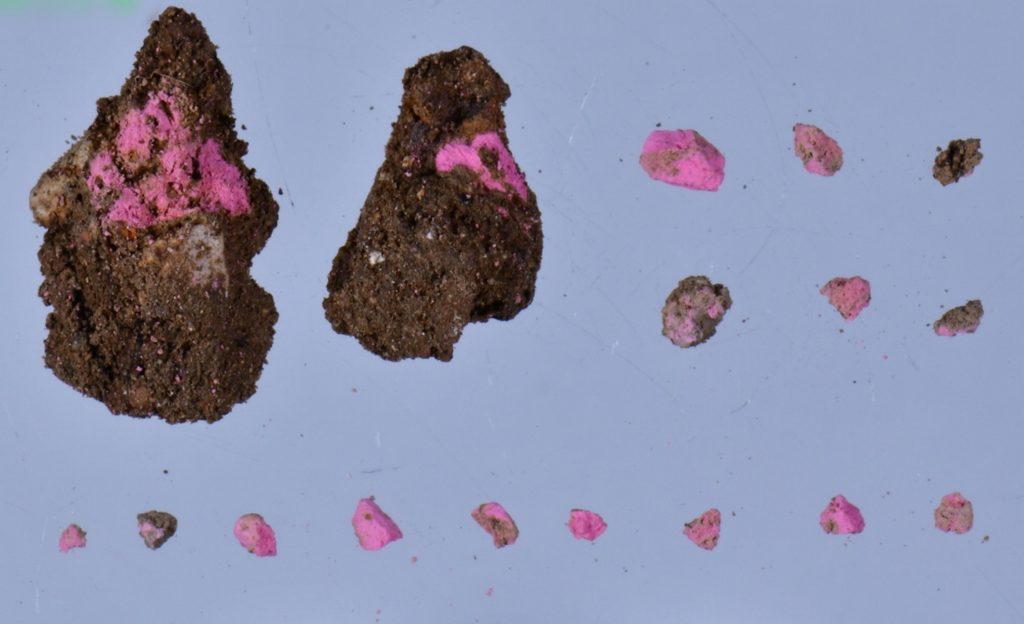
Photo: AA

The excavations, which have been carried out in collaboration with the Kütahya Governorate and Dumlupınar University, were conducted east of the Temple of Zeus, Professor Gökhan Coşkun, the head of the Archaeology Department at DU, told Anadolu Agency (AA).


📣 Our WhatsApp channel is now LIVE! Stay up-to-date with the latest news and updates, just click here to follow us on WhatsApp and never miss a thing!!


Coşkun said they discovered the remnants of a cosmetics and jewelry shop while excavating 2,000-year-old shops in the ancient city’s marketplace. “We found out that the shop sold perfume, jewelry, and makeup products,” he said, adding that they found many perfume bottles, pieces of jewelry, and makeup.
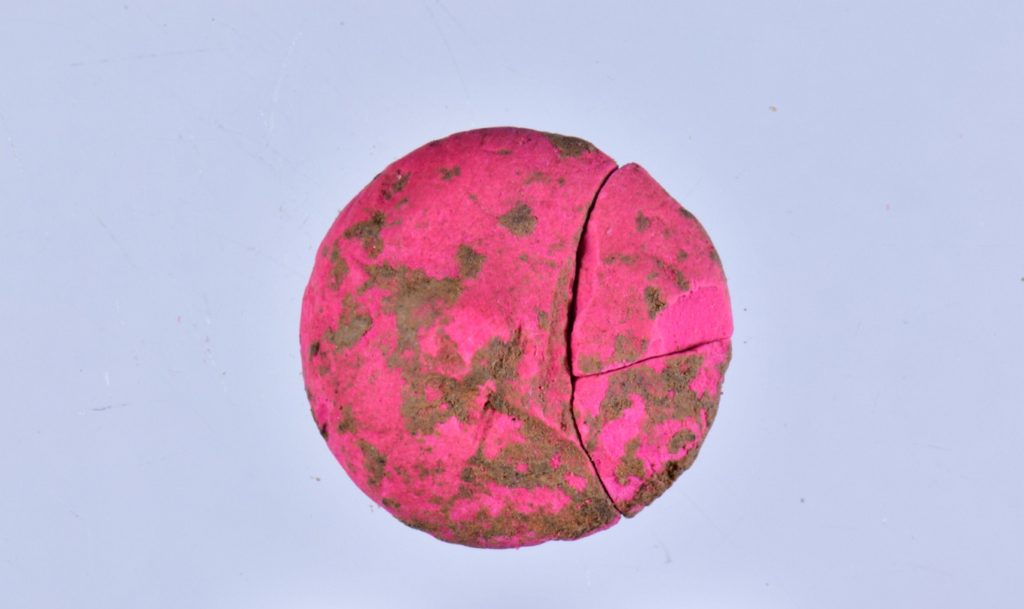
2,000-year-old makeup products found during excavations in Kütahya. Photo: AA
Photo: AA

The professor noted that they discovered blusher and eye shadows in the excavations.

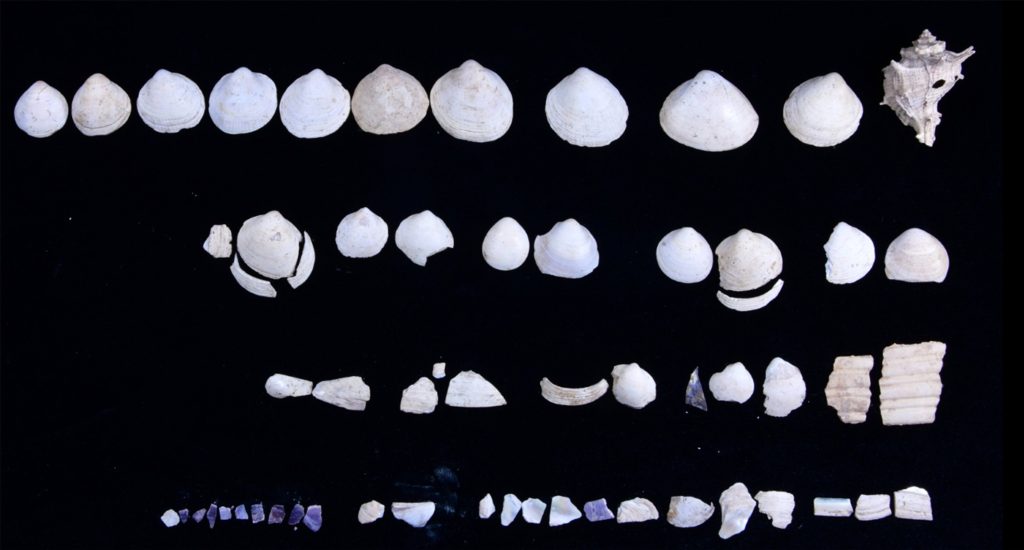
“We know that ancient Romans stored their eyeshadows and blushes in oyster shells and we found numerous oyster shells in the shops we were carrying out excavations in,” Coşkun said. The professor said that archaeologists discovered makeup products of 10 different colors and different sorts of hair accessories and jewelry.

Regular excavations have been carried out at the site since 1970.

Cover Photo: 2,000-year-old oyster shells used to store makeup products found during excavations in Kütahya. AA

Related Articles

Scientists have developed a new tool that enables them to identify prehistoric and historic individuals’ relatives up to the sixth-degree

24 December 2023

24 December 2023

A new method of genetic analysis makes it possible to determine family relationships of prehistoric and historical individuals up to...

Researchers reveal the 4,500-year-old network of funerary avenues in Arabian Peninsula

15 January 2022

15 January 2022

Archaeologists from the University of Western Australia (UWA) have determined that people living in ancient northwest Arabia built long-distance “funerary...

Fossils of sea creatures 35 million years old discovered in eastern Turkey

17 August 2021

17 August 2021

In Turkey’s eastern province of Mus, a team of researchers discovered fossils of sea creatures estimated to be 35 million...

Scandinavia’s Oldest Identified Ship Burial in Trøndelag “Rewrites History”

14 November 2023

14 November 2023

In Leka, a municipality in Norway’s Trøndelag county, archaeologists have uncovered Scandinavia’s oldest identified ship burial, dating back to around...

Archaeologists Unearth 3,000-Year-Old Urartian Murals Hidden in a Mysterious Underground Structure Beneath Garibin Tepe

6 November 2025

6 November 2025

Archaeologists uncover one of the best-preserved Urartian mural complexes deep under Van, Türkiye In the rugged highlands of eastern Türkiye,...

The easternmost Roman aqueduct in Armenia was discovered

19 November 2021

19 November 2021

Archaeologists from the University of Münster and the National Academy of Sciences of the Republic of Armenia have discovered remains...

9,200-year-old Noongar habitation discovered at Augusta archaeological dig site

28 July 2021

28 July 2021

An archaeological dig in Augusta, in West Australia‘s South West, has uncovered evidence of Noongar habitation dating back an estimated...

3,000-year-old Drill Bit Workshop Unearthed in Vietnam’s

13 May 2021

13 May 2021

According to the provincial museum, an ancient drill bit workshop dating back more than 3,000 years has been discovered at...

3,000-Year-Old Hazelnut Shells Discovered in the Sacred Hittite City of Nerik

30 July 2024

30 July 2024

In the sacred Hittite city of Nerik, located in the northern Vezirköprü district of Samsun province in the Central Black...

Ancient winery site uncovered in China’s Hebei

5 January 2022

5 January 2022

In northern China’s Hebei region, an ancient winery going back 400 years to the late Ming and early Qing Dynasties...

Archaeologists uncovered a kurgan tomb from a previously unknown culture

8 January 2023

8 January 2023

Archaeologists from the Siberian Federal University have unearthed a kurgan tomb and numerous bronze tools and artifacts from a previously...

During roadwork in Oregon, a woolly mammoth tusk was discovered

21 June 2021

21 June 2021

A 12,000-year-old woolly mammoth tusk was discovered beneath the street by crews rerouting a gas line in Corvallis, Oregon. “Whenever...

Second Rare Inscription Honoring Justinian and Theodora Unearthed in Kosovo’s Ancient City of Ulpiana

3 August 2025

3 August 2025

In a discovery that sheds new light on Kosovo’s ancient roots, the country’s Minister of Culture, Hajrulla Çeku, announced via...

A First in Türkiye: ‘Pilgrim Dimitrakis’ Inscribed Skull Found in Sinop

1 August 2024

1 August 2024

A male skull with the Greek inscription “Pilgrim Dimitrakis” was found during archaeological excavations at Balatlar Church in Sinop, on...

Orkney dig reveals ruins of huge Neolithic tomb

21 October 2023

21 October 2023 1

A 5,000-year-old tomb was unearthed in Orkney, north-east Scotland. The discovery was announced by the Guardian, describing the tomb structure...