
24 January 2026 The Future is the Product of the Past

The 2800-year-old Urartians Lake, which is an engineering masterpiece of its time, is drying

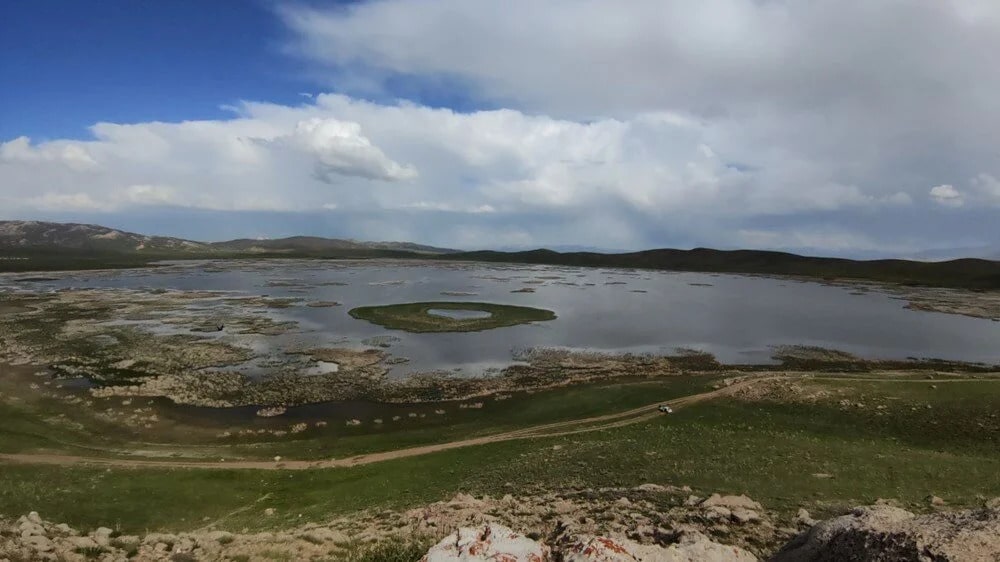
Keşiş Lake in Van, in eastern Turkey, which was built by the Urartu King Rusa 2,800 years ago, was negatively affected by drought. High temperatures caused the water level of the lake to decrease and a large part of it to dry up.

The lake, as the name of its producer, Rusa Lake, because it lives intensely, Turna Lake, the names of Monk Lake or Wide Lake are given by the local people.

Keşiş Gölü is an artificially-created lake located 23 km east of Van, in the Varak Dağı massif. The lake was made by the Urartian king Rusa, son of Erimena, to ensure a constant water supply for the capital Tušpa.

Its height from the sea is 2,550 m and its area is 4–7 km2 depending on the rainfall.  The lake, where 20 million m3 of water can be stored, has a water collection basin of 100 km2.  The lake is located on a plateau with cold spring waters.

During the reign of Urartu King Rusa II. (685-645 BC), a small river was blocked by two dams to create a reservoir lake. This lake, which was an engineering masterpiece of its time, has been operating as an irrigation system for 2800 years.


📣 Our WhatsApp channel is now LIVE! Stay up-to-date with the latest news and updates, just click here to follow us on WhatsApp and never miss a thing!!


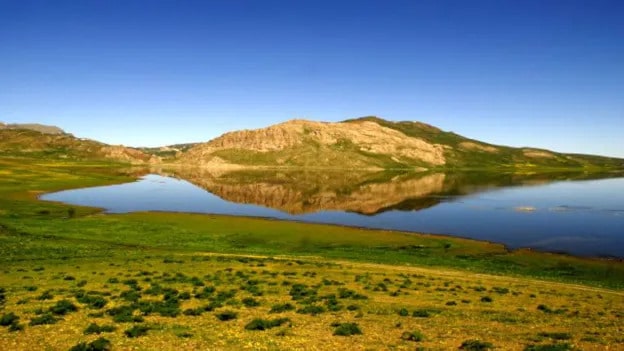
Keşiş Gölü, Van.

Four Urartian inscriptions, including a rock relief, were discovered in its vicinity. The upper part of a stele, the so-called Keşiş Göl stele, records the creation of Rusai Sue (Lake Rusa).

It has long been a destination for tourists, especially in the spring, when the multicolored foliage around the lake is in full bloom.

In 2021, Keşiş Lake was designated as a “sensitive area that needs protection”. This designation was meant to protect the lake as a natural wonder. However, water levels have now dropped to a historic low and the lake is in danger of disappearing entirely.

Van Yüzüncü Yıl University, Faculty of Literature, Department of Geography, Professor Dr. Faruk Alaeddinoğlu, who expressed that there are many lakes of various sizes in the basin, stated, “One of these lakes is Turna (Keşiş) Lake. Turna Lake is a very special lake that is used for both recreational purposes and actually serves as a lake we utilize for agricultural activities of the local people in the region. It meets the irrigation water needs as well. However, witnessing the recent decline in the lake’s water level during a field survey a few days ago was quite saddening.”
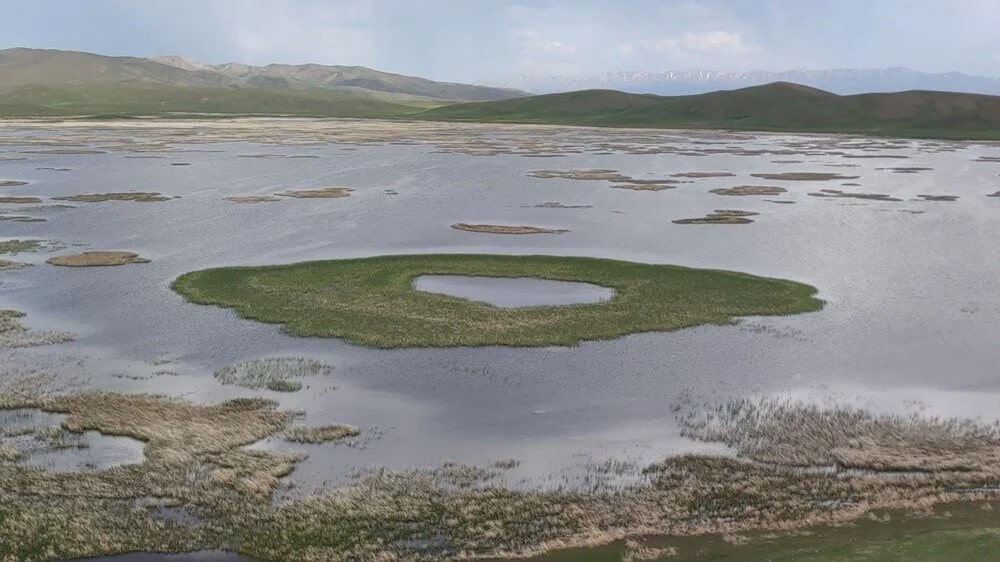
Photo: İHA

Alaeddinoğlu stated that the region largely lacks snowfall, saying, “Because there are no high mountainous areas in this region. Therefore, snowfall does not occur. Consequently, the expected precipitation did not take place.”

Alaeddinoğlu, emphasizing the need to find a solution to the drought, continued his statement as follows:

“Especially in the area where dams are built for the water needed by the people in the region, the water level has currently dropped below those dams. Therefore, unfortunately, the villagers cannot meet their needs from the lake. This decline will continue because there are no new water sources feeding that area. Water resources will already decrease from now on. Evaporation will also contribute to water loss.”

Related Articles

Archaeologists discover a new megalithic monument in heart of Andalusia in southern Spain – 5,000-year-old secret

5 May 2023

5 May 2023

Archaeologists in Spain uncovered a previously overlooked tomb while investigating the formation of La Peña de los Enamorados, also known...

Standing Swords, Beads, and Magnificent Horse Gear: Viking Treasures Unearthed Along Sweden’s E18

5 November 2025

5 November 2025

Two upright swords thrust into Viking graves, strings of glittering beads, and richly decorated horse equipment have emerged from the...

3D virtual reconstruction of the Celtic city gate

2 May 2022

2 May 2022

A new 3D virtual reconstruction of the Celtic gate has been made in Staffelberg, in the German state of Bavaria....

5,000-Year-Old Mysterious Ritual Pits Unearthed in Germany Reveal Burned Homes, Dog Sacrifices, and Human Skulls

1 August 2025

1 August 2025

Archaeologists uncover over 5,000-year-old ritual pits filled with burned structures, dog remains, and human skulls in Saxony-Anhalt, suggesting complex ceremonies...

‘Mystery and Unfathomable’ King Arthur’s Hall is 4,000 Years Older Than Previously Thought

10 November 2024

10 November 2024

A mysterious monument in Cornwall has been discovered to be 5,000 years old—4,000 years older than previously thought. The rectangular...

3,000-Year-Old Lost Anatolian language ‘Kalašma’ deciphered

5 July 2024

5 July 2024

In 2023 excavation site at the foot of Ambarlikaya in Boğazköy-Hattusha in Turkey, a cuneiform tablet with a previously unknown...

How Knossos Palace Looked in Its Glorious Days

9 May 2021

9 May 2021

Knossos Palace is a famous architectural structure of ancient Knossos, which was the capital of the Minoan Civilization. Archaeologist Arthur...

Extraordinary Discovery of a Unique Painted Tomb in Tarquinia’s Etruscan Necropolis

1 February 2025

1 February 2025

Exceptional discovery in the necropolis of Tarquinia, located near the western coast in central Italy, north of Rome (a UNESCO...

Sacred Seduction: Kamasutra Feminism and the Legacy of Ancient Erotic Temples

8 April 2025

8 April 2025

For many, the Kamasutra is merely a name linked to condom brands and erotic chocolates, often dismissed as just a...

Turkey’s second ancient lighthouse found in the Bathonea

28 July 2023

28 July 2023

The excavations in the ancient Greek city of Bathonea, located in the Küçükçekmece Lake basin in the Avcılar district of...

Neo-Assyrian Writing Boards: The Role of Beeswax, Orpiment, and Carbon Black in 7th Century BC Writing Techniques

13 April 2025

13 April 2025

Recent scientific investigations into the writing boards excavated from the ancient Assyrian city of Nimrud have shed new light on...

Who will solve the puzzle of Bronze Age tin? Origin of tin ingots from Uluburun shipwreck disputed – the metal may have come from Cornwall

3 October 2023

3 October 2023

The exact origin of tin in the Bronze Age is the Holy Grail of archaeometallurgists: For 150 years, experts have...

Archaeologists may have found the lost 2,000-year-old ancient city of Bassania in Albania

19 June 2022

19 June 2022

Polish archaeologists may have discovered the 2,000-year-old lost city of Bassania in Albania. The remains of two large ancient stone...

Europe’s First Toolmakers Were Innovators — Not Imitators, New Study Reveals

17 October 2025

17 October 2025

Europe’s first toolmakers developed their own stone technology 42,000 years ago, according to a new study that challenges the idea...

Scientists Uncover 22,000-Year-Old Evidence of Prehistoric Transport

9 March 2025

9 March 2025

In a remarkable glimpse into the ingenuity of our early ancestors, recent research reveals that 22,000 years ago, humans may...