
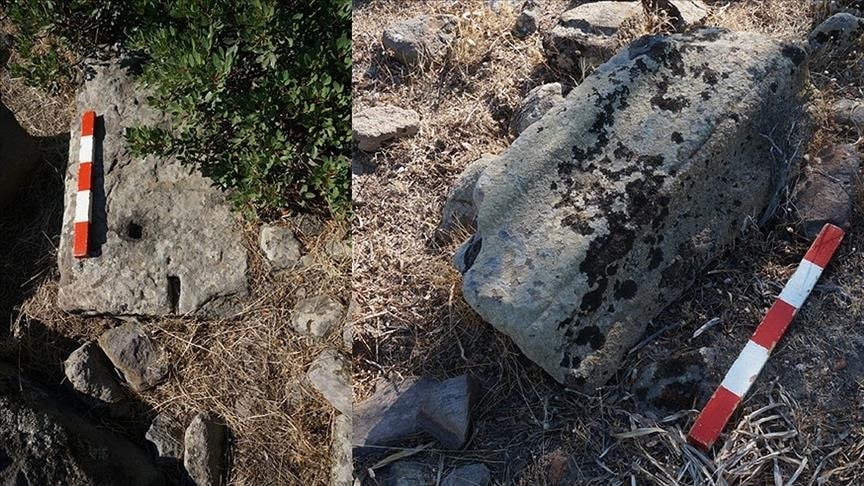
A 2,500-year-old temple dedicated to Aphrodite, the ancient Greek goddess of love and beauty, has been identified on Türkiye’s Aegean coast, offering new evidence for the religious and social life of ancient communities around İzmir’s Çeşme and Urla districts.
The discovery comes from a long-running archaeological surface survey conducted across the Urla-Çeşme peninsula, one of western Anatolia’s most historically layered coastal regions. The research, carried out under the direction of Assoc. Prof. Elif Koparal of Mimar Sinan Fine Arts University, examined a broad area covering Urla, Seferihisar and Çeşme.
According to the survey results, archaeologists identified 16 Late Neolithic settlements and a total of 35 archaeological sites across the region. Yet among these finds, one discovery stands out: the remains of a sanctuary linked to Aphrodite, dating to the 6th century BC.
A sacred landscape on the Aegean coast
The temple was identified during fieldwork in a region where ancient routes, coastal settlements and sacred spaces once formed a dense network of movement and exchange. Speaking to Anadolu Agency, Assoc. Prof. Koparal said the research revealed “an important social and economic network” in the area.
“During our surface survey, we identified the Temple of Aphrodite from the 6th century BC, which was a common cult at that time. This is a fascinating and impressive discovery,” Koparal said.
She also noted that the first traces of the temple were detected in 2016, and that information about the site had previously been published in an academic journal.
The discovery is important not only because of the temple itself, but also because of what it suggests about the wider Aegean world. In the Archaic period, western Anatolia was home to thriving Ionian cities, maritime trade routes and sanctuaries that connected local communities with broader Greek cultural traditions. A temple dedicated to Aphrodite in this coastal zone fits naturally into that world.
Aphrodite beyond love and beauty
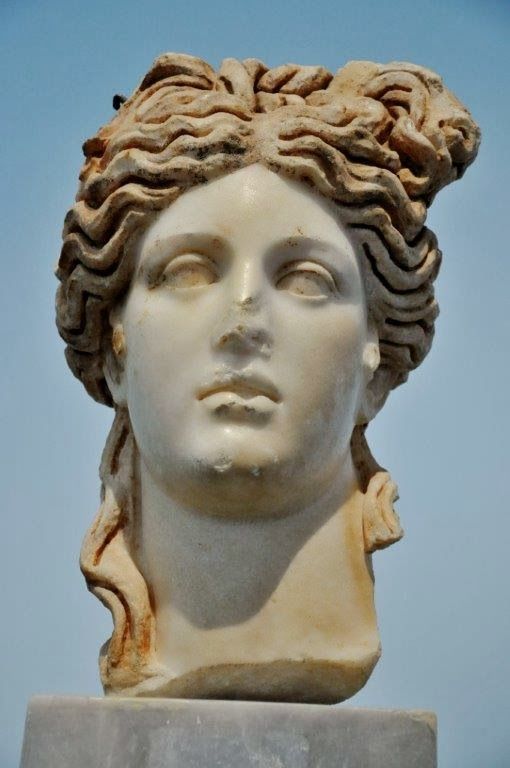
Aphrodite is best known as the goddess of love, beauty and desire. In Roman mythology, she was identified with Venus. But in the ancient Greek world, her role was broader than modern popular imagination often suggests.
She was associated with fertility, attraction, marriage, prosperity and the fragile bonds that held communities together. In coastal areas, Aphrodite could also carry maritime meanings. Sailors, merchants and travelers often looked to divine protection before crossing dangerous waters, and sanctuaries near the sea were never only religious spaces. They were also meeting points, markers of identity and places where trade, ritual and local power intersected.
Her symbols included the rose, myrtle, dove, swan and, in later artistic traditions, the shell. These images reflected both her beauty and her connection to birth, renewal and the sea. For communities living along the Aegean coast, Aphrodite was not a distant mythological figure. She was part of daily life, civic identity and sacred geography.
A discovery that deepens İzmir’s ancient past
The Urla, Seferihisar and Çeşme region has long been recognized as one of the richest archaeological landscapes in western Türkiye. Its coastline faces the Aegean islands, while its inland routes connect agricultural zones, harbors and ancient settlements.
The identification of Late Neolithic sites in the same survey area shows that human occupation here stretches back thousands of years before the temple of Aphrodite was built. This makes the discovery especially valuable. It places the Aphrodite sanctuary inside a much deeper history of settlement, ritual and movement across the peninsula.
The temple also adds another layer to the story of ancient İzmir. While the region is often associated with major Ionian cities and classical urban culture, the new research shows that rural and coastal sacred spaces also played a crucial role in shaping local society.
A sanctuary dedicated to Aphrodite would have drawn worshippers, travelers and perhaps merchants moving through the region. In that sense, the temple was not simply a place of worship. It was part of a living network, one that connected belief, economy and landscape.
A rare glimpse into an ancient cult
For archaeologists, the discovery offers a rare opportunity to better understand how Aphrodite was worshipped in western Anatolia during the Archaic period. Temples and sanctuaries dedicated to the goddess were not isolated monuments. They reflected the hopes, fears and identities of the people who built and visited them.
In the case of the Urla-Çeşme peninsula, the temple suggests that Aphrodite’s cult had a meaningful presence in a region shaped by sea routes, settlement networks and cultural exchange.
More than 2,500 years later, the remains of that sacred place still speak to a familiar human impulse: the desire to seek beauty, protection and connection in a changing world.
Cover Image Credit: AA
