
22 June 2026 The Future is the Product of the Past

A Mysterious Human Face Carved on Stone Dated to Bronze Age Discovered in Kazakhstan

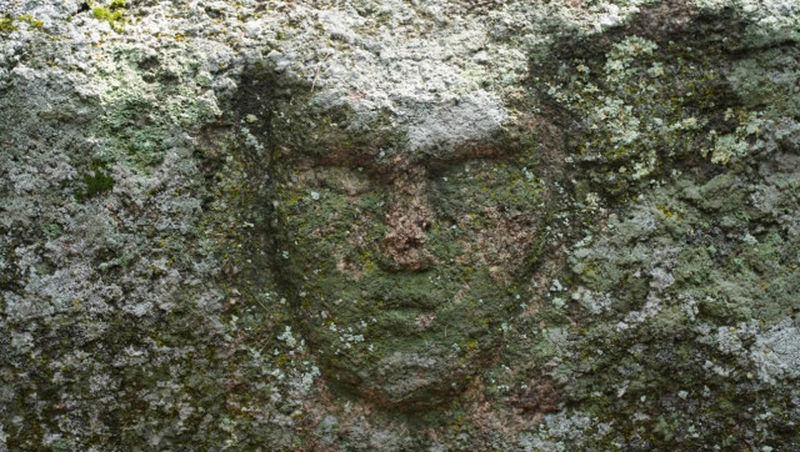
Kazakhstan’s rich archaeological landscape continues to reveal fascinating details about ancient civilizations. Recent research in the Akmola, and Pavlodar revealed a stone carving depicting a human face and burial sites dating back to the Bronze Age.

Kazakh archaeology not only enriches the scientific world with its remarkable discoveries but also reveals the main stages of the ancient and medieval development of Kazakhstan society.

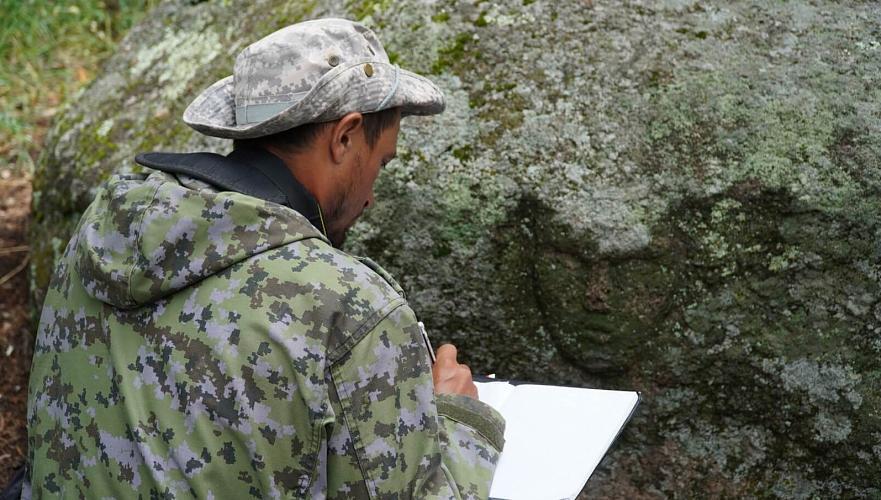
A mysterious archaeological find has been uncovered in the Akmola Region of Kazakhstan. Employees of the Regional Emergency Situations Department came across a historical find in the form of a human face carved into stone and invited archaeologists to examine the artifact.

The monument, which originated from an ancient sculptor, was brought to the attention of scientists from Astana and their colleagues abroad. According to the experts, it is currently difficult to determine which era the item belongs to.

Scientists are divided on the origins of the artifact. Some assert that the stone has been in its current location since the Bronze Age, while others attribute its presence to the subsequent Turkic period.


📣 Our WhatsApp channel is now LIVE! Stay up-to-date with the latest news and updates, just click here to follow us on WhatsApp and never miss a thing!!


Photo: Akmola Region, gov.kz.

Sergey Yarygin, a leading scientist at the Alkey Margulan Institute, noted that similar carvings have been found in Bronze Age settlements in Central Asia and Eastern Europe, Astana Times reported.

He also pointed out the presence of analogous images in the early Iron Age in southern Siberia and in medieval Turkic cultures that spread across the Eurasian steppes. Despite these parallels, Yarygin emphasized that the exact period of the artifact remains uncertain, as it could belong to various historical epochs, including more recent times.

The distinctive discovery was made by Nursultan Ashkenov and Akhmet Zaripov, employees of the Sandyktau district fire service. The Emergency Situations Department has taken the stone under its protection.

“It is a source of great satisfaction to make such an important discovery while engaged in our primary responsibilities. Furthermore, I believe that this achievement will have a positive impact not only on our district but also on the entire country,” stated Aset Zhangozhin, head of the Emergency Situations Department of Sandyktau district.

This finding is expected to draw more scholarly attention and may prompt further archaeological investigations in the area.

Important discoveries from the Bronze Age in the Pavlodar Region

In the Koktas complex in the Pavlodar Region, a large number of rare and valuable artifacts were unearthed during the archaeological excavation carried out by researchers from the Pavlodar Pedagogical University. The Koktas site also contains over 20 burial mounds, some of which date back to the Saka period.

Among them is the most notable, a bronze spearhead from the mid-13th to the 8th century BCE that is said to have come from the Sargarin-Alexeyev culture.  Asylbek Yelaman, a second-year student, found this spearhead, which is unique for the area. Aside from the spearhead, pieces of pottery kitchenware were also discovered.

Cover Photo: Akmola Region, gov.kz.

Related Articles

Salona’s Gate of Death: New Discoveries at Croatia’s Ancient Roman Arena

25 February 2026

25 February 2026

The ancient city of Salona, once the thriving capital of the Roman province of Dalmatia, continues to reveal new secrets...

Ancient Hawaiian Petroglyphs Reappear on Oahu’s Shoreline After Years Beneath the Sand

25 July 2025

25 July 2025

A remarkable piece of Hawaii’s cultural legacy has resurfaced this month, as ancient Hawaiian petroglyphs were once again exposed along...

4000-year-old Temple With A 2.30 Meters Central Monolith Discovered in Cyprus

9 July 2024

9 July 2024

An Italian archaeological mission, the Erimi Archaeological Project of the University of Siena, discovered a 4,000-year-old temple in Cyprus. This...

25 Qing Dynasty tombs found in China’s Hunan

25 May 2022

25 May 2022

25 graves dating from the Qing Dynasty (A.D. 1644–1912) have been uncovered in the Houbeishan tomb complex in southern China,...

Archaeologists in northern Spanish have discovered what they believe to be the oldest Basque language text

15 November 2022

15 November 2022

Archaeologists have discovered what they believe to be the oldest Basque language text, on  Irulegi archaeological site, near the Aranguren...

Archaeologists in Derbyshire have unearthed a 9th century Anglo Saxon house

15 July 2021

15 July 2021

A nearly complete Anglo-Saxon house, considered to date from the early ninth century and might have been the abode of...

Archaeologists have discovered the ruins of what may be one of the four lost Ancient Egyptian “Sun Temples”

31 July 2022

31 July 2022

A Polish and Italian archaeological mission, while conducting an excavation in the Abusir necropolis near Saqqara in Egypt, unearthed the...

Jomon Ruins Adding to UNESCO World Heritage List

26 May 2021

26 May 2021

An international advisory panel has recommended that a group of ruins from the ancient Jomon period in northern Japan is...

An olive workshop dating back to the 6th century was found in the ancient city of Dara

16 February 2022

16 February 2022

An olive workshop dating back to the 6th century was unearthed in the ancient city of Dara, one of the...

From Researchers, a New İnterpretation of Norse Religion

26 February 2021

26 February 2021

Recent research on pre-Christian Norse religions shows that the variation in Norse religions is far greater than previously imagined. Ten...

9,000-Year-Old Canhasan May Hold a Missing Clue to the Origins of Çatalhöyük’s Symbolic World

24 May 2026

24 May 2026

For more than half a century, Canhasan sat on the edge of one of archaeology’s biggest Neolithic stories, known but...

The Glauberg Celtic Prince: A 5th Century BCE Most Extraordinary Iron Age Royal Discovery

16 February 2026

16 February 2026

The Glauberg Celtic Prince is one of the most extraordinary Iron Age discoveries in Central Europe. Unearthed in 1996 near...

Before Rome, Before Greece: Anatolia’s Oldest Glass Revealed in Hittite Büklükale

28 July 2025

28 July 2025

Nestled along the western bank of the Kızılırmak River in central Turkey, the archaeological site of Büklükale continues to astonish...

Rare 1,900-Year-Old Aramaic Inscription Discovered in Dead Sea Cave Near Ein Gedi

11 August 2025

11 August 2025

Archaeologists have uncovered a rare 1,900-year-old Aramaic inscription in a Dead Sea cave near Ein Gedi, possibly linked to the...

A secret chamber has been found in the famous Gorham Cave Complex

29 September 2021

29 September 2021

A cave chamber sealed off by sand for some 40,000 years has been discovered in Vanguard Cave inside the Gorham’s...