
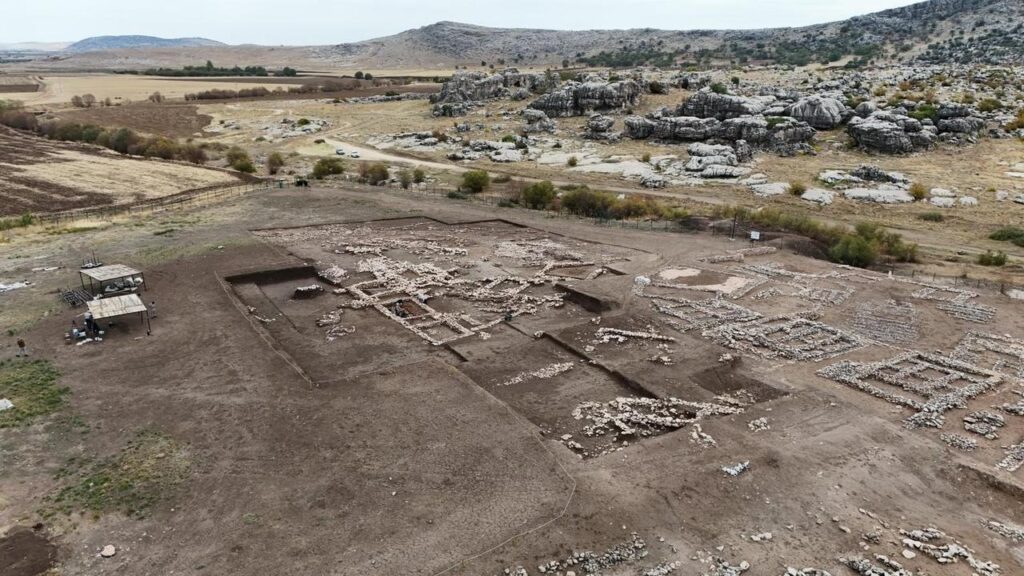
Archaeologists excavating the prehistoric settlement of Çayönü Tepesi, near Ergani in southeastern Türkiye, have uncovered compelling evidence of a 5,000-year-old earthquake that caused the collapse of a mudbrick building. The discovery provides rare insight into the region’s ancient seismic history and the resilience of one of Anatolia’s earliest farming communities.
A 5,000-Year-Old Collapse Frozen in Time
The find, announced by Associate Professor Savaş Sarıaltun, head of the Çayönü Excavation Project at Çanakkale University, was made within layers dating to the Early Bronze Age — roughly the third millennium BCE. Excavations at the site, which began in 1964 and continue today, have revealed continuous habitation from around 10,200 BCE to 7,000 BCE, marking Çayönü as a cornerstone in humanity’s transition from hunting to settled agriculture.
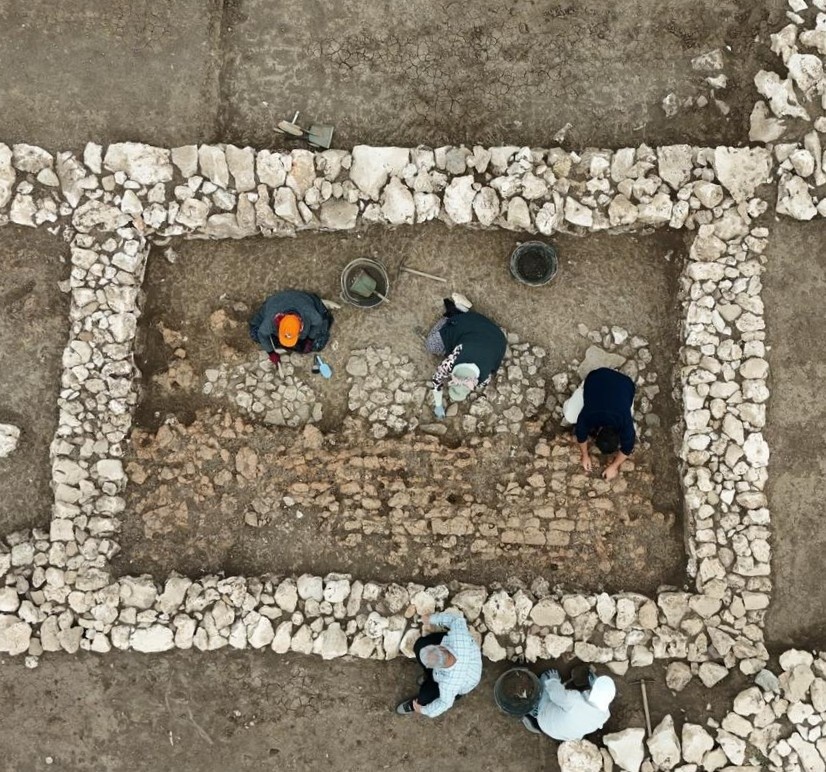
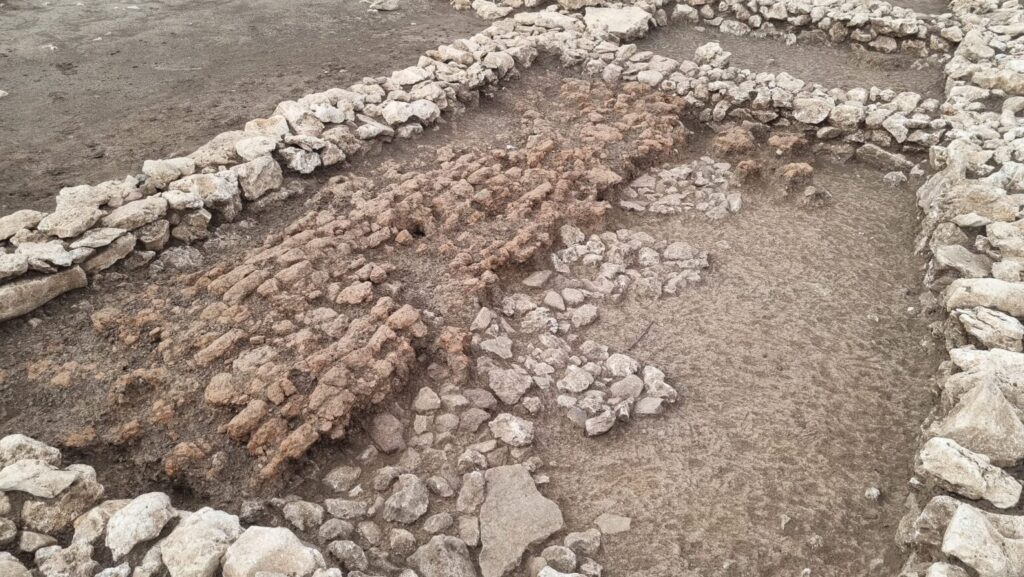
“This season, our team expanded into post-Neolithic layers,” Sarıaltun explained. “In one of these, we found a rectangular structure whose southern mudbrick wall, built on a stone foundation, had collapsed northward in a single block. The direction and integrity of the fall show clear signs of an ancient earthquake.”
Measuring roughly 5.2 meters long and 1.25 meters wide, the fallen wall section was found lying intact on the building floor — a sign, Sarıaltun noted, that the structure had been abandoned before the tremor struck. “We discovered no domestic items, tools, or burned material inside the room. Everything indicates the inhabitants had already left the building, and the quake simply brought down what time had weakened.”
Red Earth, Not Fire
The discovery also revealed red-hued mudbricks, their distinctive color caused not by burning but by hematite-rich soil used in the mixture. According to Sarıaltun, this natural pigment provides valuable information about the local environment and building technology of the time. “The red tone is due to iron oxide in the region’s clay,” he said. “There are no traces of fire, so we can confirm the collapse was purely structural and not the result of destruction or conflict.”
This detail sheds light on prehistoric construction techniques in the Upper Tigris Basin, where communities used locally sourced materials to build durable homes and communal buildings that could endure centuries of environmental stress.
Reading the Ancient Fault Lines
Though no clear fault line passes directly beneath Çayönü Hill, geological surveys suggest the site could have been affected by regional seismic activity — possibly from zones north of Diyarbakır, such as the modern Elazığ–Sivrice fault area. The collapse pattern implies that while the quake was strong enough to topple walls, it was not a catastrophic event. “The wall fell in one piece rather than shattering, meaning the tremor was moderate but sudden,” Sarıaltun explained.
Comparable findings from other archaeological sites in the Upper Tigris Basin, such as Salat Tepe near Bismil, show similar earthquake sequences from later Bronze Age periods, reinforcing the notion that southeastern Anatolia has long been seismically active.
Connecting Neolithic and Bronze Age Worlds
The earthquake evidence at Çayönü adds a new dimension to the site’s long history. Originally a Neolithic farming settlement dating back over 10,000 years, Çayönü played a pivotal role in early human innovation — from the domestication of plants and animals to the development of organized architecture. The Early Bronze Age remains now unearthed demonstrate that life continued at Çayönü long after its Neolithic heyday, connecting the deep prehistoric world to the dawn of urban civilization.
For archaeologists, each excavation season at Çayönü reveals new details about how ancient communities adapted to both environmental change and natural disasters. “This site tells the story of humanity’s first experiments with permanent living,” Sarıaltun noted. “And now, it also tells how earthquakes shaped those early lives, just as they continue to shape Türkiye today.”
A Living Laboratory of the Past
Beyond its scientific importance, the discovery underscores Çayönü Tepesi’s role as a living laboratory for understanding ancient resilience. From mudbrick craftsmanship to settlement planning, the site continues to inform studies on how early Anatolian societies engineered their homes and survived in a geologically dynamic landscape.
As excavations proceed, researchers hope to pinpoint the exact source of the 5,000-year-old quake and uncover further evidence of how prehistoric inhabitants responded to seismic risk. What began as a search for Neolithic architecture has now turned into a window onto the deep geological memory of Anatolia — a reminder that beneath every ancient wall lies a record not only of human ingenuity but of the earth’s own restless power.
Cover Image Credit: İHA
