
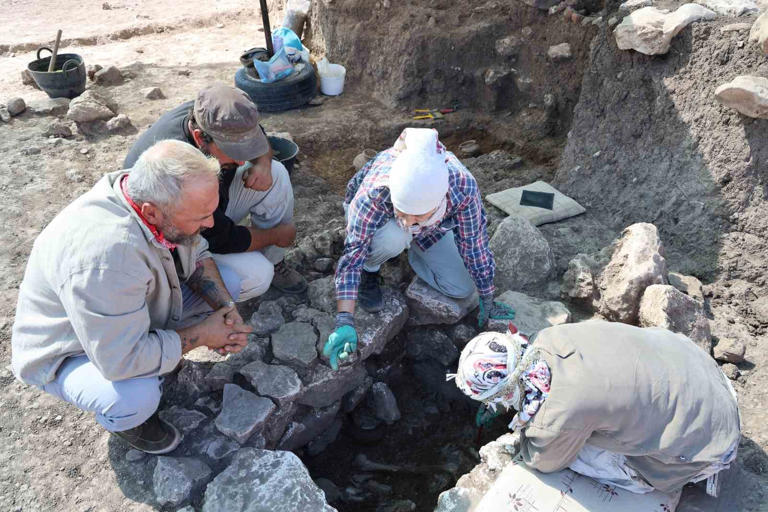
Archaeologists working in Çayönü Tepesi (Çayönü Hill), one of the world’s most significant early human settlements, have uncovered six ancient graves dating back to both the Early Bronze Age (around 5,000 years ago) and the Neolithic period (11,000 years ago). The discovery, made in the Ergani district of Diyarbakır, is providing researchers with invaluable insights into burial traditions, daily life, and cultural connections of the region’s first settled communities.
The excavations, directed by Associate Professor Savaş Sarıaltun from Çanakkale University’s Faculty of Applied Sciences, began in May and have continued through a productive five-month season. “This year we were fortunate,” Sarıaltun explained. “We uncovered not only architectural remains but also six graves—five belonging to the Early Bronze Age and one dating back 11,000 years to the Neolithic period. These finds help us understand how the Çayönü community transitioned from the dawn of agriculture to complex societies.”
Çayönü: A Cradle of Civilization
Çayönü is globally recognized as one of the birthplaces of agriculture and permanent settlement. Located in southeastern Türkiye near the Tigris River, the site has been under excavation since 1964, and it consistently yields discoveries that reshape our understanding of early human history.
Archaeologists have long known that Çayönü’s inhabitants were among the first to domesticate plants and animals, shifting from a nomadic hunter-gatherer lifestyle to settled farming communities around 10,000 BCE. The site preserves evidence of early architecture, including stone-paved houses and unique “grill-plan” buildings, as well as ritual practices and sophisticated craft production.
The newly uncovered burials add another layer to this story. They reveal not only how people lived but also how they treated their dead, providing clues about social organization, belief systems, and cultural continuity across millennia.
Details of the Discovery
Among the six newly found graves, researchers identified different burial types:
Two simple pit burials: Bodies were placed directly in shallow earth pits without grave goods.
One jar burial: One jar burial was identified, in which the deceased had been placed inside a large ceramic vessel. However, the grave was heavily damaged due to its proximity to the surface.
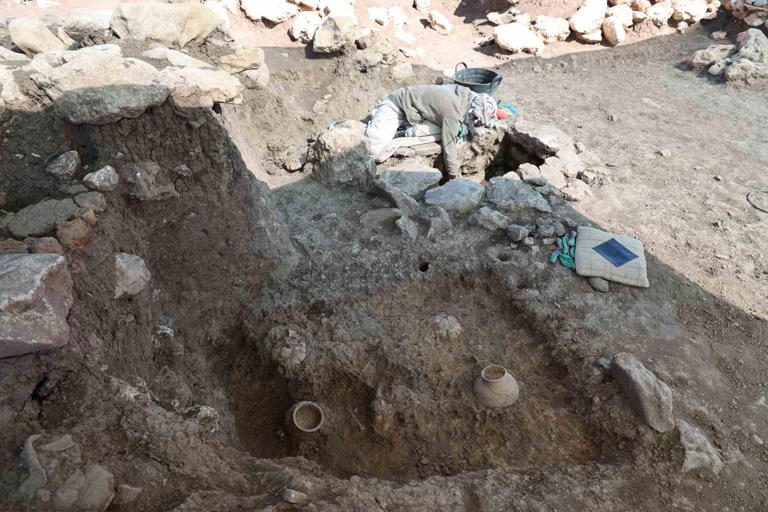
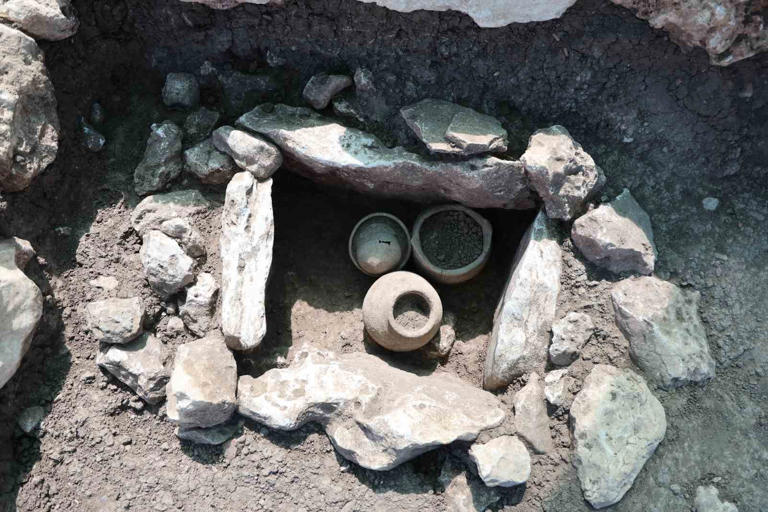
Three stone cist (sanduka) burials: Rectangular graves constructed with stone slabs and sealed with heavy capstones. These contained richer grave goods, including ceramic vessels and ritual offerings.
Sarıaltun emphasized the importance of these findings: “The presence of grave gifts, such as pots and bowls, tells us about funerary rituals and symbolic practices. Alongside the burials, we also found offering pits—empty graves filled only with gifts, without human remains. Such practices reveal complex beliefs about death and the afterlife.”
Insights from Human Remains
The skeletal remains are now being analyzed at Hacettepe University’s Department of Anthropology, where researchers study diet, health, and genetic heritage. Anthropologist Ömür Dilek Erdal noted that one of the Neolithic burials, dating back 11,000 years, is especially significant: “The individual was buried on his right side, accompanied by six vessels, and covered with clay before being sealed with heavy stones. Such carefully prepared burials give us a glimpse into ritualized practices at the dawn of civilization.”
Preliminary analysis suggests the population of Çayönü had strong ties with surrounding regions, including Mesopotamia, Iran, Iraq, and the Caucasus. DNA studies indicate a heterogeneous community that played a central role in spreading early agricultural practices into Anatolia.
“These people were farmers and laborers engaged in heavy physical activities,” Erdal explained. “The skeletal evidence shows signs of strenuous work, while genetic analyses reveal a diverse, interconnected community that shaped the cultural fabric of early Anatolia.”
Why the Findings Matter
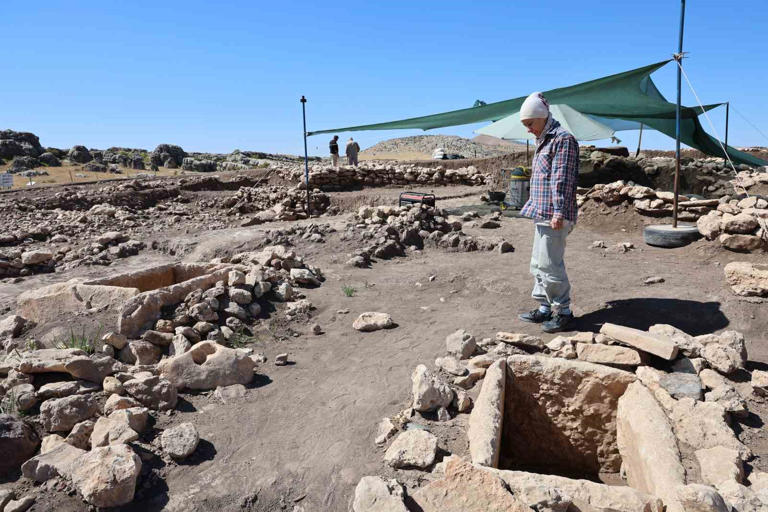
Over 600 skeletons have been unearthed at Çayönü since excavations began, most belonging to the Neolithic period. Each discovery enriches our understanding of how early societies lived, interacted, and evolved.
The latest graves bridge the gap between the Neolithic and Early Bronze Age, showing that Çayönü was continuously inhabited for thousands of years. This continuity demonstrates not just survival, but cultural adaptation—how early farming societies evolved into more complex communities capable of rituals, long-distance trade, and technological innovation.
A Window into Humanity’s Past
Çayönü is more than an archaeological site; it is a living archive of human history. Here, researchers trace the monumental shift from foraging to farming, from temporary shelters to permanent villages, and from simple burials to elaborate rituals.
As excavations continue, scholars hope to answer even deeper questions: How did these societies govern themselves? What role did religion play? How did they adapt to environmental challenges?
For now, the six newly uncovered graves serve as poignant reminders of humanity’s shared journey. Each skeleton, vessel, and offering buried beneath Çayönü’s soil brings us closer to understanding not only how our ancestors lived, but also how they envisioned life, death, and the world beyond.
Cover Image Credit: İHA
