
16 January 2026 The Future is the Product of the Past

9,500-Year-Old Public Building with Red Floor Unearthed at Çayönü Tepesi, Türkiye

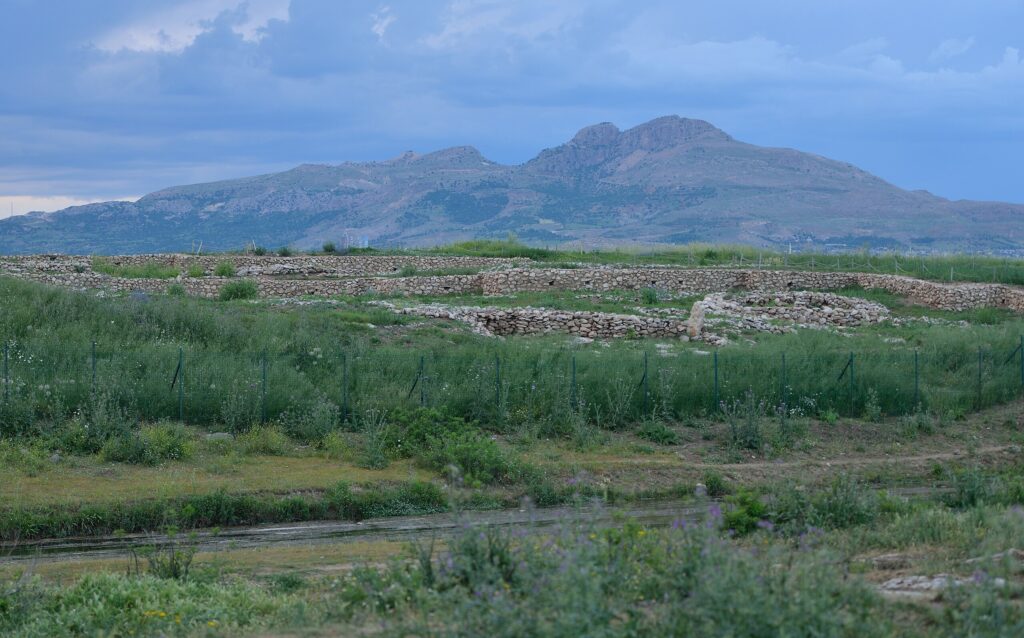
Archaeologists have unearthed a 9,500-year-old public building with a striking red-painted floor at Çayönü Tepesi, one of the world’s most important Neolithic settlements located in Ergani, Diyarbakır, southeastern Turkey. The discovery sheds light on the social and cultural life of some of the earliest farming communities during humanity’s transition from nomadic to settled life.

A Landmark Discovery in Neolithic Archaeology

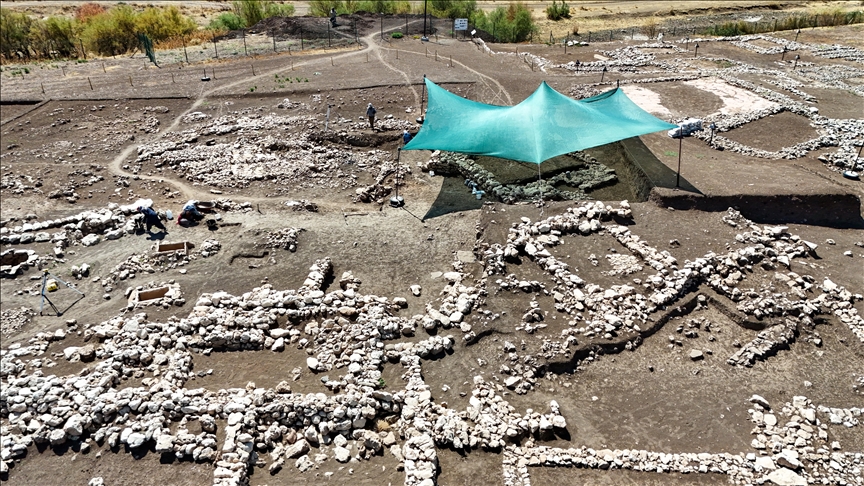
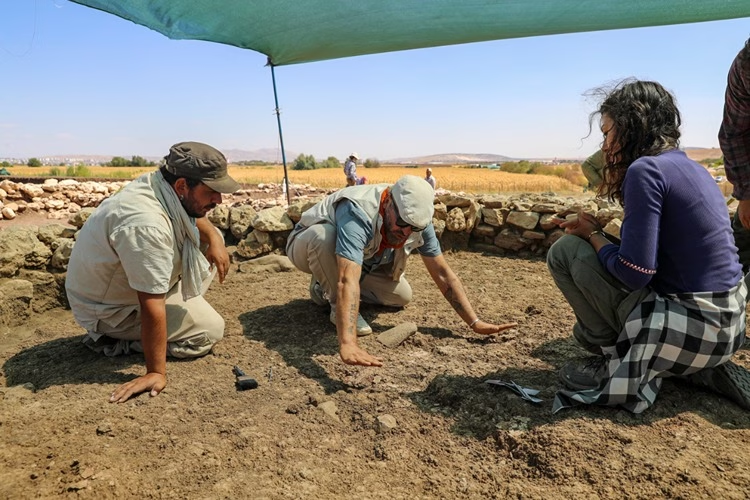
Excavations at Çayönü, first launched in 1964, have revealed many “firsts” in human history, including the beginnings of agriculture, animal domestication, and early metallurgy. This season, under the direction of Assoc. Prof. Savaş Sarıaltun from Çanakkale Onsekiz Mart University, archaeologists focused their work on a 900-square-meter area on the eastern side of the mound. There, they uncovered the so-called “Red-Floored Public Building,” dating to around 7600–7500 BCE.

Unlike domestic houses, the building appears to have served as a communal gathering place. Sarıaltun explained that it may have hosted meetings, rituals, or collective events: “This structure is different from private dwellings. It represents a space shared by the entire community, which makes it one of the most valuable discoveries at Çayönü.”
Credit: AA

A Structure in Use for Generations

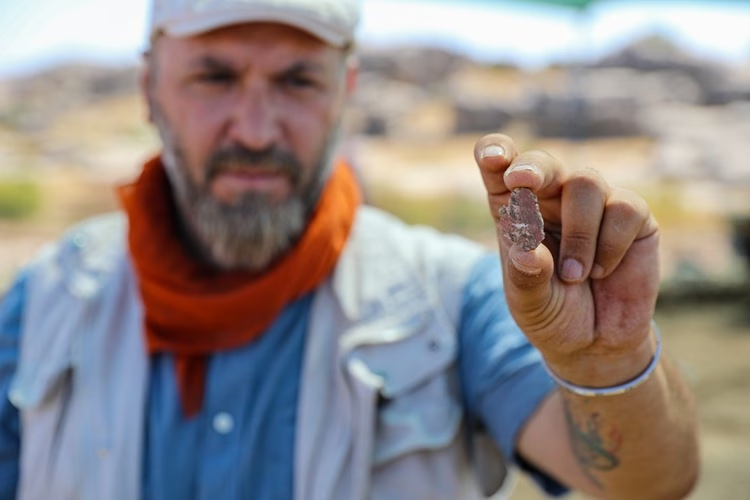
Evidence suggests that the building remained in use for 150–200 years. Archaeologists found that its floor had been repainted at least four times, highlighting the building’s continued importance to the settlement. The pigments used to create the vivid red tones were likely obtained from natural ochre or iron-rich clay found in the nearby mountains.

This advanced use of pigment not only demonstrates early aesthetic preferences but also reflects the symbolic and ritualistic value attached to communal spaces in Neolithic society. The building’s proximity to the famous Terrazzo Building—another monumental structure with a mosaic floor—further underscores its significance in the settlement’s social and ceremonial life.


📣 Our WhatsApp channel is now LIVE! Stay up-to-date with the latest news and updates, just click here to follow us on WhatsApp and never miss a thing!!


Archaeologists uncovered a 9,500-year-old public building with a vivid red-painted floor at Çayönü Tepesi. Credit: AA

Çayönü Tepesi: A Cradle of Civilization

Çayönü Tepesi, dating back more than 12,000 years, stands as one of the most critical sites of the Neolithic Revolution—the global shift from hunting and gathering to farming and permanent settlement. Located in Upper Mesopotamia, the site rivals other groundbreaking archaeological sites such as Göbeklitepe and Nevali Çori.

Excavations have revealed not only early houses and communal structures but also evidence of animal domestication, the first cultivation of cereals, and even early copper working. These discoveries make Çayönü a cornerstone in understanding how human societies evolved toward urban life.

Recognized as a candidate for UNESCO World Heritage status, Çayönü provides invaluable insights into the origins of agriculture, technology, and social organization. The latest discovery of the Red-Floored Building adds yet another dimension, offering a rare glimpse into how early farming communities built and maintained shared public spaces.
Credit: AA

Why the Red-Floored Building Matters

The uniqueness of this structure lies not only in its age but also in its painted floor—the first of its kind discovered at Çayönü. Sarıaltun emphasized that the use of red pigment across multiple layers shows deliberate effort to preserve the building’s special character. This indicates that communal identity, symbolic practices, and shared rituals were already deeply rooted in early Neolithic societies.

By studying this building, archaeologists aim to reconstruct the daily lives, spiritual practices, and social organization of people who lived nearly 10,000 years ago. In this way, Çayönü continues to reshape our understanding of humanity’s earliest experiments with permanent settlements and shared cultural life.

Cover Image Credit: Public Domain

Related Articles

A Pagan cemetery belongs to the Late Roman Empire period in Istanbul

12 June 2022

12 June 2022

During the restoration of the ancient Sheikh Suleiman Mosque, which was restored as part of the Med-Art Education Project by...

4000-year-old sword found in Finland

12 October 2021

12 October 2021

A Bronze Age sword dating back as far as 1700 B.C.was discovered broken in items in Finland this previous summer...

Archaeologists uncovered a second mosaic in Rutland Roman villa in England

29 November 2022

29 November 2022

Archaeologists report they have uncovered a second mosaic at the site of the 2020 mosaic discovery at the Roman villa...

Bronze Age family systems deciphered: Paleogeneticists analyze 3,800-year-old extended family

31 August 2023

31 August 2023

A Bronze Age family living 3,800 years ago in the Southern Urals may have taken a flexible approach to marriage,...

Ancient golden neck ring found in Denmark

24 April 2022

24 April 2022

A one-of-a-kind golden neck ring from the Germanic Iron Age (400-550 A.D.) has been discovered in a field not far...

The first settlement of the Cimmerians in Anatolia may be Büklükale

7 June 2022

7 June 2022

Archaeologists estimated that the first settlement in Anatolia of the Cimmerians, who left Southern Ukraine before Christ (about 8th century...

A Sunken Port Beneath the Red Sea May Have Reshaped the Map of Human Migration Out of Africa 20,000 Years Ago

26 July 2025

26 July 2025

New research suggests an ancient trade hub lies beneath Egypt’s Red Sea coast—offering clues to how early civilizations connected Africa...

Archaeologists Find Stunning Evidence of a Megalithic Network Hidden in Indonesia

30 November 2025

30 November 2025

A new wave of archaeological research at Mount Tangkil is reshaping academic understanding of West Java’s ancient landscapes. Recent investigations...

Archaeologists discovered a dragon made of mussel shells in in Inner Mongolia

26 August 2023

26 August 2023

Archaeologists discovered a dragon made of mussel shells earlier this week in Chifeng, North China’s Inner Mongolia Autonomous Region, which...

Recent excavations reveal the complete water conservancy system of the nearly 5000-year-old Liangzhu Ruins

26 November 2024

26 November 2024

In recent excavations around the Liangzhu Ruins in east China’s Zhejiang Province, researchers have discovered about 20 ancient dams. Seven...

Roman mosaic found under the pavement in the narrow streets of Hvar

13 February 2022

13 February 2022

In the Old Town on the Adriatic island of Hvar, Croatia, a Roman mosaic was unearthed beneath a narrow street....

Copious Copper Supplies Made Cyprus a Trading Center in the Bronze Age

23 March 2023

23 March 2023

Cyprus was a surprisingly busy trading hub during the early period of international trade in the Mediterranean region. Its awe-inspiring...

Remains of 2 houses belonging to the founding period of the city were unearthed in the ancient city of Hierapolis

5 November 2021

5 November 2021

During this year’s excavations in the ancient city of Hierapolis-Pamukkale in Turkey’s Aegean province Denizli, the remains of two houses...

3,000-Year-Old Lost Anatolian language ‘Kalašma’ deciphered

5 July 2024

5 July 2024

In 2023 excavation site at the foot of Ambarlikaya in Boğazköy-Hattusha in Turkey, a cuneiform tablet with a previously unknown...

In Turkey’s western Uşak province, 2,000-year-old statues have been unearthed

19 December 2021

19 December 2021

During the excavations in the ancient city of Blaundos in the Ulubey district of Uşak, two statues of 2000 years...