
10 December 2025 The Future is the Product of the Past

12,000-Year-Old Grid-Plan Structures and Water Channel Discovered at Çayönü Mound

New Neolithic-era discoveries at Çayönü in southeastern Türkiye, dating back to approximately 10,200–6,500 BCE, include four grid-plan buildings and a Bronze Age (c. 3100–1100 BCE) water channel. Excavations reveal rich cultural layers spanning over millennia and early evidence of urban planning, metallurgy, and copper craftsmanship.

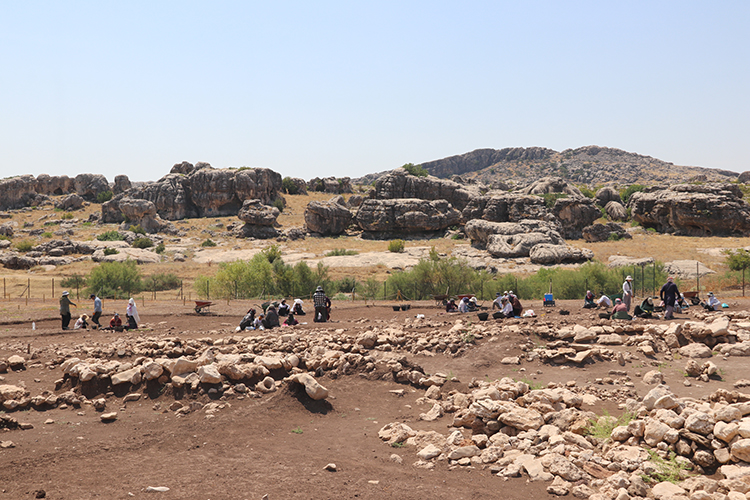
Excavations at the 12,000-year-old Neolithic site of Çayönü Mound, located in southeastern Turkey’s Ergani district, have unearthed four grid-plan structures and a Bronze Age water channel, shedding new light on the region’s prehistoric urban planning and craft production.

The latest findings were revealed during the 2025 excavation season led by Associate Professor Dr. Savaş Sarıaltun from Çanakkale Onsekiz Mart University. According to a report by Anadolu Agency (AA), the discoveries come from the eastern part of the mound—an area never previously excavated.

“These grid-plan buildings and the channel system show that Çayönü still holds many undiscovered layers and stories,” said Dr. Sarıaltun.
New Neolithic-era discoveries at Çayönü in southeastern Türkiye, dating back to approximately 10,200–6,500 BCE, include four grid-plan buildings. Credit: AA

A Legacy of Firsts: Çayönü’s Historical Significance

Discovered during surface surveys in 1963 and first excavated in 1964 by Dr. Halet Çambel and Prof. Dr. Robert J. Braidwood, Çayönü is one of the earliest known Neolithic settlements in the world. Situated just north of Hilar village, the site is often cited as one of the birthplaces of agriculture, settled life, and early metallurgy.


📣 Our WhatsApp channel is now LIVE! Stay up-to-date with the latest news and updates, just click here to follow us on WhatsApp and never miss a thing!!


Archaeological evidence shows that Çayönü hosted continuous habitation from 10,000 BCE, transitioning from hunter-gatherer lifestyles to farming and settled communities. Its discoveries have contributed to understanding early human societal structures, rituals, and technological innovations.

2025 Discoveries: Architecture, Tools, and Water Engineering

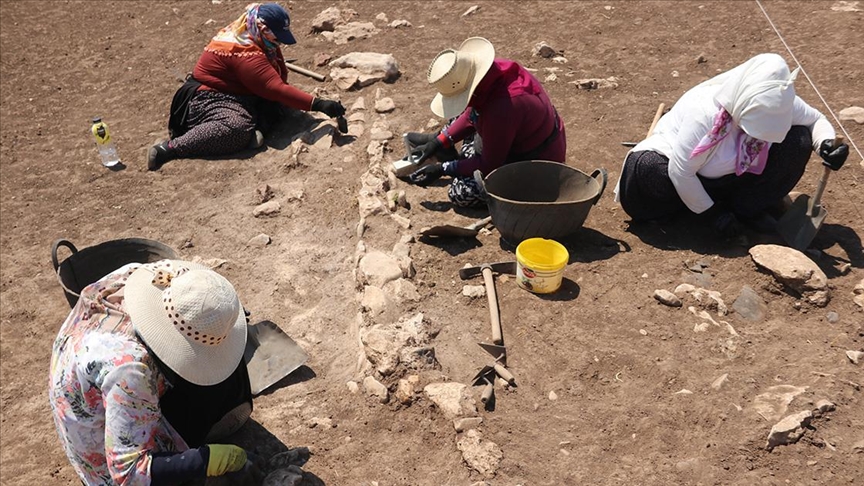
The current excavation team, consisting of 60 members including scientists, students, and local workers, has focused on both Neolithic and Early Bronze Age layers. In the eastern zone, archaeologists unearthed:

Four Neolithic grid-plan buildings, offering new insights into early urban planning and community organization.

A carefully constructed water channel made of terracotta “küng” pipes and stone walls, possibly used for waste or clean water—still under analysis.

A range of obsidian tools, including a unique artifact dubbed the “Çayönü Tool.”

Numerous malachite samples, copper objects, and ornamental beads, indicating advanced metalworking and decorative arts.
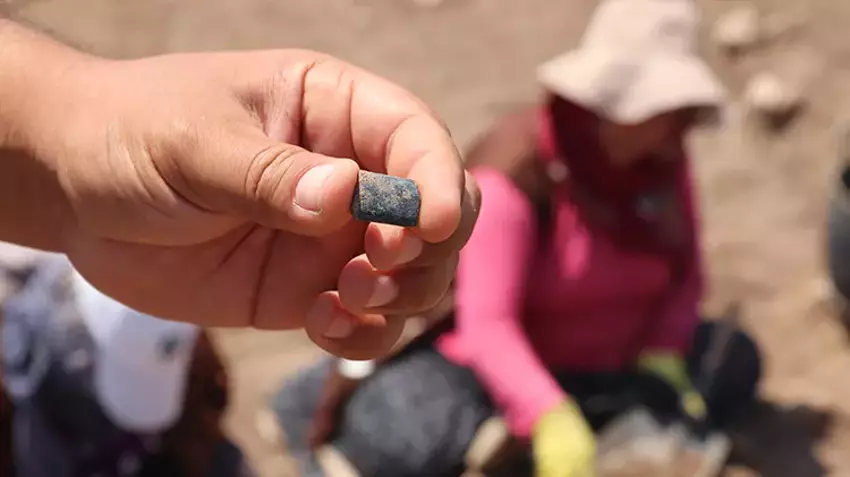
Numerous malachite samples, copper objects, and ornamental beads, indicating advanced metalworking and decorative arts. Credit: AA

These finds help clarify the architectural and social strategies of Çayönü’s ancient inhabitants.

“This year alone, we’ve already discovered twice as many artifacts as last year,” noted Sarıaltun, underlining the productivity of the 2025 season.

Early Metallurgy and Ornamentation

The presence of malachite and worked copper objects points to early metallurgical expertise in the region. Among the notable finds are:

Beads in various forms: single-holed, two-holed square, four-holed square, and almond-shaped varieties

14 confirmed copper artifacts, with expectations for more as excavations continue

Evidence of localized production zones, highlighting specialization and craft diversity

These elements support the theory that Çayönü was a center for both utilitarian and decorative production during the Neolithic.

Interpreting Social Structure Through Space and Objects

The newly identified grid-plan structures—especially those dated between 9100–9000 BCE—offer a rare glimpse into the spatial planning and social organization of prehistoric communities. Comparing the eastern and western building zones, archaeologists suggest that different functional areas may have existed for habitation, production, or possibly governance.

“These structures help us understand settlement strategies, group behavior, and the range of tools and ornaments produced. Each layer tells a new story about life 12,000 years ago,” said Sarıaltun.
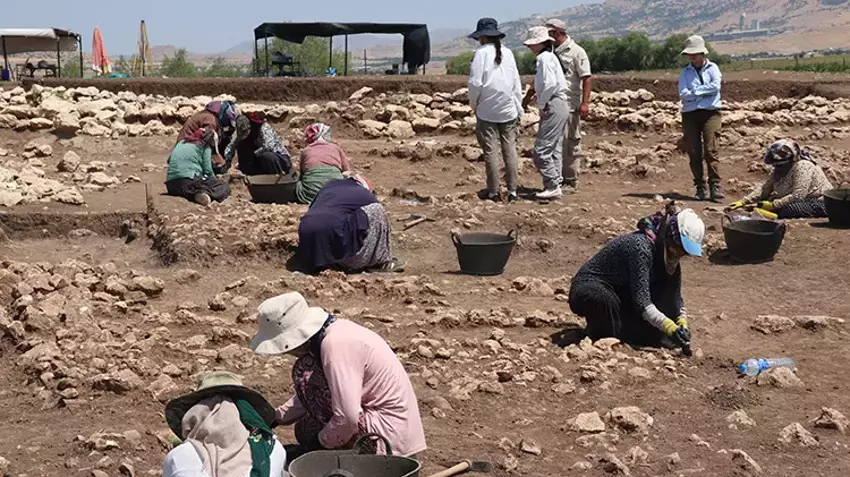
Excavation areas set to expand from 750 to 1,500 square meters by the end of 2025. Credit: AA

Looking Ahead: Çayönü’s Unfinished Story

With excavation areas set to expand from 750 to 1,500 square meters by the end of 2025, archaeologists believe Çayönü still holds many secrets about the earliest chapters of human civilization. The site continues to serve as a focal point for understanding humanity’s transformation from nomadic to settled life, with implications for agriculture, architecture, and social evolution.

“Each season at Çayönü brings a new discovery. There are still many chapters left to uncover,” concluded Sarıaltun.

Cover Image Credit: Anadolu Agency (AA),

Related Articles

Divers Discover 2,500-Year-Old Shipwreck and anchors Off the Coast of Sicily

23 January 2025

23 January 2025

A shipwreck dating back to the 5th and 6th centuries BC was discovered in the waters of Santa Maria del...

“Harbetsuvan Tepe”, the 10,000-year-old Neolithic Acropolis of Taş Tepeler

21 May 2022

21 May 2022

Harbetsuvan Hill is similar to the acropolises built on the hills near the ancient Greek cities. It was established in...

A Neolithic Ornate Necklace with Over 2,500 Stones found in a Child’s Grave

3 August 2023

3 August 2023

An ornate necklace found in a child’s grave in ancient Jordan about 9,000 years ago provides new insights into the...

The Mystery of the Hekatompedon: An Ancient Shepherd’s Graffiti Sheds New Light on the Mystery of the Acropolis’ Lost Temple

13 June 2024

13 June 2024

The Acropolis of Athens and its monuments, the greatest architectural and artistic complex bequeathed to the world by ancient Greece,...

The Mysterious Stone Structure Overlooking Ani: A Hidden Monument Raising New Questions

14 November 2025

14 November 2025

A lone stone structure standing silently on a windswept hill near Kars has begun to draw growing curiosity. Rising from...

Rare Roman Marble Sarcophagus Depicting Dionysus and Hercules Discovered in Caesarea, Israel — A First of Its Kind

9 June 2025

9 June 2025

A rare Roman-era marble sarcophagus featuring a vivid scene of a mythological drinking contest between Dionysus, the god of wine,...

The two sarcophagi discovered beneath Notre Dame start to reveal their secrets

12 December 2022

12 December 2022

The owner of one of the two sarcophagi that were found in an excavation at the intersection of Notre Dame...

For the first time, researchers discovered bioarchaeological evidence of familial embalming in early modern France

16 November 2024

16 November 2024

A unique discovery has revealed new insights into the burial rituals of early modern Western Europe: For the first time,...

A hungry Badger uncovers the largest collection of such coins ever discovered in northern Spain

11 January 2022

11 January 2022

Archaeologists have uncovered a rich trove of 209 Roman-era coins in northwestern Spain, due to the apparent efforts of a...

5700-year-old monumental Menga Dolmen reveals it as one of the greatest feats of Neolithic engineering

6 December 2023

6 December 2023

A new investigation tracing the source of the gigantic stones that make up the Menga dolmen in southern Spain reveals...

The 1800-year iron mask unearthed in Turkey is proof of the first military base of the Roman period in the Western Black Sea Region

23 November 2021

23 November 2021

An iron face mask used by a skilled member of the Roman cavalry 1,800 years ago has been discovered in...

Holy vessels of Anatolia in the Neolithic Age

17 October 2021

17 October 2021

Although it means Neolithic Age – New stone age – the developments in the Neolithic Age are much more than...

Excavations in and around Yazıkaya, one of the monumental works of the Phrygians, start again after 71 years.

23 July 2022

23 July 2022

Archaeological excavations at Midas Castle in Yazılıkaya Midas Valley in the Han district of Eskişehir, located in northwest Turkey, will...

The World’s Oldest Mummies “Chile’s Ancient Mummies Older than Egypt’s”

20 February 2024

20 February 2024

At the beginning of the 20th century, mummies dating back 2000 years before the Egyptians were found in the Atacama...

KIŠIB: A Digital Archive From 80,000 Mesopotamian Seals is Being Created

19 December 2024

19 December 2024

Over the next 16 years, a research team from the Institute for Near Eastern Archaeology at the Free University of...