
6 June 2026 The Future is the Product of the Past

First-Ever Painted Depiction of Celtic God Sucellus Discovered at Gallo-Roman Sanctuary

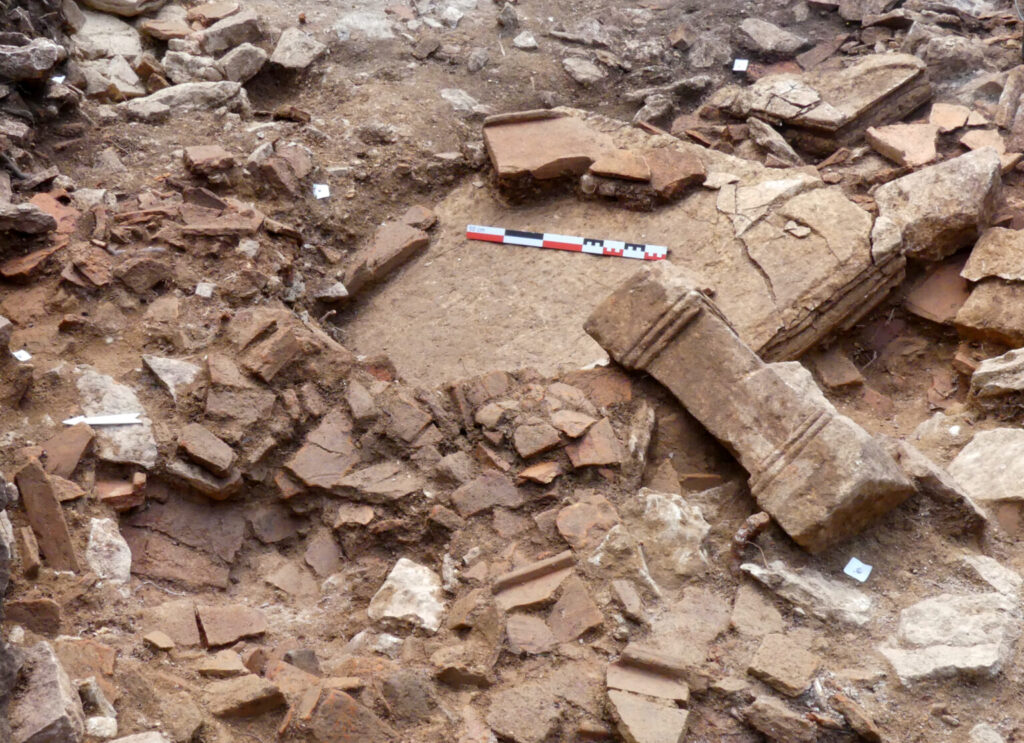
Archaeologists excavating a hilltop sanctuary in eastern France have uncovered a remarkable painted altar block depicting Sucellus, a powerful Celtic deity associated with prosperity, forests, and agriculture. The discovery was made at the Gallo-Roman sanctuary of Mancey in Burgundy’s Saône-et-Loire region and may represent the only known painted depiction of the god ever found.

The sanctuary, located on a forested ridge overlooking the Tournugeois landscape near the town of Tournus, has been under systematic investigation since 2023. Excavations during the 2025 field season revealed a sprawling ritual complex that remained active for nearly five centuries, from the late Iron Age through the final centuries of the Roman Empire.

The painted altar block emerged from the ruins of a temple identified by archaeologists as Monument M3, where evidence suggests that ceremonial banquets and elite gatherings once took place. The temple floor contained thousands of remains from ritual feasts—including bones of pigs, birds, and fish—along with drinking vessels, jewelry, coins, and votive objects.
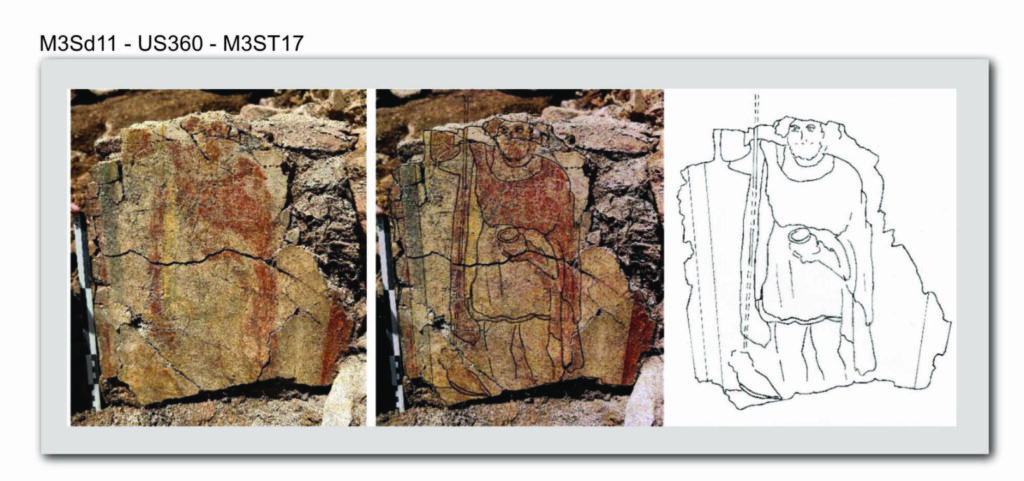
Masonry block depicting the god Sucellus from Temple M3. Credit: Grégory Compagnon (2026) © Groetembril, APPA-CEPMR, Le Fil d’ArAr

The Hammer-Bearing God of Prosperity

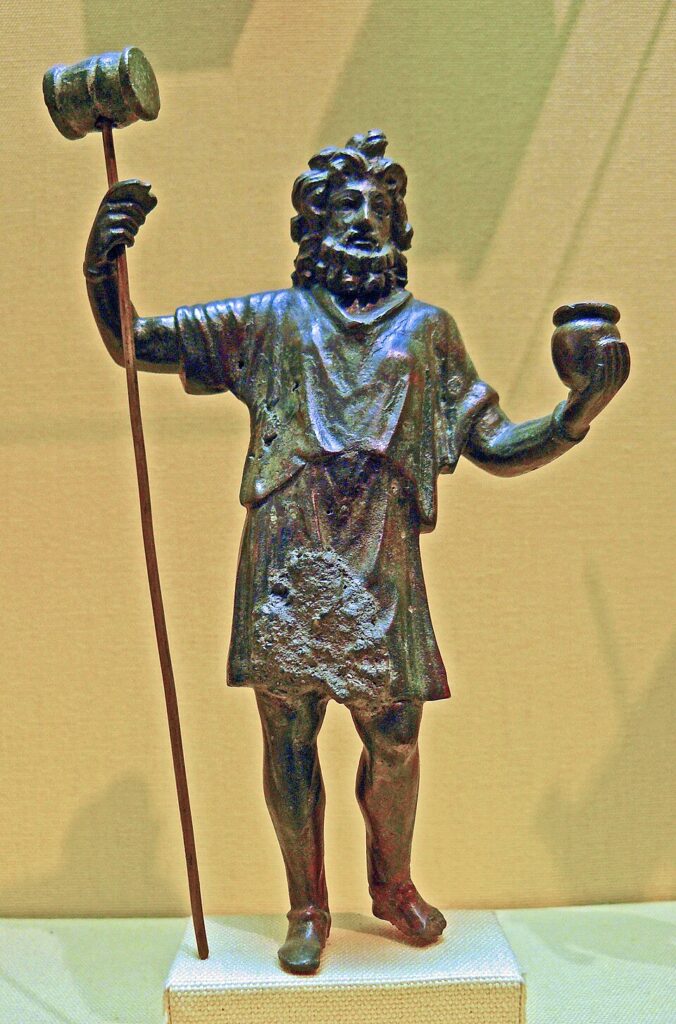
Sucellus was one of the most widely worshipped gods in Roman Gaul, often depicted carrying a long-handled hammer or mallet and accompanied by a wine jar or barrel, symbols linked to fertility, abundance, and protection of rural life. In inscriptions and sculptures found across Gaul, he sometimes appears alongside the goddess Nantosuelta, forming a divine pair connected with prosperity and the natural world.

Although dozens of stone sculptures of Sucellus are known from sites across France, Germany, and Luxembourg, painted representations of the god are extremely rare. If the identification of the Mancey altar is confirmed, it could provide a unique glimpse into the visual culture of Celtic religious worship during the Roman period.


📣 Our WhatsApp channel is now LIVE! Stay up-to-date with the latest news and updates, just click here to follow us on WhatsApp and never miss a thing!!


The Celtic god Sucellus with his characteristic hammer and olla. Musee d'Archéologie National. Credit: Public Domain
The Celtic god Sucellus with his characteristic hammer and olla. Musee d’Archéologie National. Credit: Public Domain

Ritual Life on a Sacred Hill

Archaeologists believe the sanctuary covered roughly one hectare and included two temples, gathering areas, and spaces used for ritual meals and offerings. Thousands of artifacts recovered from the site suggest it attracted large numbers of visitors and may have served as an important regional cult center.

Even after the temples collapsed in the late fourth century AD, people continued to visit the sacred hill, leaving coins, figurines, and offerings among the ruins.

Grégory Compagnon (March 12, 2026). The Ancient Sanctuary of Mancey: Results of the 2025 Excavation Campaign. Le Fil d’ArAr. Accessed March 15, 2026, at https://doi.org/10.58079/15v3y

Cover Image Credit: Grégory Compagnon (2026) © Groetembril, APPA-CEPMR, Le Fil d’ArAr

Related Articles

Danish Sailors Measured Air Pressure Earlier Than We Thought—Ship Logs May Help Predict Climate Change

18 April 2026

18 April 2026

Historic air pressure records from Danish ship logs are now helping scientists refine modern climate models. A vast archive of...

Archaeologists say 12,000-year-old flutes discovered in northern Israel may have been used to lure falcons

9 June 2023

9 June 2023

New research reveals that about 12,000 years ago, in northern Israel, humans turned the bones of small birds into instruments...

6th-Century BC Houses and Earthquake Evidence Discovered in Davti Blur, an Urartian Fortress City in Armenia

28 January 2025

28 January 2025

An Armenian-Polish archaeological team has uncovered remnants of 6th-century BC houses, a cremation cemetery, and signs of a significant earthquake...

Prehistoric Star Map Carved in Stone Discovered in Bulgaria

14 July 2025

14 July 2025

A recently uncovered archaeological site in the Rhodope Mountains of southern Bulgaria is now entering the scientific spotlight. In a...

Archaeologists uncovered largest Bronze Age burial site of Nitra culture in Czech Republic

19 October 2024

19 October 2024

Archaeologists have uncovered the Nitra culture’s largest Bronze Age burial site near Olomouc in Central Moravia, during their rescue research...

Roman Mosaic found during rescue excavation in southeast Türkiye

13 December 2023

13 December 2023

Archaeologists discovered mosaics believed to be from the Roman era during a rescue excavation undertaken in a rural expanse in...

A Discovery That Defies the Bronze Age: Unusual Metal Artifact Found in China May Have Extraterrestrial Origins

30 March 2026

30 March 2026

A groundbreaking archaeological discovery in southwestern China is reigniting global curiosity about ancient technologies—and even the possibility of materials originating...

The 2000-year-old origin mystery of the Etruscans solved

25 September 2021

25 September 2021

A genetic analysis of DNA taken from ancient skeletons appears to have answered a conundrum that has captivated researchers for...

A Christian monastery, possibly pre-dating Islam, found in UAE

6 November 2022

6 November 2022

A Christian monastery has been discovered on the island of Siniyah off the coast of the United Arab Emirates (UAE),...

Life and Death in Ancient Nubia: 4,000-Year-Old Kerma Grave Discovered in Sudan

13 February 2026

13 February 2026

Polish archaeologists have uncovered a remarkably well-preserved 4,000-year-old grave in Sudan’s Bayuda Desert, offering valuable new insights into burial customs,...

Silk Road archaeological discoveries draw attention despite the pandemic

20 June 2021

20 June 2021

A report prepared by more than 30 global experts believes that despite the COVID-19 pandemic, archaeological discoveries related to the...

5,000-Year-Old Tombs Discovered in Ibri Reveal Ancient Oman–Mesopotamia Link

21 August 2025

21 August 2025

Oman’s Ministry of Heritage and Tourism has announced a remarkable discovery in the Al-Sabikhi area of the Wilayat of Ibri,...

Sensational Find: 900-year-old Picture Stone! Is Depicted Figure the Legendary Bishop Otto of Bamberg?

19 August 2024

19 August 2024

During construction work in Klotzow (Vorpommern-Greifswald district), one of the most spectacular archaeological finds in Mecklenburg-Vorpommern in recent years has...

Archaeologists Discover 40,000-Year-Old Evidence of Neanderthal Habitation in Ghamari Cave, Iran

13 March 2025

13 March 2025

Iranian archaeologists have made a groundbreaking discovery in Ghamari Cave (also known as Qamari Cave), located near Khorramabad in Lorestan...

Ancient Tombs with Winged Victories Unearthed in Rome’s Vast Ostiense Necropolis

6 March 2026

6 March 2026

Archaeologists working south of Rome have uncovered an exceptionally well-preserved section of the ancient burial ground known as the Ostiense...