
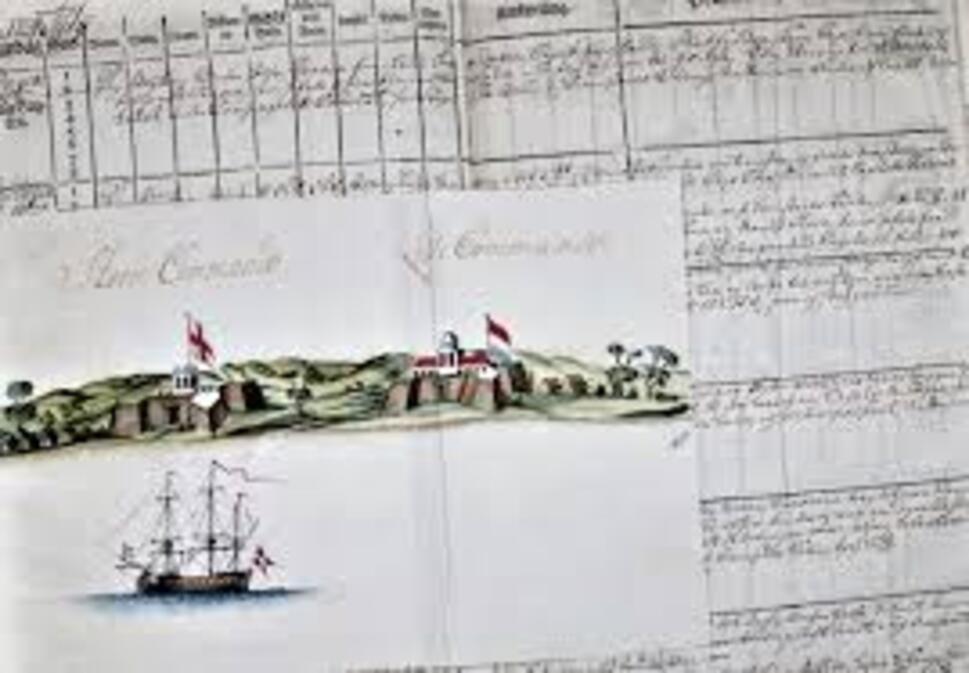
Historic air pressure records from Danish ship logs are now helping scientists refine modern climate models.
A vast archive of centuries-old Danish ship logbooks is emerging as an unexpected cornerstone for modern climate science, offering millions of previously unused weather observations that could reshape how researchers understand both past and future climate patterns.
Collected by sailors navigating under the Danish flag since the 17th century, these handwritten records—once simple navigational tools—are now being transformed into high-value scientific data through an ambitious international effort known as the ROPEWALK project.
What makes this discovery particularly significant is not just the scale of the archive, but its precision. Recent findings reveal that Danish sailors were conducting systematic atmospheric pressure measurements as early as 1822, decades earlier than previously documented in meteorological history.
A Hidden Scientific Legacy at Sea
For centuries, captains and officers aboard Danish vessels were required to keep detailed logs of their voyages. These journals documented everything from wind direction and sea currents to temperature, ice conditions, and barometric pressure.
What seemed like routine maritime discipline has turned out to be a scientific treasure trove.
According to Danish Meteorological Institute researcher Martin Stendel, these observations provide something modern science desperately needs: long-term, consistent climate data.
“Global climate research depends on historical observations,” Stendel explains. “With these ship logs, we are adding something truly unique—data that extends back centuries with remarkable continuity.”
The scale is extraordinary. The Danish National Archives holds more than 700 shelf meters of maritime records, including over 31,000 logbooks, some dating back to 1675.
Earlier Than Expected: A Breakthrough in Climate History
One of the most striking revelations from the archive is the discovery that systematic barometric measurements were already being conducted at sea in the early 19th century.
Logbooks from 1822 show consistent air pressure readings, challenging previous assumptions about when such scientific practices became standard.
Archival researcher Adam Jon Kronegh highlights the importance of this finding:
“These records prove that Danish sailors were not just observing the weather—they were measuring it in a structured and scientific way, much earlier than we believed.”
A particularly dramatic entry from 1823 illustrates both the accuracy and human dimension of these logs. While sailing near the coast of South Africa, a Danish ship recorded a sharp drop in atmospheric pressure, equivalent to about 936 hPa in modern units—clear evidence of a severe storm.
The written account describes towering waves, damaged masts, and even crew members swept overboard. Yet alongside the chaos, precise measurements were carefully noted, reinforcing the reliability of the data.
From Ink and Paper to Climate Models
The transformation of these fragile documents into usable data is being carried out under the ROPEWALK project, a collaboration between the Danish National Archives and the Danish Meteorological Institute.
Backed by funding from the A.P. Møller Foundation, the project is digitizing and analyzing millions of handwritten weather observations.
The process involves high-resolution imaging, optical text recognition, and even contributions from volunteers—including students and citizen scientists—who help transcribe the data.
Once processed, the information is integrated into modern climate models, significantly improving their accuracy.
The result is not just historical insight, but practical impact.
“Each observation helps us reconstruct past weather conditions,” says Stendel. “The more we understand the climate of the past, the more precisely we can predict the climate of the future.”
Why These Logs Matter Now
Modern climate science relies heavily on long-term datasets. However, reliable instrumental records rarely extend beyond the late 19th century.
This is where the Danish ship logs become invaluable.
They provide continuous, geographically diverse observations spanning regions such as the North Atlantic, the Arctic, and the waters around Greenland—areas critical to understanding global climate systems.
Their consistency is equally important. Unlike scattered historical accounts, these logs were recorded systematically over centuries, making them uniquely suited for scientific analysis.
Danish Culture Minister Ane Halsboe-Jørgensen emphasizes the broader significance:
“These well-preserved records give us a rare opportunity to turn centuries of cultural heritage into knowledge that can guide future decisions.”
A Nearly Endless Resource for Climate Research
With international organizations such as the World Meteorological Organization already expressing interest, the ROPEWALK project is quickly gaining global attention.
Experts believe the archive represents a near-limitless resource for climate research, offering insights that extend far beyond Denmark’s maritime history.
What began as ink on paper—notes scribbled by sailors facing unpredictable seas—has become a bridge between past and future.
And as these records continue to be decoded, they are proving one thing with increasing clarity:
The story of climate change did not begin in the modern era. It was being quietly documented, day by day, aboard ships sailing the world’s oceans centuries ago.
The archive containing the logbooks has been digitized and is freely accessible at arkivalieronline.rigsarkivet.dk.
Cover Image Credit: ROPEWALK PROJECT
