
19 January 2026 The Future is the Product of the Past

World’s First Pregnant Ancient Egyptian Mummy has been Discovered

Experts from the Polish Academy of Sciences aim to research all mummies in museums as part of the Warsaw Mummy Project.

As part of this project, researchers worked to discover more about the woman thought to be in her 20s.

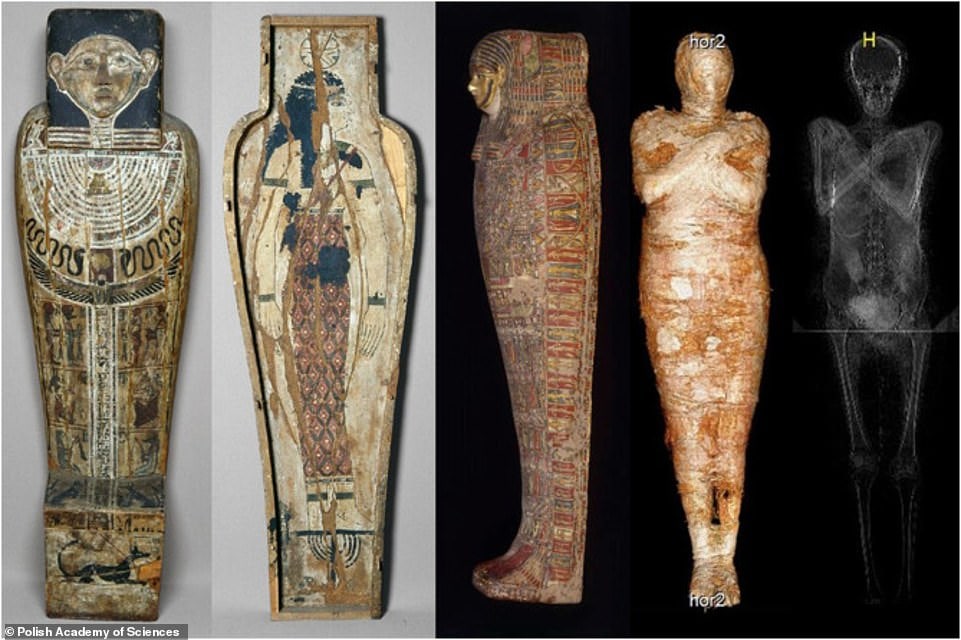
The first mummified bones of an ancient Egyptian pregnant woman dating back over 2,000 years have been found in Thebes. According to scans of the body, she died at the age of 28 weeks pregnant.

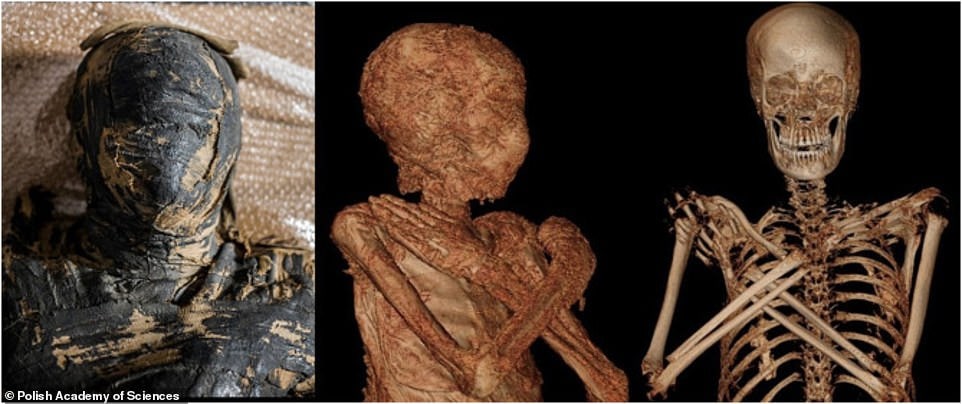
The team found the remains of a fetus, estimated to be 26 to 30 weeks old, inside the woman using a combination of CT scans and X-rays. The first time a pregnant mummy has been discovered.

According to the authors of a paper published in the Journal of Archaeological Science, the body of the woman who died 2,000 years ago was carefully wrapped in fabrics and left with a rich collection of amulets to see her into the afterlife.


📣 Our WhatsApp channel is now LIVE! Stay up-to-date with the latest news and updates, just click here to follow us on WhatsApp and never miss a thing!!


The team can’t say why the fetus was left inside the woman and not mummified separately, but it could be because it was too young to have a name and needed to travel to the afterlife inside its mother.

Study lead author Dr. Wojciech Ejsmond said this was the ‘first discovery of a pregnant embalmed body,’ adding: ‘There is no other so well preserved ancient body of a pregnant woman.

The body was wrapped in fine fabrics and laid to rest with a set of amulets representing Horus’ four sons, which the team believes indicate she was a powerful figure in Thebes.
World's First Pregnant Ancient Egyptian Mummy
The head and CT scans the mummy. The first remains of an ancient Egyptian mummified pregnant woman have been discovered in Thebes, dating back more than 2,000 years, the corpse was 28 weeks into her pregnancy when she died.

According to the study writers, the mummy was discovered in royal tombs in Thebes, Upper Egypt, and came from the elite of the Theban culture.

The woman was transported to Warsaw, Poland, in 1826, at the time of some of the most famous Egyptian Valley of the Kings findings, and is now on display at the National Museum in Warsaw.

‘This mummy provides new possibilities for pregnancy studies in ancient times, which can be compared with and related to current cases,’ study authors wrote.

‘Furthermore, this specimen sheds a light on an unresearched aspect of ancient Egyptian burial customs and interpretations of pregnancy in the context of ancient Egyptian religion.’

‘For Egyptologists, this is a fascinating discovery because we know little about perinatal health and childhood in ancient Egypt,’ Dr. Ejsmond added.

‘Physicians can study, for example, the intestinal content of the fetus to gather information on the development of the immune system in ancient times.’

The fetus was mummified alongside its mother in the lower part of the lesser pelvis and partly in the lower part of the greater pelvis. It was not, however, removed from its original location.

Related Articles

From Prehistoric Georgia ‘World’s oldest wine”

12 July 2022

12 July 2022

For many years in a row, wine has been a popular alcoholic beverage consumed worldwide. While we associate many things...

Archaeologists have unearthed a trove of artifacts at the necropolis of Saqqara

9 June 2022

9 June 2022

Archaeologists at the necropolis of Saqqara, near Cairo, have discovered a cache of 250 complete mummies in painted wooden sarcophagi...

Mysteries of Giza

9 February 2021

9 February 2021

The Great Pyramid is one of the rare surviving works of the ancient world. These gigantic structures give today’s visitors...

Ancient Three Fortresses: Layered Defense on Egypt’s Eastern Border at Tell Abu Saifi

11 May 2025

11 May 2025

Archaeological excavations at the strategically significant Tell Abu Saifi site in North Sinai have unearthed compelling evidence of Egypt’s long-standing...

Al-Ula, The Living Museum of Ancient Arab Civilizations

12 February 2021

12 February 2021

Al-Ula oasis is located in the lush Wadi Al-Qura, or “valley of villages”, about 110 km southwest of the modern...

The Rock Tombs Found by Chance in the Al-Hamidiyah Necropolis

12 May 2021

12 May 2021

A series of rock tombs carved into the slope of a mountain have been discovered in the Al-Hamidiyah necropolis on...

Archaeologists reveal 4,000-year-old rock-cut tomb, artifacts in Saqqara

8 January 2024

8 January 2024

A team of Egyptian and Japanese archaeologists has unveiled a rock-cut tomb believed to be more than 4,000 years old...

46 Eagles in vivid color revealed on Ancient Egyptian temple ceiling

15 May 2022

15 May 2022

A joint German/Egyptian archaeological mission at the Temple of Esna on the west bank of the Nile, 35 miles south...

Ancient Tombs and 2-Meter Sarcophagus with Hieroglyphics Unearthed Near Aga Khan Mausoleum in Aswan

11 July 2025

11 July 2025

A joint Egyptian-Italian archaeological team has unearthed a significant collection of ancient rock-cut tombs near the Aga Khan Mausoleum on...

The Lost Princess of Egypt “Ankhesenamun”

19 April 2021

19 April 2021

Ankhesenamun was born around 1350 BC as the daughter of King Akhenaten and Queen Nefertiti. The life of Ankhesenamun, who...

The largest embalming cache ever found in Egypt unearthed at Abusir

10 February 2022

10 February 2022

Archaeologists from the Czech Institute for Egyptian Science have discovered a cache of artifacts related to the practice of Egyptian...

A Lynx Buried with Four Big Dogs in an Ancient Roman Well in Hungary

17 April 2024

17 April 2024

Archaeologists have discovered the skeleton of an adult male lynx accompanied by four big dogs in a Roman-era pit in...

People knew how to make bread 14,400 years ago

15 May 2022

15 May 2022

Archaeological finds in Jordan’s Black Desert show that humans used stone ovens to bake bread 14,400 years ago. Researchers have...

“Dholavira,” the settlement with the world’s oldest signboard

16 August 2021

16 August 2021

Dholavira, also known as Kotda (which means “big fort”), is one of the islands in Kutch’s vast desert. The city...

Who Are The Sea Peoples?

13 February 2021

13 February 2021

Who are the Sea Peoples, which are seen as the beginning of the dark age, and where did they come...