
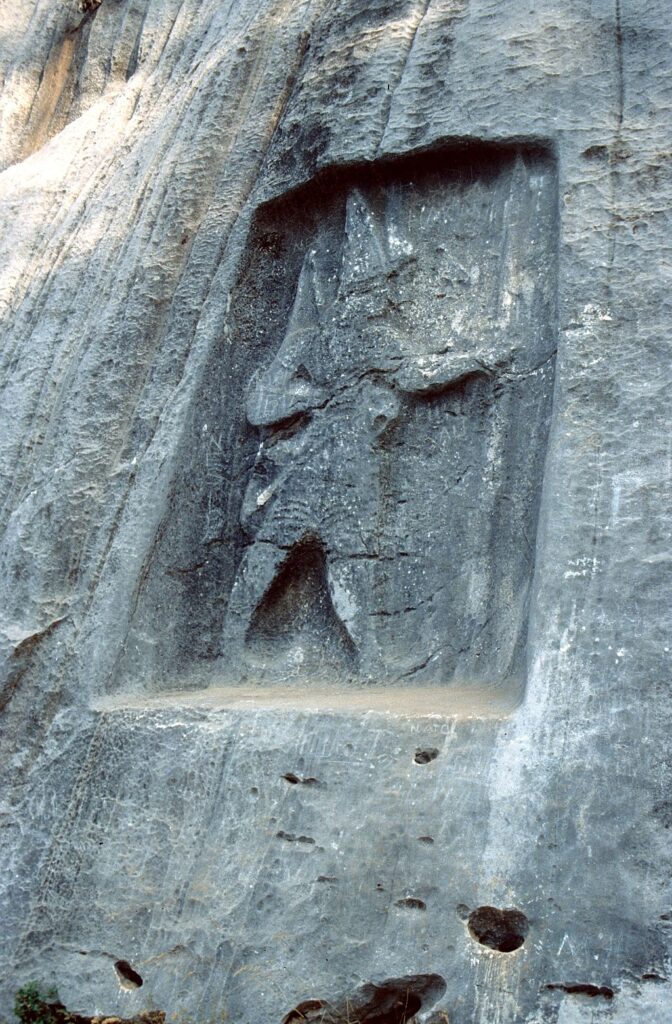
Carved into the cliffs of western Anatolia over three thousand years ago, the Karabel Rock Monument is the last surviving example of its kind—a solitary voice from the Hittite Empire still echoing through the ages. Yet today, this irreplaceable treasure stands weathered, vandalized, and forgotten, silently resisting the pull of time as it waits for the rescue and recognition it so urgently deserves.
Nestled in the scenic Karabel Pass along the İzmir-Kemalpaşa-Torbalı highway, the Karabel Rock Monument stands as a rare and invaluable remnant of the Hittite Empire—one of the most powerful civilizations of the ancient Near East. Despite its immense historical and cultural value, this archaeological treasure remains dangerously neglected and vulnerable to irreversible damage.
Hittite Power and Prestige
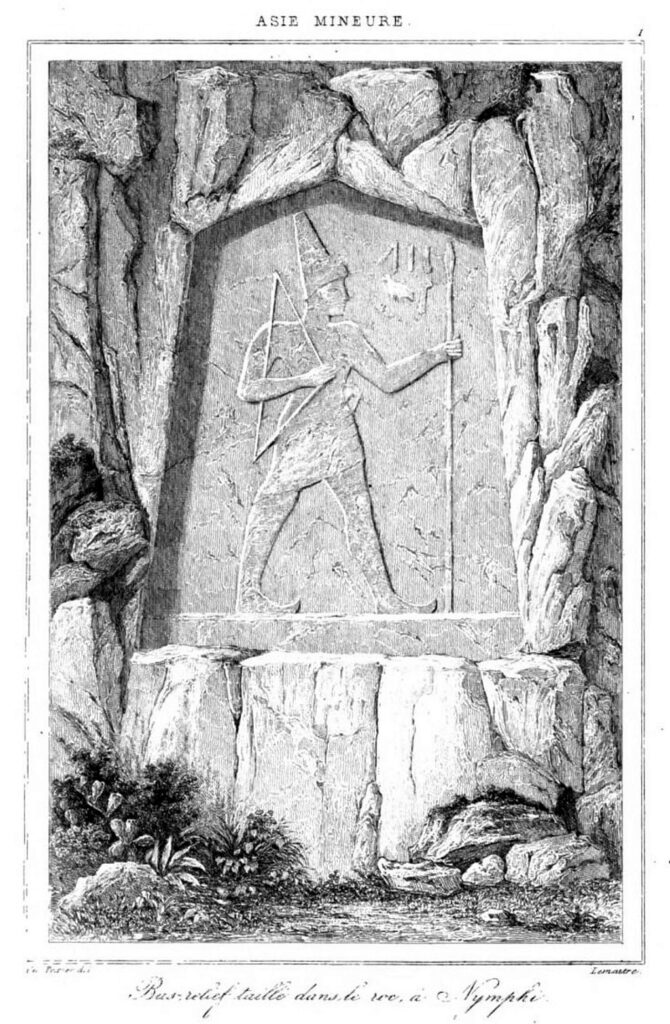
Dating back to the 13th century BCE, the Karabel Rock Monument is attributed to Tarkasnawa, a Hittite king of the kingdom of Mira, a vassal state under the greater Hittite realm. The monument features a carved relief of a warrior—believed to be Tarkasnawa himself—armed with a spear and bow, with a sword at his waist. The figure is inscribed with Luwian hieroglyphs, offering rare insight into the political geography and royal iconography of Late Bronze Age Anatolia.
This inscription, once deciphered, played a crucial role in identifying Mira’s location and understanding the extent of Hittite influence in western Anatolia. The Karabel Monument is thus not only a striking visual artifact but also a cornerstone of Anatolian archaeology and Hittitology.
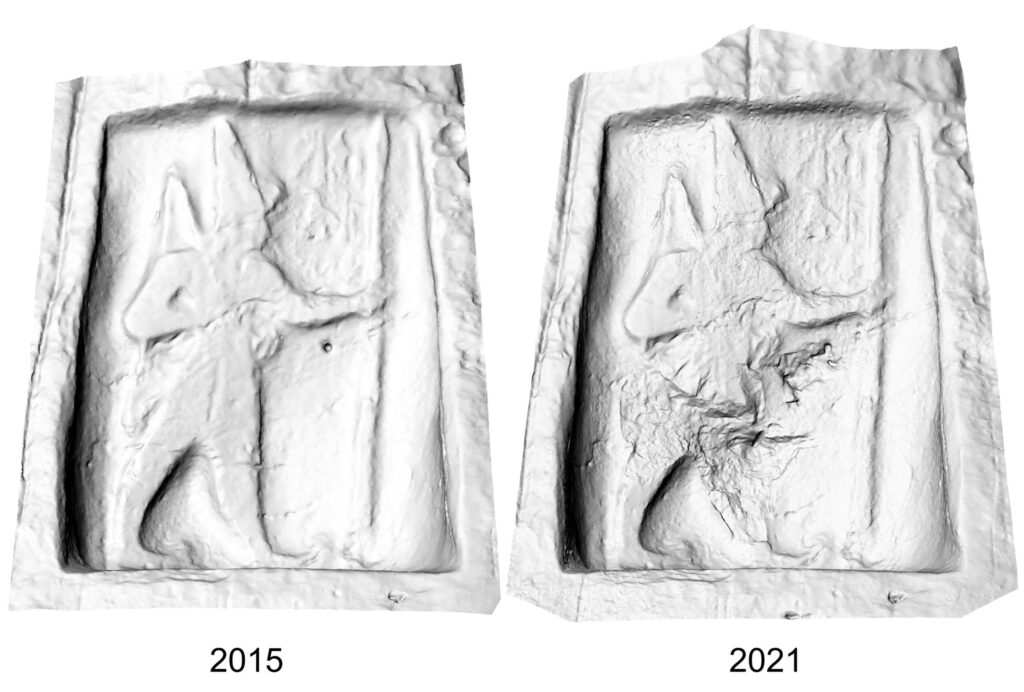
Comparison of photogrammetric scans from 2015 and 2021 showing damage inflicted in 2019. Credit: Public Domain
The Last of Its Kind
Originally, the site featured two monumental ruler figures carved into the cliff face (Karabel A and B), along with two inscriptions engraved on large boulders (Karabel C1 and C2). These reliefs, carved in the distinctive Luwian hieroglyphic script, served both as political propaganda and a declaration of power across the western reaches of Hittite-controlled Anatolia.
The Karabel relief is one of only three known Hittite rock carvings of its kind. Tragically, the other two were destroyed during modern infrastructure projects, making Karabel the last surviving Hittite rock monument in its original setting. Its survival adds enormous scholarly, cultural, and touristic significance.
Despite its historical significance, the Karabel relief suffered further damage in early 2019, when it was defaced by unknown individuals—presumed to be treasure hunters—who left visible marks and irreversible harm. This act of vandalism further underscores the urgent need for protective measures and public awareness to preserve one of the last standing symbols of Hittite power in western Anatolia.
An Urgent Call for Protection
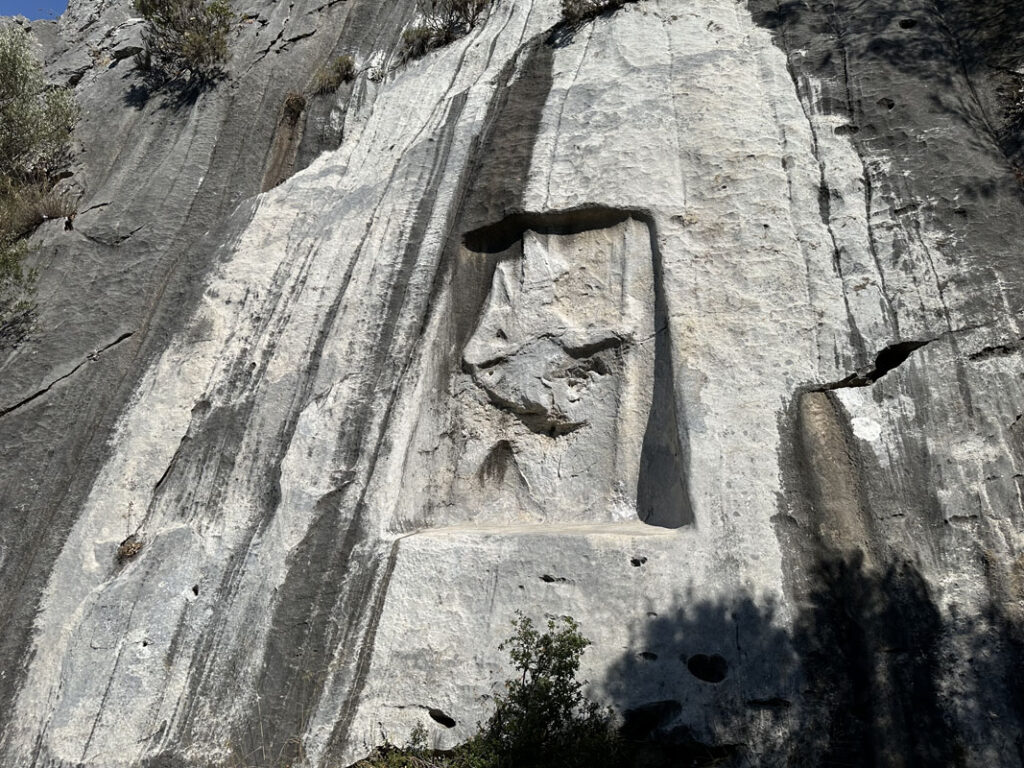
Despite its uniqueness, the current condition of the Karabel Monument is alarming. The staircase leading to the monument has collapsed, leaving it difficult to access. The surface of the relief shows signs of acid damage, and there is clear evidence of vandalism by treasure hunters, including drilling marks. These acts not only threaten the physical integrity of the monument but also endanger the invaluable information it holds.
While Turkey has gained international recognition for its efforts to repatriate stolen artifacts, the lack of protection for priceless heritage sites still within the country’s borders—such as Karabel—raises serious concerns.
Why Karabel Matters for Tourism and Education
The Karabel Rock Monument offers more than just historical fascination; it holds untapped potential for cultural tourism. Properly protected, preserved, and promoted, it could become a centerpiece of archaeological tourism in Western Anatolia, drawing both international visitors and scholars.
What Needs to Be Done
To ensure the survival of this irreplaceable monument, a comprehensive preservation strategy must be implemented without delay. First and foremost, the site needs to be secured through the installation of surveillance systems and protective fencing to deter vandalism and unauthorized access. Equally important is the restoration of safe and sustainable pathways, allowing visitors to reach the monument without causing further damage to the environment or the site itself. Urgent conservation work must also be undertaken to stabilize the relief, repair existing damage, and prevent further deterioration.
Finally, public engagement is essential—through educational initiatives, guided tours, and cultural tourism campaigns, greater awareness and appreciation of the Karabel Monument can be fostered, helping to ensure its long-term protection and integration into Türkiye’s rich cultural heritage landscape.
The Karabel Rock Monument is a silent witness to the grandeur of the Hittite civilization, etched into the rocks of İzmir over 3,000 years ago. Let us not allow this voice from antiquity to be silenced by modern neglect. With timely and responsible stewardship, Karabel can be transformed from a forgotten relic into a symbol of pride for Turkey’s rich archaeological heritage.
Source: Adnan Erdoğan, Arkeolojik Haber
Cover Image Credit: Hittite rock relief of King Tarkasnawa, Türkiye. Public Domain
