
14 December 2025 The Future is the Product of the Past

Archaeologists Uncover Oldest Greek Marble Altar in Western Mediterranean at Tartessian Site in Spain

The discovery of the Oldest Greek Marble Altar in the Western Mediterranean offers unprecedented insight into Tartessian culture and its connection to ancient Mediterranean civilizations.

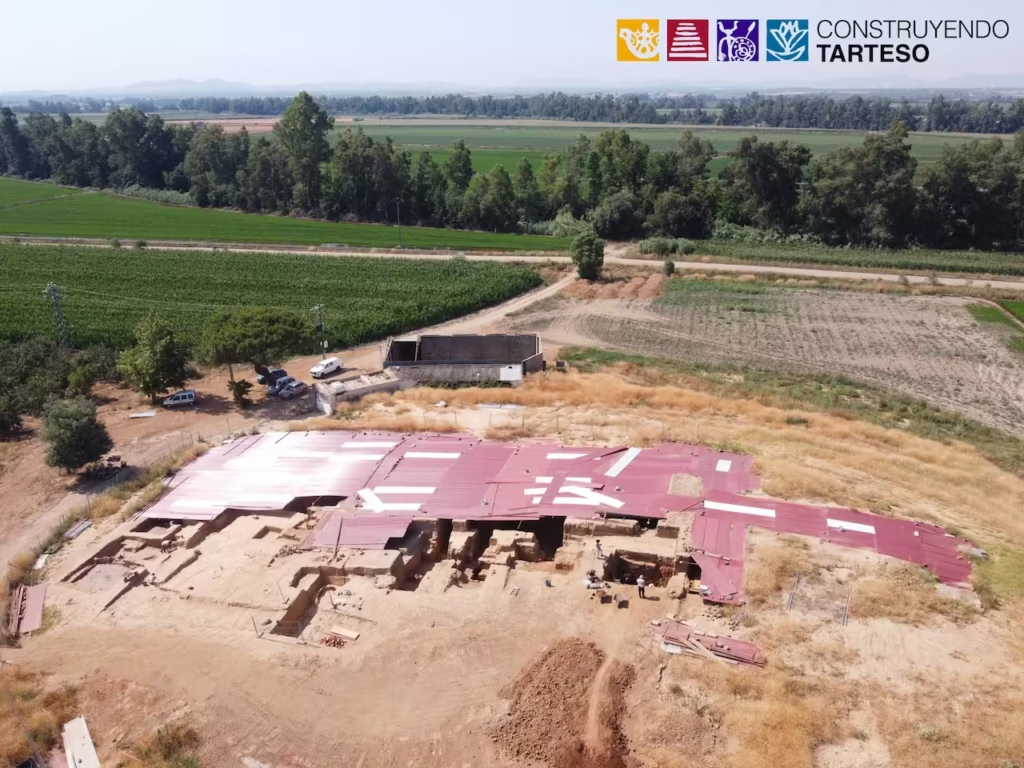
Casas del Turuñuelo, a major Tartessian archaeological site in Spain’s Badajoz province, continues to astonish the academic world. In its latest excavation campaign, researchers from the Institute of Archaeology of Mérida (IAM, CSIC-Government of Extremadura) have discovered what is now considered the oldest Greek marble altar ever found in the western Mediterranean.

A Rare Marble Column with Greek Origins

At the heart of this groundbreaking discovery is a marble column altar, analyzed by expert Anna Gutiérrez from the Catalan Institute of Classical Archaeology (ICAC). The column, composed of a base and shaft, has been traced to the island of Marmara (ancient Proconnesus) in Asia Minor—part of the ancient Greek world. Dated to the 5th century BCE, the altar is unique in its material: Asian marble, a rarity in inland Iberia.

This makes it the only known Greek altar of its kind in the region, according to excavation leaders Esther Rodríguez González and Sebastián Celestino Pérez. Its ceremonial placement among luxury items like Attic ceramic cups and a bronze potter’s wheel reinforces the building’s ritualistic importance.
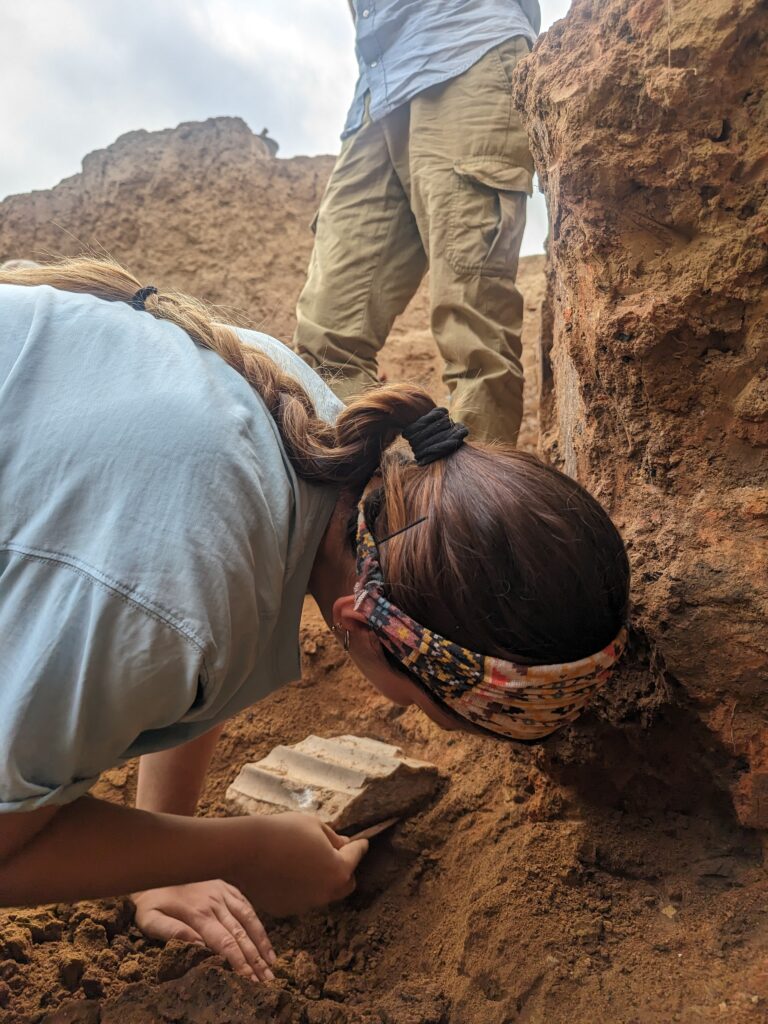
The marble column unearthed at the Casas del Turuñuelo site. Credit: Construyendo Tarteso Project (IAM-CSIC).

A New Chapter in Tartessian Archaeology

Located in the Vegas Altas region near the Guadiana River, Casas del Turuñuelo has emerged as a cultural and architectural marvel. Previous finds include Macedonian glass, Pentelic marble sculpture fragments, and one of the largest ritual animal sacrifices ever recorded in Western Europe.


📣 Our WhatsApp channel is now LIVE! Stay up-to-date with the latest news and updates, just click here to follow us on WhatsApp and never miss a thing!!


The discovery of this altar deep in the Iberian Peninsula, far from typical coastal trade routes, offers new insight into Tartessos‘ role in Mediterranean exchange networks. It challenges the traditional notion of Tartessos as a passive recipient of Greek and Phoenician culture—revealing instead a society of complexity, political power, and spiritual sophistication.

Advanced Engineering and Specialized Craftsmanship

In addition to the altar, the site’s seventh excavation campaign revealed six new rooms, including exterior areas dedicated to production and storage. Artifacts like kilns, loom weights, grain mills, and a rare bronze potter’s wheel highlight the site’s economic activities. A newly uncovered hydraulic system, nearly a meter high and constructed prior to the main building, points to advanced pre-Roman engineering skills.

Preservation and Research Potential

Thanks to exceptional preservation, Casas del Turuñuelo provides rare insight into Iron Age construction techniques, including the use of adobe in monumental architecture—a focus of the Construyendo Tarteso (Building Tartessos) research project funded by Spain’s Ministry of Science.

Supported by the Government of Extremadura, Badajoz Provincial Council, and the MAPFRE Foundation, the site has been a cornerstone of Tartessian studies for nearly a decade. Notable milestones include the 2017 discovery of a mass horse and oxen sacrifice, the 2023 revelation of human depictions in Tartessian art, and a 2024 slate plaque featuring what may be an early Paleohispanic alphabet.

The Spanish National Research Council (CSIC)

Cover Image Credit: General view of the Tartessian archaeological site of Casas del Turuñuelo in Badajoz, Spain. Construyendo Tarteso Project (IAM-CSIC).

Related Articles

8,500-year-old marble statuette found in Çatalhöyük

28 December 2021

28 December 2021

In the 29th season of the excavations in Çatalhöyük, one of the first urbanization models in Anatolia, in the Çumra...

For the first time, a Viking Age grave rich in artifacts has been found in Norway’s capital city, Oslo

23 December 2022

23 December 2022

A Viking Age grave rich in artifacts has been discovered for the first time in Norway’s capital city, Oslo. The...

Mosaics found in Türkiye’s Sinop belong to dining room of a wealthy family

24 June 2023

24 June 2023

The pebble mosaics unearthed during the excavation of a building complex in the province of Sinop on Turkey’s Black Sea...

1,500-year-old Byzantine artifacts found under a peach orchard in Turkey’s Iznik

27 January 2023

27 January 2023

In the world-famous historical city of Iznik, which was the capital of four civilizations, a farmer found coins and historical...

The Celts’ Astronomical Secrets: The Chão de Lamas Lunula and the Coligny Calendar Connection

2 March 2025

2 March 2025

A groundbreaking study published in the journal Palaeohispanica has shed light on the ancient timekeeping practices of the Celts, centering...

Excavation of the Temple of Athena Began in the Ancient City of Aigai

15 October 2021

15 October 2021

The foundations of the Temple of Athena were unearthed during the ongoing excavations in the ancient city of Aigai, located...

A 7,500-year-old settlement has been discovered in Turkey’s Domuztepe Mound

11 September 2021

11 September 2021

During the most recent excavations at Domuztepe Mound in the Türkoğlu district of southern Turkey’s Kahramanmaraş province, a settlement and...

700 Years After Dante’s Death, His Handwritten Notes Are Discovered

11 July 2021

11 July 2021

Dante Alighieri, an Italian poet, and scholar are best known for his masterwork La Commedia (also known as The Divine...

“Oracle Bone Inscriptions”, the world’s oldest writing system that has not disappeared in history

5 June 2023

5 June 2023

“Jiaguwen,” or the oracle bone inscriptions, are thought to be the earliest fully-developed characters as well as the source of...

Statue heads of “Aphrodite” and “Dionysus” were found in Aizanoi Ancient City in Turkey’s

30 October 2021

30 October 2021

The statue heads of Aphrodite, the goddess of love and beauty, and Dionysus, the god of wine, were unearthed in...

A Monumental 3,800-Year-Old Warrior Kurgan Discovered in Azerbaijan

16 July 2025

16 July 2025

A monumental discovery has emerged from the windswept plains of Ceyranchol in western Azerbaijan: a 3,800-year-old Middle Bronze Age kurgan,...

Ancient tomb discovered under parking lot greenery in Japan

16 September 2023

16 September 2023

Shrubbery intended to illuminate a corner of a nondescript parking lot in Japan’s Nara prefecture turned out to be hiding...

A Connection Between Viking Knots And Quantum Vortices Discovered

14 December 2022

14 December 2022

Scientists demonstrated how three vortices can be linked in such a way that they cannot be dismantled. Although this study...

5,500-Year-Old Blade Workshop Unearthed Near Biblical Gath Reveals

28 July 2025

28 July 2025

In a groundbreaking archaeological discovery, Israeli researchers have unearthed a 5,500-year-old flint blade workshop near Kiryat Gat, southern Israel—the first...

1,000-Year-Old Mass Grave in Peru Shows Victims Bludgeoned with Star-Headed Maces

26 May 2025

26 May 2025

Archaeologists from the University of Wrocław have uncovered a 1,000-year-old mass grave at the El Curaca site in southern Peru,...