
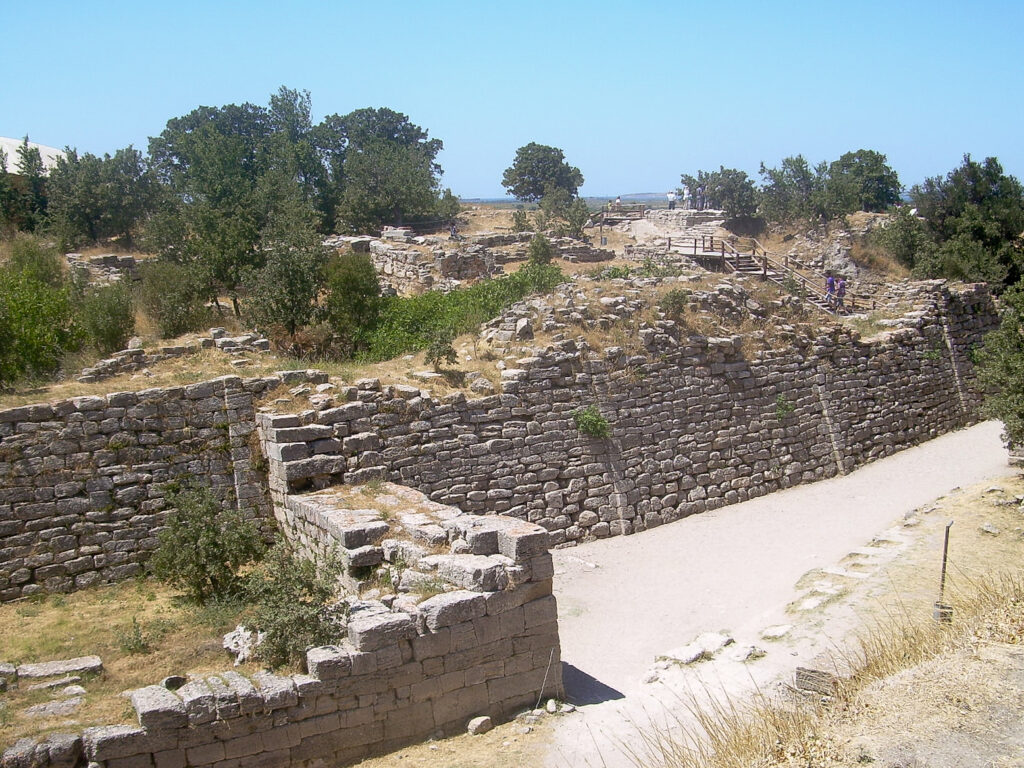
The legendary Trojan War, long enshrined in myth and Homeric epic, may be moving closer to historical validation as archaeologists at the ancient city of Troy in northwestern Türkiye intensify their search for tangible evidence. This season’s excavations are zeroing in on a crucial period—the Late Bronze Age destruction layer, roughly dated to the 13th century B.C.—believed to be directly linked to the fabled conflict.
Today, the ancient city of Troy is located on the mound of Hisarlık, in northwestern Türkiye, approximately 30 km southwest of Çanakkale and overlooking the plain near the southern entrance to the Dardanelles.
The Trojan War: A Brief Overview
Before delving into the recent discoveries, it’s essential to understand the core narrative of the Trojan War. According to ancient Greek mythology and Homer’s Iliad, the war was sparked by the abduction of Helen, the queen of Sparta, by Paris, a prince of Troy. This act ignited a decade-long siege of the city of Troy by a coalition of Greek kingdoms.
The conflict is renowned for its iconic figures like Achilles, Hector, and Odysseus, and culminated in the Greeks’ cunning use of the Trojan Horse to infiltrate and ultimately sack the city. For centuries, the line between myth and historical fact remained blurred, but ongoing archaeological efforts aim to shed light on the earthly origins of this epic tale.
Focused Excavations Yield Promising Early Results
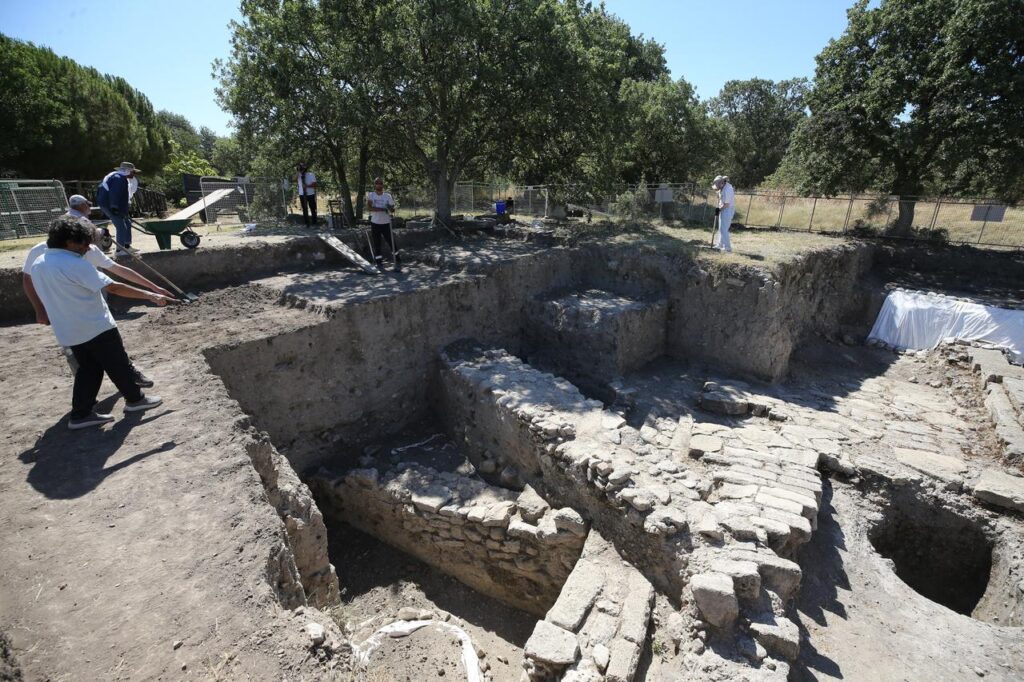
Led by Professor Rustem Aslan of Canakkale Onsekiz Mart University (COMU), the archaeological team has resumed work at the UNESCO World Heritage Site with a specific goal: to uncover physical evidence of the Trojan War. Despite the early stage of this season’s efforts, promising discoveries have already emerged.
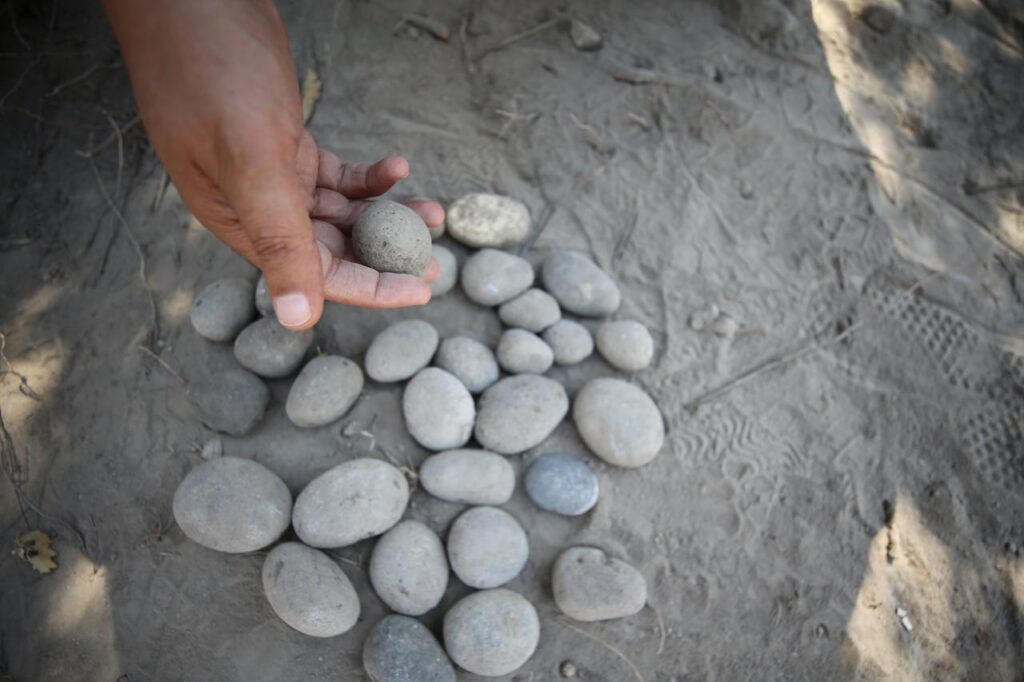
One of the most significant finds is a cache of 3,500-year-old sling stones, discovered in dense concentrations just in front of a palace structure attributed to Troy Phase 6 (Late Bronze Age). These small, rounded projectiles, common weapons during the Bronze Age, appear to have been deliberately deposited, suggesting a military function.
“The fact that so many sling stones were uncovered in such a small area in front of the palace points to an activity related to defense or assault,” stated Prof. Aslan. This discovery, coupled with two arrowheads from the same period found in the area last year, strongly indicates sustained military activity around the city’s vital structures.
Targeting the “Destruction Layer” for War Relics
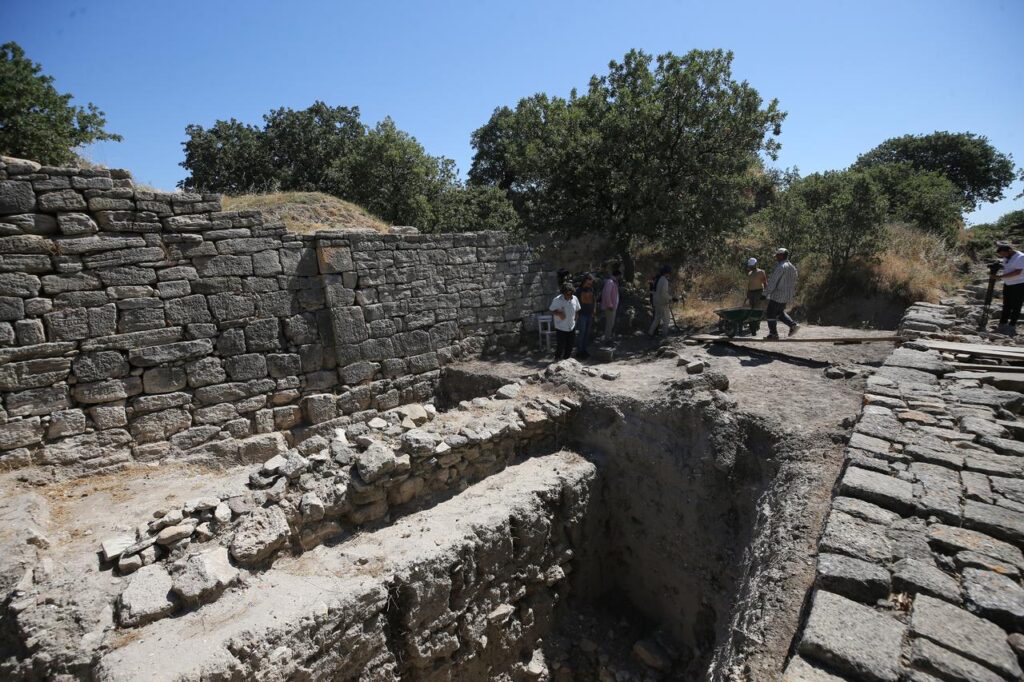
The focus of the 2025 excavation season, supported by Türkiye’s Ministry of Culture and Tourism and sponsored by ICDAS, is on accessing what archaeologists call the “destruction layer” of the Late Bronze Age. This layer, dated to around 1200 BC, is characterized by signs of violent upheaval and is widely associated with the Trojan War.
“In our work this season, we aim to reach the destruction layer of the Late Bronze Age that is thought to be linked to the Trojan War,” Prof. Aslan explained. He noted that previous work near the palace and defensive walls had already revealed war-related artifacts, including arrowheads, providing tantalizing hints of past conflicts.
Unraveling Signs of Ancient Warfare
Identifying definitive traces of ancient warfare presents a significant challenge for archaeologists. However, previous excavations at Troy—notably by Carl Blegen in the 1930s and Manfred Osman Korfmann in the 1980s—have unearthed compelling evidence of violent destruction in layers now identified as Troy 6 and Troy 7. These findings include burnt layers, damaged buildings, and carelessly buried skeletons, all consistent with war-related devastation.
“These destruction layers contain war tools and disturbed human remains that could indicate conflict,” Aslan affirmed. Preliminary evidence of such a destruction layer has recently emerged between the agora, the palace, and the defensive walls, prompting the current team to expand their research in these areas under the “Heritage for the Future Project.” They are actively searching for clues such as weapons embedded in fire layers and hastily buried skeletons—all telltale signs of conflict and destruction.
A Legacy of Discovery: From Myth to Material Evidence
The quest for the historical Troy and the reality of its legendary war has captivated scholars and archaeologists for nearly two centuries. Excavations officially began in 1863 with Frank Calvert, followed by Heinrich Schliemann in 1871, and later by Wilhelm Dorpfeld and Carl Blegen. These pioneering efforts laid the groundwork for modern archaeological investigations, transforming Troy from a purely mythical city into a tangible site of profound historical significance.
While the epic narrative of the Trojan War, complete with its wooden horse and divine interventions, continues to enthrall, the archaeological team in Türkiye is committed to unearthing the real-world evidence buried within Troy’s multi-layered mound. Each discovery, from sling stones to potential destruction layers, brings them closer to understanding how much of Homer’s epic is rooted in actual historical events.
This season, with its focused approach and promising early finds, “We hope this season will bring surprising results,” Aslan concluded, echoing the anticipation shared by historians and enthusiasts worldwide.
Cover Image Credit: Walls of Troy, Hisarlik, Türkiye. Public Domain
