
18 January 2026 The Future is the Product of the Past

As Thin as Modern Tools: World’s Oldest Steel Acupuncture Needles Discovered in China

In a discovery that reshapes the history of traditional Chinese medicine, archaeologists have unearthed what experts now confirm to be the world’s earliest known steel acupuncture needles. The artifacts were found in the famed tomb of the Marquis of Haihun, located in East China’s Jiangxi Province, and date back over 2,000 years to the Western Han Dynasty (206 B.C.–A.D. 25).

A Breakthrough in Both Medicine and Metallurgy

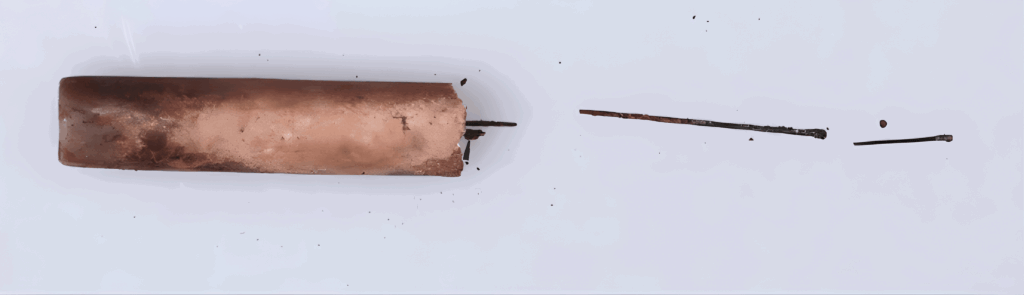
According to a report sent to the Global Times by the Jiangxi Provincial Institute of Cultural Relics and Archaeology, the needles were discovered inside a jade tube placed within a gilded lacquer box near the remains of Liu He, a briefly reigning emperor who was later titled Marquis of Haihun.

Though heavily corroded and fragmented, five needle remnants were identified. Researchers carefully analyzed those that had naturally detached, avoiding further damage to the rare artifacts. Remarkably, advanced metallurgical analysis revealed that the needles were made of steel produced via the ancient “frying” process—a sophisticated steelmaking method that allowed for the creation of needles as thin as 0.3 to 0.5 millimeters, comparable to those used in modern acupuncture.

Confirmed by Ancient Texts

Lying near the box was a wooden label inscribed with the phrase “Nine Needles Complete,” offering clear evidence of the needles’ intended medical use. This directly ties the find to ancient Chinese medical doctrines that describe nine types of acupuncture needles.
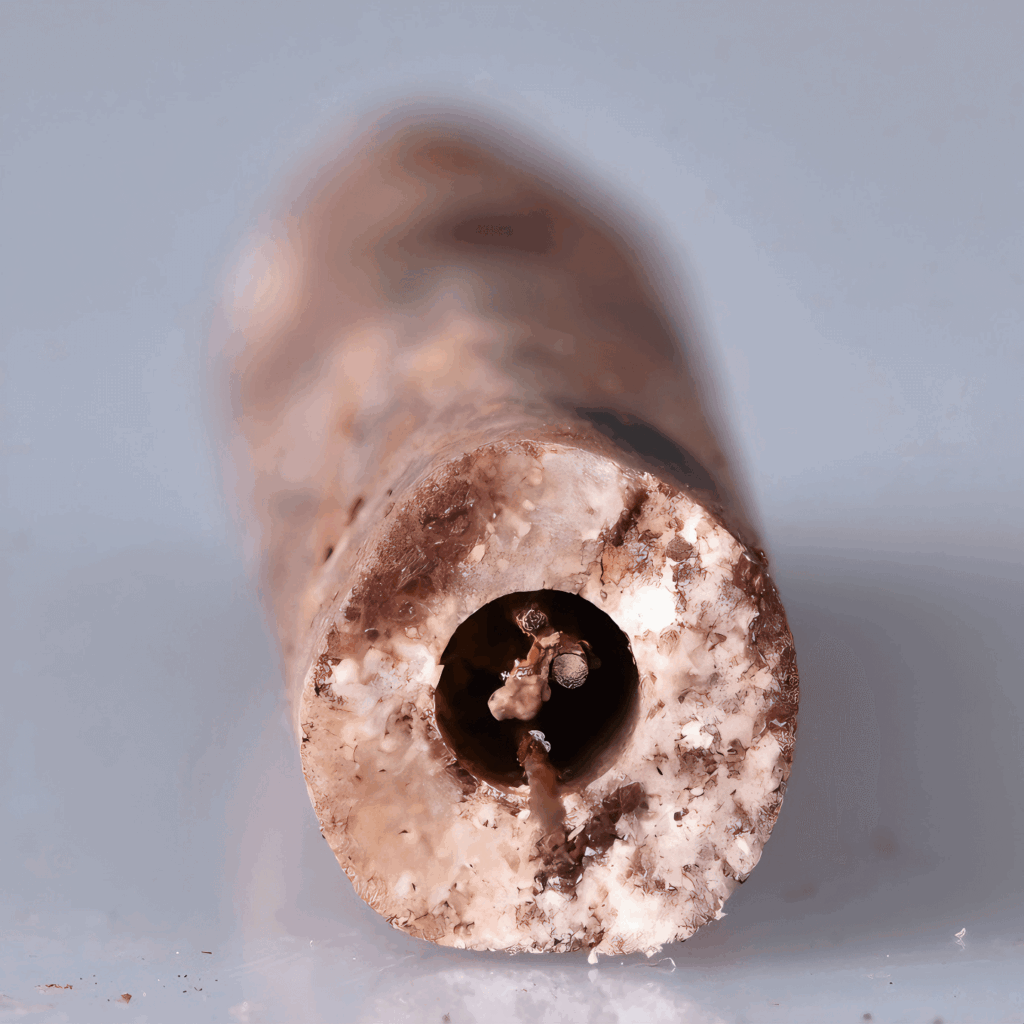
Credit: Yang Jun
Credit: Yang Jun

“This definitively identifies them as one type of the ‘Nine Needles’ described in ancient medical texts,” said Wang Chuning, a doctoral researcher at Peking University, as quoted by Xinhua News Agency.


📣 Our WhatsApp channel is now LIVE! Stay up-to-date with the latest news and updates, just click here to follow us on WhatsApp and never miss a thing!!


Why Steel Mattered

Experts highlight the technological significance of using steel. Unlike gold or silver, which are too soft, and iron, which rusts and poses an infection risk, steel’s durability and precision allowed for more advanced techniques and longer needle retention in the human body.

“Iron needles rust easily, risking infection. Gold or silver needles are too soft to be made this thin,”
explained Zhou Qi, a research fellow at the China Academy of Chinese Medical Sciences, in an interview with the Global Times.

“This is the earliest physical evidence of steel medical needles in China,” added Gu Man, director of the same institute.

Gu further emphasized that this discovery confirms the integration of cutting-edge metallurgy with ancient medical practice as early as the Western Han Dynasty.

“This breakthrough in material science directly fueled the evolution of acupuncture tools and the progress of medical practice itself,” Gu told the Global Times.
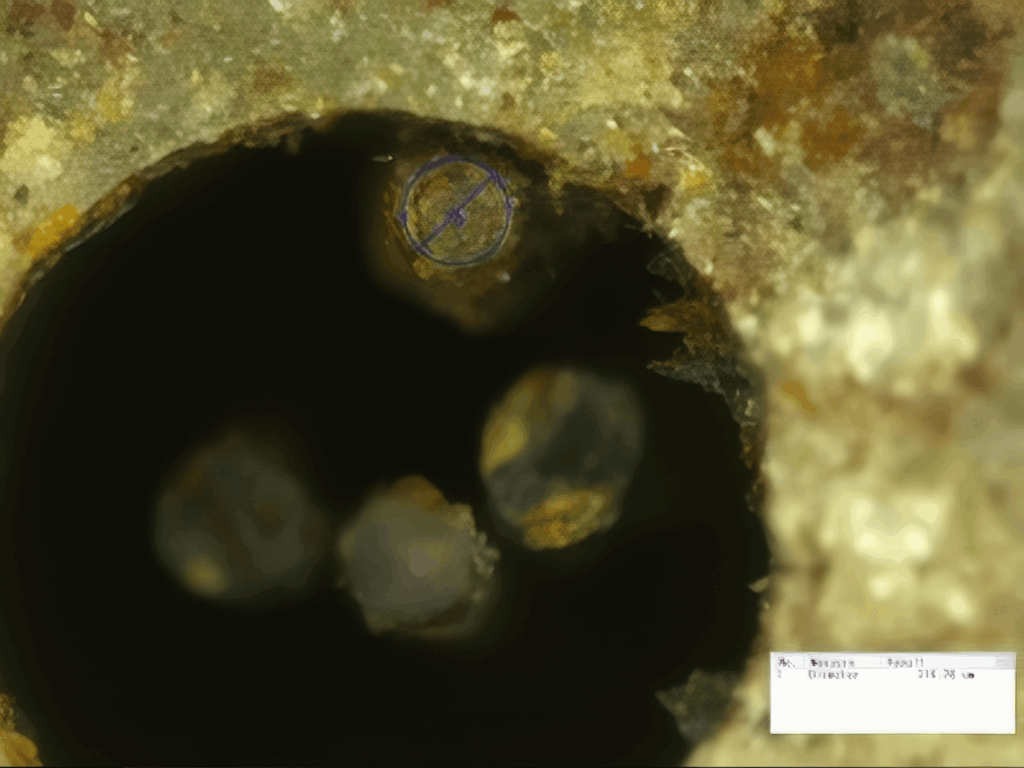
Needle's section. Credit: Jiangxi Provincial Institute of Cultural Relics and Archaeology
Needle’s section. Credit: Jiangxi Provincial Institute of Cultural Relics and Archaeology

A Tomb of Wonders

The tomb of the Marquis of Haihun, first discovered in 2011, continues to be hailed as one of China’s most significant archaeological sites in decades. Alongside the needles, the site has yielded over 10,000 artifacts, including bronze coins, books written on bamboo and wood, weapons, and a rare set of fish-scale armor.

As researchers continue to excavate and analyze the site, discoveries like these offer rare glimpses into the sophistication of early Chinese science, technology, and medicine.

Cover Image Credit: Yang Jun – Global Times

Related Articles

The excavation, which started in a cave in Turkey’s Mardin, turned into a huge underground city

19 April 2022

19 April 2022

In an underground city known used as a settlement in the early Christian era, in the Midyat district of Mardin,...

Intricate Design Revealed on 1100-Year-Old Gold-Inlaid Ritual Spear from Japan’s Island of the Gods

13 June 2025

13 June 2025

A recent archaeological breakthrough on Japan’s sacred Okinoshima Island has unveiled an ornately decorated iron spear from the late Kofun...

New insights into Scotland’s ‘bodies in the bog’

31 March 2022

31 March 2022

Fourteen bodies were found at Cramond near Edinburgh in 1975. New research suggests that two of the remains of these...

1,800-year-old wooden mask likely used in farm festivals found in Japan

25 April 2023

25 April 2023

Archaeologists have unearthed an almost perfectly preserved wooden mask from the early third century at the Nishi-Iwata ruins in Osaka...

Botanical Findings Analysis from Biblical area of Goliath sheds Unprecedented Light on Philistine Ritual Practices

27 February 2024

27 February 2024

Bar-Ilan University researchers shed “unprecedented light” on Philistine ritual practices, such as the use of psychoactive and medicinal plants, by...

Time Team Cracks Sutton Hoo Mystery: ‘Master Count’ Bucket Was a Burial Urn

20 May 2025

20 May 2025

In a remarkable breakthrough at the historic Sutton Hoo site in Suffolk, England, archaeologists have revealed that a 6th-century Byzantine...

Incredibly Rare Tyrian Purple Discovered at Carlisle Roman bathhouse

5 May 2024

5 May 2024

A rare archaeological object – thought to be the only one of its type in the former Roman Empire –...

Lion-Head Stone Spout Channels Wine in New Bathonea Wine & Olive Oil Workshop Discovery

16 October 2025

16 October 2025

A finely carved lion-head stone spout has emerged from the soil of Bathonea, the ancient harbor city lying along Istanbul’s...

Fake Byzantine Coin Pendant Is First Evidence of 6th-Century Elite in Thaxted, Essex

1 August 2025

1 August 2025

Discovery of a rare 6th-century pseudo-Byzantine gold coin pendant near Thaxted sheds new light on elite presence in early medieval...

At a dig site in western Turkey, a centuries-old Byzantine fortress will be revealed

24 December 2021

24 December 2021

Excavation of vast Byzantine-era fortifications considered to be about 900 years old has begun at a dig site in western...

4,900-year-old Copper Age Fortress with a Violent Past and Odd Roman Burial Found in Spain

13 February 2025

13 February 2025

A remarkable 4,900-year-old Copper Age fortress, featuring a pentagon shape, three concentric walls, 25 bastions, and three ditches, has been...

New evidence for early regional exchanges in Eurasia: Ice skates made of animal bones over 3,000 years old

9 March 2023

9 March 2023

Chinese archaeologists have discovered ancient ice skates made of animal bones at the Gaotai Ruins in the Xinjiang Uygur Autonomous...

A 1,100-year-old lead amulet of Bulgarian soldiers sieges Constantinople found

31 March 2023

31 March 2023

A lead plate amulet bearing an inscription in Cyrillic dating from the times of Tsar Simeon the Great was discovered...

Researchers decipher enigmatic ancient ‘Unknown Kushan Script’

13 July 2023

13 July 2023

A research team at the University of Cologne’s Department of Linguistics deciphered a writing system belonging to the Kushan Empire,...

The Largest Ancient Floor Mosaic in Cappadocia and Central Anatolia Region Uncovered -600 square meters-

12 November 2023

12 November 2023

The structure with the largest floor mosaic in Cappadocia and Central Anatolia Region was unearthed during the excavations carried out...