
26 June 2026 The Future is the Product of the Past

Discovery of 1,500-Year-Old Mosaic at Ancient City of Dara in Mardin, Türkiye

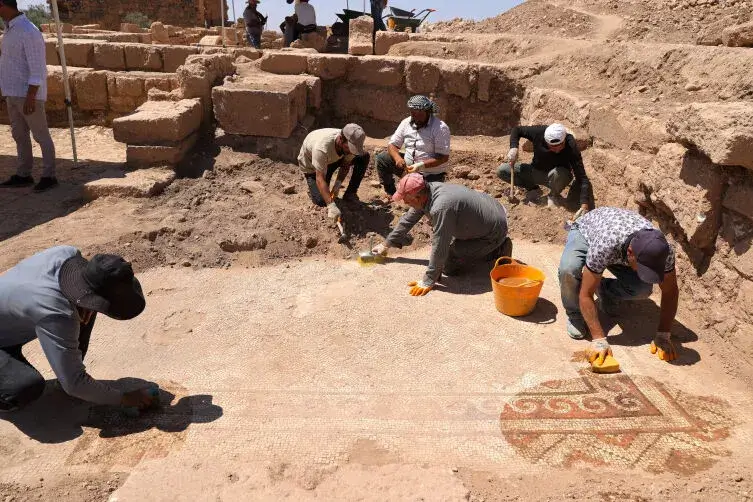
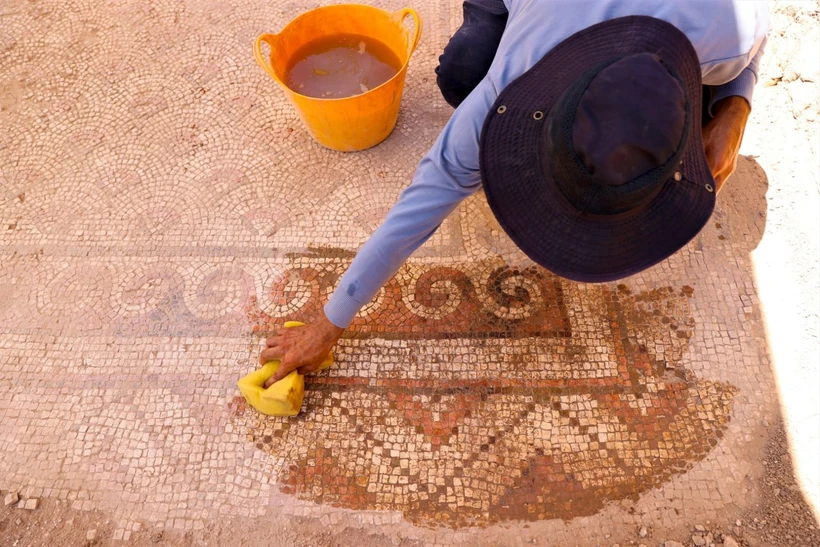
According to information provided by Anadolu Agency, archaeologists have recently uncovered a remarkably well-preserved 1,500-year-old mosaic decorated with drop and wave motifs at the ancient city of Dara in the Artuklu district of Mardin, southeastern Türkiye.

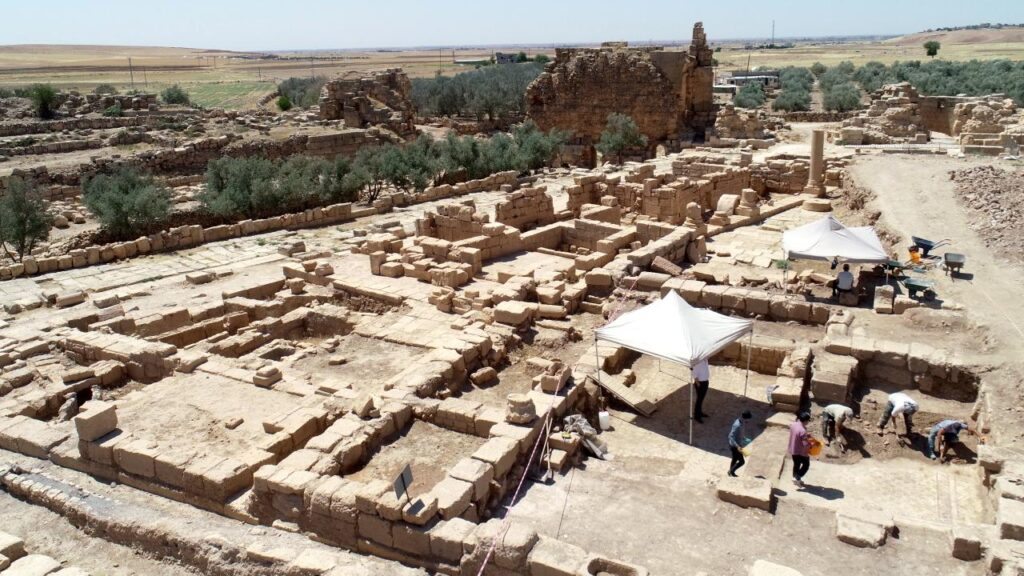
Dara was established by the Eastern Roman Empire as a strategic frontier city to defend against the Sasanian Empire. Located approximately 30 kilometers from Mardin’s city center, Dara served as a vital military, commercial, and religious hub in ancient Mesopotamia. The site includes important structures such as a necropolis, church, palace, agora (marketplace), prison, armory, and an ancient water reservoir, reflecting its multifaceted role throughout history.

Ongoing Archaeological Excavations and Recent Discoveries

Excavations at Dara have been ongoing for nearly four decades, with increased momentum since the site was included in Türkiye’s Ministry of Culture and Tourism’s “Heritage for the Future Project” last year. The project aims to accelerate the preservation and study of Türkiye’s archaeological sites.

The recent mosaic floor was discovered in a residential building adjacent to the agora area, where approximately 20 shops and workshops have been excavated alongside an advanced Roman-era drinking water system. The mosaic, covering nearly 50 square meters, is nearly intact and features intricate geometric designs, including wave and diamond-shaped motifs.
Credit: AA

Ayhan Gök, the provincial director of culture and tourism, told Anadolu Agency: “We have been conducting excavations at Dara for 39 years. Since its inclusion in the Heritage for the Future Project, our work has intensified. This newly discovered mosaic is particularly exciting because it shows evidence of ancient restoration and has remained preserved for around 1,500 years.”


📣 Our WhatsApp channel is now LIVE! Stay up-to-date with the latest news and updates, just click here to follow us on WhatsApp and never miss a thing!!


Dara’s Rich Mosaic Culture and Historical Significance

Chief archaeologist Devrim Hasan Menteşe, leading the excavations, explained that Dara is renowned for its rich mosaic culture, especially in the agora and surrounding residential areas. “While many mosaic fragments have been found previously, this is one of the few occasions where an almost complete mosaic floor has been uncovered,” Menteşe said.

Dating from the reign of Emperor Justinian I (525–575 AD) based on coins found on-site, the mosaic underscores Dara’s importance not only as a military garrison housing around 25,000 soldiers but also as a thriving commercial center and spiritual destination.

“Recent discoveries confirm Dara’s role as a significant trade hub in Mesopotamia during Roman times,” Menteşe added. “Inscriptions suggest it was also a religious pilgrimage site, highlighting its multifaceted historical value.”
Credit: AA

Despite challenging weather conditions, excavation teams continue to reveal vital features such as Dara’s large necropolis, ancient city walls, water cisterns, and agora, enriching our understanding of this ancient city’s cultural legacy.

The newly discovered mosaic is expected to attract more visitors and researchers, further enhancing Dara’s status as a key archaeological and tourist site in southeastern Türkiye.

Cover Image Credit: Anadolu Agency (AA)

Related Articles

A Rare Design in Roman Military Architecture: Triangular Stone Tower Discovered Near Sofia

22 July 2025

22 July 2025

Bulgarian archaeologists have uncovered a triangular stone tower — a rare architectural form in Roman military design — at the...

Archaeologists discovered on Tunisian coast three shipwrecks, one of which 2,000 years old

8 June 2023

8 June 2023

A team of archaeologists from eight countries—Algeria, Croatia, Egypt, France, Italy, Morocco, Spain, and Tunisia bordering the Mediterranean Sea has...

Recent excavations reveal the complete water conservancy system of the nearly 5000-year-old Liangzhu Ruins

26 November 2024

26 November 2024

In recent excavations around the Liangzhu Ruins in east China’s Zhejiang Province, researchers have discovered about 20 ancient dams. Seven...

Researchers have found in miniature ceramic bottles evidence of the oldest known use of cosmetics in the Balkans

14 July 2021

14 July 2021

In miniature ceramic bottles from excavations ascribed to the Lasinja Culture in the Southeast Prealps and the Vinča Culture in...

7,000-Year-Old Alutiiq Villages Discovered on Alaska’s Shuyak Island

3 July 2025

3 July 2025

A recent archaeological survey led by the Alutiiq Museum has revealed significant discoveries on Shuyak Island, part of the Kodiak...

34 Roman Tombs, Rare Greek Inscription, and Shield Umbo Discovered in Ancient Tomis

3 March 2026

3 March 2026

Muzeul de Istorie Națională și Arheologie Constanța has announced the discovery of 34 Roman-period tombs during preventive archaeological excavations at...

2,000-year-old Celtic hoard of gold ‘rainbow cups’ discovered in northeastern Germany

13 January 2022

13 January 2022

Archaeologists have found an ancient Celtic coins treasure consisting of 41 gold coins in a field in Brandenburg, a state...

Only Known 2,000-Year-Old Jewish Coin Showing the Temple Menorah Returns to Israel from the U.S.

21 May 2026

21 May 2026

A tiny bronze coin struck more than 2,000 years ago has returned to Israel after being seized in the United...

“Cardiff’s earliest house” unearthed during an archaeological dig may shed light on the city’s earliest inhabitants

15 July 2022

15 July 2022

Archaeological excavation in a city park in Cardiff, the capital of Wales, has uncovered what is believed to be the...

1.5 tons of bronze coins found in east China

19 December 2022

19 December 2022

An ancient coin hoard containing 1.5 tonnes of coins from the Tang (618-907) and Song (960-1279) dynasties has been discovered...

Archaeologists unearth human spines threaded onto reed posts in Peru

5 February 2022

5 February 2022

Archaeologists have found almost 192 examples of human vertebrae threaded onto reed posts 500 years ago in the Chincha Valley...

Archaeologists Uncover Evidence of British Rule in Florida

29 March 2025

29 March 2025

A recent archaeological excavation in St. Augustine, Florida, has revealed a British redoubt dating back to 1781, offering valuable insight...

Anglo-Saxon Prince Buried With His Horse Discovered at Sizewell C Site

13 January 2026

13 January 2026

An elite Anglo-Saxon prince buried with his horse discovered during Sizewell C excavation in Suffolk, revealing rare 7th-century burial rituals...

The two sarcophagi discovered beneath Notre Dame start to reveal their secrets

12 December 2022

12 December 2022

The owner of one of the two sarcophagi that were found in an excavation at the intersection of Notre Dame...

18,000 years ago, late Pleistocene humans may have hatched and raised the “World’s Most Dangerous Bird.”

2 October 2021

2 October 2021

Researchers say the eggshell is an understudied archaeological material that has the potential to clarify past interactions between humans and...