19 January 2026 The Future is the Product of the Past

Ancient Funerary Stones Looted from Yemen Will Be Exhibited at the Victoria & Albert Museum

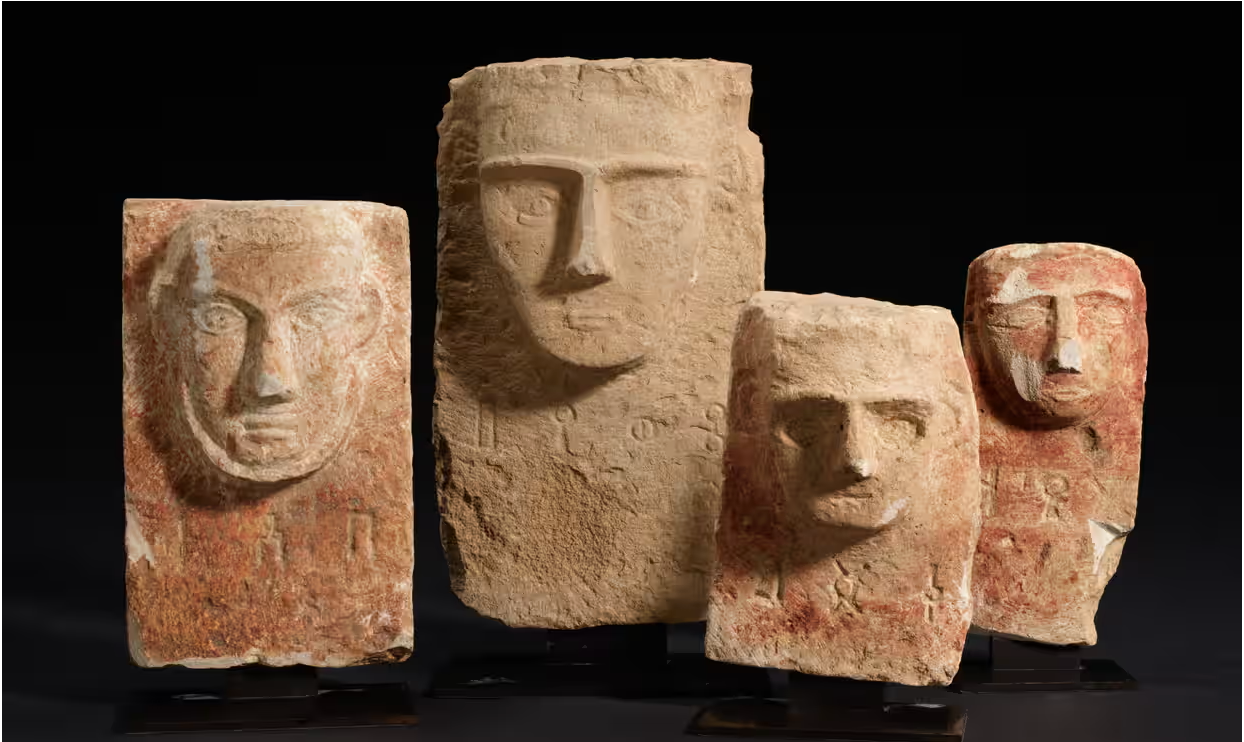
The Victoria & Albert Museum (V&A) has signed a historic agreement with the Yemeni government to temporarily keep and display four ancient Funerary Stones seized by police in east London and believed to have been looted from Yemen.

Dating back to the second half of the first millennium BCE, the stelae come from a Yemen necropolis that has been subject to recent looting. The objects were spotted in an interior design shop by an archaeology enthusiast and recovered by the Met’s Art and Antiques Unit.

Works are usually returned to their country of origin as soon as possible, but the Museum will now be able to display the rare artifacts at its V&A Storehouse in Stratford before they are sent back when it opens in 2025.

In a historic agreement with Yemen, the V&A will temporarily research and conserve the stones until it is safe to return them. The objects are of the type listed on the International Council of Museum’s emergency red list of cultural objects at risk.

They will be on view at V&A East Storehouse as part of the show “Culture in Crisis” through 2025. On Tuesday, the agreement was signed by the V&A’s director Tristram Hunt and the ambassador for Yemen in the UK Yassin Saeed Noman.


📣 Our WhatsApp channel is now LIVE! Stay up-to-date with the latest news and updates, just click here to follow us on WhatsApp and never miss a thing!!
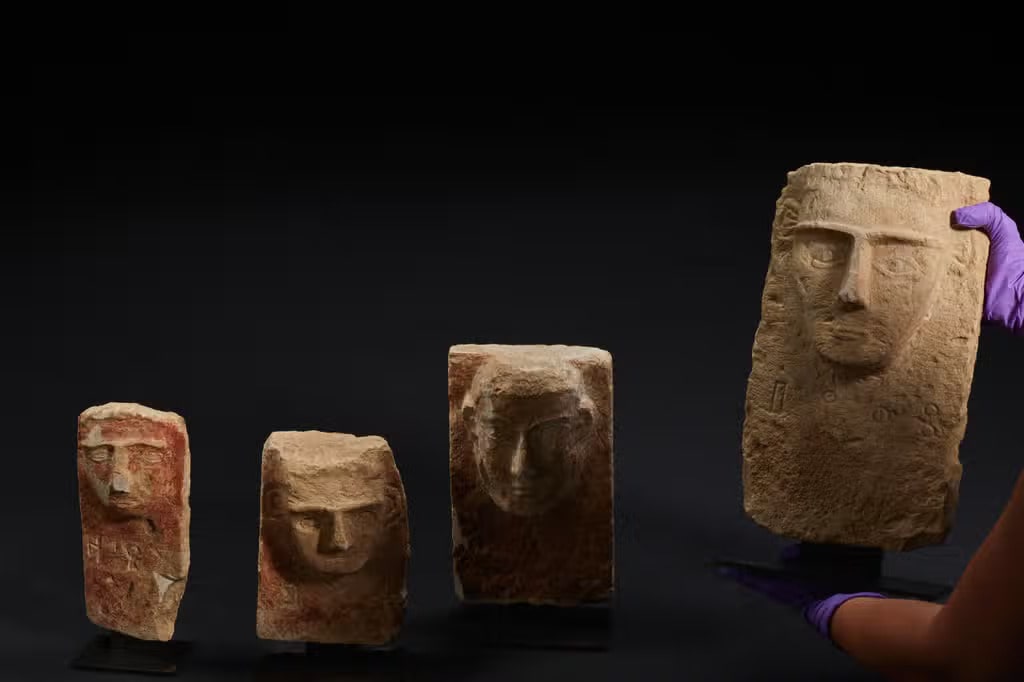


A group of four ancient funerary stelae from the Republic of Yemen. Photo: © Victoria and Albert Museum, London

“This is a historic agreement that will give the public the chance to appreciate these exceptional examples of Yemeni culture and creativity, before the objects are repatriated, and shine a light on how the V&A’s Culture in Crisis program helps curtail the illegal trade of looted objects and the preservation of cultural heritage worldwide,” Hunt told the BBC.

Charles Harper, UK charge d’affaires and deputy ambassador to Yemen, said: “Arts and culture can play an important role in rebuilding a society from conflict and this agreement is a fantastic way to ensure Yemeni culture remains in Yemeni care.”

The V&A’s Culture in Crisis, external programme was established in 2015 and looks to protect cultural heritage by working closely to support law-enforcement around the world to help prevent the illicit trade of cultural artefacts.

Cover Photo: Ancient funerary stelae looted from a Yemen necropolis. PHOTO: ED LYON/V&A MUSEUM IN LONDON
Related Articles

Archaeologists Unearth 78,000-Year Oldest Human Burial

5 May 2021

5 May 2021

A 78,000-year-old group of bones discovered at the mouth of a Kenyan coastal cave constitutes the oldest recorded formal human...

Archaeologists say 12,000-year-old flutes discovered in northern Israel may have been used to lure falcons

9 June 2023

9 June 2023

New research reveals that about 12,000 years ago, in northern Israel, humans turned the bones of small birds into instruments...

“Nikasitimos Was Here Mounting Timiona,” 2,500-year-old erotic graffiti on Astypalaia, Greece

7 April 2024

7 April 2024

In 2014, an archaeologist working on Astypalaia, a remote Greek island of the Dodecanese discovered one of the world’s oldest...

Ancient Roman 3rd-century defensive wall found in Germany

24 March 2024

24 March 2024

An exciting archaeological discovery was made during construction work in Aachen’s city center, Germany. At the corner of Pontstrasse and...

A Mysterious Deity’s Ancient Gold Gift was Discovered at Georgia’s Gonio-Apsaros Roman Fort

25 October 2024

25 October 2024

During excavations at the Roman fortress of Apsaros in Georgia, archaeologists discovered a unique gold votive plaque presented to Jupiter...

Rare ivory plaques from First Temple Period were discovered in Jerusalem

8 September 2022

8 September 2022

An extraordinary find was made in Jerusalem: an assemblage of ivory plaques from the First Temple period, one of only...

Ancient tomb with prayer-related murals found in China’s Shanxi

25 December 2021

25 December 2021

Archaeologists in north China’s Shanxi Province have found an ancient tomb dating back to the Jin Dynasty (1115-1234) with murals...

4000-year-old sword found in Finland

12 October 2021

12 October 2021

A Bronze Age sword dating back as far as 1700 B.C.was discovered broken in items in Finland this previous summer...

2900-Year-Old Erzin Stele: A Key to Understanding the Hittite to Greek Mythological Transition

5 April 2025

5 April 2025

In a significant archaeological discovery, a basalt stele was unearthed in 1987 by O. Günay while plowing his field at...

Poland’s oldest copper axe discovered in the Lublin region

30 March 2024

30 March 2024

A copper axe from the 4th to 3rd millennium BC identified with the Trypillia culture was found in the Horodło...

2,000-year-old graves found in ancient necropolis beneath Paris Train Station

24 April 2023

24 April 2023

Archaeologists have discovered 50 tombs in an ancient necropolis just meters from a busy train station in central Paris, and...

A Forgotten Capital in Anatolia: 2,000-Year-Old Bone Pen Unearthed at Türkmen-Karahöyük

19 August 2025

19 August 2025

The unearthing of a 2,000-year-old bone pen at Türkmen-Karahöyük offers a rare glimpse into the sophisticated bureaucracy and daily life...

Urartian-Era Fortress with 50 Rooms Discovered at 3,000 Meters in Eastern Türkiye

5 August 2025

5 August 2025

Archaeologists uncover a massive high-altitude fortress believed to date back to the Iron Age, with ties to the ancient Urartian...

500-year-old Ottoman bath revived after years of restoration

5 April 2024

5 April 2024

The 500-year-old Zeyrek Çinili Hammam, a masterpiece of Mimar Sinan and one of the most important examples of Ottoman Bath...

Archaeologists discover that Iranian farmers grew rice about 3,000 years ago

18 May 2023

18 May 2023

Archaeologists excavating in Iran’s Mazandaran region have revealed that Iranian farmers were cultivating rice as far back as 3000 years...