
14 December 2025 The Future is the Product of the Past

Ark of the Covenant Discovery? Biblical Ruins Unearthed in Israel May Be Key to Ancient Mystery

Archaeologists at Tel Shiloh Claim Structure Matches Biblical Tabernacle Where the Ark of the Covenant Was Housed

In a monumental discovery that could rewrite biblical archaeology, a team of researchers at the ancient site of Tel Shiloh in Israel claims to have unearthed the very location where the Ark of the Covenant was once stored — a find that aligns with scriptural descriptions in the Old Testament.

Led by Dr. Scott Stripling, Director of Excavations at Shiloh, the team has uncovered what they describe as a monumental Iron Age I structure that matches the biblical specifications of the Tabernacle — the portable earthly dwelling place of God described in Exodus. The site is located in the hill country of Ephraim, a region noted in the Bible as Israel’s first central worship center.

“We have identified a monumental building from the Iron Age I period that perfectly matches the biblical specifications,” said Dr. Stripling in an interview with The Christian Broadcasting Network (CBN). “It is oriented east-west and has an internal ratio of 2 to 1 — just as described in the book of Exodus.”

Evidence of Sacrificial Rituals Matches Biblical Practices

In addition to architectural features, over 100,000 animal bones were found at the site, mainly from sheep, goats, and oxen — the same animals listed in Levitical sacrificial laws. The bones predominantly came from the right side of the animals, which directly correlates with Leviticus 7, where the right side is reserved for priestly offerings.


📣 Our WhatsApp channel is now LIVE! Stay up-to-date with the latest news and updates, just click here to follow us on WhatsApp and never miss a thing!!


“The evidence of sacrificial rituals here is overwhelming,” Stripling told CBN. “These findings cannot be considered a coincidence. They match the biblical account to a degree that’s hard to ignore.”

Pottery fragments discovered in the same layer date back to the period in which the Ark would have been housed at Shiloh, around the 15th to 11th centuries BC, before it was moved to Jerusalem during King David’s time.
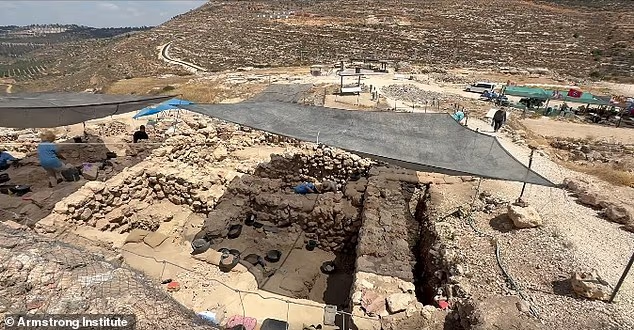

Excavated ruins at Tel Shiloh in Israel, believed by archaeologists to be the site of the biblical Tabernacle—described in scripture as the original resting place of the Ark of the Covenant. Credit: Armstrong Institute

Shiloh and the Biblical Ark: A Powerful Connection

According to the Bible, the Ark of the Covenant — a gold-covered wooden chest containing the Ten Commandments — was kept in the Tabernacle at Shiloh for nearly 400 years. In 1 Samuel 4, it is described how the Israelites brought the Ark into battle, only for it to be captured by the Philistines. The event led to the death of Eli the High Priest, who fell and died upon hearing the news.

Stripling’s team may have even identified the city gate where Eli was sitting when he received the fateful report — a discovery that adds yet another layer of depth to the excavation.

“We believe we have uncovered the very gate mentioned in the story of Eli’s death,” Dr. Stripling told CBN.

The Tabernacle’s Inner Room — A Holy of Holies Found?

One of the most striking architectural features is a massive interior dividing wall, which researchers believe may have once separated the Holy of Holies — the most sacred part of the Tabernacle where the Ark was kept. According to Exodus 26 and Leviticus 16, only the high priest could enter this space once a year, under strict conditions, due to the believed physical presence of God dwelling between the cherubim atop the Ark.

Could This Be the Final Clue in the Ark of the Covenant Mystery?

While the Ark itself remains lost to history — vanishing from records around 586 BC — this latest discovery at Tel Shiloh offers perhaps the strongest archaeological evidence to date of its original resting place. Combined with historical, biblical, and material evidence, researchers say the site aligns too closely with scripture to dismiss.

“If you believe the Bible is rooted in historical truth,” said Stripling, “then this site could very well be where the Ark once stood.”

The excavation continues, and the world watches with anticipation. Whether this discovery finally unlocks the mystery of the Ark of the Covenant remains to be seen — but one thing is clear: Shiloh may be more than just an ancient ruin. It could be the heartbeat of a biblical legend.
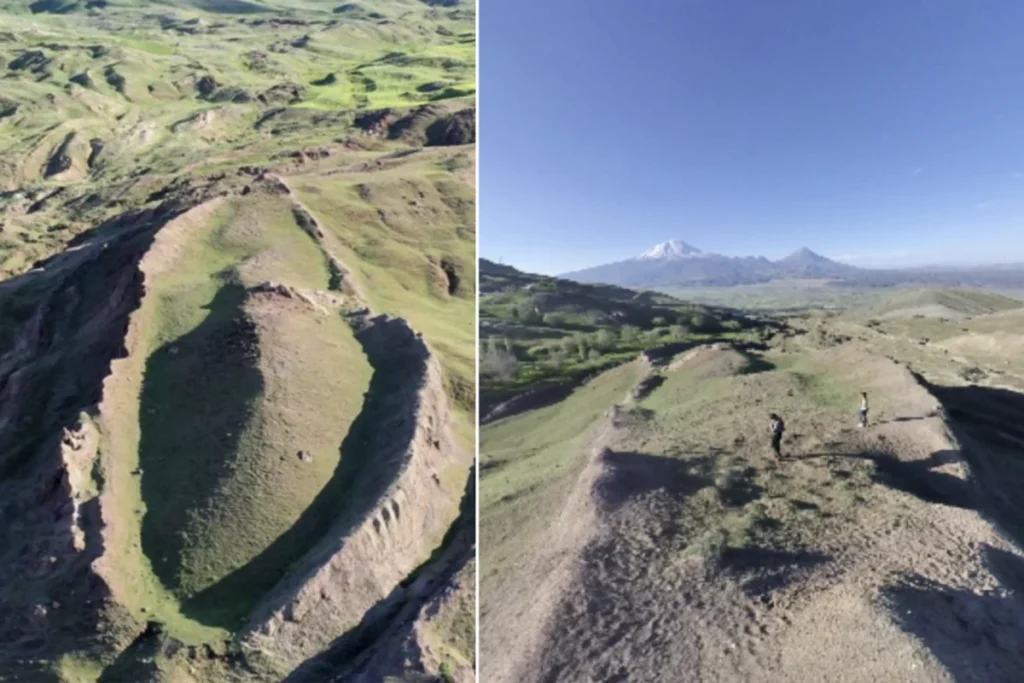
A recent discovery in Türkiye has ignited interest among experts who believe they may have found the fossilized remains of Noah’s Ark. Credit: Noah’s Ark Scans

Related Development: Possible Site of Noah’s Ark Being Excavated in Türkiye

While interest in the Ark of the Covenant intensifies in Israel, another biblical mystery is being explored in Türkiye, where archaeologists have begun excavating the Durupınar formation — a site believed by some to be the resting place of Noah’s Ark. Located approximately 18 miles south of Mount Ararat’s summit, the boat-shaped, 538-foot-long geological formation closely matches the dimensions described in the Book of Genesis.

Excavation efforts, now officially underway, aim to determine whether this natural feature may in fact be the remains of the legendary vessel. Though long debated among geologists and theologians alike, renewed interest and fresh data have sparked scientific curiosity once again.

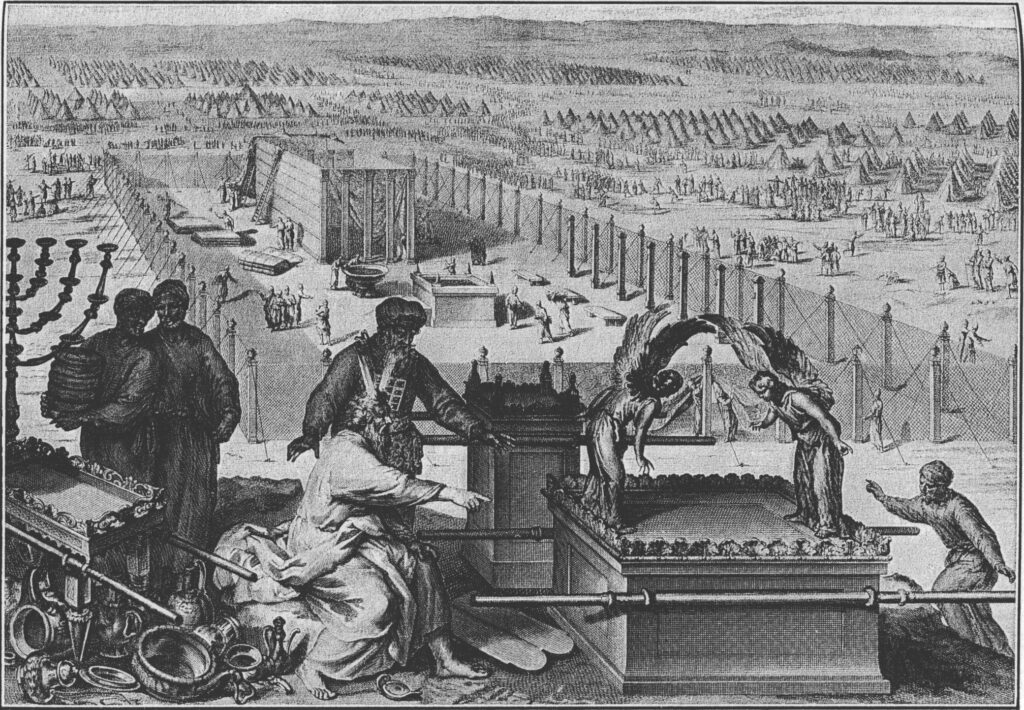
Cover Image Credit: 1728 illustration of the Ark at the erection of the Tabernacle and the sacred vessels, as in Exodus 40:17–19. Public Domain

Related Articles

Archaeologists in northern Spanish have discovered what they believe to be the oldest Basque language text

15 November 2022

15 November 2022

Archaeologists have discovered what they believe to be the oldest Basque language text, on  Irulegi archaeological site, near the Aranguren...

2,000-Year-Old Roman Stele Decorated with an Eagle and Greek Inscriptions Found in Manbij, Syria

23 August 2025

23 August 2025

A striking Roman-era stele carved from black basalt, featuring a detailed eagle clutching a wreath and adorned with Greek inscriptions,...

Unique Lion-Headed Handles Unveiled from a Roman-Period Cist Tomb Near Khirbat Ibreika

30 April 2025

30 April 2025

Beneath the ancient dust of Khirbat Ibreika in southern Israel, archaeologists have unearthed an unexpected enigma: four bronze discs, each...

A new study shows that the cave paintings at Cueva Ardales are the work of Neanderthals

21 August 2021

21 August 2021

A study of pigments used in murals in the Cueva Ardales caves in southern Spain has revealed that Neanderthals, long...

The secret of the mummy in the Crystal coffin found in a garage in San Francisco

30 March 2023

30 March 2023

Mysterious mummies are a symbol of ancient lost times, which we often associate with Egypt and other ancient civilizations. Therefore,...

Rare Roman Marble Sarcophagus Depicting Dionysus and Hercules Discovered in Caesarea, Israel — A First of Its Kind

9 June 2025

9 June 2025

A rare Roman-era marble sarcophagus featuring a vivid scene of a mythological drinking contest between Dionysus, the god of wine,...

Particle physics and archeology collaboration uncovers secret Hellenistic underground chamber in Naples

13 May 2023

13 May 2023

The ruins of the ancient necropolis of Neapolis, built by the Greeks between the end of the fourth and the...

Archaeologists find an Anglo-Saxon church at Stoke Mandeville excavation site

13 September 2021

13 September 2021

Archaeologists working on the HS2 project found the remains of an Anglo-Saxon church during their excavations at the former St...

A 3200-year-old trepanned skull discovered in eastern Turkey’s Van province

12 November 2022

12 November 2022

A 3200-year-old trepanned skull was discovered in eastern Turkey’s Van province. In the prehistoric era, Anatolia served as a transitional...

Synchrotron Technique Reveals Mysterious Portrait Underneath Renaissance Painting

16 April 2023

16 April 2023

Conservators and curators from the Art Gallery of New South Wales used the Australian Synchrotron’s advanced imaging technique to learn...

Ceremonial cave site from Postclassic Maya period discovered in Yucatán Peninsula

21 December 2021

21 December 2021

Archaeologists have discovered a ceremonial cave site in Chemuyil on the Yucatán Peninsula, Mexico, that dates from the Postclassic Maya...

1,800-Year-Old Gold Ring with ‘Venus the Victorious’ Carving and Carolingian Coins Discovered in France

25 December 2024

25 December 2024

Archaeologists from the French National Institute for Preventive Archaeological Research (INRAP) have discovered a 1,800-year-old gold ring with a chiseled...

Well-Preserved Funerary Enclosures, Mausoleums, and Gladiator Epitaph Discovered in Ancient Roman Colony of Liternum, Italy

22 March 2025

22 March 2025

Recent archaeological excavations in the ancient Roman colony of Liternum, located in present-day Giugliano in Campania, Italy, have unveiled significant...

Ancient Cymbals Unearthed in Oman Reveal Shared Musical Traditions Across Bronze Age Cultures

8 April 2025

8 April 2025

Recent archaeological discoveries in Oman have unveiled significant insights into the musical practices of Bronze Age societies, suggesting a rich...

The marble head of God Apollo unearthed in an excavation at Philippi, Greece

29 March 2024

29 March 2024

The excavation, carried out by a group of students of the Aristotle University of Thessaloniki in the archaeological site of...