
12 June 2026 The Future is the Product of the Past

Aspendos Excavation Reveals Rare 1,700-Year-Old Roman Emperor’s Statue Head

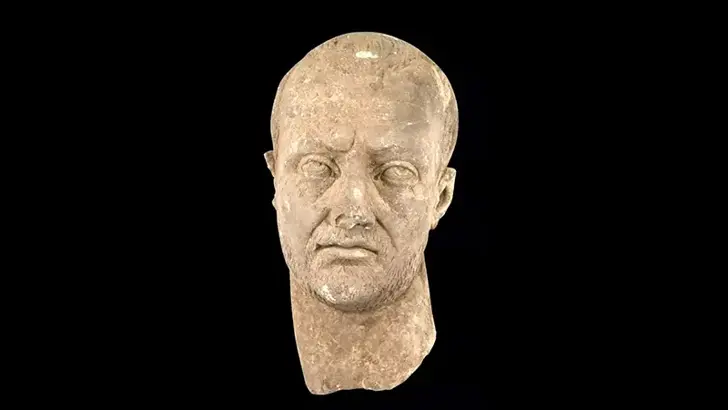
Archaeologists have uncovered a remarkable marble head believed to depict a Roman emperor during excavations in the ancient city of Aspendos, located in southern Türkiye’s Antalya Province. Dating back approximately 1,700 years to the late 3rd century AD, this rare artifact blends Roman realism with Hellenistic artistic influence, offering fresh insights into a pivotal era of Roman history.

The Emperor’s Portrait: A Blend of Power and Emotion

The marble head, measuring around 40 centimeters in height, is estimated to date between AD 250 and 300—a time marked by significant political and artistic transitions within the Roman Empire.

Based on the estimated dating of the statue to the late 3rd century AD, it could possibly represent Emperor Gallienus or Emperor Claudius II Gothicus, both of whom ruled during the turbulent period known as the Crisis of the Third Century. This timeframe aligns with the political instability and artistic transitions reflected in the statue’s realistic yet expressive style.

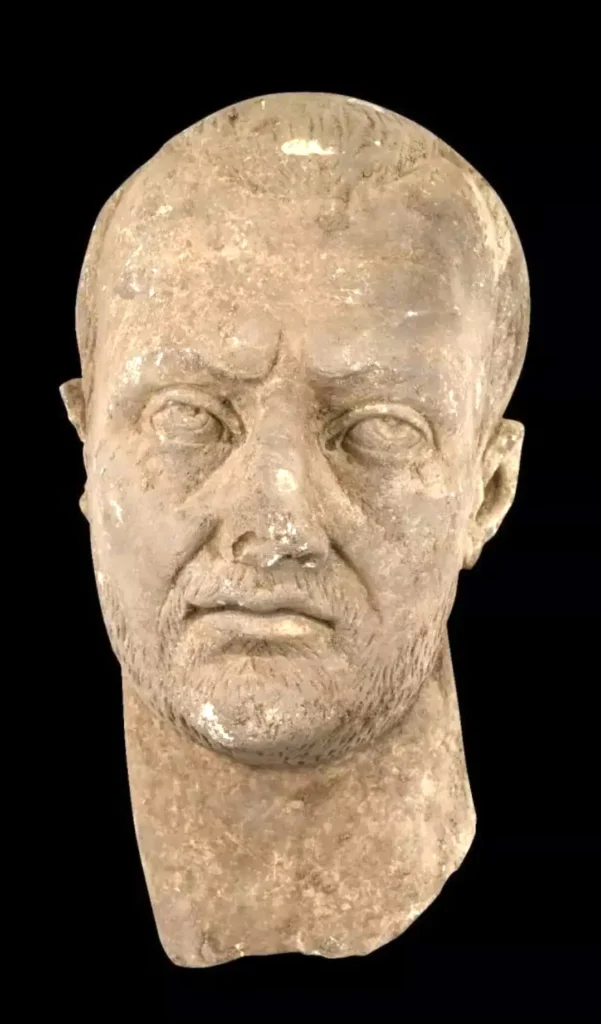
The portrait exemplifies verism, a Roman tradition emphasizing hyper-realistic details such as deep forehead wrinkles, pronounced cheek folds, and furrowed lips. These features symbolized wisdom and authority. Simultaneously, the statue’s slightly tilted neck and introspective gaze reveal the lasting impact of Hellenistic art, which infused sculptures with emotional depth and humanity.

“This discovery highlights a fascinating fusion of artistic legacies—Roman verism merged with Hellenistic emotional expression—to convey both imperial power and moral gravitas,” said the lead archaeologists involved in the analysis.


📣 Our WhatsApp channel is now LIVE! Stay up-to-date with the latest news and updates, just click here to follow us on WhatsApp and never miss a thing!!


Based on the estimated dating of the statue to the late 3rd century AD, it could possibly represent Emperor Gallienus or Emperor Claudius II Gothicus, both of whom ruled during the turbulent period known as the Crisis of the Third Century.
Based on the estimated dating of the statue to the late 3rd century AD, it could possibly represent Emperor Gallienus or Emperor Claudius II Gothicus, both of whom ruled during the turbulent period known as the Crisis of the Third Century.Credit: DHA

Aspendos: Beyond Its Famous Theater

Aspendos, best known for its exceptionally preserved Roman theater, was a thriving urban center in the ancient region of Pamphylia. Founded as early as the 10th century BCE, the city became an important hub for trade, politics, and culture under Roman rule.

The newly found statue head was excavated in the city’s Roman forum, the vibrant civic heart where imperial authority was visually asserted through monumental art and architecture. Alongside ongoing digs of public baths, aqueducts, and administrative buildings, this discovery enriches our understanding of Aspendos’ urban planning and the role of imperial propaganda in Anatolia during the late Roman Empire.

Significance of the Find

This marble head not only deepens historical knowledge about the Crisis of the Third Century—a period of military, economic, and political upheaval—but also illustrates how emperors used art to project resilience and legitimacy in times of uncertainty. The blend of realism and emotion captured in the sculpture’s expression offers a rare glimpse into the complex identity and ideals of late Roman imperial rule.

Cover Image Credit: DHA

Related Articles

Mycenaean Palace Reveals Sparta Rose From an Older Lakedaimonian World

19 May 2026

19 May 2026

Sparta’s origins may be far older and more complicated than the familiar story of a warrior society founded by conquering...

200,000-year-old hand axe discovered in the northern part of Saudi Arabia

5 November 2023

5 November 2023

The Royal Commission for AlUla (RCU) of Saudi Arabia has announced that archeological excavation teams at the Qurh site in...

Archaeologists Found Seal Impressions That Could Change Hittite History in Kayalıpınar

15 September 2023

15 September 2023

A seal impression belonging to Hattusili III was found during the excavations carried out near the village of Kayalıpınar in...

Viking Tomb Discovery in Denmark May Reveal Elite Family Linked to King Harald Bluetooth

20 June 2025

20 June 2025

A stunning archaeological discovery near Aarhus, Denmark, has revealed 30 Viking Age graves that may belong to a powerful aristocratic...

Ancient Walled Oases Unveiled in Saudi Arabia Reveal 4,000 Years of Desert Settlement

30 June 2025

30 June 2025

A groundbreaking archaeological discovery has revealed a vast network of ancient walled oases in the Arabian Desert, dating back over...

Rare ivory plaques from First Temple Period were discovered in Jerusalem

8 September 2022

8 September 2022

An extraordinary find was made in Jerusalem: an assemblage of ivory plaques from the First Temple period, one of only...

Archaeologists in eastern Newfoundland unearth the oldest English coin ever found in Canada

14 November 2021

14 November 2021

Archaeologists in eastern Newfoundland have unearthed a rare two-penny piece minted between 1493 and 1499 more than 520 years ago....

800-year-old Jin dynasty palace complex found in Beijing Olympic Village

9 February 2022

9 February 2022

While building the athletes’ Olympic Village for this year’s Winter Games in Beijing, China found the remains of an ancient...

The Talayots of Menorca: The Mystery of a Lost Mediterranean Stone Civilization

8 April 2026

8 April 2026

On the windswept Mediterranean island of Menorca, time seems to stand still among colossal stone towers rising silently from the...

The inhabitants of Pınarbaşı Höyük in central Turkey may be the ancestors of the Boncuklu Höyük and Çatalhöyük neolithic human communities

27 July 2022

27 July 2022

The Department of Excavations and Researchs, which is affiliated with the Ministry of Culture of the Republic of Turkey, attracted...

Egyptian mission discovered five ancient water wells in North Sinai

1 March 2022

1 March 2022

A team of Egyptian archeologists working in the Tell El Kedwa discovered five ancient wells which are believed to be...

East and West Meeting at the King’s Dinner Table

7 April 2021

7 April 2021

Researchers from Tezukayama University and the Uzbekistan Archaeological Institute reported that a food pantry about 37 feet long and 10...

Gravitational Wave Researchers Shed New Light on the Mystery of the 2,000-Year-Old Computer Antikythera Mechanism

28 June 2024

28 June 2024

Astronomers from the University of Glasgow who specialize in studying tiny ripples in space-time have shed new light on the...

Hornelund Brooches: Exquisite Viking Gold Ornaments with Norse and Christian Symbolism Unearthed in Denmark

5 August 2025

5 August 2025

The Hornelund Brooches are rare and captivating examples of Viking Age goldsmithing, discovered in southwestern Jutland, Denmark. These two intricately...

Luxury, Hunting, and Gold: Rare Medieval Ivory Comb Reveals the World of Westphalian Nobles

31 May 2026

31 May 2026

A small fragment of carved elephant ivory is offering an unusually vivid glimpse into the world of medieval aristocratic life...