
10 February 2026 The Future is the Product of the Past

Amateur Female Detectorist Discovers Rare 1,500-Year-Old Brooch in Northern Finland

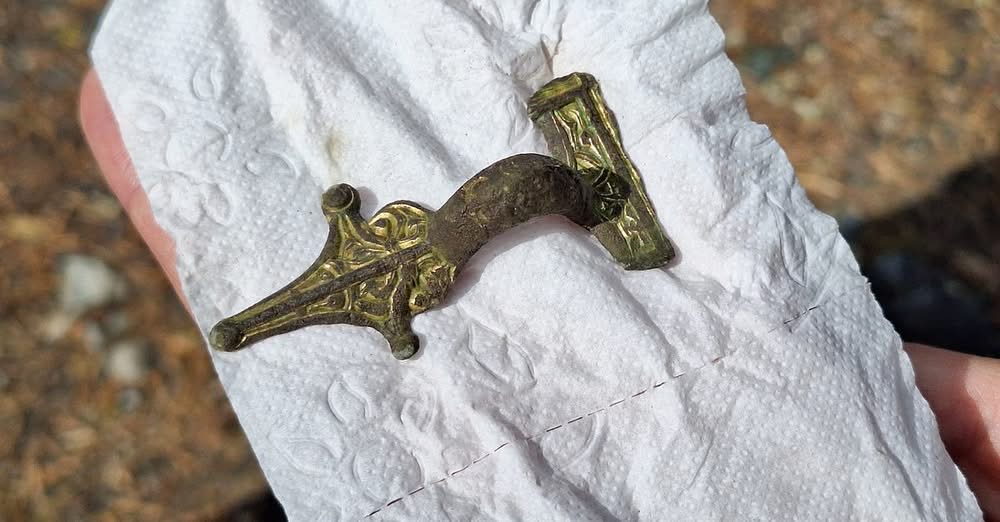
A remarkable archaeological discovery in the Finnish town of Kemi is offering fresh insights into the lives of elite women during the Iron Age. While casually using her metal detector, a local woman stumbled upon an intricately decorated brooch – a rare and culturally significant item now on display at the Tornedalen Museum.

The brooch, dating back to the later part of the Migration Period (approximately 475–550 AD), was used by high-status women to fasten their garments at the chest. More than a functional object, it served as a powerful symbol of wealth and social standing.

A Singular Find in Northern Finland

This brooch is no ordinary find. According to Finnish heritage officials, it represents only the second known artifact of its kind in Finland. The only comparable brooch with similar relief-style ornamentation was previously discovered in Rovaniemi, located further north.

What makes this discovery even more significant is the geographical context. Until now, no such finds have been documented in northern Sweden, and comparable artifacts have primarily been uncovered in central Sweden—particularly Hälsingland—and southern Norway. This suggests that the cultural influences and trade networks during the Migration Period extended much further north than previously believed.

“This find opens up entirely new perspectives on the Iron Age in Lapland and the Tornedalen region,” says Sami Raninen, an archaeologist and curator at the Finnish Heritage Agency.


📣 Our WhatsApp channel is now LIVE! Stay up-to-date with the latest news and updates, just click here to follow us on WhatsApp and never miss a thing!!


The Migration Period: A Time of Cultural Transformation

The Migration Period, spanning roughly from 375 to 568 AD, was marked by widespread movement of peoples across Europe—particularly Germanic tribes—following the decline of the Western Roman Empire. While it falls within the broader Iron Age, which was characterized by the use of iron tools and weapons, the Migration Period stands out as a distinct phase of intense cultural transformation, political upheaval, and shifting power structures.

These migrations significantly reshaped the political, cultural, and social landscapes of the continent, laying the groundwork for the early medieval era.
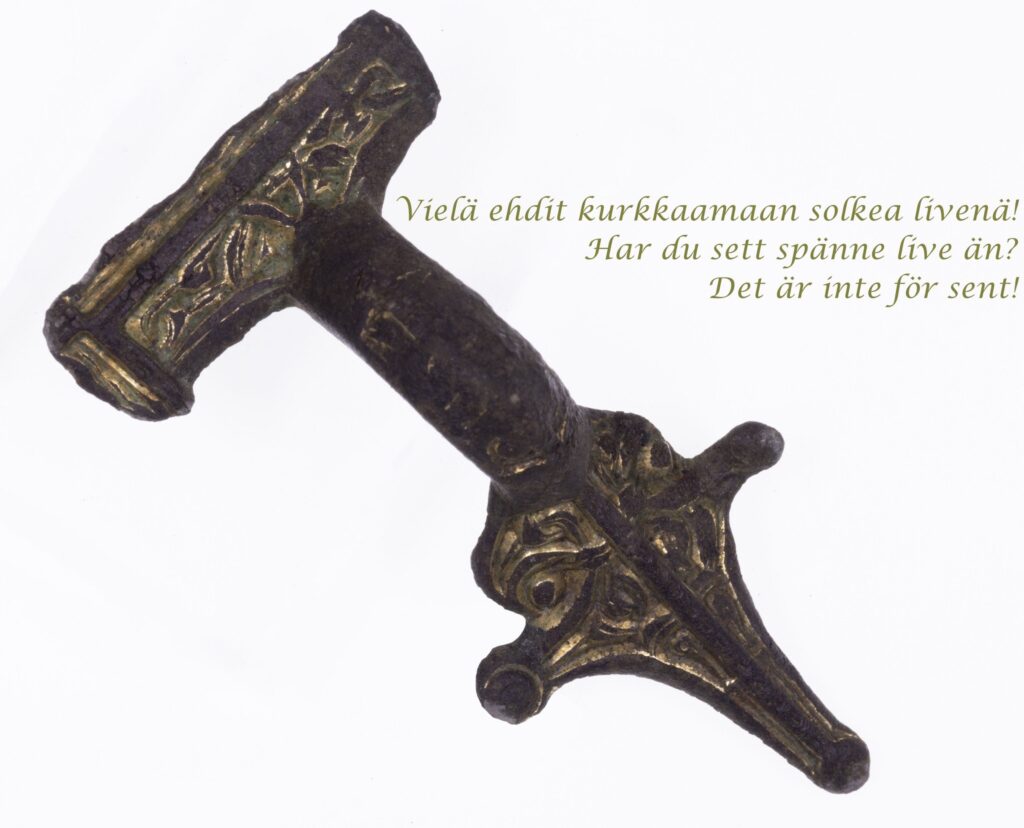
The rare Migration Period brooch, discovered in Finnish Lapland, is now on display at the Tornedalen Museum — offering visitors a unique glimpse into the craftsmanship and status symbols of ancient elite women. Credit: Tornedalens Museum

In northern Europe, this era saw the formation of complex societies and long-distance trade networks. Artifacts like the Kemi brooch not only reflect advanced craftsmanship but also hint at connections between distant communities, possibly through marriage alliances, trade, or elite networks.

The presence of such a high-status item in Finnish Lapland suggests that this northern region was not isolated but actively participating in broader Iron Age dynamics.

Responsible Discovery Matters

Authorities remind amateur metal detectorists that in Finland and Sweden, discovering ancient artifacts carries legal and ethical responsibilities. If you find an item that could be of historical value, it’s important to stop digging, avoid cleaning the object, and report the find to the appropriate authorities.

In Sweden, metal detecting is only allowed with a permit from the County Administrative Board (Länsstyrelsen), even on private land.

A Window into the Past

The brooch now housed at the Tornedalen Museum serves not only as a beautiful artifact but also as a critical piece of the puzzle in understanding the role of women in Iron Age society. These brooches, typically worn by women, offer archaeologists valuable clues about dress, identity, and societal structures of the time.

As more discoveries like this one come to light, researchers can continue to build a richer, more inclusive picture of life in northern Europe during the Migration Period—an era that helped shape the foundations of modern European cultures.

Cover Image Credit: Tornedalens Museum

Related Articles

Bronze Age and Roman-era settlements unearthed in Newquay

10 April 2023

10 April 2023

Archaeologists from the Cornwall Archaeological have uncovered ancient dwellings from the Bronze Age and a Roman period settlement in Newquay,...

Mysterious 1,600-Year-Old Roman-Era Burial Unearthed in Delbrück-Bentfeld, Germany

15 June 2025

15 June 2025

Archaeologists have uncovered a rare and mysterious Roman-era burial in Delbrück-Bentfeld, Germany, revealing a unique glimpse into the region’s ancient...

Olmec reliefs show Ancient Olmec Leaders In Trance-Like State Roaring Like Jaguars

14 August 2022

14 August 2022

Archaeologists in Mexico have discovered two carved reliefs from the late Olmec period (900-400 B.C.) in Villahermosa, Tabasco, southeastern Mexico...

Alexander the Great’s Bathroom Discovered at Greece’s Aigai Palace

11 May 2024

11 May 2024

Archaeologists say to have unearthed Alexander the Great’s bathroom at the Aigai Palace in northern Greece. The vast Aigai palace,...

Queen Kubaba: Some 4,500 years ago, a woman rose to power and reigned over one of the largest civilizations in ancient Mesopotamia

28 December 2023

28 December 2023

Is it possible to say who was the first queen in history? Given the size and diversity of human civilization,...

Smoke archeology finds evidence Humans visited Nerja Cave for 40,000 Years

26 April 2023

26 April 2023

A new study by a team from the University of Córdoba reveals that Nerja is the European cave with the...

Ancient fish processing factories were discovered in ancient Roman city of Balsa, Portugal

18 July 2022

18 July 2022

In the Roman city of Balsa, one of the most important and symbolic archaeological sites in southern Portugal, archaeologists have...

Archaeologists find Viking Age shipyard in Swedish island

15 June 2022

15 June 2022

Archaeologists from Stockholm University have discovered a Viking Age shipyard at Birka on the island of Björkö in Lake Mälaren,...

Israeli researchers uncover earliest evidence silver used as currency in Levant

9 January 2023

9 January 2023

On Sunday, Israeli archaeologists revealed that they had found the earliest proof of silver being used as money in the...

Treasure of 1,290 Ancient Roman Coins Discovered by Amateur Archaeologist in Switzerland

16 April 2022

16 April 2022

An amateur archeologist has found a big treasure trove of over 1,290 priceless, ancient Roman coins dating back to the...

An extraordinary votive treasure was unearthed in the ancient Roman bath sanctuary of San Casciano Dei Bagni in Italy

7 August 2022

7 August 2022

In San Casciano Dei Bagni, a Tuscan hill town famous for its hot springs, 40 miles southeast of Siena, unique...

For the first time in Turkish history, a gold belt buckle depicted the face of a Göktürk Khagan found

19 December 2023

19 December 2023

A social complex (Külliye) and new artifacts from the Western Gokturk period were discovered in Kazakhstan. Among these items, a...

‘Mystery and Unfathomable’ King Arthur’s Hall is 4,000 Years Older Than Previously Thought

10 November 2024

10 November 2024

A mysterious monument in Cornwall has been discovered to be 5,000 years old—4,000 years older than previously thought. The rectangular...

Egyptian Pharaoh Slain in Battle Because of the Hippos

17 February 2021

17 February 2021

The mummy of Pharaoh Seqenenre Taa II, found in 1880, was re-analyzed. When it was found, the deep wounds on...

2,000-Year-Old Durotriges Tribe Discovery in Dorset Unveils Possible Human Sacrifice Ritual

2 November 2025

2 November 2025

Archaeologists from Bournemouth University have uncovered the remains of a teenage girl buried face down in a pit in Dorset,...