
Archaeologists uncover a massive high-altitude fortress believed to date back to the Iron Age, with ties to the ancient Urartian civilization.
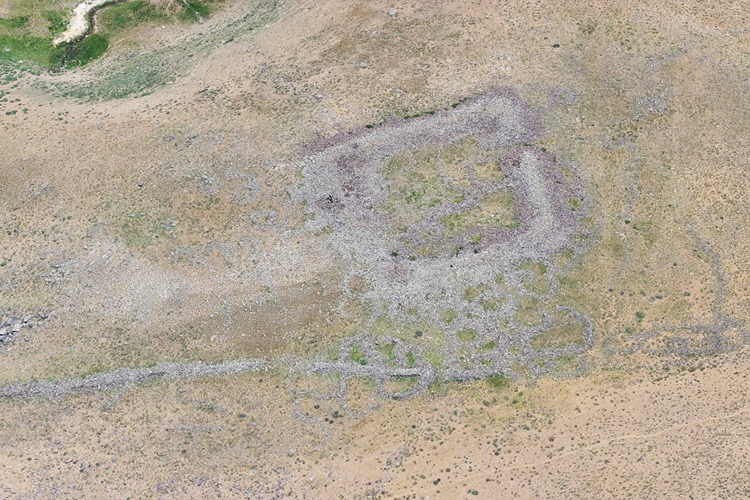
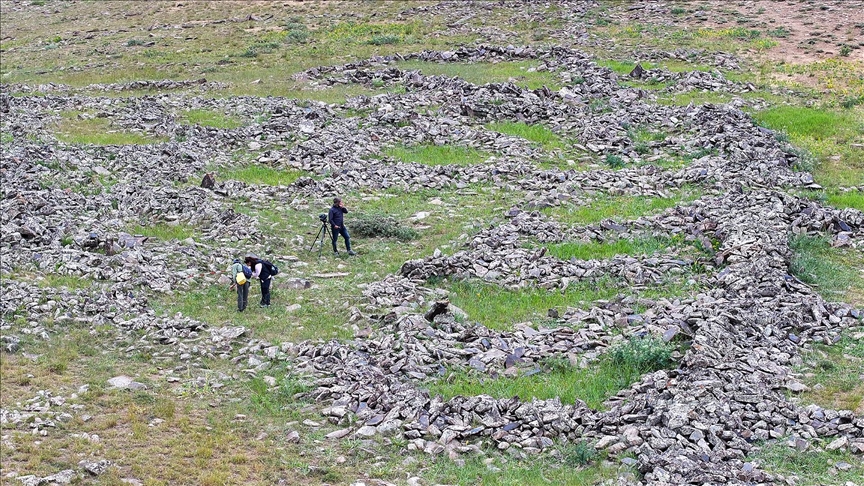
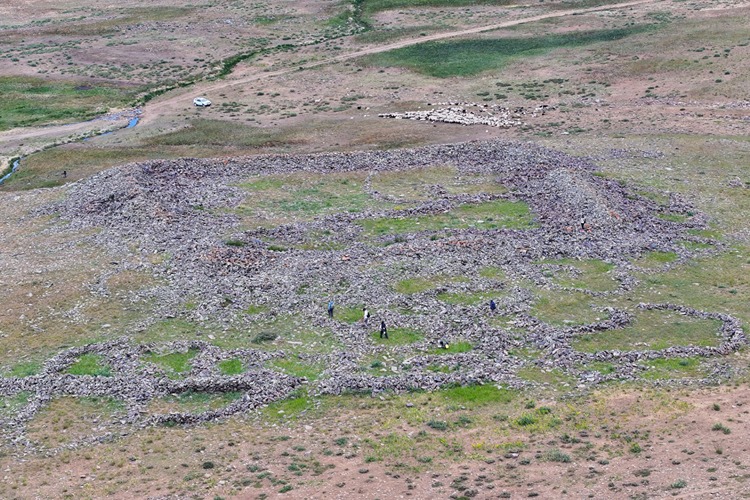
An archaeological team in eastern Türkiye has discovered the remains of a massive fortress with nearly 50 rooms and 4 kilometers of stone walls at an elevation of 3,000 meters. The remarkable find, located in the Tirişin Plateau of Van’s Gürpınar district, sheds light on the region’s strategic and cultural importance throughout history.
Led by Professor Dr. Rafet Çavuşoğlu, head of the Archaeology Department at Van Yüzüncü Yıl University, the 12-person research team—including archaeologists, anthropologists, and art historians—conducted a surface survey in the rugged terrain under the support of Türkiye’s Ministry of Culture and Tourism.
After a two-hour climb to the windswept plateau near Beşbudak Village, the team identified the ruins of a large-scale fortress built from locally sourced basalt stone. Initial examinations suggest the structure dates back to the Iron Age, with significant reuse and occupation continuing into the Middle Ages.
“Finding a 4-kilometer-long fortress wall and approximately 50 living spaces at such a high elevation was an extraordinary surprise,” said Prof. Dr. Çavuşoğlu. “This area likely served not only as a defensive stronghold but also as a vital pastoral and residential zone.”
Key Discoveries
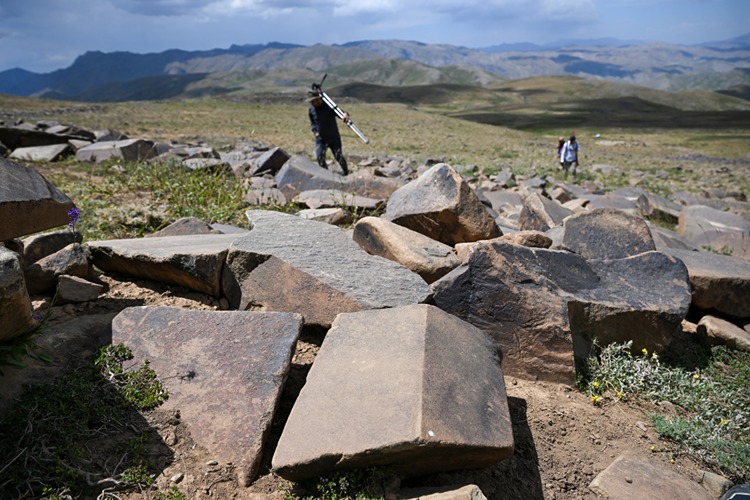
Alongside the structural remains, researchers found ceramic shards, millstones, and carved stones bearing various symbols, indicating prolonged and diverse use of the site. The fortress also includes an inner citadel likely used as an administrative or strategic command center.
Drone footage and GPS mapping were used to document the site in preparation for registration and inventory by the Van Cultural Heritage Preservation Board. The team also identified circular mound-like structures resembling kurgans, possibly used for burial or ceremonial purposes.
Tirişin Plateau: A Natural Fortress
The Tirişin Plateau is not only strategically placed but also rich in natural resources like abundant water and fertile grazing lands—ideal for the semi-nomadic pastoralism practiced throughout history. These features likely made it a coveted location for ancient civilizations.
“We believe this area was a hub for small livestock farming, which still continues today,” noted Çavuşoğlu. “The fortress provided both protection for the inhabitants and control over valuable highland resources.”
The Urartians: Masters of the Mountains
The discovery aligns with what is known about the Urartians, an ancient kingdom that dominated eastern Anatolia between the 9th and 6th centuries BCE. Known for their military prowess, sophisticated irrigation systems, and fortified architecture, the Urartians strategically built their cities and fortresses on high ground to maintain visibility and control over surrounding valleys.
Building at high altitudes gave Urartians several advantages:
Natural defense: Elevation made invasions difficult.
Water management: They could construct advanced water channels from mountain sources.
Surveillance: Panoramic views allowed early warnings of potential threats.
The newly discovered fortress may have functioned in a similar manner—providing security, administrative control, and agricultural oversight.
A Step Toward Tourism and Preservation
Local officials and residents expressed enthusiasm about the find. Beşbudak Village headman Mehmet Ceylan emphasized the cultural value of the site, calling for further preservation and promotion.
“This is an important legacy left by our ancestors,” said Ceylan. “We hope this discovery brings more awareness and tourism to our village and region.”
This high-altitude archaeological site is a significant addition to the historical landscape of eastern Anatolia. As studies continue, the findings may deepen our understanding of ancient civilizations like the Urartians and their remarkable ability to adapt to and thrive in challenging mountainous environments.
With growing interest in cultural heritage tourism and ongoing research in the region, Van is quickly becoming a focal point for archaeologists and history enthusiasts alike.
Cover Image Credit: AA
