
18 January 2026 The Future is the Product of the Past

Bosnia and Herzegovina Unearths Europe’s Largest Hoard of 2,000-Year-Old Bipyramidal Ingots from the Sava River

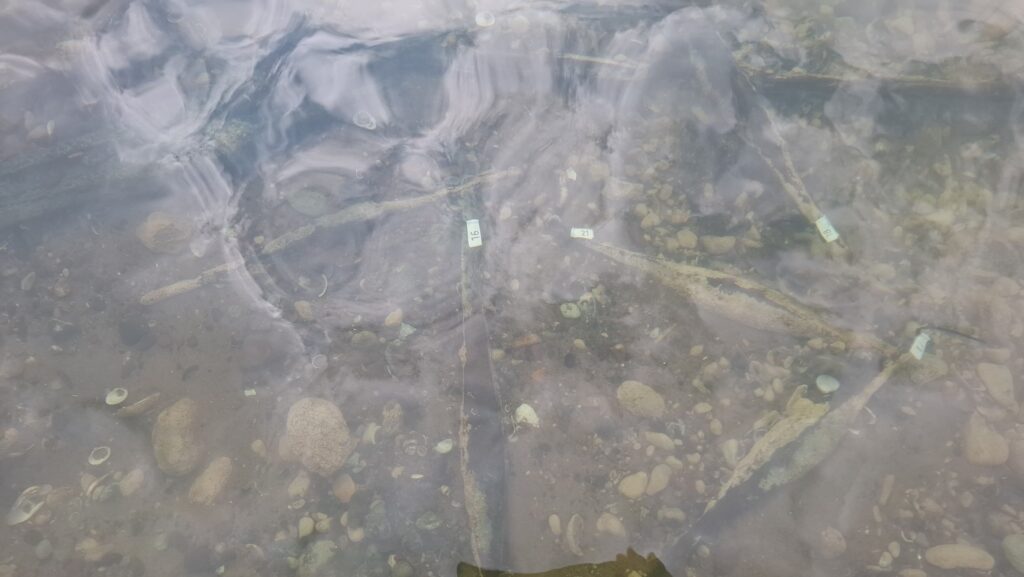
Previously recognized for its exhibitions on medieval manuscripts and regional folklore, the Franciscan Monastery Museum “Vrata Bosne” in Tolisa is once again in the spotlight—this time for a groundbreaking archaeological discovery. In just two days of exploration along the Sava River in the Posavina Canton, researchers have unearthed an unprecedented number of bipyramidal ingots—rare iron bars believed to be over 2,000 years old.

These unique artifacts, known to be semi-processed iron used by ancient blacksmiths for crafting tools, weapons, and various items, are rarely found. Before this discovery, only a few examples were housed in museums across France, Germany, Slovenia, and Sarajevo. Now, however, hundreds have been discovered at this single site in northern Bosnia, potentially making it the richest known source of such artifacts in all of Europe.

From Local Passion to Global Significance

The discovery owes much to Pero Matkić, a local history enthusiast and collaborator with the museum, who meticulously collected initial fragments and shared images with experts in Vinkovci, Croatia. The importance of the site quickly became evident, prompting a rapid response from archaeological professionals.

Leading the expert team are Krunoslav Zubčić, an underwater archaeologist from the Croatian Conservation Institute in Zagreb, and Nikica Spudić, a specialist from the Croatian Mountain Rescue Service in Karlovac. Their expertise is now driving the detailed excavation and analysis of this extraordinary find.
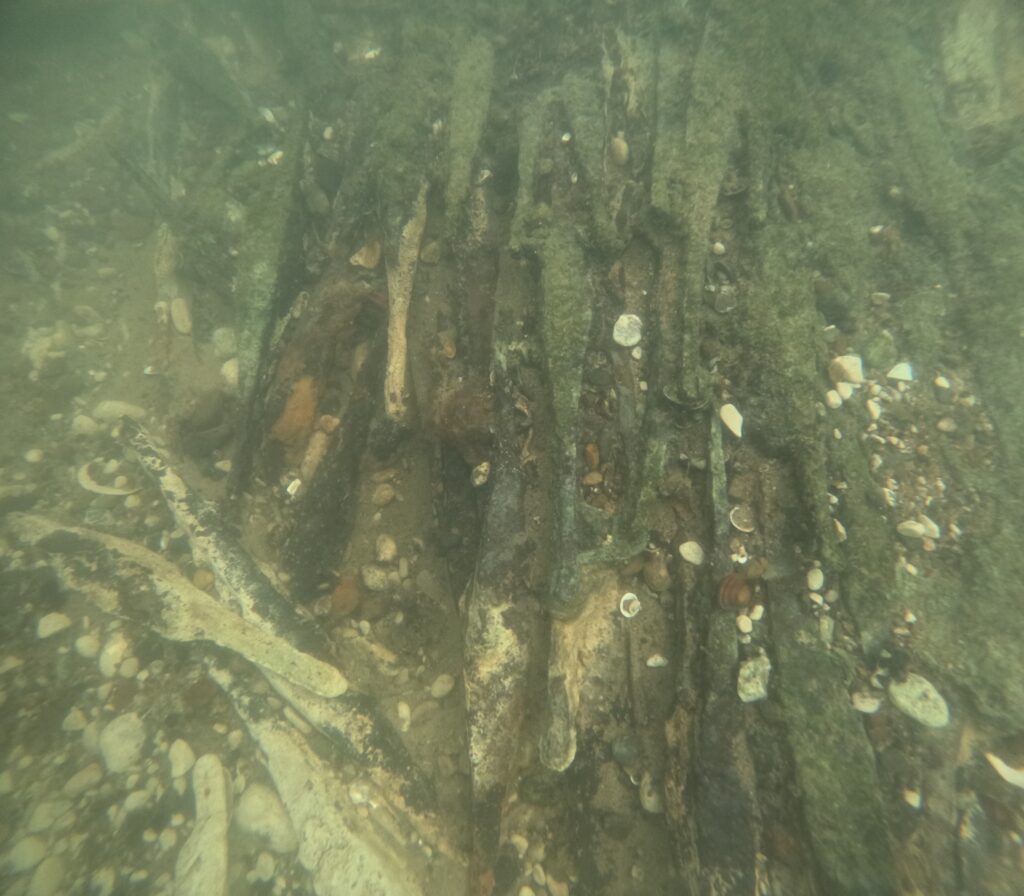
Bosnia and Herzegovina Unearths Europe’s Largest Cache of 2,000-Year-Old Bipyramidal Ingots in the Sava River. Credit: Muzej Franjevačkog samostana Tolisa Vrata Bosne

“The ingots are characteristic of the transitional period from the La Tène culture to Roman times, dating to the 1st or 2nd century BCE,” explains Professor Jozo Jezerčić, director of the Museum “Vrata Bosne.” “It appears that a cargo—possibly transported by river—sank into the Sava, likely due to a storm or conflict. The vehicle may have been swept away, but the heavy ingots remained submerged until now.”


📣 Our WhatsApp channel is now LIVE! Stay up-to-date with the latest news and updates, just click here to follow us on WhatsApp and never miss a thing!!


Advanced Techniques and Future Research

To ensure precise documentation, the site was first mapped and marked with fixed reference points. Photogrammetry techniques were used to create a 3D model and detailed topographic plan. Each item was then cataloged and carefully removed from the riverbed, placed in distilled water for preservation before undergoing further conservation.

“The real excitement begins now,” says underwater archaeologist Zubčić. “Chemical analysis will soon reveal the origin of the metal—possibly tracing it to ancient mines—and provide insights into trade routes that connected Bosanska Posavina to Central Europe even before the Roman era.”
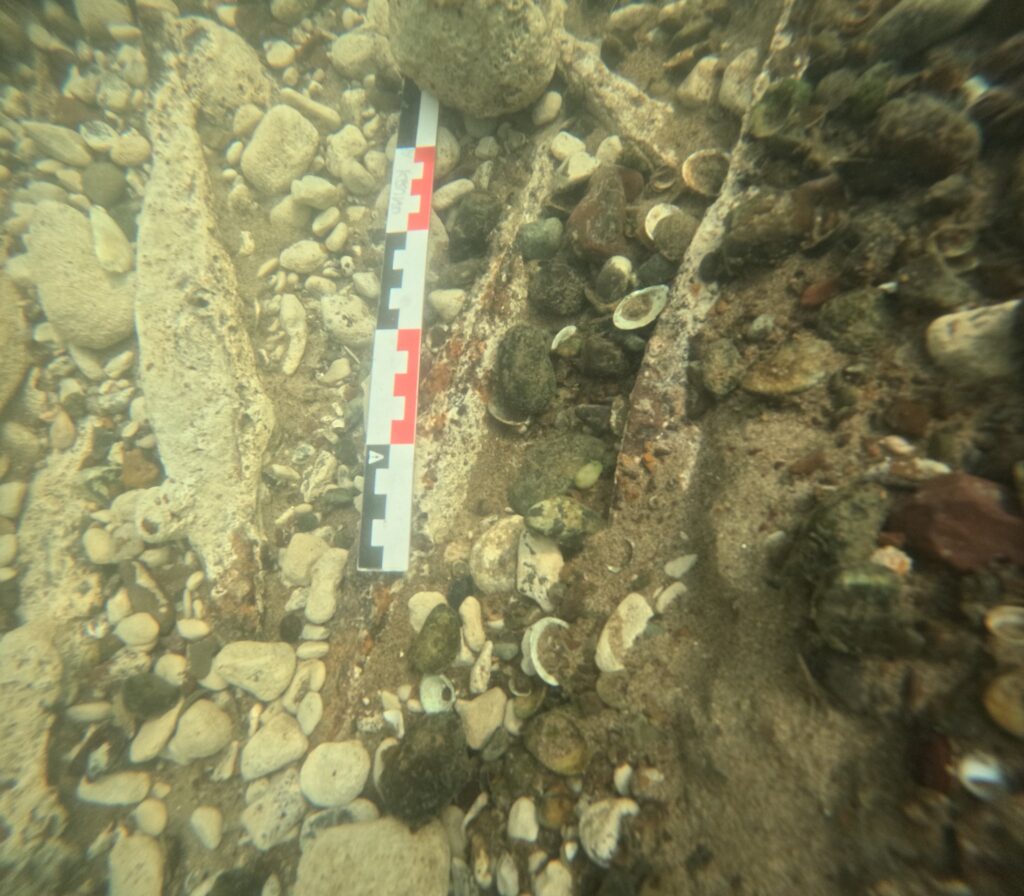
Bosnia and Herzegovina Unearths Europe’s Largest Cache of 2,000-Year-Old Bipyramidal Ingots in the Sava River. Credit: Muzej Franjevačkog samostana Tolisa Vrata Bosne

A New Chapter in European Archaeology

Experts believe this discovery could redefine the historical role of Bosanska Posavina, positioning it as a crucial center of trade and economic activity in antiquity—far more significant than previously thought.

“The story of these mysterious ingots is just beginning,” Jezerčić adds. “To properly preserve and analyze them, we are collaborating with institutions in Slovenia, Germany, France, and Austria. This will be a long-term, international effort that may change how we understand prehistoric and Roman-era commerce across Europe.”

Cover Image Credit: Muzej Franjevačkog samostana Tolisa Vrata Bosne

Related Articles

History of 8,500 years waits for a museum

19 June 2023

19 June 2023

The conservation process of the Yenikapı shipwrecks, which were discovered during the Marmaray project and considered the largest collection of...

1400-year-old gold foil figures found in pagan temple

19 September 2023

19 September 2023

Archaeologists have discovered a votive gold hoard during road development works in Vingrom, south of Lillehammer on the shores of...

Monumental Roman complex discovered in France

19 March 2023

19 March 2023

In the city of Reims in northeastern France, archaeologists have discovered an ancient Roman-era monumental complex dating from the 2nd...

1,400-Year-Old Bronze Cauldron Discovered in Pergamon’s ‘Mosaic House’

27 July 2025

27 July 2025

A remarkable archaeological discovery has been made in the ancient city of Pergamon (modern-day Bergama) in Turkey’s İzmir Province. Excavations...

Archaeologists opened an untouched Etruscan tomb

31 October 2023

31 October 2023

In Vulci Archaeological Park, central Italy, a 2,600-year-old intact double-chambered Etruscan tomb that was discovered in April and had remained...

Evidence found of Goose domestication in Neolithic China 7,000 years ago

8 March 2022

8 March 2022

Geese may have been domesticated in what is now China as early as 7,000 years ago, according to a study...

Three Roman Graves Uncovered in Portugal

17 April 2024

17 April 2024

Three burials dating to the 5th or 6th century AD have been unearthed in the ancient Roman city of Ossónoba...

Lost Kingdom of Purušhanda? Archaeologists Unearth Ancient Ovens and Hearths in Üçhöyük, Türkiye

29 September 2025

29 September 2025

Archaeologists excavating at Üçhöyük in Bolvadin, Afyonkarahisar (western Türkiye) have uncovered remarkable new evidence that may help identify the long-lost...

Rare 2,000-Year-Old Hasmonean Oil Lamp and Writing Stylus Unearthed Near Jerusalem

17 December 2025

17 December 2025

Archaeologists working near Jerusalem have uncovered a rare 2,000-year-old oil lamp and a writing stylus dating to the Hasmonean period,...

Scottish Archaeologists unearth ‘missing’ Aberdeenshire monastery linked to first written Gaelic

19 November 2023

19 November 2023

One of the biggest mysteries in Scottish archaeological history has been solved with the discovery of the monastery site where...

Mystery of the 1,700-year-old Mosaic Solved: The Medallion in the Mosaic uncovered to be the Symbol of a Roman Military Unit

10 August 2024

10 August 2024

The mystery of the 1,700-year-old mosaic, which was found during excavations in Amasya province in northern Turkey 11 years ago...

Remains of the summer palace of Genghis Khan’s grandson, Hulagu Khan, found in eastern Turkey

7 July 2022

7 July 2022

The archeology study team, consisting of Turkish and Mongolian scientists, found important findings in the study carried out to find...

Ancient Guests, Exotic Gifts: Wild Boars Traveled Miles to a Prehistoric Feast in Iran

15 July 2025

15 July 2025

New research suggests prehistoric communities in Iran’s Zagros Mountains transported wild boars over 70 kilometers to participate in elaborate communal...

Part of The ‘Missing Link’ in Human Migration may have been Found in Kaldar Cave

3 April 2021

3 April 2021

Kaldar cave is an important archaeological site that provides evidence for the transition from the Middle and Upper Paleolithic Ages...

The Largest Circular Tomb of the Ancient World Is Opening

16 February 2021

16 February 2021

The restoration of Augustus’ colossal tomb, which is expected to be opened in 2014, has been completed. The Augustus mausoleum...