
9 June 2026 The Future is the Product of the Past

Cuneiform Clues Reveal Körzüt as “The Sacred City of Haldi,” in Urartu Kingdom

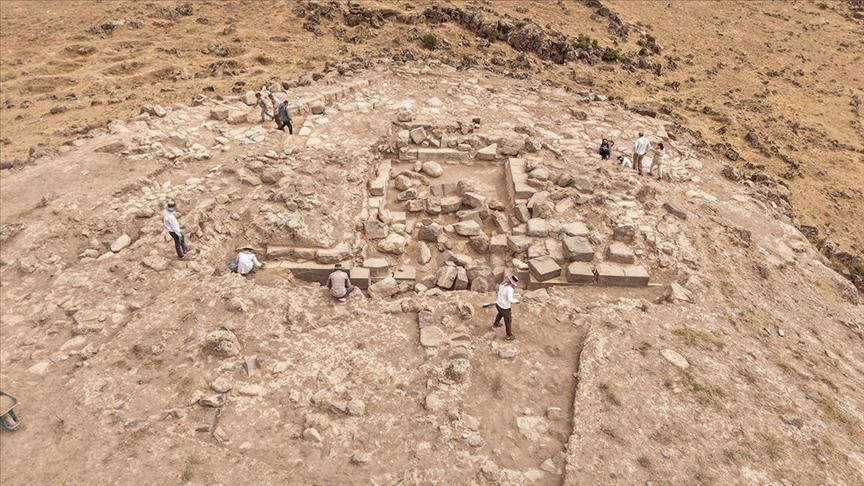
Excavations in eastern Türkiye uncover a major religious center of the Urartian Kingdom—The Sacred City of Haldi, shedding new light on ancient Anatolian history.

Archaeologists have uncovered evidence confirming that Körzüt Fortress, located in the Muradiye district of Türkiye’s eastern Van province, was once known as “Haldi Patari,” or “The Sacred City of Haldi,” during the Urartian era. The discovery came after the successful deciphering of cuneiform inscriptions unearthed during excavations at the site.

Led by Dr. Sabahattin Erdoğan, an associate professor from Van Yüzüncü Yıl University’s Department of Archaeology, the ongoing excavations are being carried out with support from Türkiye’s Ministry of Culture and Tourism, Van Governorship, and Muradiye District Governorship.

Who Was Haldi?

Haldi was the supreme deity of the Urartian pantheon, worshipped as the god of war, sky, and kingship. Often depicted standing on a lion and holding a weapon, Haldi was considered the divine protector of the Urartian state and its military conquests.

Temples dedicated to Haldi were built in key cities across the kingdom, and his name frequently appeared in royal inscriptions. As the patron god of the royal family, Haldi’s presence symbolized strength, divine legitimacy, and sacred authority—making sites like “Haldi Patari” (The Sacred City of Haldi) deeply significant in both religious and political terms.


📣 Our WhatsApp channel is now LIVE! Stay up-to-date with the latest news and updates, just click here to follow us on WhatsApp and never miss a thing!!


Excavations in eastern Türkiye uncover a major religious center of the Urartian Kingdom—The Sacred City of Haldi, shedding new light on ancient Anatolian history.
Excavations in eastern Türkiye uncover a major religious center of the Urartian Kingdom—The Sacred City of Haldi, shedding new light on ancient Anatolian history. Credit: AA

A Fortress with Millennia of Secrets

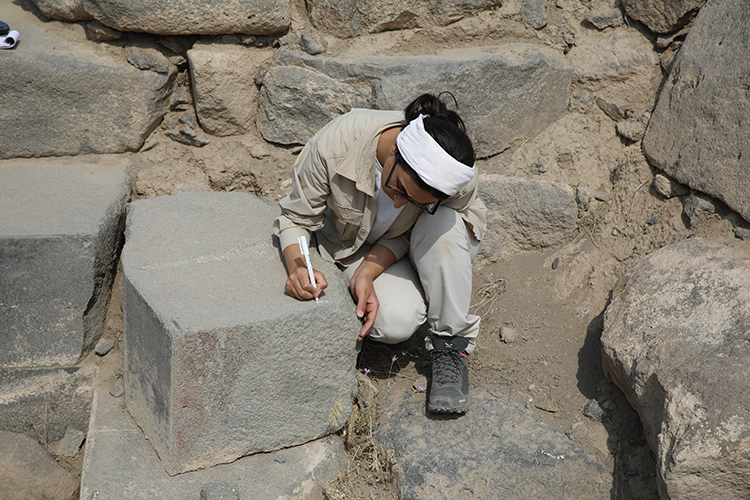
The Körzüt Fortress, originally built on a rocky hill by Urartian King Minua, has long intrigued researchers. This season’s excavation revealed a host of significant archaeological finds including arrowheads, coins, and both glazed and unglazed ceramic fragments. Yet the most momentous discovery emerged from two basalt stone blocks engraved with six lines of cuneiform script.

“Our interpretation of the inscriptions confirmed the site’s ancient name as ‘Haldi Patari,’ meaning ‘The Sacred City of Haldi,’” said Dr. Erdoğan. “This revelation allows us to fully identify the city’s ancient identity and significance as a major religious center in the Urartian Kingdom.”

The tablets, dating back nearly 3,000 years, mention Haldi—the chief deity of the Urartians—indicating that the area served as a holy sanctuary dedicated to this war and sky god.

Unearthing Temples and Royal Structures

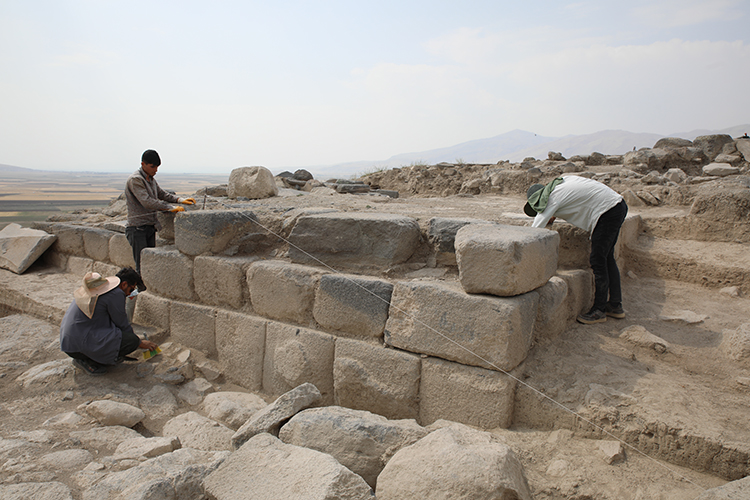
Among the most important findings this year was the discovery of a second temple and the monumental entrance of a “citadel” or palace complex. The excavations also identified key routes connecting the city with surrounding civilian settlements, offering valuable insights into ancient urban planning.

“Identifying the roads leading into the city and the entrance to the citadel gives us a much clearer picture of how this sacred city was structured and accessed,” Erdoğan explained. “Our next steps will include removing debris within the temple and starting a full restoration project.”

In addition to Urartian relics, the team also discovered coins from the 10th century CE and medieval ceramic artifacts, demonstrating the site’s long-term occupation and cultural continuity.
Körzüt—or Haldi Patari—was built with such immense stones that some weigh between 6 and 12 tons.
Körzüt—or Haldi Patari—was built with such immense stones that some weigh between 6 and 12 tons. Credit: AA

Architectural Grandeur: A Testament to Urartian Engineering

Joining the excavation team, Dr. Can Avcı from Istanbul University emphasized the architectural sophistication of Körzüt Fortress. “This was not just any settlement. Körzüt—or Haldi Patari—was built with such immense stones that some weigh between 6 and 12 tons. Constructing walls nearly 9 meters wide with these materials is a feat of ancient engineering,” Avcı noted.

He highlighted that the massive basalt stones were sourced from nearby quarries and transported across uneven terrain, then precisely fitted to form imposing fortifications.

“These structures were designed not only to protect but also to impress,” said Avcı. “They reflected power to the people and posed a clear warning to potential enemies.”

According to Avcı, the fortress walls surrounding the citadel include some of the largest and heaviest stones ever used in Urartian architecture. The durability and static balance of the construction reveal a deep understanding of materials, gravity, and terrain—attributes often overlooked in ancient construction narratives.
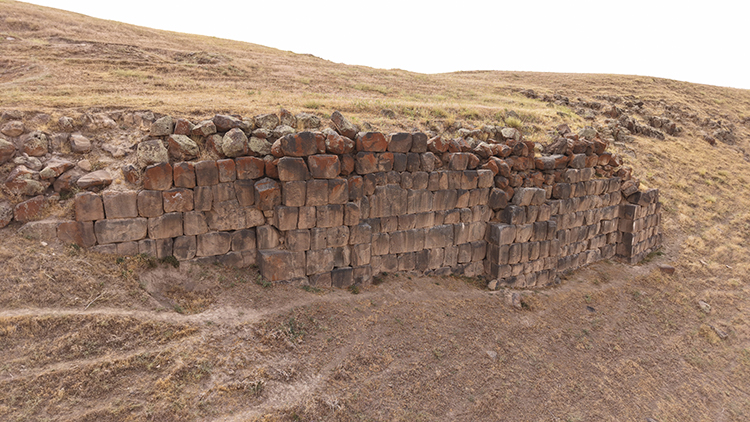
Constructing 9-meter-wide walls with multi-ton basalt blocks stands as a remarkable feat of Urartian engineering and architectural mastery. Credit: AA

A New Chapter in Anatolian Archaeology

The discovery of Körzüt as Haldi’s sacred city is expected to reshape scholarly understanding of the Urartian Kingdom’s religious and political geography. It also places the Muradiye Plain and the broader Van Lake Basin firmly on the map of major historical and archaeological significance.

For Türkiye and the global archaeological community, these findings are not just about identifying a city—they are about reconnecting with a civilization that once commanded respect and reverence across ancient Anatolia.

As restoration plans move forward, Körzüt Fortress stands poised to become a centerpiece of cultural tourism and a vital window into the powerful legacy of Urartu.

Cover Image Credit: AA

Related Articles

From Justinian’s Glory to Ruin: The Last Stand of Montenegro Triconch Church

10 August 2025

10 August 2025

In the heart of Bar, just off the bustling Ulica Maršala Tita, lie the weathered remains of the Triconch Church...

No Mortar, No Cement, No Metal – How Sardinia’s Nuragic Towers Have Defied Gravity for 3,500 Years?

20 December 2025

20 December 2025

No mortar, cement, or metal—yet Sardinia’s Nuragic towers have stood for 3,500 years. New scientific research reveals the ancient engineering...

Ancient Mastaba Tomb of Royal Physician “Magician of the Goddess Selket” discovered in Sakkara

7 January 2025

7 January 2025

In the southern region of the Saqqara archaeological site, a joint French-Swiss archaeological team made an important discovery uncovering the...

Radiocarbon dating shows that the Roman settlement of Karanis survived in Egypt until the Arab Conquest in the 7th century AD

13 May 2024

13 May 2024

New research results are rewriting the history of Karanis, an ancient Greco-Roman agricultural settlement in the Fayum oasis in Egypt....

4,000-Year-Old Child’s Skull in Uzbekistan Reveals Earliest Evidence of Surgery in Central Asia

3 June 2026

3 June 2026

A small grave in southern Uzbekistan has opened an unexpected window onto one of the most delicate and dangerous medical...

Ancient scrolls reveal astonishing information about the life of a Nabatean woman, who lived in the first century AD in Petra

18 December 2023

18 December 2023

Petra was the capital of a powerful trading empire two thousand years ago. It was established by the Nabateans, a...

Temasek Wreck: 3.5 Tons of Yuan Ceramics Confirm Singapore as a 14th-Century Maritime Entrepôt

19 February 2026

19 February 2026

At the eastern entrance of the Singapore Strait, divers recovering fragments from the seabed did not expect to challenge a...

As Thin as Modern Tools: World’s Oldest Steel Acupuncture Needles Discovered in China

6 July 2025

6 July 2025

In a discovery that reshapes the history of traditional Chinese medicine, archaeologists have unearthed what experts now confirm to be...

Scientists discover traces of paint on the Parthenon Sculptures that reveal their true colours

12 October 2023

12 October 2023

Recent research on the Parthenon Sculptures has found traces of the original paint used to decorate the Parthenon Sculptures, revealing...

5,000-Year-Old Matrilineal Society Discovered in China: DNA Unveils Ancient Female-Led Clans

30 July 2025

30 July 2025

In a remarkable study, scientists have uncovered genetic evidence of a rare matrilineal society in Neolithic China, where women determined...

Egypt’s Karnak Temple May Have Risen From Water Like a Creation Myth, New Study Suggests

29 January 2026

29 January 2026

Karnak Temple, one of ancient Egypt’s most iconic sacred sites, may have been deliberately built on land that literally emerged...

An inscription containing the Turk name was discovered for the first time in Anatolia

3 September 2022

3 September 2022

For the first time in the pre-Islamic Early period Turkish history, an inscription bearing the inscription expression “Turk” and written...

7,000-Year-Old Canoes Reveal Early Development of Nautical Technology in Mediterranean

21 March 2024

21 March 2024

The discovery of five “technologically sophisticated” canoes in Italy has revealed that  Neolithic people were navigating the Mediterranean more than...

Detector finds rare Merovingian gold ring refers to a previously unknown principality

22 February 2024

22 February 2024

A metal detectorist has unearthed a very rare, 1,500-year-old Merovingian gold ring made of 22-carat gold at Emmerlev in Southwest...

Nine Ancient Patolli Games Found in Mexico

10 September 2024

10 September 2024

In recent rescue excavations in Mexico by archaeologists from the National Institute of Anthropology and History (INAH) nine patolli engravings...