11 March 2026 The Future is the Product of the Past

On the eastern shore of the Marmara Sea, off the coast of Yalova, a 1700-year-old Shipwreck was discovered

A 1700-year-old shipwreck was discovered during maritime police training dives in the province of Yalova, located on the east coast of the Sea of Marmara, in northwest Turkey.

In the Yalova, Phrygians in 1200 BC, In 700 BC years, the Bithynes became dominant. The region, which came under the rule of the Roman people in 74 BC. When Rome was divided into two in 395, Yalova remained within the borders of eastern Rome. Today’s Yalova hot springs have an important place in history. It is known that Termal had a great reputation as a resting and treatment place for the emperors in the Byzantine period.

The discovery was found about 200 meters from the shores of Yalova.  The shipwreck was named ‘Yalova Gazi 1 Ship Wreck’.

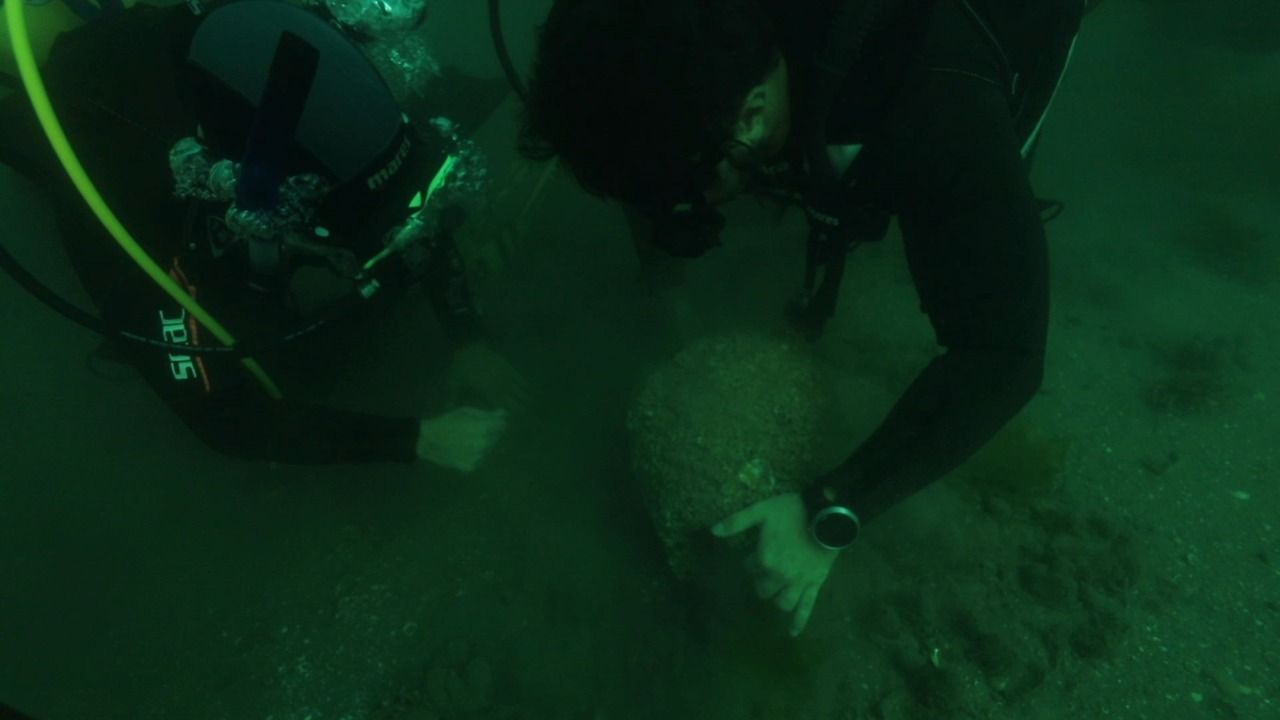
Under the coordination of the Ministry of Culture and Tourism, work carried out in the area revealed amphorae, called as such, extensively used in trade between the 9th and 13th centuries, along with wooden fragments and ballast stones.

Photo: Emre Can KAZMALI, (DHA)

In the region, under the presidency of the Yalova Museum Directorate of the Ministry of Culture and Tourism, a study was initiated with the scientific coordination of Associate Professor Dr. Serkan Gündüz, who is the head of the Underwater Archaeology Department at Bursa Uludağ University. Underwater detection and examination studies were conducted with the participation of experts from the Kocaeli Regional Board for Cultural Heritage Preservation and maritime police divers.


📣 Our WhatsApp channel is now LIVE! Stay up-to-date with the latest news and updates, just click here to follow us on WhatsApp and never miss a thing!!


During the studies carried out in the area called Yalova Gazi 1 Shipwreck; In addition to amphorae used to store fish, oil, olives, and dry food at 10 different points under 12 meters of water, wooden pieces and ballast stones used in ships were also retrieved from the sea.
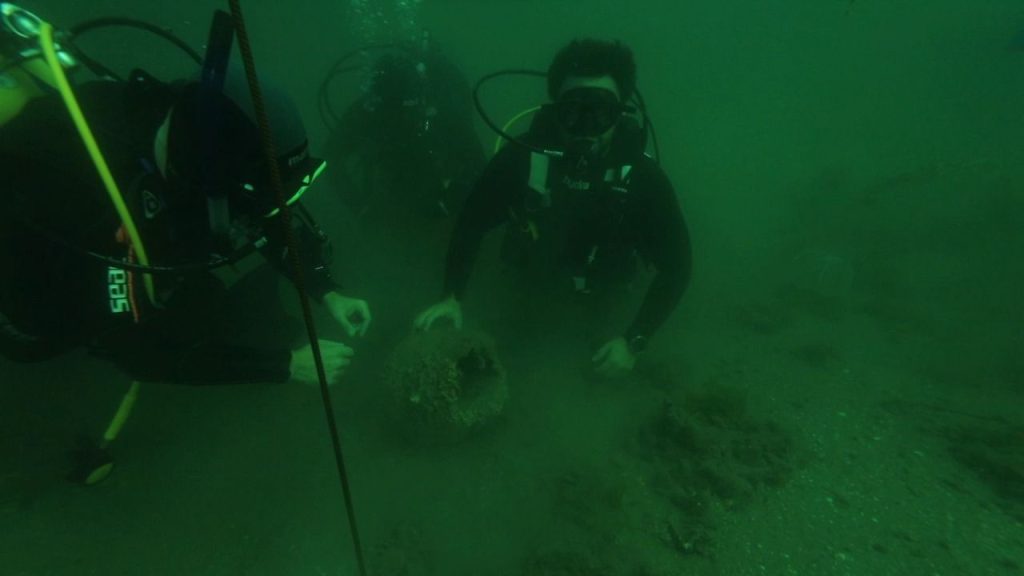
Photo: Emre Can KAZMALI, (DHA)

It was stated that the amphorae were in the form of Ganos type 1 and were used extensively in trade between the 9th and 13th centuries AD. The historical artifacts unearthed from the Yalova Gazi 1 Shipwreck, which is considered to be 1,700 years old, were brought to the Yalova Police Marine Port Branch Office.

Gökhan Çağlardere, Yalova Police Marine Port Branch Manager, stated that they had come across various objects during training dives before, they found the remains of an ancient harbor and pier, and archaeological studies were carried out there.
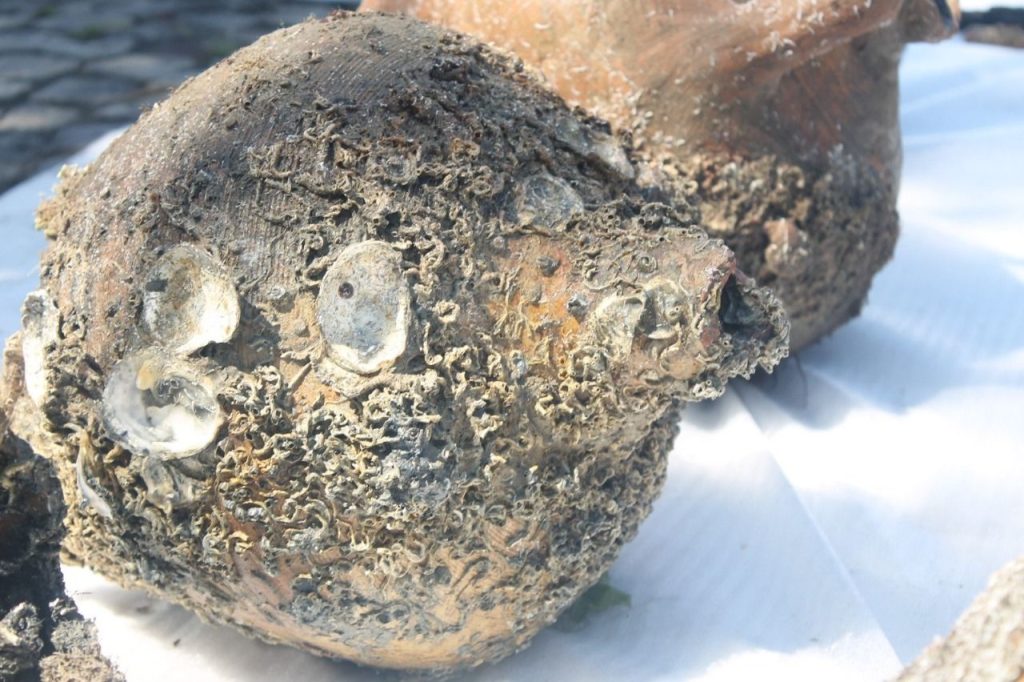
Photo: Emre Can KAZMALI, (DHA)

Çağlardere, “During our last training dive a month ago, our divers saw 1-2 objects and they suggested detailed research. Later, when we dived together, we encountered a structure underwater. We informed the relevant institutions. When diving again later, it was confirmed that there was a shipwreck here,” he said.

Related Articles

A stone bathtub, which is considered to be the first example of ‘water birth’, was found in Ani Ruins

7 September 2022

7 September 2022

A stone tub was found in the large bath, whose birth was mentioned in a work by the Turkish scholar...

Will the Siloam Inscription be returned to Israel?

12 March 2022

12 March 2022

During the visit of Israeli President Isaac Herzog to Turkey, the claim that he wanted the Siloam Inscription, one of...

Ancient Footprints Offer Evidence Humans Wore Shoes 148,000 Years Ago

12 September 2023

12 September 2023

A new analysis of ancient footprints in South Africa suggests that the humans who made these tracks might have been...

A Temple Guardian From The 13th Century Found At Cambodia’s Angkor Wat

17 September 2024

17 September 2024

While clearing rubble from a collapsed gate at the Banteay Prei Temple within Cambodia’s Angkor Wat Archaeological Park, workers stumbled...

A sculpture of a snake-bodied Roman-German deity was discovered in Stuttgart

23 April 2024

23 April 2024

A sculpture of a snake-bodied Roman-German deity was discovered at the Roman fort in Stuttgart, Germany. Since the beginning of...

A 1,000-Year-Old Bronze Wheel Cross Discovered in Brandenburg

24 January 2026

24 January 2026

A small bronze cross, recently unearthed in western Brandenburg, is reshaping how archaeologists understand the spread of Christianity in early...

A beautiful Medieval key discovered in Claverham village, UK

11 October 2023

11 October 2023

Earlier this year the Kemble fieldwork team from Cotswold Archaeology undertook a small excavation for Newland Homes on the edge...

Researchers find the earliest record of aurora in old Chinese documents

15 April 2022

15 April 2022

Researchers have found the oldest known reference to a candidate aurora in a celestial event, described in an ancient Chinese...

Unique Iron & Viking-Age Mortuary Houses Found in Norway

28 August 2024

28 August 2024

While building a road in the village of Vinjeøra in central Norway, three ancient mortuary houses dating back to the...

Turkey’s Urartian Altıntepe Castle transforms into open museum

25 May 2022

25 May 2022

Altıntepe Castle, one of the most important centers of the Urartians and the Eastern Roman Empire, is now set to...

In Moravia, archaeologists discover divine thrones, thousands of artifacts and a new settlement

13 August 2021

13 August 2021

During a four-year dig in the Moravian city (Czech Republic) of Perov, rare gems, mysterious burial places, and divine thrones...

Lost Medieval Swedish Heraldic Stone and Rare Dagger Unearthed in Vyborg’s Sewer System

20 November 2025

20 November 2025

Archaeologists in Vyborg, Russia have uncovered two remarkable artifacts that reshape the city’s connection to its medieval and post-medieval past....

Deer stone discovered in Kyrgyzstan

10 April 2023

10 April 2023

A deer stone was found in the Tarmal-Sai settlement in the Kochkor district of the Naryn region in eastern Kyrgyzstan....

A 1,300-year-old necklace is the ‘richest of its type ever uncovered in Britain’

6 December 2022

6 December 2022

Museum of London Archaeology (MOLA) archaeologists have found a “once-in-a-lifetime” 1,300-year-old gold and gemstone necklace dating back to 630-670 AD...

Lost Medieval Synagogue Unearthed: Foundations of a Major Jewish Center Rediscovered in Southern Germany

14 September 2025

14 September 2025

Archaeologists have uncovered the long-lost remains of one of the most important medieval Jewish centers in southern Germany. Excavations at...