
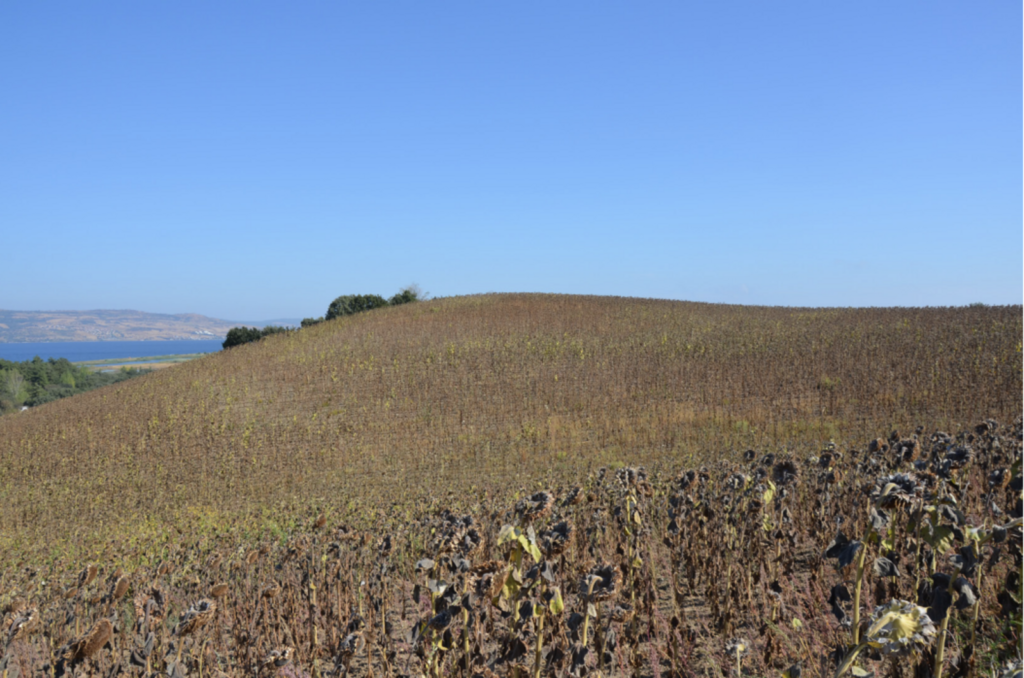
Yaylatepe Höyük, discovered on the Anatolian coast of the Dardanelles, contains examples belonging to a pottery tradition previously undocumented in the region, alongside ceramics showing similarities to Troy. New research also examines the settlement’s potential relationships with prehistoric communities on the opposite shore of the strait.
Archaeologists have identified a previously unknown Bronze Age settlement on the Biga Peninsula—where Troy is also located—on the Anatolian coast of the Dardanelles. The ceramics found at the site, named Yaylatepe Höyük, bear significant similarities to the prehistoric pottery tradition of Troy. However, some pottery fragments exhibit distinct characteristics that point researchers beyond the Çanakkale region toward the interior of Western Anatolia.
The research conducted by Dr. Meral Başaran from Fırat University, published in the Archaeology Journal, introduces Yaylatepe Höyük—discovered in 2024—to the scientific world for the first time. Identified as part of the “Dardanelles Bronze Age Ports Research Project,” the settlement’s ceramics include finds spanning various periods, from the end of the Late Chalcolithic to the beginning of the Late Bronze Age.
A New Settlement on the Peninsula of Troy
Yaylatepe Höyük is located approximately 3.2 kilometers northeast of Kangırlı village in the Lapseki district of Çanakkale. Measuring roughly 200 meters in length and 160 meters in width, the settlement sits upon a natural elevation sloping toward the Dardanelles.
A natural bay is located approximately 600 meters to the west of the mound, while the Güvenlik Stream runs to the east. According to researchers, alluvium carried by the Umurbey Stream has altered the coastline over time; therefore, Yaylatepe may have had a closer relationship with the sea during the Bronze Age than it does today.
The research team did not find the settlement by chance. Operating on the hypothesis that Bronze Age settlements on both sides of the strait might have been established in corresponding positions, researchers identified elevations around natural bays and river mouths using maps, subsequently locating Yaylatepe during field studies.
Alongside a dense amount of ceramic fragments on the surface of the settlement, terracotta loom weights, chipped stone tools, and various stone finds were documented. Despite degradation caused by agricultural activities, the mound allows for the tracking of the distribution of materials from different historical periods.
Previously Undocumented Ceramics in the Region
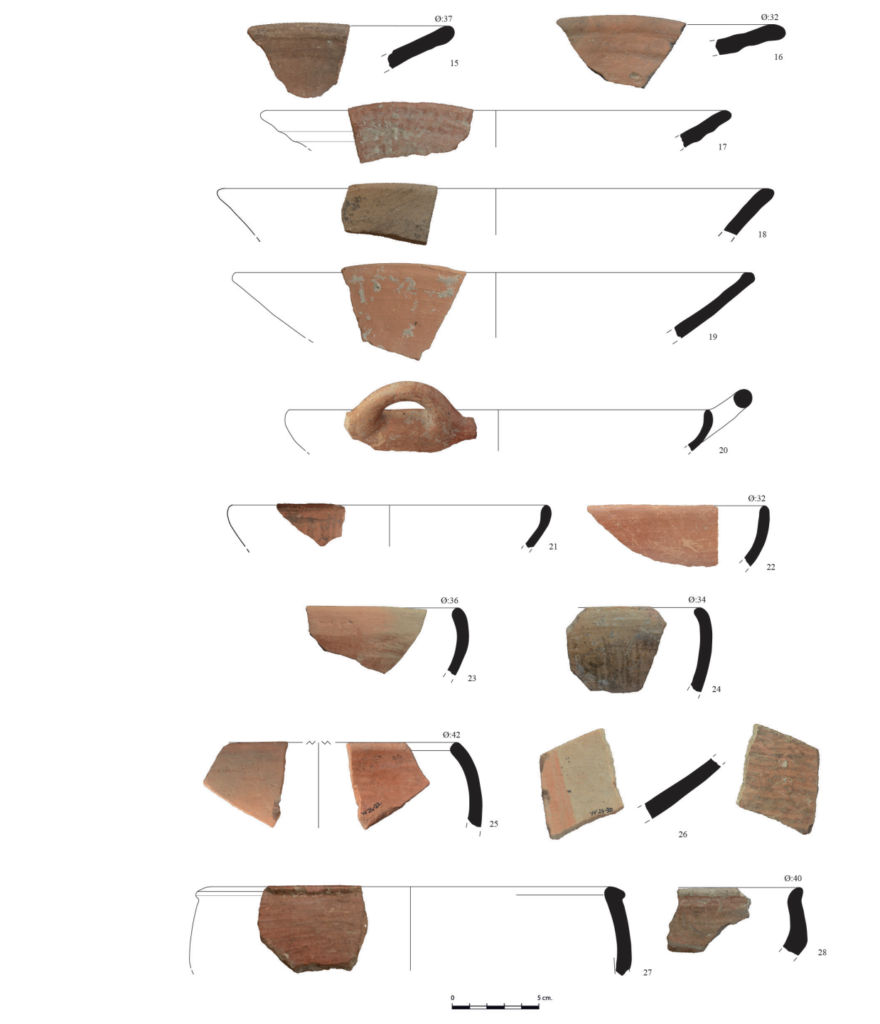
Among the finds that make Yaylatepe particularly noteworthy are the ceramics defined by researchers as “Bone-Burnished Ware.” These vessels exhibit dark, wavy traces on their surfaces created by the tool used during the burnishing process.
Başaran states that these ceramics show close similarities to examples known from the Middle Bronze Age layers of the Beycesultan settlement in the interior of Western Anatolia. Conversely, this ceramic group has not been previously documented in the Bronze Age assemblages of the Çanakkale region; examples of this group have not yet been identified in Troy or Maydos.
This difference suggests that the pottery tradition of Yaylatepe was not limited to its immediate surroundings. According to the researcher, the finds may point to possible cultural links between the Troas region and Interior Western Anatolia. However, new data from excavations are required to determine the nature of this relationship.
Other vessel forms comparable to examples in Troy were also found among the ceramics. These include the base fragment of a depas amphikypellon type vessel—a characteristic form of the Early Bronze Age III period—a bowl decorated with a red cross dating to the Middle Bronze Age, and various red-slipped vessels.
Pottery Technology Distinguishes the Settlement
Başaran conducted a detailed analysis of 54 diagnostic ceramic fragments collected during the 2024 and 2026 surface surveys. It was determined that approximately 62% of these were wheel-made, with at least 12 examples showing traces of the use of a fast wheel.
The research indicates that thinner, more homogeneous, and carefully prepared ceramic pastes were used, particularly in vessels dating to the Early Bronze Age III and later. More than half of the examined examples were well-fired. These characteristics point to a certain technical specialization in pottery production at the settlement.
Compared to many Bronze Age settlements known through surface surveys on the Gallipoli Peninsula, the ceramic assemblage of Yaylatepe possesses both greater diversity and different technological characteristics. Specifically, the density of fast-wheel-made vessels and distinct Middle Bronze Age ceramic groups make the settlement stand out in regional comparisons.
The distribution of finds across the mound is also noteworthy. Late Chalcolithic and Early Bronze Age materials are concentrated primarily on the western slopes, Middle Bronze Age ceramics are found in the higher sections, and Late Bronze Age examples are concentrated at the summit. However, because the finds were collected from the surface, it is currently impossible to reach detailed conclusions regarding the exact stratification of the settlement and its development across different periods.
Visual Relationship with the Settlement on the Opposite Shore
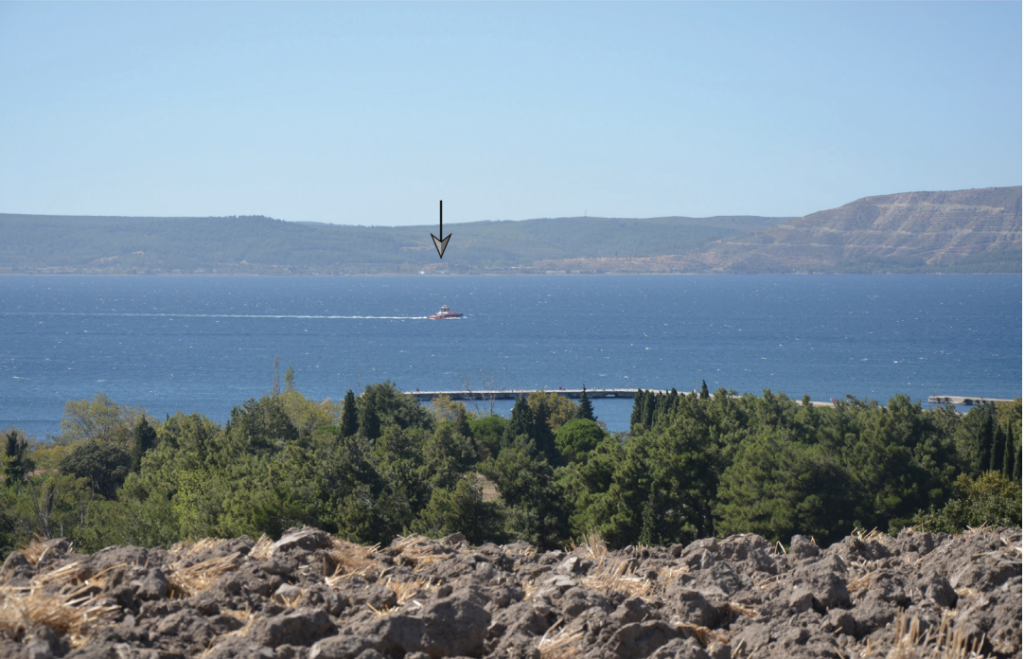
The location of Yaylatepe raises another research question as significant as the ceramic finds. The mound is positioned opposite the Asartepe settlement, located near Ilgardere village in Gelibolu on the European side of the Dardanelles.
The straight-line distance between the two settlements is approximately 6.7 kilometers. Using Geographic Information Systems (GIS), Başaran conducted a visibility analysis and determined that there is no terrain elevation obstructing the view between the two mounds. Field observations confirmed that Asartepe is visible from Yaylatepe under favorable weather conditions.
Other prehistoric coastal settlements evaluated in the research exhibit a similar geographical pattern. These settlements, located opposite each other on the two shores of the strait, are mostly situated on elevations near river mouths and natural bays. Such areas may have facilitated both the monitoring of the surroundings and the beaching of small boats.
However, the fact that the two settlements could see one another does not necessarily mean there was regular maritime transport or direct communication between them. The researcher emphasizes that to understand prehistoric maritime mobility in the Dardanelles, archaeological data must be evaluated alongside studies on wind, currents, and coastal geography.
The finds at Yaylatepe add a new center to the settlement geography of the Dardanelles during the Bronze Age. The technological characteristics of the ceramics and the comparisons with Beycesultan raise new questions for investigating the cultural relations of this coastal settlement. Future excavations may help in understanding both the settlement’s own history and the role it played in the relations between the Anatolian and European shores of the strait in more detail.
Meral Başaran (2026), Yaylatepe Höyük: Ceramic Evidence and Intervisibility of a Newly Identified Bronze Age Coastal Settlement in the Troad. Arkeoloji Dergisi, 37, 69–87. DOI: 10.51493/egearkeoloji.1894942.
