
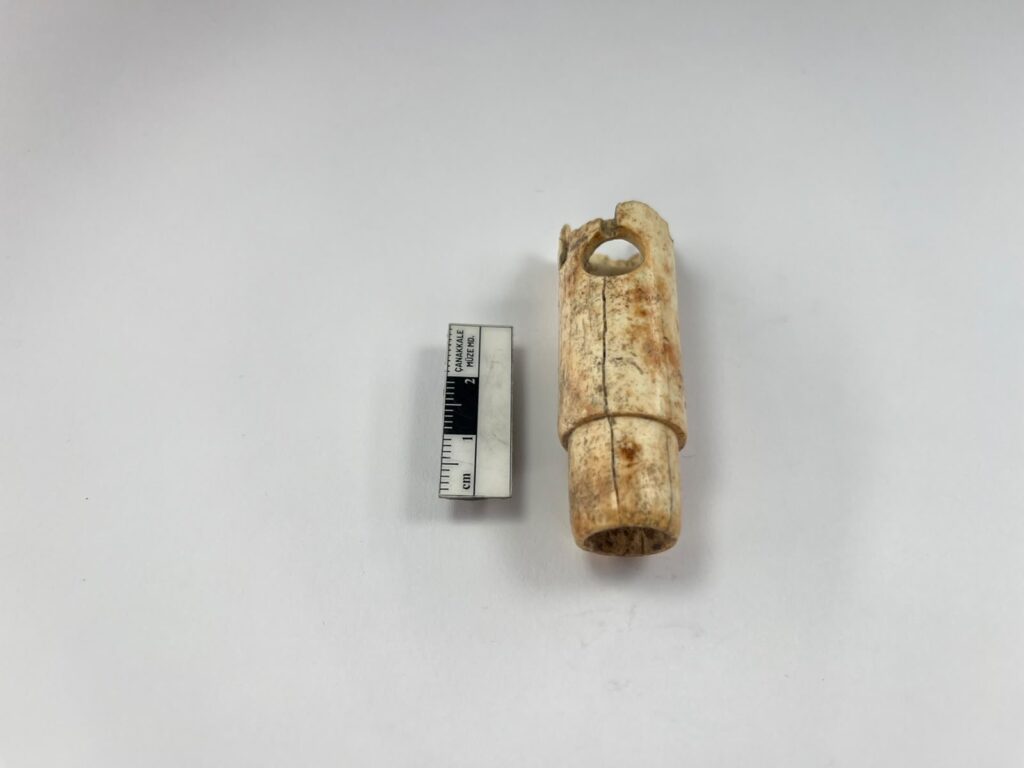
Archaeologists excavating the ancient city of Troy in northwestern Türkiye have discovered a 2,800-year-old bone flute and a 4,500-year-old human-shaped idol head. The flute is particularly remarkable: despite more than 160 years of archaeological excavations at the legendary site, it is the first musical instrument ever identified there. The two discoveries provide new evidence of musical traditions and symbolic practices during different periods of Troy’s long history.
Türkiye’s Minister of Culture and Tourism, Mehmet Nuri Ersoy, announced the discoveries from the 2026 excavation season, conducted with ministry support under the Heritage for the Future project. The bone flute was recovered from an Archaic-period settlement deposit, while the idol head was found near the city gate of Troy II, an Early Bronze Age settlement.
While Troy is internationally associated with the Trojan War and Homer’s Iliad, the latest discoveries draw attention to other aspects of everyday life, artistic expression, and cultural traditions among the communities that inhabited the settlement.
First Musical Instrument in Troy’s Excavation History
The bone flute was discovered in an archaeological deposit associated with the Archaic Period, when Troy was entering another chapter of its long history. The newly discovered flute reportedly preserves the head section attached to its body.
According to Minister Ersoy, the instrument represents the first and only musical artifact identified during more than a century and a half of archaeological investigations at Troy. Its discovery provides physical evidence of musical activity at a site better known for its fortifications, monumental architecture, and Bronze Age remains.
The discovery is significant because music, although widely represented in the art and literature of the ancient Mediterranean, often leaves relatively little direct archaeological evidence. Instruments made from organic materials are particularly vulnerable to deterioration, making surviving examples valuable for understanding ancient musical practices.
Music played various roles in ancient Greek communities, accompanying religious ceremonies, celebrations, and social gatherings. Wind instruments made from bone and reed were among the forms used across the Mediterranean world. However, the specific circumstances in which Troy’s flute was played remain unknown, and no direct connection to a particular ceremony or cult has yet been established.
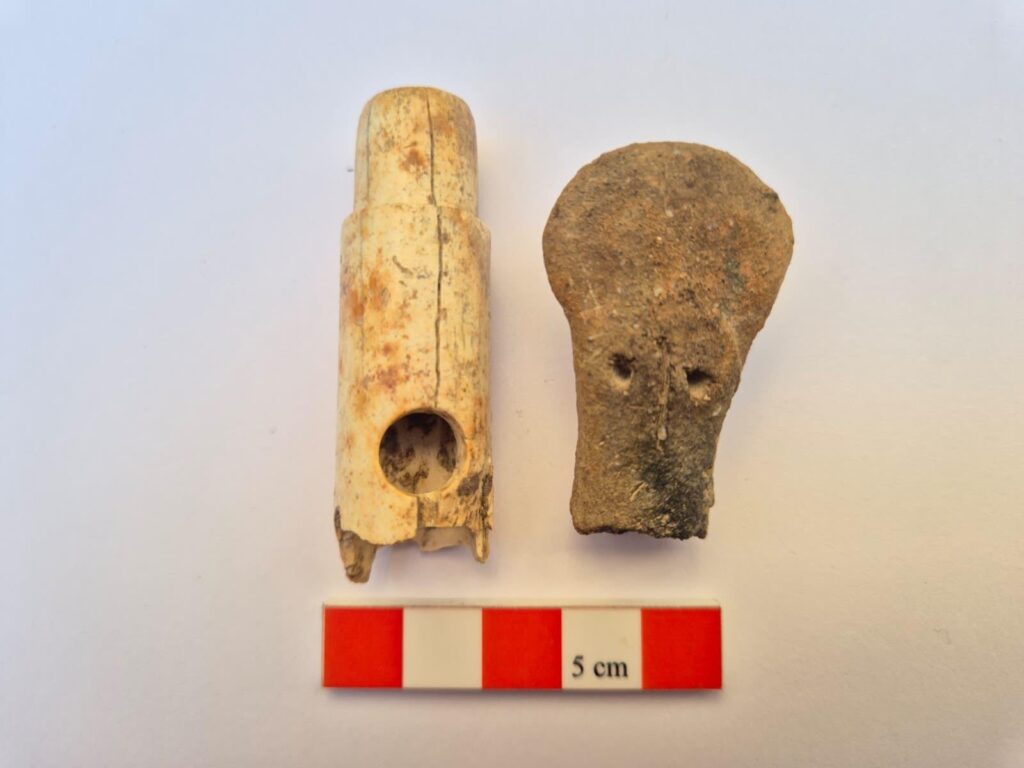
Early Bronze Age Idol Head Found Near Troy II Gate
The second discovery belongs to a considerably earlier period in Troy’s history. Archaeologists found a human-shaped idol head near the city gate of Troy II, one of the settlement phases associated with the Early Bronze Age.
During this period, Troy developed into a fortified settlement with substantial architecture and connections to communities across western Anatolia and the Aegean. Its strategic position near the Dardanelles placed it within important networks of regional interaction.
Small anthropomorphic idols are familiar objects in Early Bronze Age archaeology, with examples discovered at several settlements in Anatolia and the Aegean. Their forms vary, and researchers continue to debate their possible functions, including whether they expressed religious beliefs, represented individuals, or served other symbolic purposes.
The newly discovered head offers another object for comparison with similar finds from Troy and neighboring regions. Its location near the city gate provides an archaeological context for further investigation, although the available information does not establish whether the artifact originally belonged to a domestic, ceremonial, or other setting.
Troya’nın binlerce yıllık kültür ve sanat tarihine iki yeni keşifle katkı sunuyoruz. Bakanlığımızın izin ve destekleriyle Geleceğe Miras Projemiz kapsamında sürdürdüğümüz 2026 yılı kazılarında, yaklaşık 2.800 yıllık kemik flüt ile 4.500 yıllık insan biçimli bir idol başını gün ışığına çıkardık. Arkaik Dönem’e ait kemik flüt, 160 yılı aşkın Troya kazıları tarihinde bugüne kadar bulunan ilk ve tek müzik aleti. Bu keşifle, Troya’daki müzik kültürüne ilişkin doğrudan bir arkeolojik kanıta ulaştık. Troya II kent kapısı çevresinde bulunan idol başıyla da Erken Tunç Çağı’nın sembolik dünyasını ve Batı Anadolu’daki kültürel etkileşimleri anlamamıza katkı sağlayacak yeni bir eseri günümüze kazandırdık. Troya’nın farklı dönemlerini belgeleyen bu buluntuları bilimsel yöntemlerle araştırarak korumaya ve gelecek kuşaklara aktarmaya devam edeceğiz. Kazı ekibimize, Kültür Varlıkları ve Müzeler Genel Müdürlüğümüzün ekiplerine ve çalışmalara katkı sunan tüm mesai arkadaşlarıma teşekkür ediyorum.
— Mehmet Nuri Ersoy (@MehmetNuriErsoy) October 22, 2026
Discoveries Reflect Troy’s Long and Complex History
Located at Hisarlık in Türkiye’s Çanakkale province, Troy was occupied and rebuilt through successive periods spanning thousands of years. Archaeologists have identified multiple settlement phases, documenting changes in architecture, material culture, and connections with surrounding regions.
The city’s location overlooking routes between the Aegean and the Sea of Marmara contributed to its historical importance. While its association with the Trojan War brought it worldwide recognition, excavation results have established Troy as a major archaeological site for investigating the development of communities in northwestern Anatolia.
Recognized as a UNESCO World Heritage Site in 1998, Troy continues to produce evidence of the different societies that inhabited the settlement.
