
24 June 2026 The Future is the Product of the Past

Europe’s oldest grave of a newborn girl found in İtaly

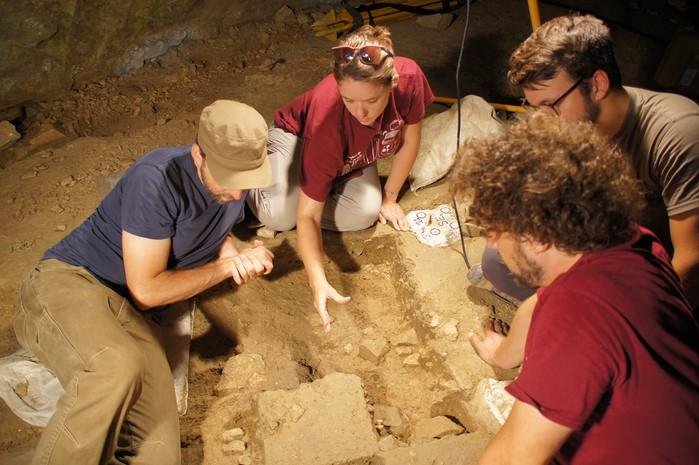
An international team of researchers has found Europe’s oldest tomb of a newborn girl, dating back 10,000 years, in Liguria.

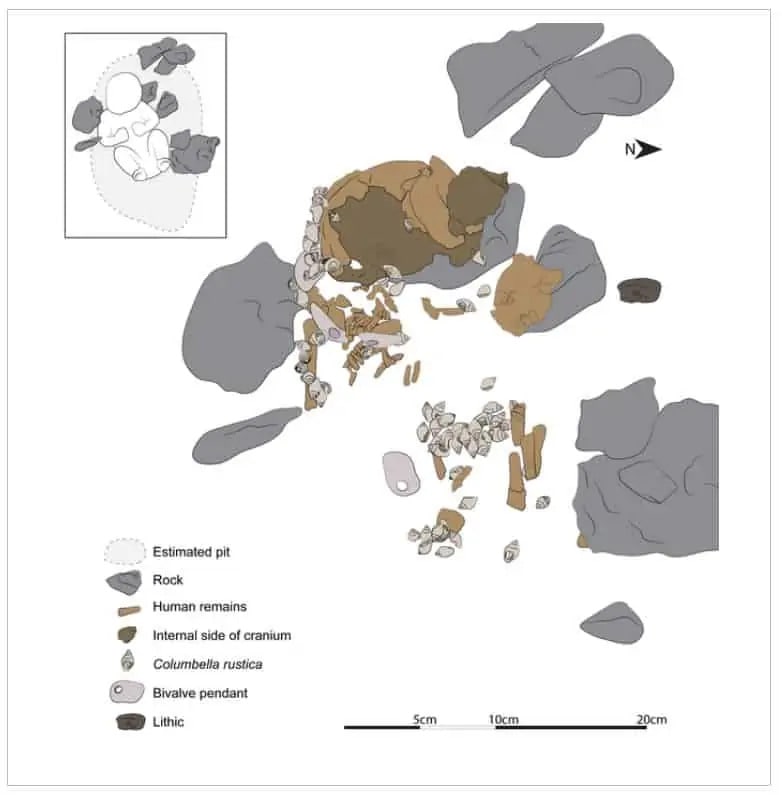
The researchers stated in a paper published Tuesday in the journal Scientific Reports that the burial site in Liguria, Italy, comprises over 60 perforated shell beads, four pendants, and an eagle-owl talon beside the human bones.

The baby girl, dubbed “Neve” (Snow) after a river in the region, was between just 40 and 50 days old when she died.

The discovery was made by Stefano Benazzi of the University of Bologna, Fabio Negrino of the Università of Genova, and Marco Peresani of the University of Ferrara, with the support of the Sincrotrone Elettra research center in Trieste.

According to the researchers, the discovery sheds light on the early Mesolithic period, during which there are few known burials. It is also significant, given the seemingly egalitarian treatment for the funeral of an infant female, the researchers said.


📣 Our WhatsApp channel is now LIVE! Stay up-to-date with the latest news and updates, just click here to follow us on WhatsApp and never miss a thing!!


“Infant burials are especially rare,” so this finding adds important information to help fill a gap in knowledge spanning from the latest Upper Paleolithic period to the earliest part of the Mesolithic, said Hodgkins, an associate professor of anthropology at the University of Colorado Denver.
“There’s a decent record of human burials before around 14,000 years ago,” said Hodgkins.

Archaeologists seldom locate the bones of ancient human infants, particularly newborns, since they are frequently too little and frail to survive millennia. Adult remains are more prevalent, although the archaeological record of prehistoric burials contains significant gaps that span thousands of years. And when ancient burials of children have been found, it’s usually been impossible to determine their sex because any DNA in their bones has deteriorated.

Neve’s remains, however, are exceptional because they survived more than 10,000 years in the ground and still contained enough DNA for the scientists to analyze, explained the University of Colorado, Denver palaeoarchaeologist Jamie Hodgkins.

  “Neve’s discovery is of exceptional importance,” said Stefano Benazzi of the University of Bologna.

“It will help us fill in many gaps, throwing light on the ancient social structure and funerary and ritual behavior of these ancestors of ours”.

Mortuary practices offer a window into the worldviews and social structure of past societies, the researchers said.

Cover Photo by Jamie Hodgkins/CU Denver

Source: 10.1038/s41598-021-02804-z 

Related Articles

Unique Ancient Pottery Found in Siberia Could Belong to a Previously Unknown Bronze Age Culture

22 October 2025

22 October 2025

Archaeologists in Western Siberia have unearthed unique Bronze Age ceramics that could belong either to the little-known Ust-Tartas culture or...

Archaeologists Uncover Unique 6th Century Mosaic in Abandoned Byzantine Monastery

9 April 2025

9 April 2025

A recent excavation report from the Israel Antiquities Authority has revealed the discovery of a well-preserved Byzantine-period monastery and farmhouse...

The Metropolitan Museum of Art Celebrates 151th Anniversary of Its Establishment

13 April 2021

13 April 2021

The Metropolitan Museum of Art, one of the few museums in the world, celebrates the 151st anniversary of its establishment....

Archeologists Unearth Spectator snacks from the Roman Period in Colosseum

28 November 2022

28 November 2022

An excavation of the Colosseum’s sewer systems has uncovered a selection of spectator snacks from the Roman Period. It appears...

Archaeologists uncover a 1,500-year-old Lost Mayan city in the Yucatan

28 May 2022

28 May 2022

Researchers have presented their findings after discovering the remnants of an ancient Mayan city on a building site in Mexico....

An Amazing Discovery in the 1900-year-old Rock Church, – Sand Dollar Fossil

5 March 2024

5 March 2024

Located in the eastern province of Diyarbakır’s Eğil district, the rock church, the walls of which are decorated with different...

Multiple Burials found at Çatalhöyük

17 September 2021

17 September 2021

Multiple burials were unearthed during the ongoing excavations in the house on the eastern mound of the Neolithic settlement Çatalhöyük....

Hunter-Gatherers Kept an ‘Orderly Home’ in the Earliest Known British Dwelling

25 July 2024

25 July 2024

Based on archaeological evidence from a Yorkshire site, new research suggests that hunter-gatherers probably kept an organized home with designated...

New discoveries found under demolished historic Tawfiq Pasha Andraos Palace in Egypt

31 October 2021

31 October 2021

An Egyptian archaeological mission excavating at the site of the recently demolished Tawfiq Pasha Andraos Palace discovered a number of...

The ruins found in Nara could be the Imperial House of Female Emperor Koken

1 July 2021

1 July 2021

Archaeologists unearthed one of the largest building remains ever found at the former site of the Heijokyu palace in the...

Archaeologists Discovered Medieval Silver Communion Set and 70 Silver Coins in Hungary

16 June 2024

16 June 2024

A 14th-century silver communion set (chalice and wafer holder) and a treasure trove of 70 silver coins were discovered in...

Mosaics found in Türkiye’s Sinop belong to dining room of a wealthy family

24 June 2023

24 June 2023

The pebble mosaics unearthed during the excavation of a building complex in the province of Sinop on Turkey’s Black Sea...

The greatest Anglo-Saxon treasure trove ever unearthed has been discovered by a metal detectorist

10 November 2021

10 November 2021

A metal detector in West Norfolk, England, unearthed 131 coins and 4 golden artifacts going back 1,400 years. This is...

A Medieval Barbican and a Network of Passages Uncovered in Western Slovakia’s town of Trenčín

5 December 2024

5 December 2024

A medieval barbican (fortified outpost or fortified gateway), and a network of passages that acted as a sewerage system have...

Lost 2,800-Year-Old Urartian Inscription Found on a Rock in Azerbaijan’s Nakhchivan

3 June 2026

3 June 2026

A Urartian cuneiform inscription carved into a rock face in Azerbaijan’s Nakhchivan region has been located by researchers, resolving a...