
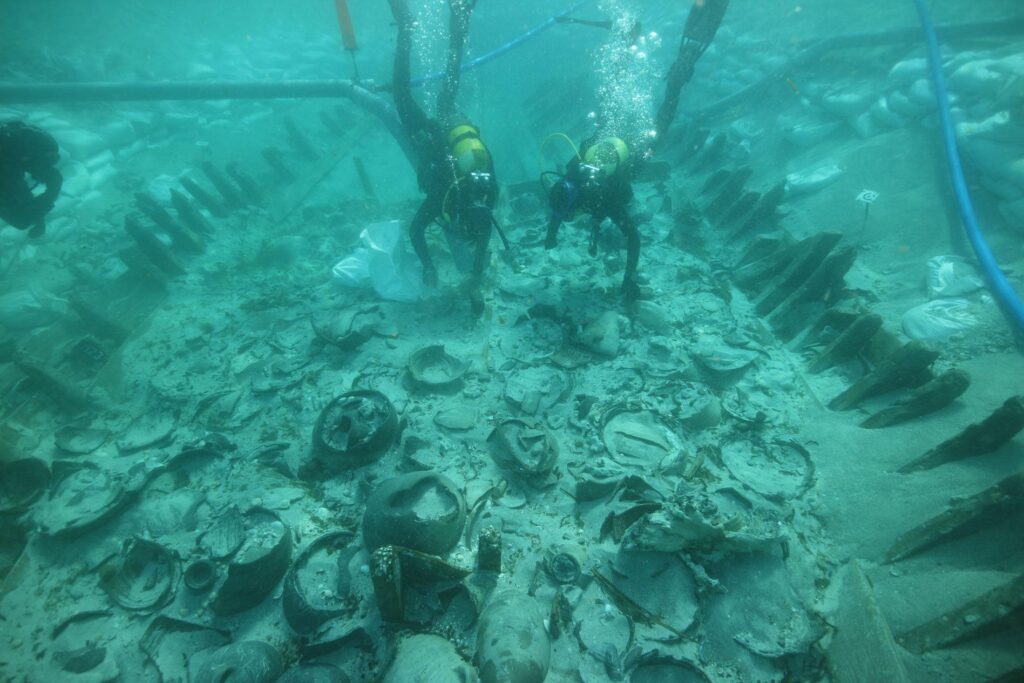
Just two meters beneath the turquoise waters of Playa de Palma, archaeologists have uncovered a remarkably preserved Roman merchant ship that sank around 1,700 years ago. Found off one of Mallorca’s most popular tourist beaches, the Ses Fontanelles wreck offers an exceptional window into late Roman trade, shipbuilding, and daily life across the western Mediterranean.
A discovery hiding in plain sight
The ship was first spotted by local resident Félix Alarcón, who noticed fragments of ancient wood protruding from the seabed during a morning swim. His report to the island’s heritage authorities led to a full-scale underwater investigation. Experts soon confirmed that the 12-meter-long vessel, loaded with hundreds of amphorae, dated to around the mid-4th century CE.
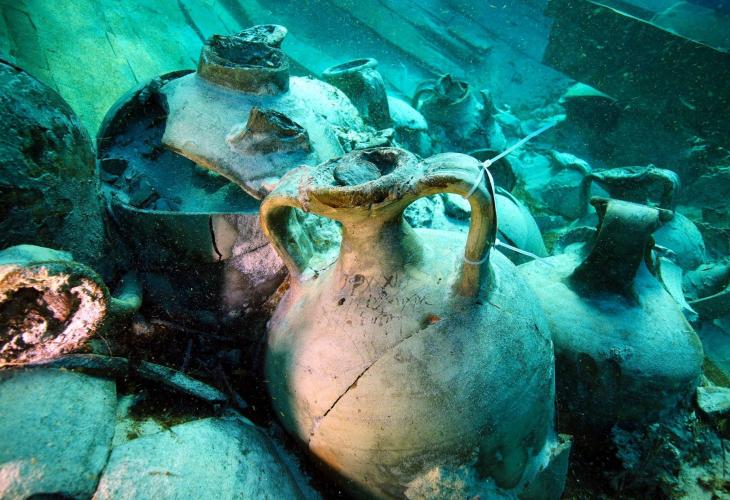
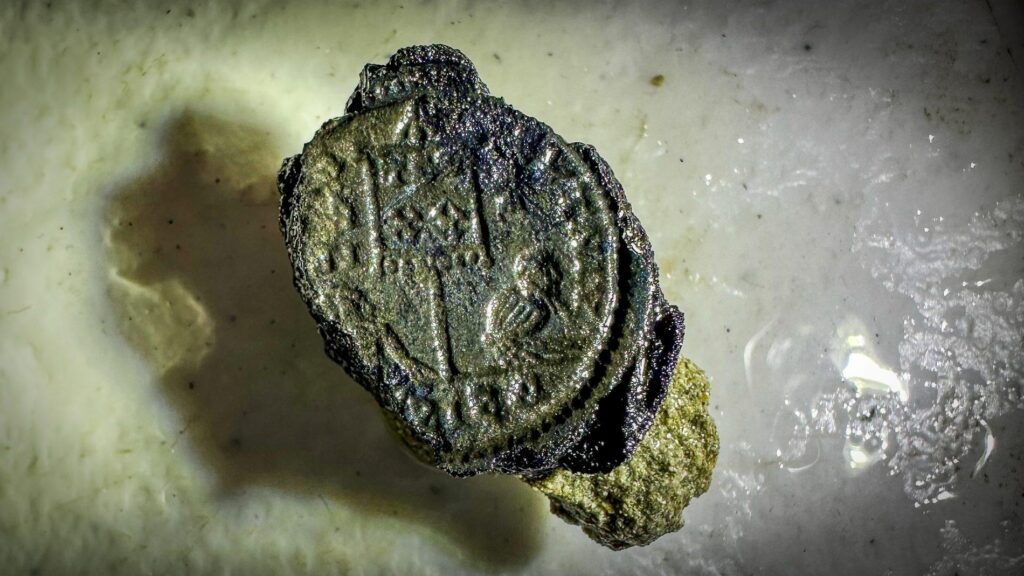
Archaeologists believe the ship departed from Cartagena, a major Roman port on Spain’s southern coast, carrying olive oil, wine, and garum—a fermented fish sauce widely traded across the empire. A coin found beneath the mast, minted in Siscia (modern Croatia) around 320 CE, provided a precise chronological marker.
Exceptional preservation beneath the sand
According to Prof. Enrique García of the University of the Balearic Islands, the vessel’s state of preservation is extraordinary. “The ship was quickly covered by sand after it sank, sealing it from oxygen and preventing biological decay,” he explained. Dozens of amphorae remained sealed, while parts of the hull and deck timbers retained their original structure.
Among the finds were two leather shoes, a carpenter’s drill likely used for onboard repairs, and an oil lamp depicting the goddess Diana, symbol of the hunt and the moon. Some amphorae, however, bear early Christian monograms, reflecting the transitional period when pagan and Christian beliefs coexisted in the late Roman world.
Insights into Roman trade and economy
The cargo provided a wealth of epigraphic evidence. Many amphorae were marked with tituli picti—painted inscriptions identifying producers, content, and tax codes. Researchers from the University of Cádiz, led by Prof. Darío Bernal, have described the collection as one of the largest of its kind ever found in Spain.
“These inscriptions reveal the administrative and commercial networks that sustained Roman trade,” Bernal noted. “At least seven individuals were involved in labeling the containers, which gives us a glimpse of the scale of industrial organization behind Mediterranean commerce.”
Laboratory analysis confirmed that the amphorae’s clay originated from southeastern Spain, consolidating evidence of Murcia’s role as a production hub for oil and fish sauce during late antiquity. Interestingly, five previously unknown amphora types were identified, potentially helping scholars trace future finds to specific routes within the western Mediterranean trading system.
A rare survivor of late antiquity
Shipwrecks from the later Roman Empire are exceptionally rare. Most earlier vessels disintegrated or were scavenged long before systematic preservation efforts existed. The Ses Fontanelles wreck therefore offers a unique time capsule for studying shipbuilding techniques, trade logistics, and the daily lives of sailors operating between Iberia, North Africa, and the Balearic Islands.
The excavation also adds context to Mallorca’s own Roman past. Conquered by Quintus Caecilius Metellus Balearicus in 123 BCE, the island became a strategic stopover in the western Mediterranean. During the 4th century, the Playa de Palma area was a lagoon-harbor, later silted up, that offered shelter to vessels during storms—possibly the same haven the doomed merchantman sought before sinking.
Conservation and future exhibition
The ship’s wooden remains remain in situ under protective sand layers, while the amphorae and artifacts have been transferred for conservation. According to Dr. Carlos de Juan of the University of Valencia, plans are underway to recover the hull in sections rather than as a single piece, since the keel had detached during earlier storms.
Once extracted, each wooden fragment will undergo desalination in freshwater tanks at Castillo San Carlos (Palma) to remove embedded salt crystals and corroded nails before impregnation and stabilization. The complete conservation and reconstruction process is expected to take at least five years, after which the ship will be exhibited to the public as a centerpiece of Mallorca’s maritime heritage.
The project, overseen by the Consell de Mallorca and supported by Spain’s ARQUEOMALLORNAUTA initiative, has already produced multiple academic papers and international conference presentations. Researchers hope the final display will not only highlight the island’s Roman legacy but also raise awareness of the fragile underwater landscapes that still hold untold stories of the Mediterranean’s trading past.
Cover Image Credit: Coins, amphorae, and many other artifacts rest on the seabed. Consell de Mallorca
