
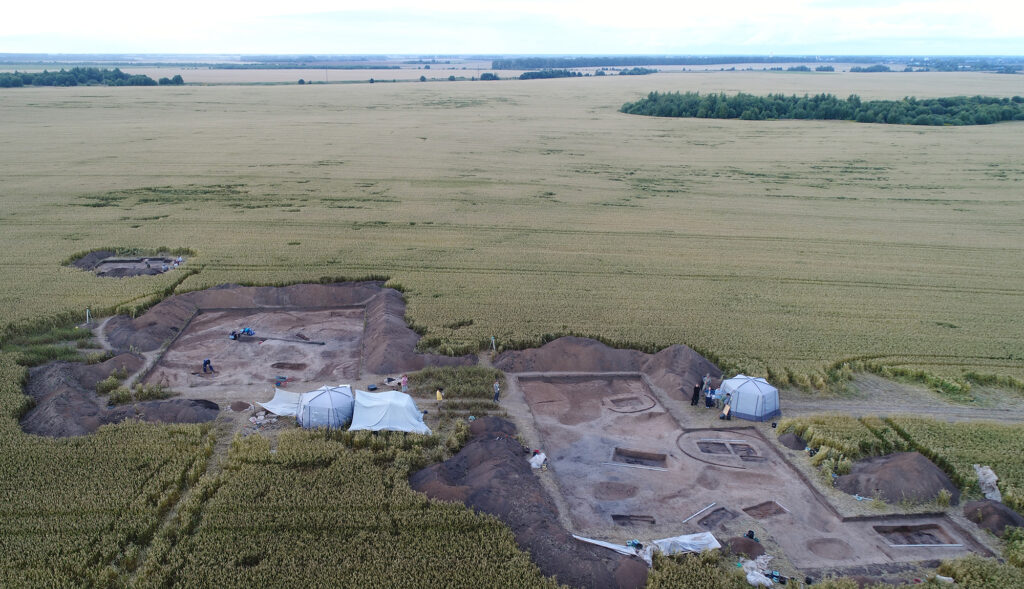
Archaeologists working in the medieval necropolis of Gnezdilovo, near Suzdal — a historic town in today’s Vladimir Oblast, Russia — have uncovered one of the most extraordinary burials yet found in Northeastern Rus’ (Here, ‘Rus’ refers to the early medieval East Slavic state known as Rus’, which existed long before the modern Russian state.).
A richly furnished female grave, referred to by researchers as a “princely” burial, contained silver jewelry, imported beads, and a rare Indian jital coin dating back to the 9th century.
The find underscores the prominent role of elite women in early Rus society and offers a glimpse into long-distance connections that stretched as far as South Asia.
What is a jital?
The jital was a small silver coin struck in the Kabul region during the late 8th and 9th centuries CE. Typically, these coins featured the image of a humped bull (zebu) and a mounted horseman — symbols of strength and prosperity. Jitals circulated in present-day Afghanistan, Pakistan, and northern India, but unlike Islamic dirhams, they rarely reached Europe.
The discovery of a jital in Suzdal is therefore highly unusual. Specialists emphasize that such coins are extremely rare in Eastern Europe, making this example one of the earliest pieces of evidence of long-distance contact between Rus and South Asia.
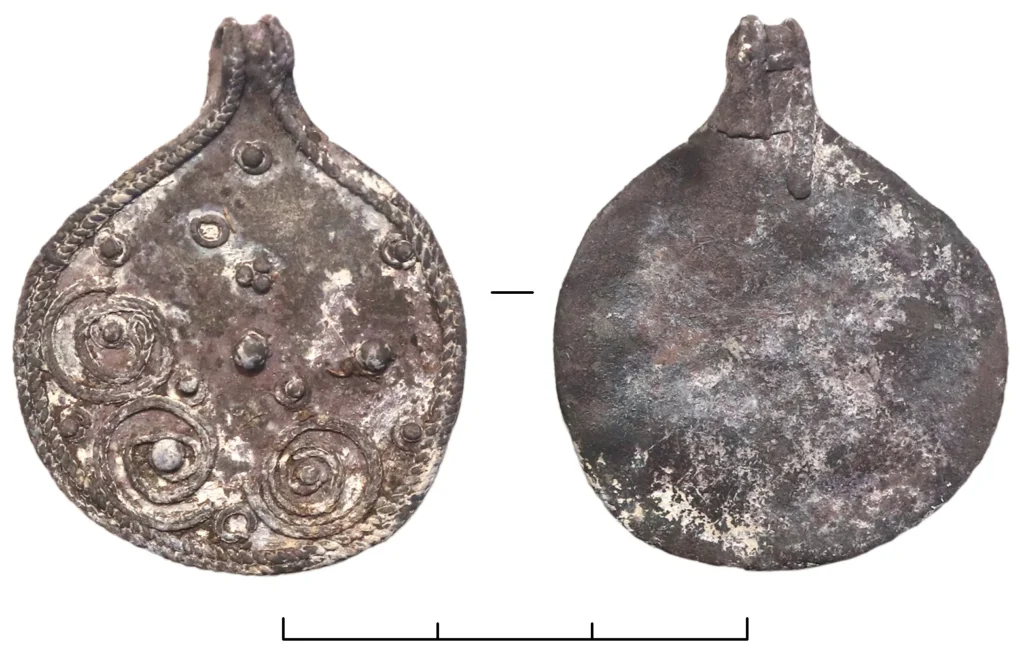
The significance of the jital find
While dirhams have been frequently unearthed in Rus and are understood to have served as both currency and raw silver, the jital’s presence in a female grave is highly symbolic. Its journey from Kabul to Suzdal — across thousands of kilometers — highlights the interconnectedness of medieval Eurasia.
Specialists suggest that the jital may have been brought to Rus as part of a trader’s hoard, a diplomatic gift, or even through indirect exchange along the Silk Road. Regardless of its path, the coin’s inclusion in a noblewoman’s burial indicates its role as a prestigious item, valued not merely for silver content but for its exotic origin.
As academician Nikolai Makarov, director of the Institute of Archaeology of the Russian Academy of Sciences, noted: “Such finds significantly expand our understanding of the Suzdal land. The princely grave at Gnezdilovo demonstrates the wide horizons of early Rus’ society and its active participation in global exchange.”
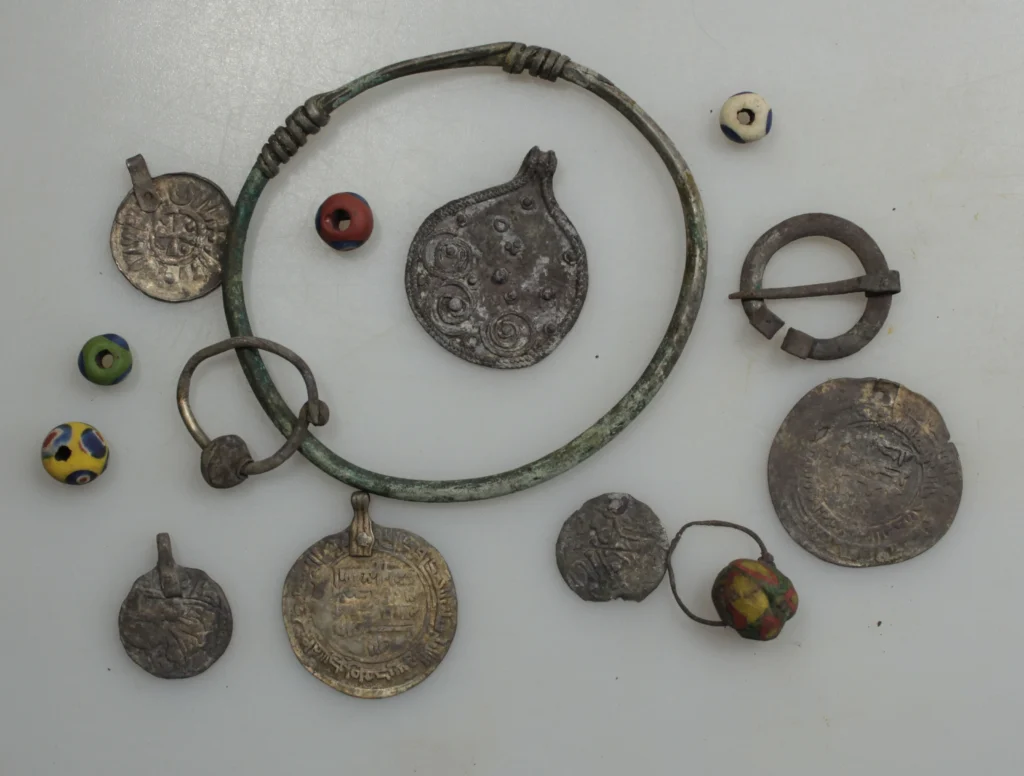
Grave 72: a high-status female burial
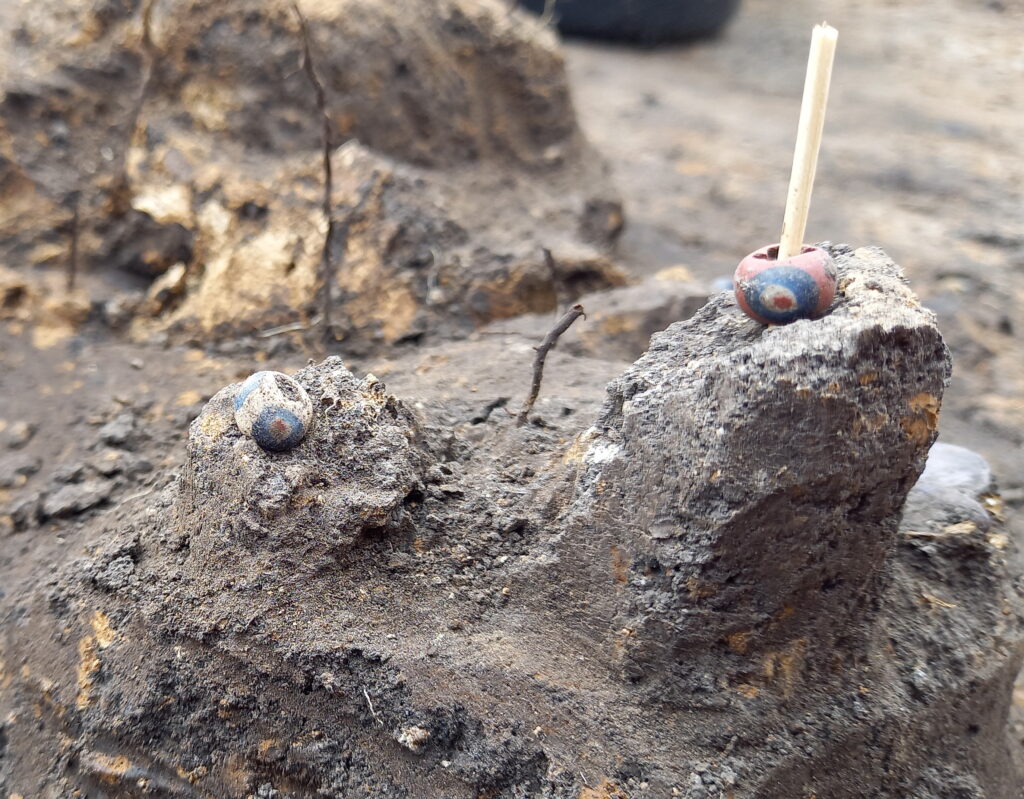
The jital was found in Grave 72, a lavishly equipped female burial uncovered during the 2025 excavation season. Alongside the coin, archaeologists recovered silver pendants, an elaborate necklace, brightly colored glass beads from the Middle East, and other imported ornaments. The grave also contained dirhams from the Islamic world and Western European denarii, creating a striking picture of the global networks that intersected in Suzdal more than a thousand years ago.
Researchers have referred to this interment as a “princely grave”, a term that highlights its wealth and ceremonial importance. While the word “princely” traditionally refers to male rulers (knyaz in medieval Rus), archaeologists use it more broadly to describe any burial of the social elite, male or female. In this case, the occupant was a woman of high rank — possibly a member of the ruling family or closely connected to it. Her burial illustrates the key role noblewomen played in both society and diplomacy, often serving as custodians of wealth and symbols of prestige.
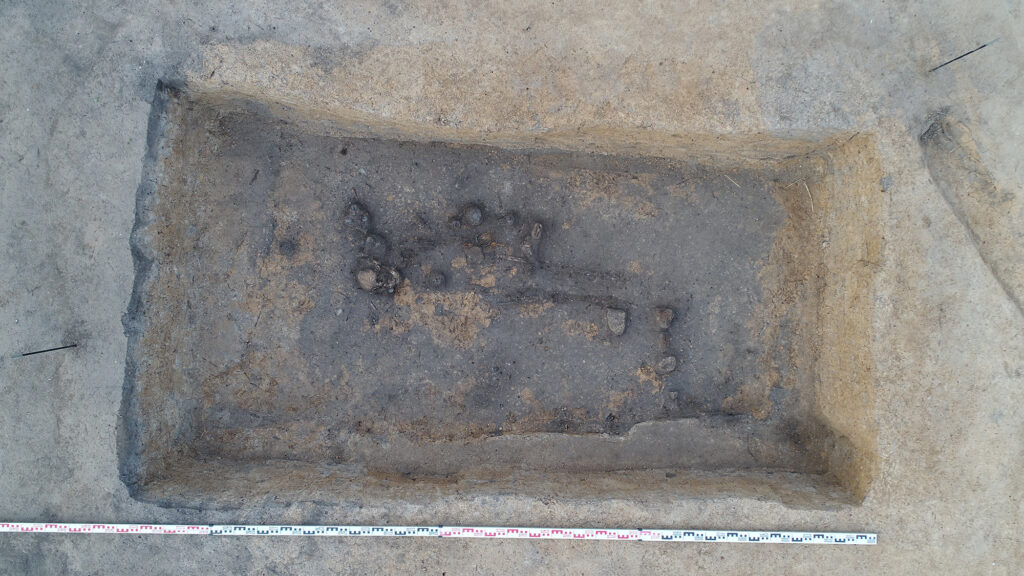
The meaning of a “princely” female grave
The use of the label “princely” for a woman’s burial may seem surprising, since medieval chronicles associate princely power almost exclusively with men. Yet the archaeological record reveals that women of the elite also commanded significant symbolic and social authority. Their burials often contained imported goods, jewelry, and luxury items that reflected not only personal adornment but also the status of their family and community.
Thus, the “princely” female grave at Gnezdilovo shows that noblewomen were active participants in the cultural and political life of Rus. The inclusion of rare coins and exotic ornaments suggests that their status was expressed through international connections as much as through local power.
Women, wealth, and status in early Rus
The discovery also sheds light on the social importance of elite women in pre-Mongol Rus. Female burials in Gnezdilovo often contain jewelry, beads, and imported ornaments, suggesting that women played a central role in representing family prestige and cultural connections. Grave 72, with its unique mix of local and foreign artifacts, epitomizes this phenomenon.
By burying a noblewoman with both traditional adornments and rare imports, the community may have been emphasizing her role as a custodian of wealth and as a link to distant lands. The jital coin, exotic and unfamiliar, would have reinforced her symbolic power, setting her apart from others in the necropolis.
Broader significance of the Gnezdilovo necropolis
The Gnezdilovo site has become one of the most important archaeological landmarks of the Suzdal region. Since its rediscovery in 2019, excavations have revealed dozens of burials dating from the 10th to 12th centuries, ranging from modest graves to elaborate elite interments. Together, they illustrate the diversity of social structures, burial practices, and cultural influences in early Rus’.
Academician Nikolai Makarov, director of the Institute of Archaeology of the Russian Academy of Sciences, stressed the significance of the latest discoveries: “With each season, Gnezdilovo becomes a key monument for studying the early history of Suzdal. The princely grave with the Indian jital provides unique evidence of the global horizons of our ancestors.”
The rare Indian jital coin from Grave 72 offers more than just a glimpse of early medieval trade. It highlights the importance of elite women in rebul crossed thousands of kilometers to rest in the burial of a noblewoman in Suzdal. Today, it stands as a powerful symbol of both the reach of medieval Eurasian networks and the often-overlooked influence of women in the political and cultural fabric of early Rus’.
Institute of Archaeology of the Russian Academy of Sciences (IA RAS)
Cover Image Credit: Institute of Archaeology of the Russian Academy of Sciences (IA RAS)
