
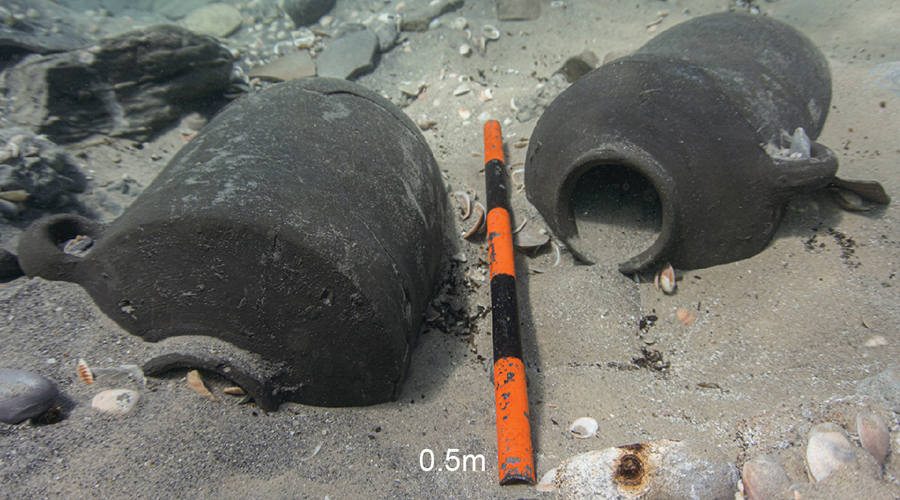
The discovery of three ancient shipwrecks in the Dor Lagoon reveals how Iron Age sailors reconnected the Mediterranean world after centuries of collapse.
Beneath the turquoise waters of Israel’s Carmel Coast, a remarkable discovery is rewriting what we know about Iron Age seafaring. Marine archaeologists from the University of Haifa and the University of California, San Diego, have uncovered the first Iron Age ship cargoes ever found in the context of an ancient port city in Israel. The finds, lying off the ancient harbor of Tel Dor, shed light on how the eastern Mediterranean pulsed with trade, empire, and innovation nearly 3,000 years ago.
A Window into a Lost Maritime World
For decades, historians have debated how trade recovered after the Late Bronze Age collapse around 1200 BCE—a period of upheaval when great civilizations fell and Mediterranean trade routes disintegrated.
Now, the sunken cargoes at Dor offer rare, tangible evidence that the sea was alive again with merchants, sailors, and explorers during the Iron Age (ca. 1200–550 BCE).
“This is the missing piece in our understanding of Iron Age connectivity,” explains lead researcher Assaf Yasur-Landau of the University of Haifa. “Until now, we had imported artifacts from land sites—but not the ships that carried them. These wrecks bring the story full circle.”
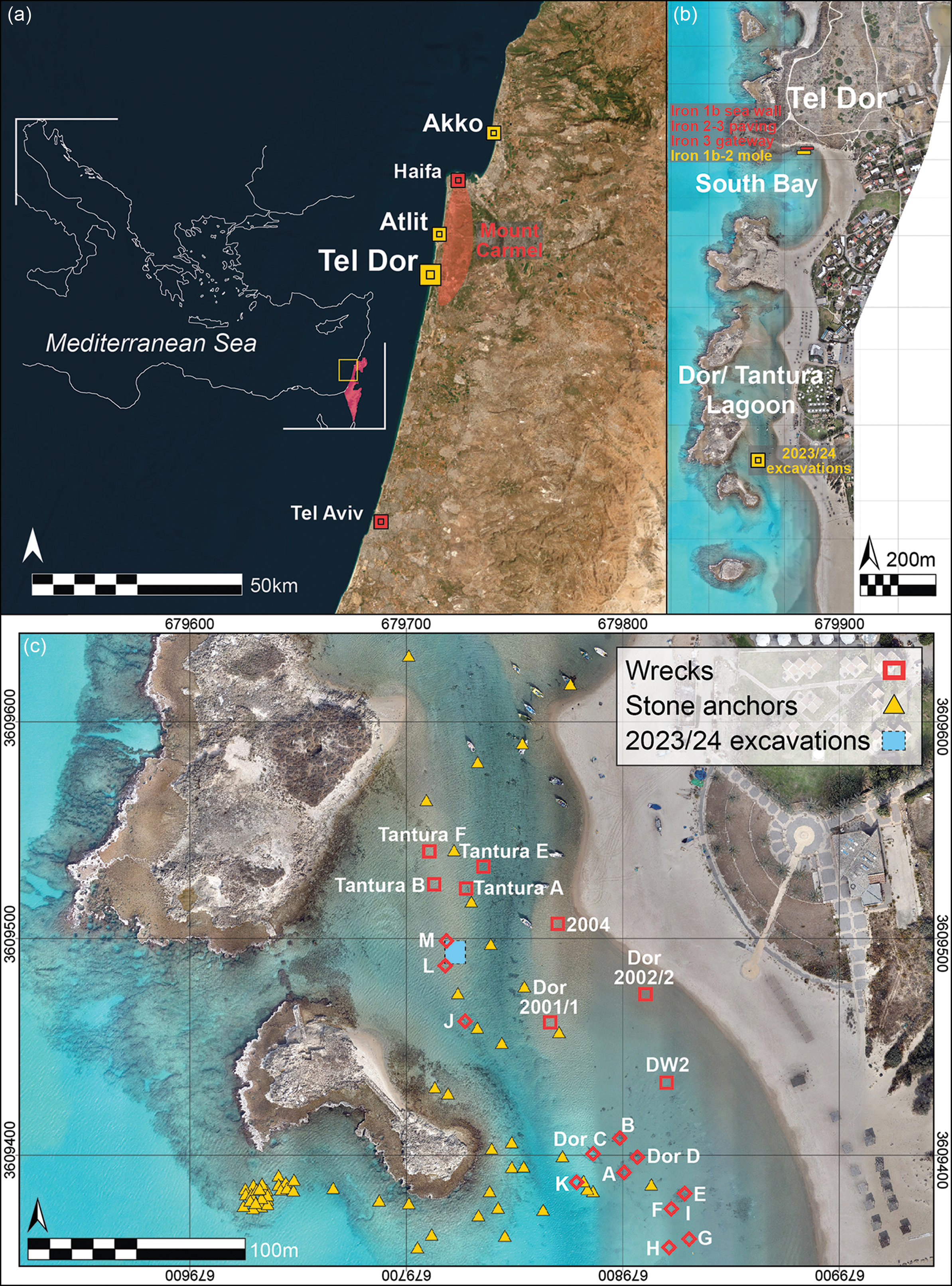
The discoveries were made during 2023–2024 underwater excavations in the Dor Lagoon (also known as Tantura Lagoon), a natural harbor protected by three islets that once offered safe anchorage to ancient ships. Using GPS-aligned 3D mapping and precision dredging, the team identified three distinct ship cargoes—each from a different century of the Iron Age—preserved beneath meters of sand and silt.
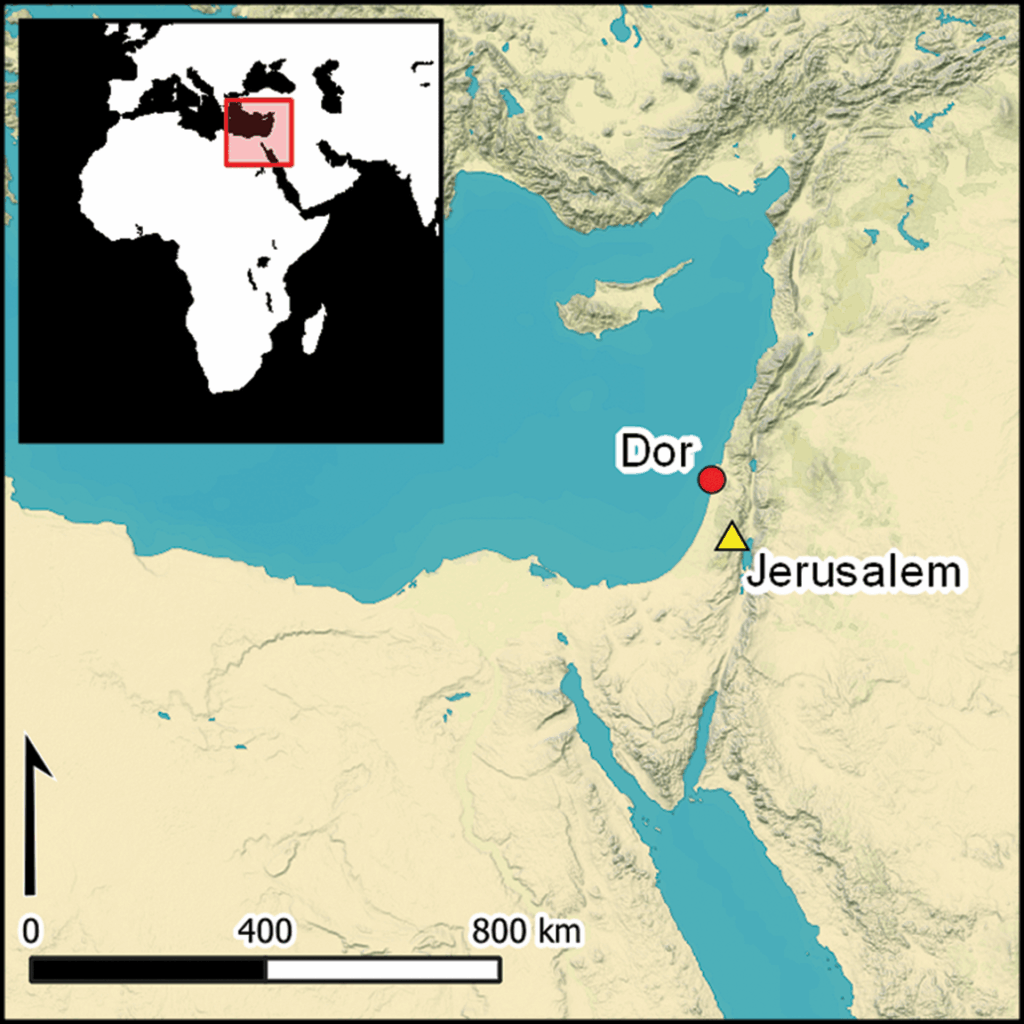
Three Shipwrecks, Three Ages of Trade
Dor M: The Dawn of Recovery (11th Century BCE)
The earliest cargo, known as Dor M, dates to the eleventh century BCE, when the Mediterranean world was just beginning to rebuild after the chaos of the Bronze Age collapse.
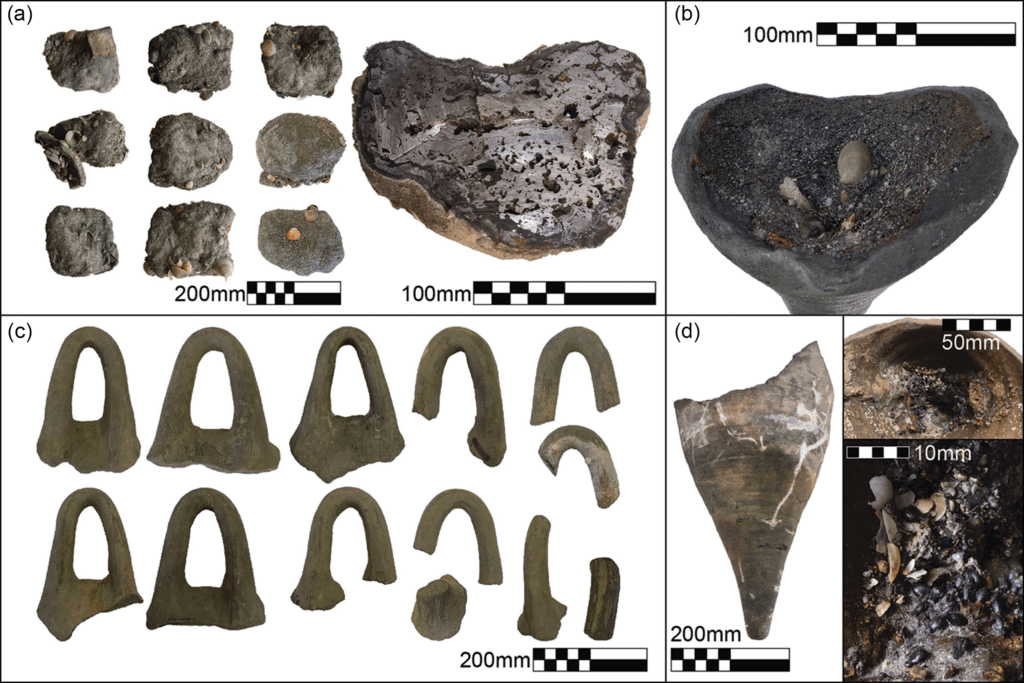
Archaeologists uncovered rare Iron I storage jars of a type found in Egypt, Cyprus, and Lebanon, alongside a stone anchor inscribed with Cypro-Minoan signs—the same writing system used on Cyprus at the time.
These clues point to a vibrant network of early seafarers linking the city-state of Dor with Egypt and Cyprus. The find echoes the ancient Egyptian tale The Report of Wenamun, which describes a harrowing voyage from Egypt to Dor and Phoenicia around the same period.
“Dor M represents the rebirth of long-distance trade,” says Yasur-Landau. “It shows that within a century of the collapse, people were back at sea, rebuilding their connections across the Mediterranean.”
Dor L1: Trade Under the Israelites (9th–8th Centuries BCE)
The second shipwreck, Dor L1, dates to the late ninth or early eighth century BCE, when Dor was under the control of the Kingdom of Israel. Its cargo contained Phoenician-style storage jars and simple galley wares, the everyday ceramics used by sailors. Some of the bowls bore mending holes—a reminder that even in antiquity, sailors reused and repaired their tools at sea.
But unlike the earlier Dor M cargo, Dor L1 shows fewer international imports, suggesting a contraction of maritime exchange. “This was a more localized trade system,” notes Yasur-Landau. “The cargo likely supplied regional coastal ports rather than far-flung empires.”
Still, the presence of complete storage jars and a single-holed stone anchor indicates this was a real shipwreck, not just debris. The ship may have sunk quietly in the lagoon after serving Israel’s coastal trade routes.
Dor L2: Iron and Empires (7th–6th Centuries BCE)
The youngest of the three cargoes, Dor L2, dates to the late seventh or early sixth century BCE, an era of imperial power. Dor, once again under Phoenician administration, thrived as a port city within the empires of Assyria and Babylon.
The L2 cargo contained Cypriot-style basket-handle amphorae—vessels used for transporting goods like wine, oil, and resin—and, astonishingly, nine iron blooms weighing up to ten kilograms each. Iron blooms are semi-processed chunks of smelted iron—a raw material rarely found in ship cargoes of this age.
“This is one of the earliest known shipments of iron across the sea,” says Yasur-Landau. “It signals that by the 7th century BCE, the Mediterranean trade network had not only revived but was thriving with industrial materials.”
The cargo also included exotic volcanic and quartz-rich ballast stones that originated far from Israel’s coast, hinting that the ship had traveled across the wider Mediterranean before meeting its fate in Dor’s sheltered bay.
A Forgotten Harbor Reborn
Long before its harbors were buried by rising seas, Dor was protected by stone quays and a mole — a massive sea wall built to shelter ships. Underwater mapping shows that much of this infrastructure remains, now submerged and preserved beneath centuries of sand.
“Dor is unique,” says co-director Thomas E. Levy of UC San Diego. “It’s one of the few places where we can trace continuous maritime activity from the 11th to 6th centuries BCE. These discoveries show how resilient the ancient maritime world really was.”
The Sea Gives Back Its Stories
Only about a dozen Iron Age shipwrecks are known across the entire Mediterranean. The three from Dor alone triple Israel’s underwater record for this period and fill a crucial gap in the history of ancient trade.
Each jar, amphora, and anchor is now being studied with advanced residue and isotope analysis, revealing the origins of their contents and materials. Excavations will continue in future seasons — and archaeologists believe that parts of the wooden hulls may still lie beneath the silt, waiting to be revealed.
For the researchers, Dor’s lagoon is not just an excavation site. It is a dialogue with the past — a chance to listen to the whispers of a seafaring people who connected continents long before modern navigation.
“Every time we uncover an amphora,” says Yasur-Landau, “it’s as if a sailor from 2,800 years ago reaches out and reminds us — the sea never forgets.”
Yasur-Landau, A., Runjajić, M., Shegol, E., Rosen, R., Johnson, K., Cvikel, D., … Levy, TE (2025). Dor limanından (İsrail) Demir Çağı gemi kargoları. Antiquity, 99 (406), 1004–1020. doi:10.15184/aqy.2025.71
Cover Image Credit: Yasur-Landau et al., 2025, Antiquity.
