20 January 2026 The Future is the Product of the Past

Ancient city “Germanicia” lost in 73 years

The presence of the ancient city of Germanicia, discovered during an illegal excavation in the southeast Turkish province of Kahramanmaraş in 2007, revealed 73 years ago, but the ruins of the old city were destroyed by illegal construction.

While the ruins of Kaisereia Germanikeia, which was called the imperial city in the Roman period, can be seen in Kahramanmaraş with aerial photographs taken about 73 years ago, it has been seen that it has been under the buildings due to unplanned construction in the last 50 years.

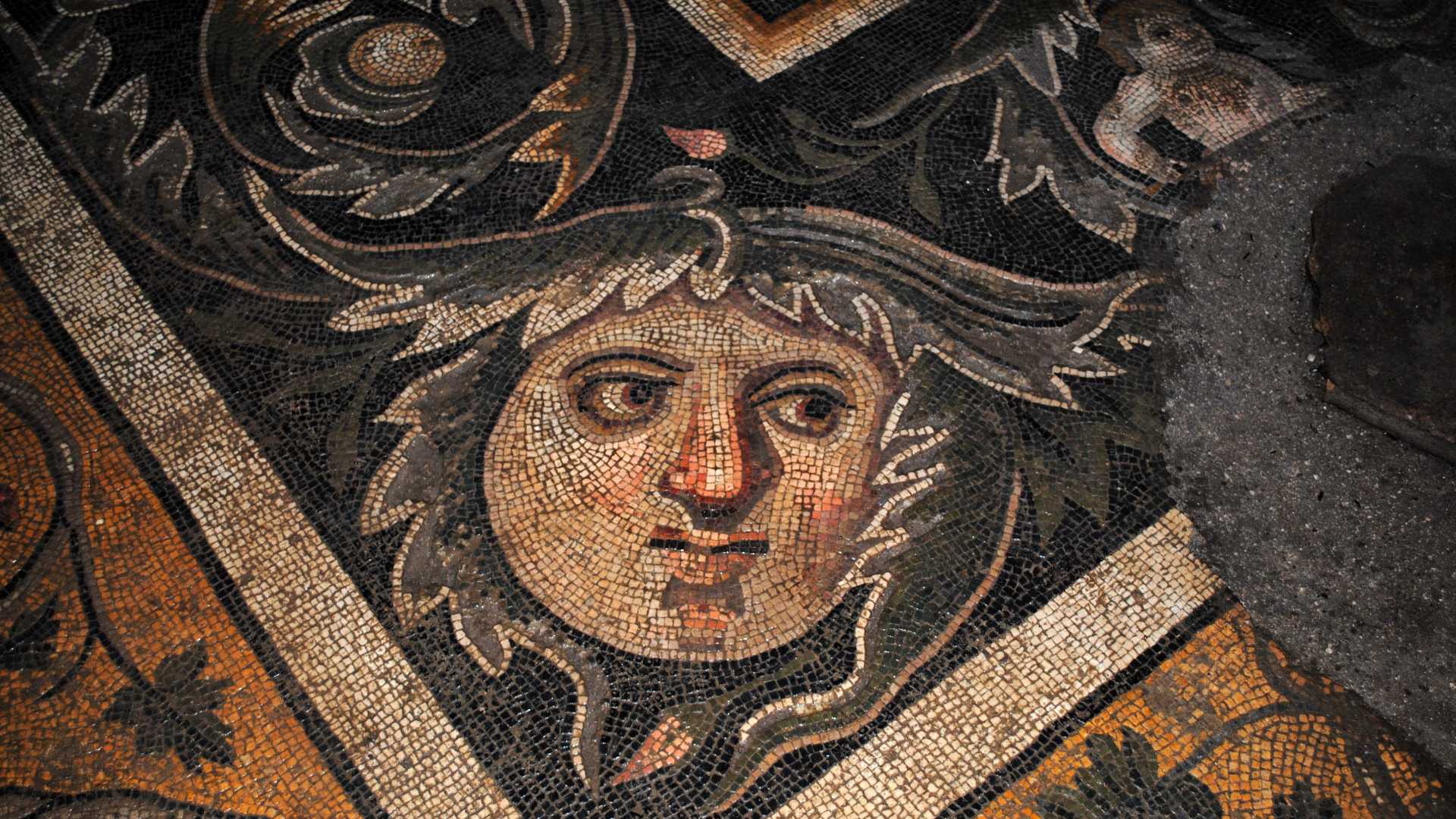
Mosaics, which covered the floors throughout the late Roman era, reflected the era’s social life. The mosaics made their way into archaeological literature through the World Mosaic Unions’ multi-language publishing, increasing the region’s prominence.

According to Yunus Emre Kaçamaz, head of the Kahramanmaraş Chamber of Architects, 17 structures survived, and one mound from the old city was plainly visible in an aerial image of the region taken in 1948.
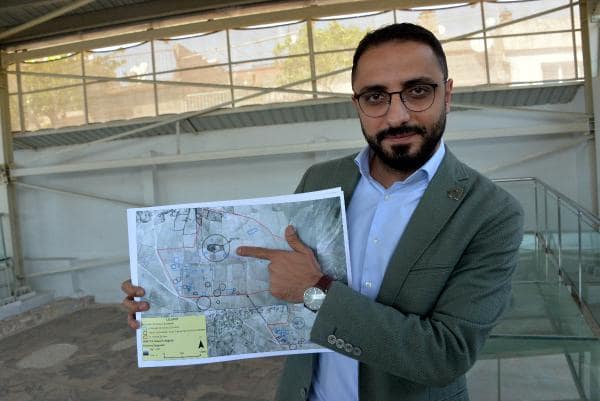
Yunus Emre Kaçamaz, head of the Kahramanmaraş Chamber of Architects.

“If we were more careful in 1948, we might have been visiting this place as an open-air museum right now,” he said.


📣 Our WhatsApp channel is now LIVE! Stay up-to-date with the latest news and updates, just click here to follow us on WhatsApp and never miss a thing!!


Kaçamaz recently made some examinations in the ancient city, which was found in the first century, but only its remains from the fourth and sixth centuries have been unearthed so far in the excavations.

Kaçamaz, who also visited the Germanicia Mosaics, which were available to tourists in two distinct locations, came upon 1,500-year-old moss-covered columns in one of the region’s residences. The ancient columns were discovered during the foundation excavation of his uncle’s house, according to owner Ali Akbey, and some of the columns were utilized as stones in the construction of the garden wall.
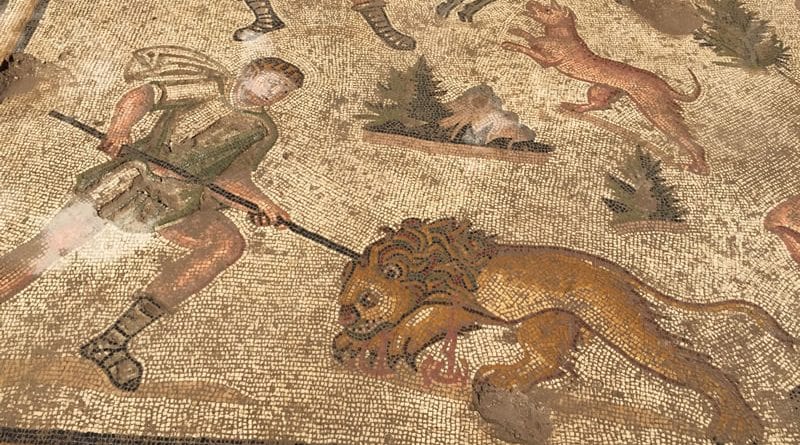
Ancient city of Germanicia
Ancient city of Germanicia-Hunter.

Stating that the ancient city of Germenicia is significant in terms of tourism, Kaçamaz said that the authorities should start a new and different work in the region as soon as possible.

“When we look at the aerial photographs taken in 1948, we can see the ruins of the ancient city of Germanicia in the photographs. If we had acted more carefully in 1948, we might have been visiting this place as an open-air museum with column heads and churches. And now there has been an unbelievably illegal construction. The Culture and Tourism Ministry and the Environment and Urbanization Ministry should support this place, and we should turn the region into an open-air museum as soon as possible with expropriations. There are too many illegal structures here. This needs to be resolved as soon as possible,” Kaçamaz said.

The ancient city was found in 2007 during illicit excavations in the Dulkadiroğlu district. The registration, expropriation, excavation, and preservation operations to unearth the old city that encompasses 140 hectares, including the neighborhoods of Namik Kemal, Şeyhadil, Dulkadirolu, and Bağlarbaş, are currently underway.

In 2014-2015, a pedestrian platform with a temporary protective wall and canopy was erected around the mosaic area. After the mosaics were restored and conserved, the area was made available to the public for free.

Related Articles

Failed Mongol fleet may actually land in Japan after 800 years

18 July 2023

18 July 2023

A  recent shipwreck was found off the coast of Japan this year and identified as part of a Mongol fleet...

The world’s oldest wine discovered in liquid form was found in a Roman tomb in Spain

18 June 2024

18 June 2024

Archaeologists discovered an urn with a reddish liquid in a family mausoleum dating to the 1st century AD in the...

An 8,500-Year-Old Micro-Carved Bead—and a 10,000-Year-Old Skull Room—Reveal Sefertepe’s Hidden Symbolic World

30 November 2025

30 November 2025

An 8,500-year-old micro-carved bead and a 10,000-year-old skull room uncovered at Sefertepe reveal a remarkably complex symbolic world in Neolithic...

Medieval Islamic Burials in a Neolithic Giant: DNA Reveals the Afterlife of Spain’s Menga Dolmen

5 January 2026

5 January 2026

A new interdisciplinary study suggests that the Menga dolmen—one of Europe’s largest Neolithic monuments—did not lose its symbolic importance with...

The Big Universe Coming Out from the Dust “in Esna Temple”

7 February 2021

7 February 2021

While the Esna Temple has been waiting to renew and breathe again for a long time, it has recently experienced...

Seven Roman altars multicolored in the Great Northern Museum

12 November 2021

12 November 2021

We know that the ancient world is now very colorful. But these colors weren’t just limited to robes and other...

Anglo-Saxon monasteries were more resilient to Viking attacks than thought

31 January 2023

31 January 2023

Researchers from the University of Reading’s Department of Archaeology have found new evidence that Anglo-Saxon monastic communities were more resistant...

First in Anatolian Archaeology, a 2,600-year-old Sacred Room and Stone Symbolizing the Goddess Kubaba Discovered at Oluz Höyük

29 November 2024

29 November 2024

Archaeologists have discovered a sacred room and stone from the Phrygian period, dating back 2,600 years, during excavations at the...

The Oldest Known Map of Europe, “Saint-Bélec Slab”

6 April 2021

6 April 2021

An ornate Bronze Age stone slab (Saint-Bélec slab) that was excavated in France in 1900 and forgotten about for over...

Australia’s 1,400-year-old Mysterious Earth Rings: Evidence of Millennia of Human Effort, Not Natural Formation

21 January 2025

21 January 2025

A chain of mysterious earth rings in the Sunbury hills at the fringe of Melbourne, in Australia have been found...

Evidence of a Roman shrine dating back was discovered during dig at Leicester Cathedral

7 March 2023

7 March 2023

Excavations by the University of Leicester archaeologists for have uncovered evidence that the site of Leicester Cathedral has been used...

An Amazing Discovery in the 1900-year-old Rock Church, – Sand Dollar Fossil

5 March 2024

5 March 2024

Located in the eastern province of Diyarbakır’s Eğil district, the rock church, the walls of which are decorated with different...

Discovery Shedding Light on Ancient Maritime Trade: 1,500-Year-Old Trade Shipwreck Found off Türkiye’s Ayvalık

21 December 2024

21 December 2024

‘Turkish Sunken-Ships Project: Blue Heritage’, a 1500-year-old trade shipwreck was found off the coast of Ayvalık district of Balıkesir. Under...

Bone workshop and oil lamp shop unearthed in Aizanoi ancient city in western Turkey

13 November 2021

13 November 2021

Archaeologists have unearthed a bone workshop and an oil lamp shop in an Aizanoi ancient city in the Çavdarhisar district...

Teymareh Petroglyphs, One of the World’s Largest Rock Art Collections, at Risk of Disappearing Due to Mining Activities

20 August 2024

20 August 2024

Petroglyphs are among the world’s oldest practiced art forms and are as diverse as the wide-ranging cultures and civilizations that...