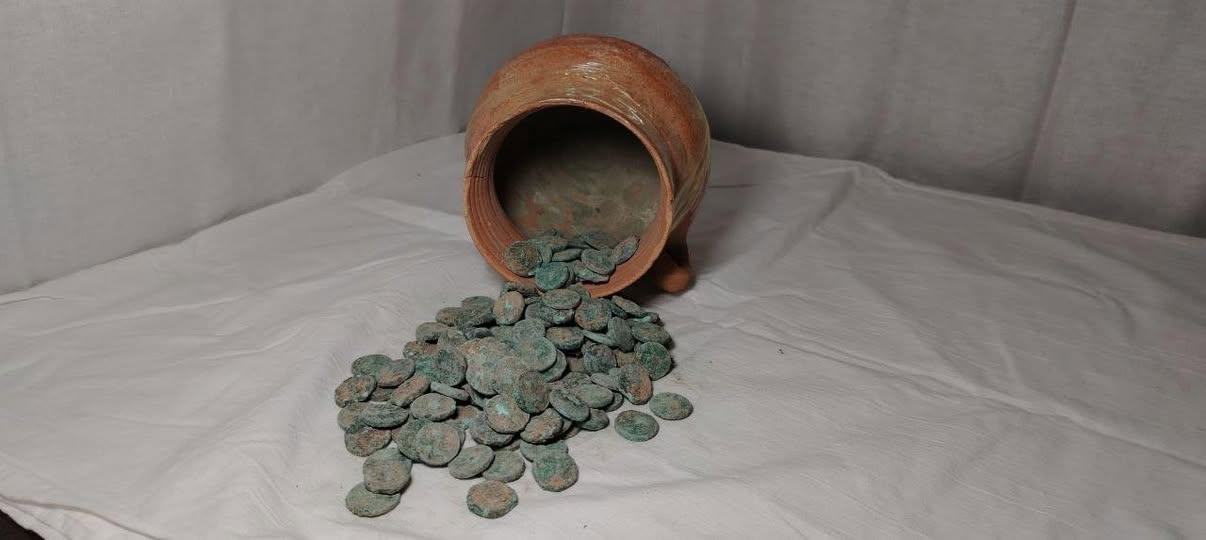
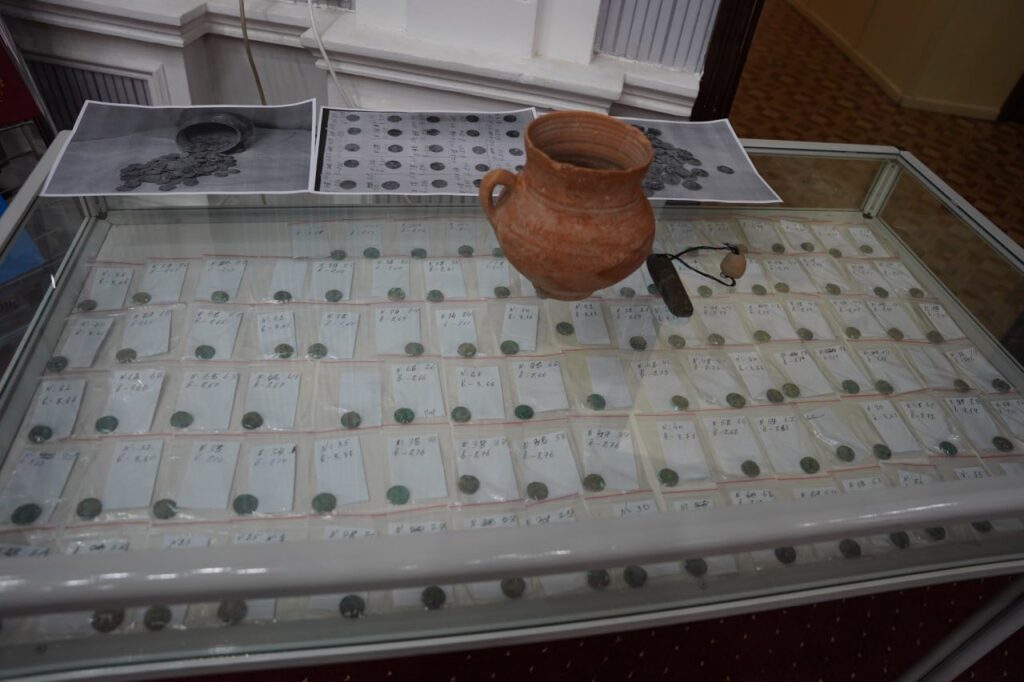
A chance discovery in southern Tajikistan has opened a new window onto the early history of the Kushan Empire. In the Shahritus district, more than 150 copper coins dating to the 1st century AD have been unearthed, offering rare material evidence from the formative phase of Kushan rule in Central Asia.
The find was announced in early 2026 by the National Academy of Sciences of Tajikistan, following the transfer of the hoard to state custody. According to officials, the coins were discovered accidentally by a local resident during routine agricultural work. Beneath the soil lay a small ceramic vessel, filled with heavily oxidized copper coins that had remained undisturbed for nearly two millennia.
Once the discovery was reported, specialists were dispatched to Shahritus to document the context and secure the find. The hoard was subsequently transferred to the Academy for study, conservation, and long-term preservation.
Coins Linked to Kushan King Vima Taktu
The numismatic importance of the hoard quickly became clear. Professor Abduvali Sharifzoda, one of Tajikistan’s leading numismatists, presented the coins to journalists, noting that the majority were minted during the reign of Vima Taktu.
Often overshadowed by his successor Kanishka I, Vima Taktu ruled during a crucial transitional period in Kushan history, likely in the late 1st century AD. His reign marked the consolidation of Kushan power following the expansion of the Yuezhi tribes into Bactria and northern India. Coins attributed to Vima Taktu are especially valuable to historians, as they help establish early Kushan chronology, political authority, and monetary policy.
📣 Our WhatsApp channel is now LIVE! Stay up-to-date with the latest news and updates, just click here to follow us on WhatsApp and never miss a thing!!
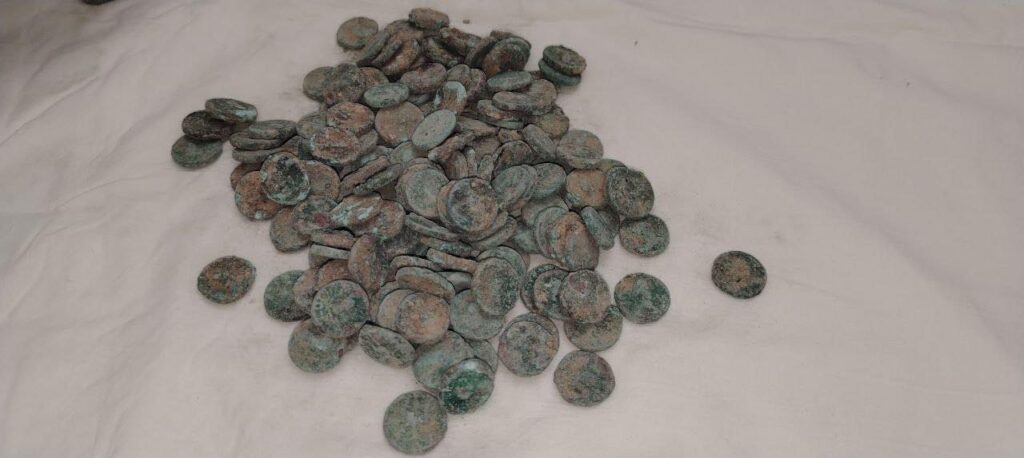
The Shahritus coins, despite corrosion, retain diagnostic features—iconography, legends, and weight standards—that firmly place them within this early imperial phase. Their presence in southern Tajikistan highlights the region’s role as an active economic and administrative zone within the Kushan world.
Restoration and Scientific Study Underway
Conservation work is currently being carried out by Rustam Burkhanov and Manuchehr Rakhmonov, restorers at the Institute of History, Archaeology, and Ethnography under the Academy. The process involves careful cleaning, stabilization of the copper surfaces, and documentation of each specimen before further analysis.
Once restored, the coins are expected to provide data on minting practices, circulation patterns, and regional trade networks. Preliminary assessments suggest the hoard was intentionally buried—possibly during a moment of instability or local unrest—rather than being a casual loss.
The Kushan Kingdom and Central Asia’s Forgotten Superpower
The Kushan Empire was one of the great powers of the ancient world, controlling territory that stretched from modern-day Uzbekistan and Tajikistan through Afghanistan and deep into northern India. Positioned at the heart of the Silk Road, the Kushans facilitated long-distance trade between Rome, Parthia, China, and South Asia.
Under rulers like Vima Taktu, the empire developed a sophisticated monetary system that blended Hellenistic imagery, Iranian religious symbols, and emerging imperial ideology. Copper coinage, such as that found at Shahritus, played a vital role in everyday transactions, taxation, and military supply.
The discovery reinforces Tajikistan’s importance within this transregional empire, reminding scholars that Central Asia was not merely a corridor between civilizations but a dynamic center of political and economic life.
A Find with Regional and Global Significance
As restoration continues, researchers anticipate that the Shahritus hoard will contribute to broader debates on Kushan chronology, state formation, and regional administration. Each coin adds a fragment to a larger historical puzzle—one that connects local communities in southern Tajikistan to the vast imperial networks of the early first millennium.
Far from being just a buried pot of coins, the find stands as tangible evidence of an empire at its formative peak—and of a king, Vima Taktu, whose reign helped lay the foundations of Kushan power across Central Asia and beyond.
Cover Image Credit: Asia+ via Facebook