
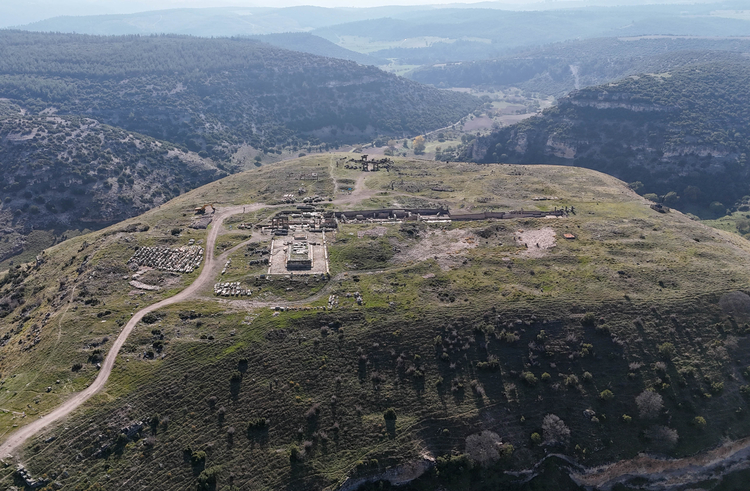
According to a report by Anatolian Archaeology, archaeologists have begun excavating a Roman-era stadium perched above the dramatic canyons of Uşak’s Ulubey district — a discovery that could turn the ancient city of Blaundos into one of western Türkiye’s most distinctive archaeological landscapes.
High on a wind-carved plateau in western Türkiye, archaeologists have uncovered a Roman-era stadium that once greeted travelers entering Blaundos — a city originally settled by Macedonian troops after Alexander the Great’s Anatolian campaign. Rising above the sheer walls of the Ulubey Canyon, the newly excavated structure is offering a striking new dimension to a site long known for its dramatic, fortress-like setting.
The discovery, announced by the Uşak Museum Directorate, marks the first major season of work on a stadium that has remained partially buried for nearly two millennia. Early results already suggest that Blaundos, a medium-sized ancient settlement, may soon redefine its place among the standout archaeological landscapes of western Türkiye.
A Canyon-Edge Stadium Revealed for the First Time
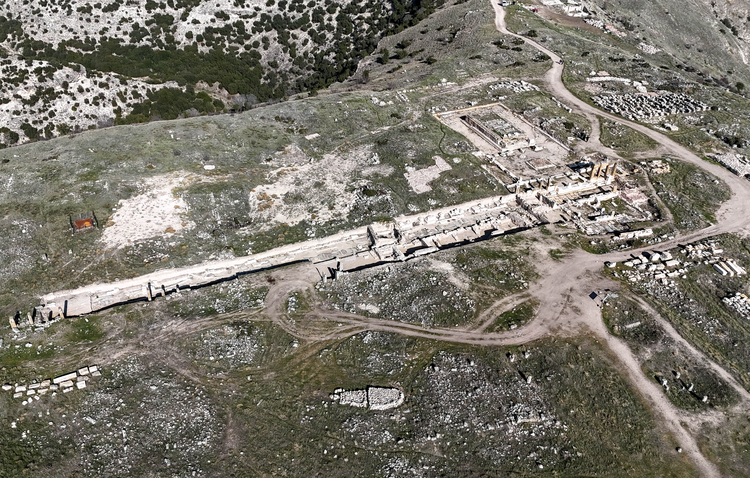
This year’s excavations began with a clear objective: to expose the full layout of a stadium measuring 140 meters in length and 37 meters in width, constructed directly beside the city’s monumental gate. Few ancient cities in Anatolia position such a structure at the entrance, and none do so with a view plunging into a canyon hundreds of meters deep.
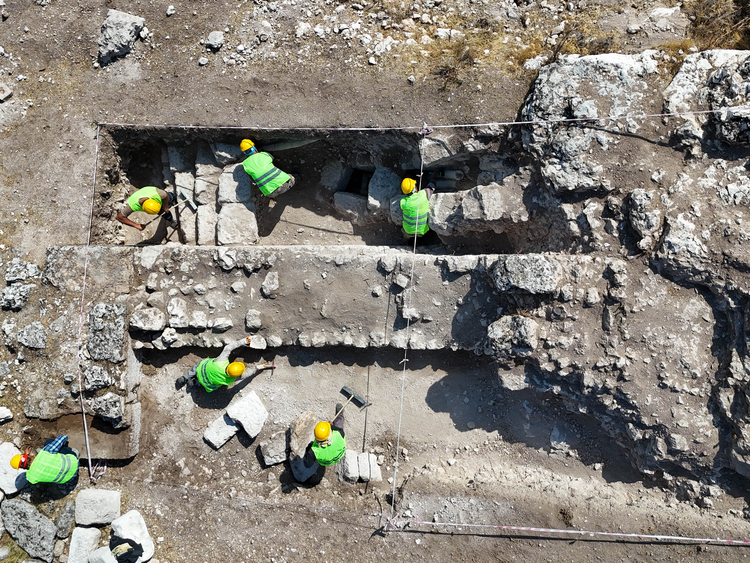
Archaeologists working under the Geleceğe Miras Project (Heritage for the Future Project) have already uncovered key architectural elements. These include a stepped entryway carved into the slope, a large retaining wall engineered to stabilize the uneven terrain, and a rock-cut water conduit supplying the nearby Roman bath complex. The hydraulic system — hewn directly from bedrock — suggests a sophisticated understanding of water management at Blaundos during the early imperial period.
In his statement to Anadolu Agency (AA), Excavation Director Şerif Söyler notes that the stadium likely dates to the 1st century AD, though further work may refine that chronology:
“Blaundos is a medium-sized ancient city, and the dimensions of the stadium reflect that scale. But its visibility at the city entrance gives it a monumental character we did not fully appreciate before.”
A City Founded by Macedonians: The Historical Arc of Blaundos
Although Blaundos first appears in historical records in the Hellenistic era, its origins lie in the turbulent decades following Alexander the Great’s march through Anatolia in the late 4th century BC. After the Macedonian conquest, strategic highland zones across western Anatolia were reorganized as garrison cities. Blaundos — isolated on a natural mesa surrounded by the branching ravines of the Ulubey Canyon — became one of these fortified settlements.
Its elevated topography allowed control of surrounding routes, while its single narrow entrance created a natural defense system. Roman authorities later enhanced the city’s layout, adding public baths, colonnaded streets, monumental tombs, and aqueducts. These layers, accumulated over centuries, transformed Blaundos into a hybrid urban landscape blending Hellenistic military planning with Roman civic architecture.
The rediscovery of the stadium now strengthens that narrative. Positioned at the threshold of the city, it symbolized both civic identity and imperial order — a space where athletic competitions, ceremonies, and processions unfolded against the backdrop of canyon walls.
A Landscape Rich in Landmarks: From Demeter’s Temple to Trilithic Stones
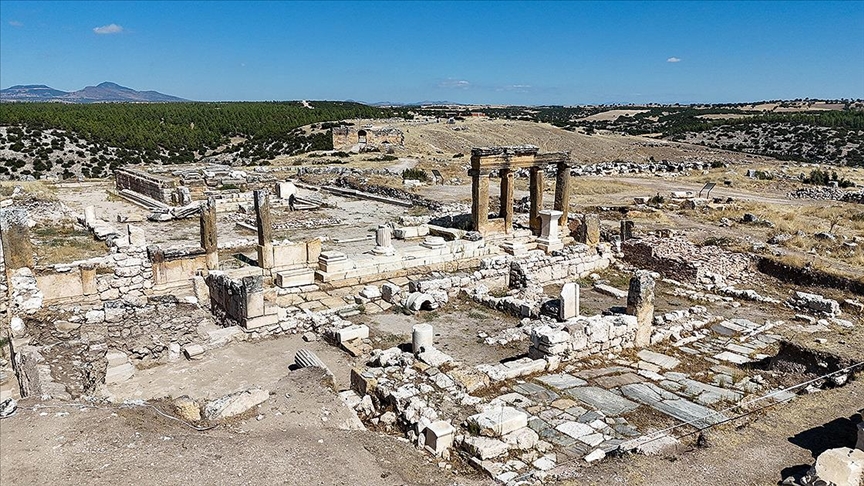
The newly exposed stadium is only the latest feature in a site already distinguished by remarkably diverse remains. Blaundos hosts nine restored Roman aqueducts stretching across the plateau, a monumental 2,000-year-old tomb attributed to an elite local family, and a long colonnaded street where Roman and later Byzantine elements intermingle.
Near the center of the city stands a temple dedicated to Demeter, a structure that underscores Blaundos’ connection to agricultural cult practices throughout the ancient Mediterranean. Meanwhile, at the city’s far edge, three upright trilithic stones — often compared to a miniature Stonehenge — offer a mysterious and visually arresting element to the skyline.
Below the plateau, dozens of rock-cut tombs descend into the canyon slopes, forming a layered funerary landscape unmatched elsewhere in the region. Taken together, these features highlight why archaeologists increasingly view Blaundos as one of the most photogenic and topographically unique ancient cities in Türkiye.
From Ruins to Cultural Venue: The Future of the Stadium
The long-term vision for Blaundos extends far beyond excavation. Once the stadium is fully cleared and restored, the site is expected to become a venue for concerts, staged performances, athleticexhibitions, and cultural festivals — bringing ancient architecture and modern community life into direct conversation.
Söyler emphasizes the transformative potential: “Seeing a stadium rise beside the entrance will reshape the image of Blaundos. It will enhance both its visual identity and its cultural value. This season marks the beginning of revealing an entirely new side of the city.”
As restoration continues year-round under the Ministry of Culture and Tourism, Blaundos is poised to join Türkiye’s growing list of revived ancient centers — places where archaeology and public engagement intersect to create sustainable heritage tourism.
Cover Image Credit: Mehmet Yılmaz/AA
