

5 June 2026 The Future is the Product of the Past

Hungarian Archaeology Student Discovers Rare Bronze Figurines at Roman-Era Brigetio Site

A remarkable archaeological discovery emerged this July at the ancient Roman site of Brigetio in Komárom, Hungary. First-year archaeology student Laura Zentai, participating in ongoing excavations, uncovered three rare bronze figurines estimated to be over 2,000 years old. These artifacts offer new insights into Roman military life and craftsmanship on the empire’s southeastern frontier.

Uncovering History at Brigetio

Brigetio, located in modern-day Komárom near the Hungarian-Slovak border, was an important Roman military settlement in the province of Pannonia from the late 1st century AD. It served as a strategic border defense camp guarding the Roman Empire’s northern frontier along the Danube River. Excavations at Brigetio have been ongoing for decades, attracting Hungarian university students and international researchers interested in Roman military architecture, daily life, and material culture.

This summer marked the beginning of fieldwork for Laura Zentai, a student from Mosonmagyaróvár. Despite being her first outdoor excavation experience, Zentai’s contributions were significant. As reported by Hungarian news portal 24.hu, she uncovered three bronze figurines among the ruins of a long-destroyed building at Brigetio.
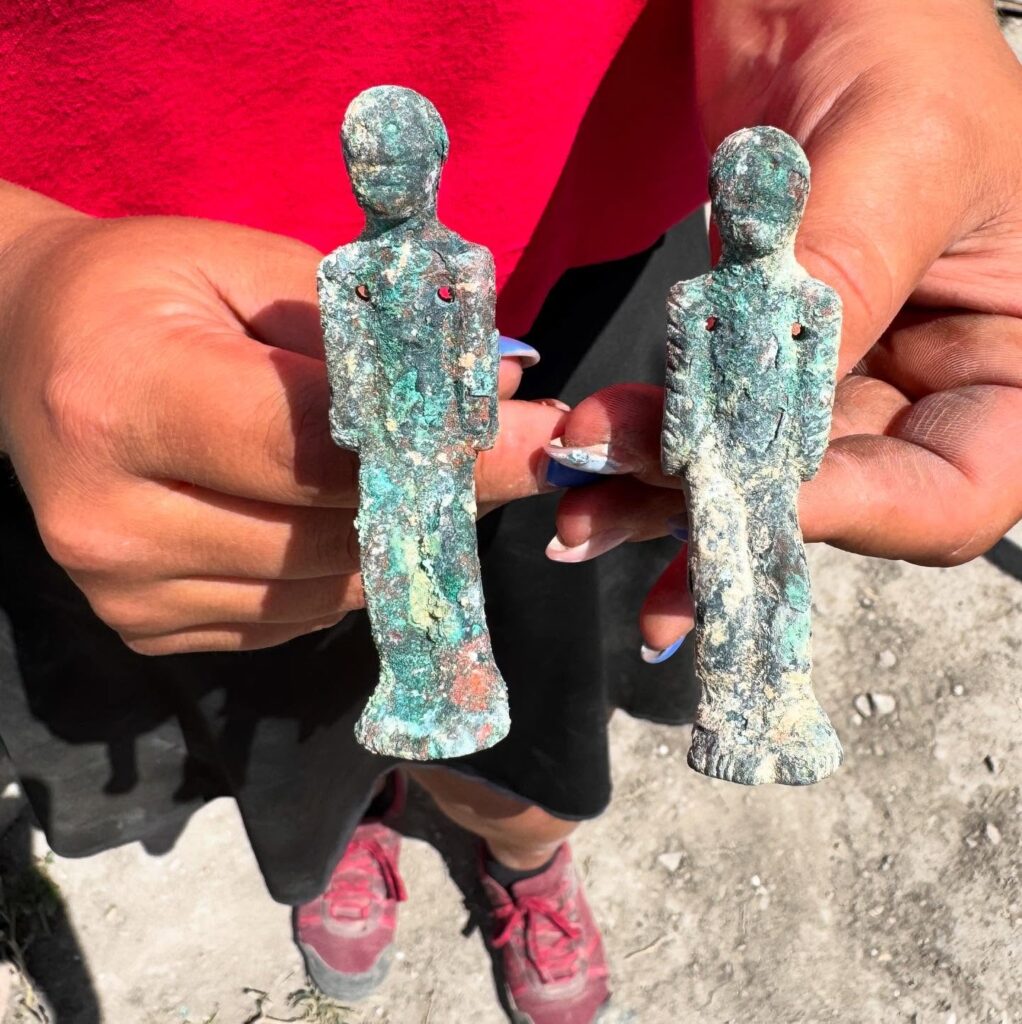
Archaeology student Laura Zentai, participating in ongoing excavations, uncovered three rare bronze figurines estimated to be over 2,000 years old. Credit: Brigetio/Facebook

The Bronze Figurines: Decoration and Function

The three miniature bronze figures differ in form and detail, with two representing a small human figure, while another was found in a fragmentary state. Experts believe these figurines were not merely decorative items. According to a report by Kemma.hu, their intricate craftsmanship and size suggest a functional role, possibly as decorative stabilizers on the base of a cistern or storage vessel used within the Roman camp.

Bronze figurines of this type are rare finds in Hungary, making this discovery particularly noteworthy for understanding Roman material culture in the region. Such objects offer clues to the everyday life of Roman soldiers and the practical, artistic, and symbolic elements they incorporated into their environment.


📣 Our WhatsApp channel is now LIVE! Stay up-to-date with the latest news and updates, just click here to follow us on WhatsApp and never miss a thing!!


Significance for Roman Archaeology and Local Heritage

The discovery of these figurines enriches knowledge about Brigetio’s infrastructure and its role within the Roman Empire’s border defense system. As a major military hub in Pannonia, Brigetio housed legionaries and auxiliary troops responsible for securing the empire’s borders and maintaining control over the Danube frontier.

This find also highlights the active role of university students in archaeological research in Hungary. Zentai’s discovery demonstrates how new generations of archaeologists are contributing valuable insights, expanding the historical narrative of Roman military settlements.
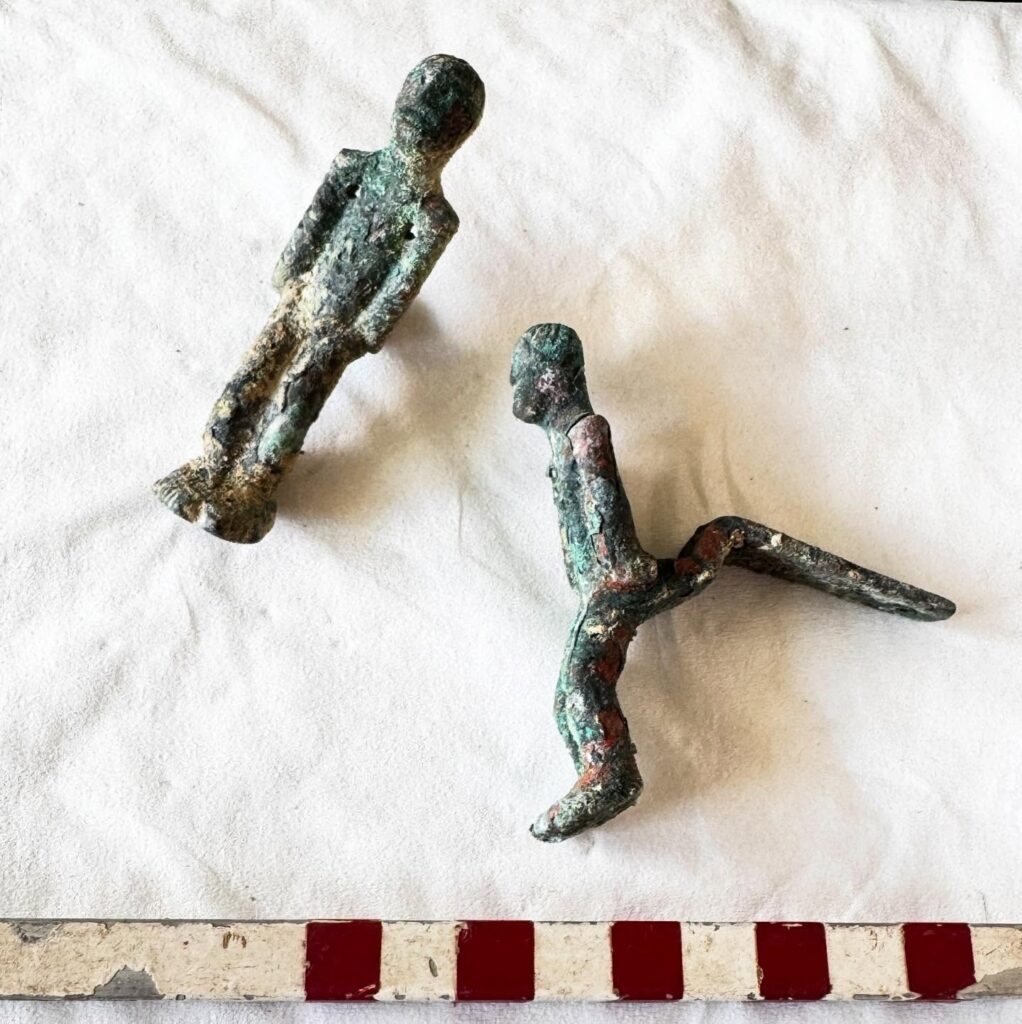
The three miniature bronze figures differ in form and detail, with one representing a small human figure, while another was found in a fragmentary state

A Promising Future for Brigetio Excavations

Laura Zentai described her first excavation as a “dream experience,” underscoring the thrill of unearthing such valuable artifacts early in her career. Excavations at Brigetio continue, with archaeologists hopeful for further significant finds that can illuminate the social, military, and economic aspects of life in Roman Pannonia.

The ongoing work not only advances scientific understanding but also serves as an inspiration to students and historians passionate about uncovering the past. These discoveries help preserve and promote Hungary’s rich archaeological heritage while connecting local communities with their ancient history.

Brigetio

Cover Image Credit: Laura Zentai. Brigetio/Facebook

Related Articles

Archaeologists Unearth Roman Archive of Ancient City of Doliche

20 November 2023

20 November 2023

Archaeologists from the Asia Minor Research Center at the University of Münster have uncovered the municipal archive in the ancient...

Hannibal’s Italian Ally: 170 Meters of Fortifications and 450 Roman Lead Projectiles Discovered

20 June 2025

20 June 2025

Archaeologists in Ugento, a city in southern Italy that once sided with Hannibal during the Second Punic War, have uncovered...

Unique Roman Cavalry Parade Helmet Recreated

6 April 2024

6 April 2024

Two replicas have been created of the gilded silver unique Roman cavalry helmet that amateur archaeologists found in 2001 while...

The Earliest Evidence of Christianity on Bulgarian Territory Found in Roman city of Deultum

13 July 2024

13 July 2024

A silver amulet was discovered during excavations of the Deultum-Debelt National Archaeological Reserve, near the village of Debelt in the...

Who will solve the puzzle of Bronze Age tin? Origin of tin ingots from Uluburun shipwreck disputed – the metal may have come from Cornwall

3 October 2023

3 October 2023

The exact origin of tin in the Bronze Age is the Holy Grail of archaeometallurgists: For 150 years, experts have...

2,400-Year-Old Iron Age Structure Built with Massive Oak Beams and Stonework Discovered in Germany

27 May 2026

27 May 2026

An Iron Age structure discovered beneath the Main River bank in Aschaffenburg has surprised archaeologists with its age, preservation, and...

Statue Head of Goddess Tyche Discovered in Bulgaria

8 December 2024

8 December 2024

A remarkably crafted head of a large statue of the Greek goddess Tyche was recently unearthed during the excavations of...

A 4000-year-old Fabric Found in a Cave of Skulls in the Judean Desert is the Oldest Dyed with Insect Dye

15 July 2024

15 July 2024

Researchers discovered an ancient textile dyed with kermes (Kermes vermilio) in Israel’s Cave of Skulls that dates back to the...

Archaeologists uncovered a second mosaic in Rutland Roman villa in England

29 November 2022

29 November 2022

Archaeologists report they have uncovered a second mosaic at the site of the 2020 mosaic discovery at the Roman villa...

China exhibits 2,000-year-old artifacts discovered in Guangzhou

12 August 2021

12 August 2021

On August 10, the National Museum of China launched an exhibition featuring archaeological finds from ancient China’s Qin (221–207 BC)...

Woodhenge Found in Denmark: A Link Between Denmark and Britain’s Neolithic Past

1 March 2025

1 March 2025

In a stunning revelation, archaeologists have unearthed a remarkable structure dubbed “woodhenge” in Denmark, a discovery that not only illuminates...

Archaeologists Find Mysterious 2,800-year-old Channels in Jerusalem

30 August 2023

30 August 2023

Archaeologists excavating in Jerusalem have uncovered a network of mysterious channels dating back to the days of King Joash and...

New fortifications unearthed in Porsuk Mound excavations

11 August 2021

11 August 2021

In the excavations of Porsuk Mound, which is an important Hittite settlement and where traces of settlement remains can be...

Archaeologists in Israel are restoring the largest Roman Basilica in the country

6 June 2021

6 June 2021

Archaeologists in Israel are trying to rebuild a 2,000-year-old Roman-era basilica that is thought to be the country’s biggest. A...

An 1800-year-old inscription was discovered in Hadrianaupolis indicating the existence of the Asclepius cult

5 September 2022

5 September 2022

An inscription pointing to the existence of the cult of Asclepius was found in the ancient city of Hadrianaupolis, which...