
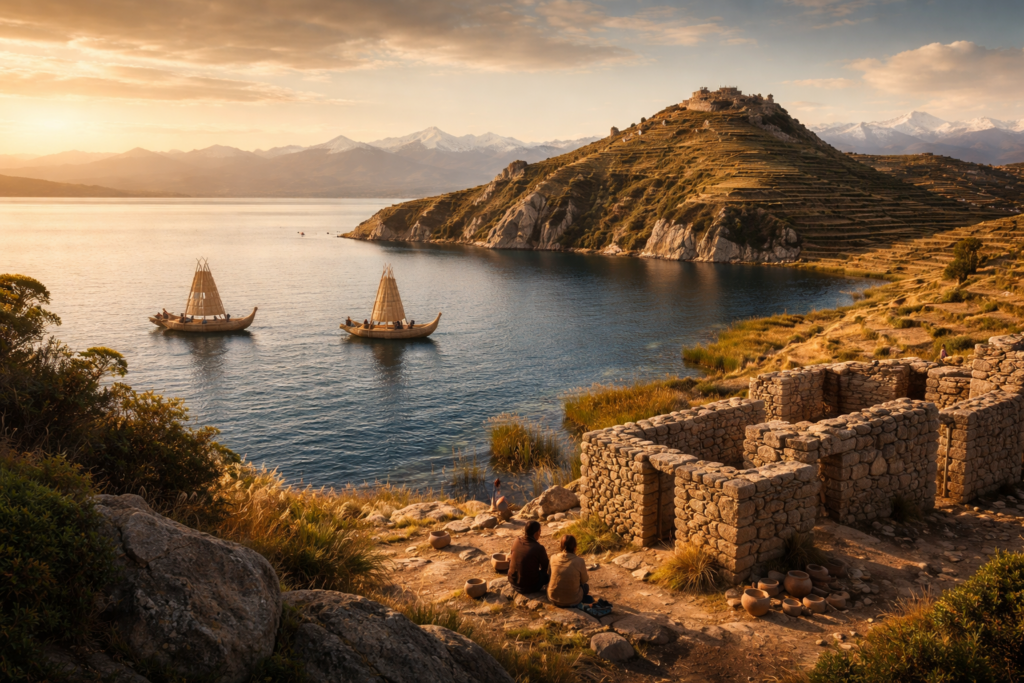
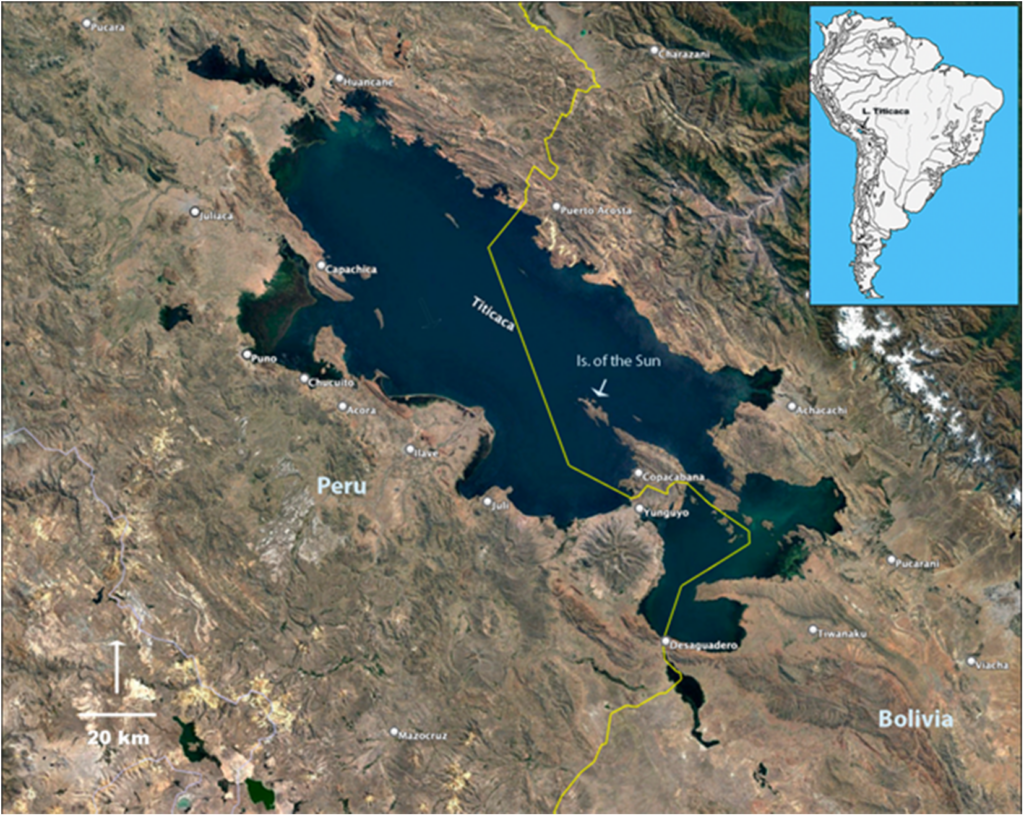
A windswept island in the middle of Lake Titicaca—long revered as a sacred landscape in Andean cosmology—has just yielded evidence that human life there began far earlier than anyone imagined.
New scientific analysis reveals that people were living on Bolivia’s Island of the Sun as early as 3500 BC, pushing back the timeline of settlement in the Titicaca Basin by centuries. The discovery doesn’t just revise a date—it reshapes how archaeologists understand the origins of mobility, trade, and early community life in the high Andes.
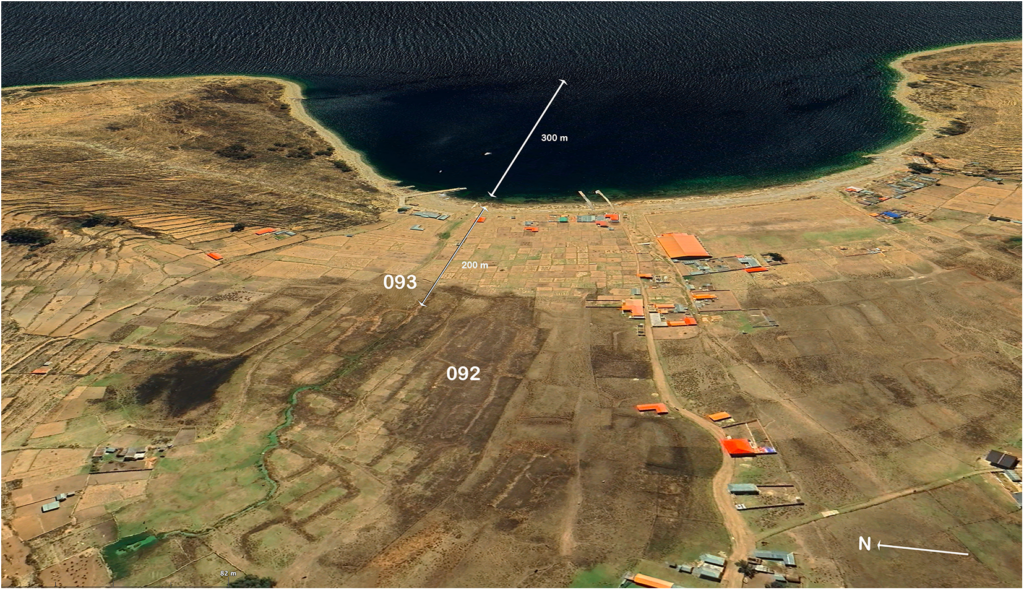
At the center of this breakthrough is the archaeological site of Ch’uxuqullu, first excavated decades ago but only now fully understood thanks to modern radiocarbon dating techniques.
A Hidden Past Revealed by New Technology
For years, archaeologists believed that sustained human presence on the Island of the Sun began much later, during the Late Archaic period. But newly analyzed samples using Accelerator Mass Spectrometry (AMS) have dramatically refined that timeline.
The results are striking.
Charred organic remains recovered from deep layers of the site date to between 3635 and 3381 BC, firmly placing the first occupation in the fourth millennium BC.
This makes Ch’uxuqullu one of the earliest known inhabited locations in the entire Lake Titicaca region—and crucially, it confirms that people were already navigating the lake thousands of years earlier than previously believed.
Life on an Island That Was Never Truly Connected
One of the most compelling aspects of this discovery lies in geography.
Even during periods when Lake Titicaca’s water levels were significantly lower, the Island of the Sun was likely never fully connected to the mainland. Geological and bathymetric data indicate that surrounding waters remained deep enough to require deliberate crossing.
That detail changes everything.
If people were living on the island around 3500 BC, they must have possessed functional watercraft technology—boats capable of transporting individuals, tools, and resources across open water.
In other words, this wasn’t an isolated settlement. It was part of a dynamic, lake-based network.
Rethinking Early Andean Mobility and Trade
For decades, archaeologists emphasized camelid caravans as the primary drivers of early Andean exchange. But the new evidence suggests a more complex picture—one in which water routes played a central role much earlier than assumed.
Artifacts recovered at Ch’uxuqullu include a wide range of nonlocal materials such as obsidian, quartz, and various types of chert. These resources do not naturally occur on the island, indicating long-distance exchange networks were already in operation.
The implication is clear: people in the Titicaca Basin were not isolated highland foragers. They were participants in interconnected systems of movement, trade, and communication—both by land and by water.
A Gradual Shift Toward Settled Life
The site also provides valuable insight into a major turning point in human history: the transition from mobile hunter-gatherer groups to more settled lifeways.
At Ch’uxuqullu, archaeologists identified a continuous sequence of occupation layers with no major interruptions. While no permanent structures were found, the evidence suggests repeated, long-term use of the same location—an early form of semi-sedentary behavior.
This pattern aligns with broader developments across the Titicaca Basin, where communities began intensifying their use of local resources, particularly fishing and plant cultivation.
The marsh-rich environment of Challa Bay, just below the site, would have offered a reliable supply of fish, birds, and edible plants—making it an ideal location for repeated habitation.
The Arrival of Pottery and Cultural Connections
Another key finding from the site is the timing of pottery adoption.
Ceramic fragments appear in layers dated between the 12th and 10th centuries BC, suggesting that the inhabitants of the island were closely connected to broader cultural developments across the region.
The pottery styles match those found on the mainland, indicating that despite its insular location, the Island of the Sun remained firmly embedded within regional social and technological networks.
Why This Discovery Changes the Bigger Picture
At first glance, this might seem like a simple revision of dates—just pushing human presence on the island a few centuries further back. But the implications run much deeper than that.
What this discovery really reveals is a world that was already far more connected, mobile, and technologically capable than we once assumed. Reaching the Island of the Sun was never a matter of simply walking across exposed land. Even during periods of lower water levels, the island remained separated by open water, meaning that the people who settled here were already navigating the lake with purpose.
That detail quietly overturns a long-standing assumption. For years, archaeologists placed the rise of water-based mobility later in the region’s timeline. Now, it appears that boats—and the knowledge to build and use them—were part of daily life much earlier.
It also reframes how we think about isolation. The island was not a remote outpost. The presence of nonlocal materials suggests that people were moving goods, ideas, and resources across the lake, linking communities in ways that were both practical and persistent.
In that sense, this discovery is less about a single site and more about a shift in perspective. It shows that even in one of the world’s highest and most challenging landscapes, early societies were already experimenting with movement, exchange, and long-term occupation.
A Living Landscape of Movement and Memory
Today, the Island of the Sun is best known as a sacred Inca site, associated with origin myths and pilgrimage traditions. But this new research shows that its significance stretches far deeper into the past.
Long before empires rose along the Andes, small groups of people were already crossing the waters of Lake Titicaca, carrying with them tools, ideas, and traditions.
They left behind subtle traces—layers of ash, fragments of stone, pieces of pottery.
Now, thousands of years later, those traces are finally telling their story.
Source: Stanish C, Damiata B. A Fourth Millennium BC Occupation on the Island of the Sun, Lake Titicaca, Bolivia. Latin American Antiquity. Published online 2026:1-10. doi:10.1017/laq.2025.10158
Cover Image Credit: Arkeonews – This image was generated by the author using AI.
