
6 February 2026 The Future is the Product of the Past

Archaeologists Uncover a 2,300-Year-Old Fortress City in Uzbekistan’s Kashkadarya Oasis

The windswept hills of Uzbekistan’s Kashkadarya Oasis, long known as one of the cradles of human settlement in Central Asia, have yielded a major archaeological discovery: the remains of a fortified city that flourished between the 3rd century BC and the 3rd century AD. A research team from the Samarkand Institute of Archaeology has identified the settlement on a prominent mound near the village of Pasttol in the Kamashi district, revealing new layers of urban history in a region where more than 1,500 archaeological sites have already been documented.

A Newly Identified Stronghold on the Ancient Caravan Route

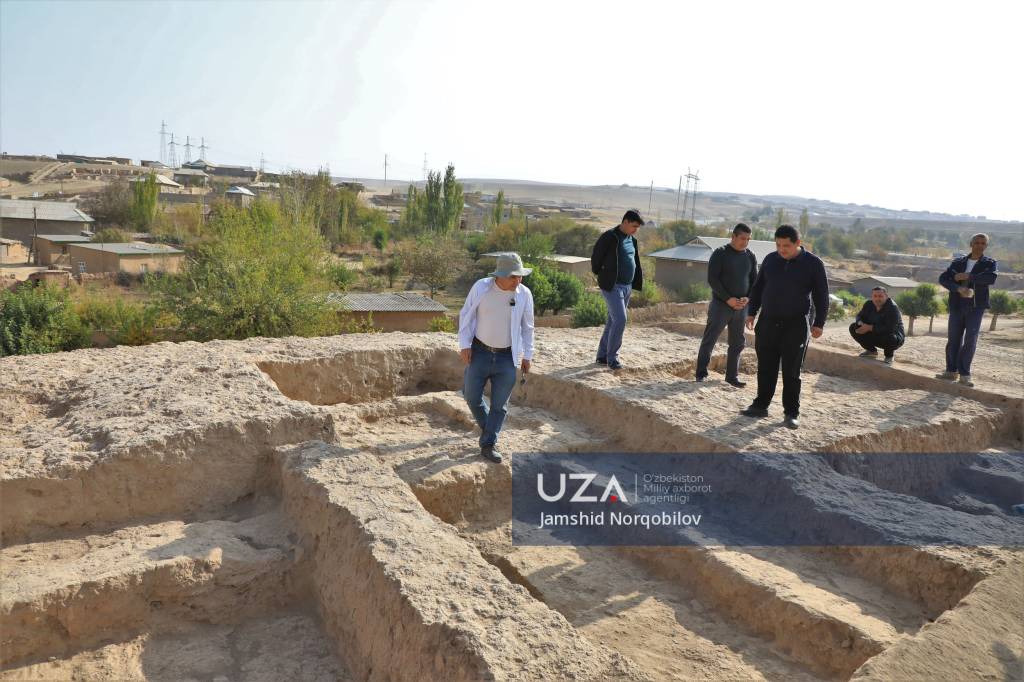
The site, locally known as Baburtepa, lies just south of Pasttol and occupies a strategic position along the historic Langar road, once a vital artery linking Bukhara and Khwarezm. The mound covers more than six hectares and rises 8 to 10 meters above the surrounding landscape—dimensions that immediately suggested to researchers that they were dealing with a major architectural complex rather than an isolated outpost.

Dr. Sanjar Abdurakhimov of the Samarkand Institute, one of the project’s lead archaeologists, reports that the structure was originally mapped by senior scholar Abdusabur Raimkulov but has never been excavated systematically until now. Fieldwork began in 2023, and by 2024 the team had opened trenches in three sectors, uncovering foundations of a rectangular fortress with clear evidence of sustained habitation.

According to Abdurakhimov, the central portion of the complex likely contained a palace or ceremonial building. Excavations revealed a large hall, several adjacent rooms, and fragments of vibrant wall paintings—rare survivals in the region’s archaeological record.
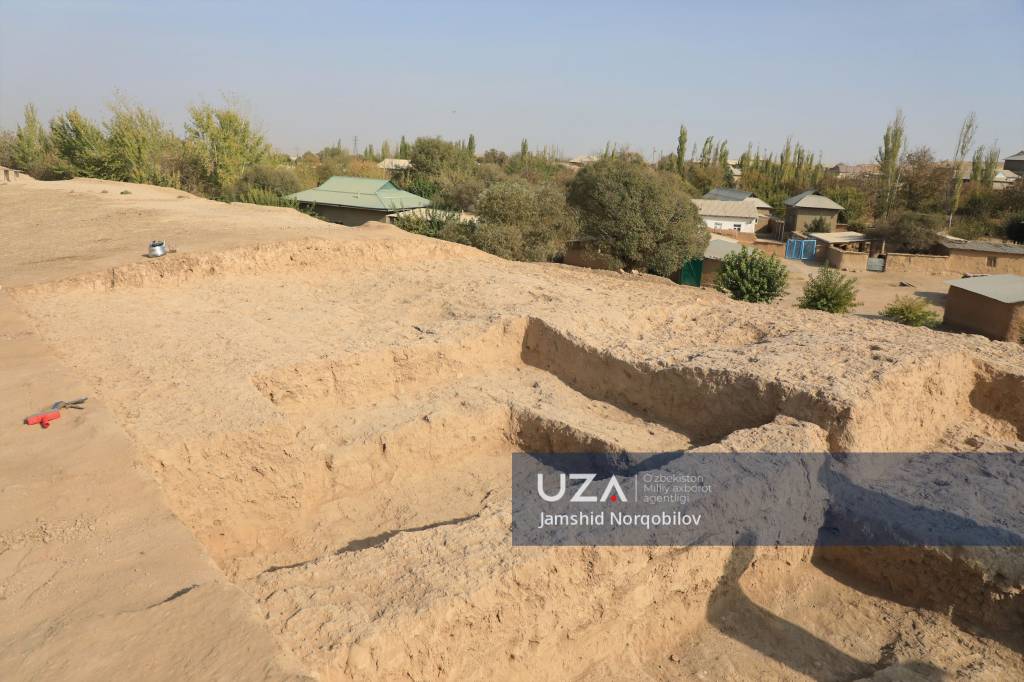
The mound covers more than six hectares and rises 8 to 10 meters above the surrounding landscape. Credit: Uzbekistan National News Agency (UzA)

Craft Production and Daily Life in a Long-Lived City

Beyond the monumental structures, the site provides a vivid picture of craft specialization and urban continuity. Excavators uncovered defensive walls, guard posts, pottery workshops, storage urns, and numerous ceramic artifacts scattered across the settlement.


📣 Our WhatsApp channel is now LIVE! Stay up-to-date with the latest news and updates, just click here to follow us on WhatsApp and never miss a thing!!


The ceramics—figurines, vessels, and funerary urns—were produced with an exceptional level of craftsmanship. Several figurines stylistically align with the Seleucid and Kushan periods, suggesting that the city maintained cultural and economic ties across empires that once controlled or influenced Central Asia.

Archaeologists also identified traces of stone-carving workshops, pointing to a local tradition of artistic production. The combination of pottery, stone crafts, and architectural complexity indicates that the fortified city was not a temporary encampment but a thriving settlement that persisted across multiple centuries.

A Region Dense With Forgotten Cities

New finds from the Kashkadarya Oasis offer a broader context for the Baburtepa discovery. In 2025 alone, archaeologists recorded more than 100 previously undocumented sites in the region—an astonishing number that reinforces the area’s position as one of the oldest and most densely urbanized landscapes in Central Asia.

Senior researcher Abdusabur Raimkulov notes that urban culture emerged in the oasis as early as the 9th–8th centuries BC. Its strategic location along caravan routes led to rapid expansion, and by the medieval era, the region contained more than 30 major cities.

The newly discovered fortress city adds substantial weight to this narrative. It provides a rare opportunity to study the evolution of fortified urban centers over a 600-year period, from the Hellenistic era through the Kushan Empire. Researchers believe that future excavations may uncover administrative quarters, residential blocks, or additional painted surfaces—elements that could shed light on political structures, religious practices, and everyday life in ancient Kashkadarya.
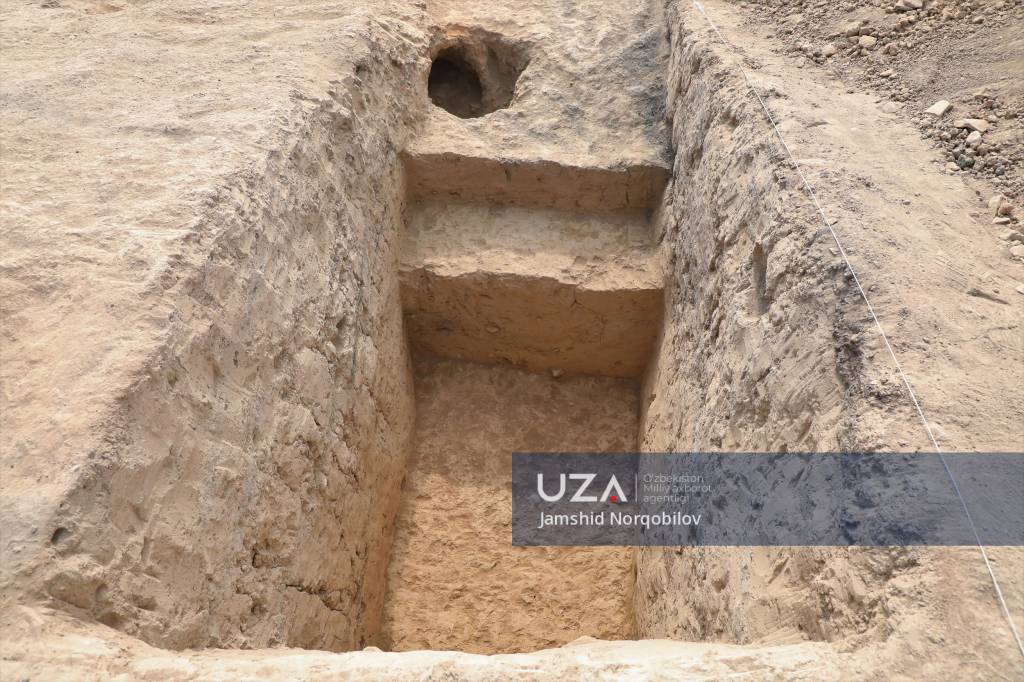
The team had opened trenches in three sectors, uncovering foundations of a rectangular fortress with clear evidence of sustained habitation. Credit: Uzbekistan National News Agency (UzA)

Expanding the Archaeological Map of Uzbekistan

For the Samarkand Institute of Archaeology, the Baburtepa project represents a long-term research commitment. Specialists plan to broaden excavations, conduct architectural mapping, and apply advanced technologies such as photogrammetry, soil analysis, and micro-excavation of painted plaster fragments.

The discovery not only enriches Uzbekistan’s already remarkable archaeological landscape but also opens a new window onto the development of early cities in the heart of the Silk Roads.

Cover Image Credit: UZA

Related Articles

Before the Olympics, the Alps Reveal a 200-Million-Year-Old Secret

18 December 2025

18 December 2025

High in the heart of the Italian Alps, where jagged peaks rise above future Olympic venues, an extraordinary window into...

A 1,000-Year-Old Bronze Wheel Cross Discovered in Brandenburg

24 January 2026

24 January 2026

A small bronze cross, recently unearthed in western Brandenburg, is reshaping how archaeologists understand the spread of Christianity in early...

China Discovers 2,200-Year-Old Imperial Road, the Ancestor of Today’s 4-lane Highways

22 December 2025

22 December 2025

Chinese archaeologists have uncovered a remarkably preserved section of an ancient imperial highway built more than 2,200 years ago—an infrastructure...

Ancient Walled Oases Unveiled in Saudi Arabia Reveal 4,000 Years of Desert Settlement

30 June 2025

30 June 2025

A groundbreaking archaeological discovery has revealed a vast network of ancient walled oases in the Arabian Desert, dating back over...

Are the skeletons found in the restoration of the Bukoleon Palace the victims of the Crusader army massacre in Constantinople?

29 November 2021

29 November 2021

It is thought that the 7 skeletons messy found in the Bukoleon Palace excavations may be the victims of the...

Evidence of Medieval Plague Victims Buried With “Significant Care” Found

23 June 2021

23 June 2021

The Black Death, which killed between 40 and 60% of Europe’s population in the mid-14th century, was a devastating epidemic...

After 1,300 years, water to again flow from monumental fountain in the City of Gladiators in Turkey

30 December 2022

30 December 2022

The approximately 2,000-year-old monumental fountain in the ancient city of Kibyra in Golhisar, Burdur in southwestern Turkey will start flowing...

Surprising Discovery: In Guatemala, archaeologists uncover hidden neighborhood in the ancient Maya city

28 September 2021

28 September 2021

A recent lidar analysis revealed, the region surrounding Central Tikal’s Lost World Complex, which was long thought to be a...

Rare 1,400-Year-Old Stone Sculpture of a Woman Unearthed in Kyrgyzstan’s Chui Valley

31 October 2025

31 October 2025

Archaeologists from the Greater Altai Research and Educational Center for Altaic and Turkic Studies at Altai State University, in collaboration...

Egypt’s Karnak Temple May Have Risen From Water Like a Creation Myth, New Study Suggests

29 January 2026

29 January 2026

Karnak Temple, one of ancient Egypt’s most iconic sacred sites, may have been deliberately built on land that literally emerged...

A rare bronze talismanic healing bowl was discovered in Hasankeyf excavations

3 December 2023

3 December 2023

During the ongoing excavations in the Hasankeyf mound in Batman, one of the oldest settlements in the world, an 800-year-old...

Nineteen Ancient Tombs from the 4th Century BC Unearthed in Padula, Campania

8 February 2025

8 February 2025

In Padula, located in the Campania region of southern Italy, authorities announced the remarkable discovery of nineteen ancient tombs during...

A woman in Norway found Viking-age 1000-year-old hoard in basement

20 April 2023

20 April 2023

A woman in Norway cleaned her parents’ home, she found 32 iron ingots dating to the Viking or early Middle...

Iron Age comb found made from human skull in UK

2 March 2023

2 March 2023

Researchers from the London Archaeological Museum (MOLA) determined that an Iron Age comb they found during an archaeological dig that...

Medieval Mummy Seized in Niğde, Türkiye, Amidst Smuggling Crackdown

12 March 2025

12 March 2025

Authorities in Türkiye have detained six individuals in the Bor district of Niğde, who were allegedly attempting to sell an...