
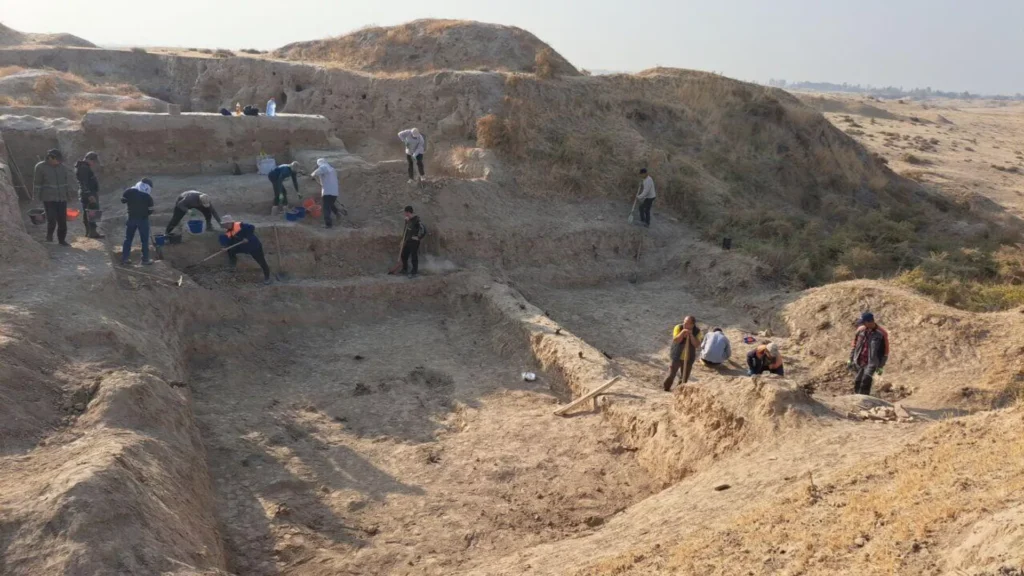
Archaeologists in Uzbekistan have uncovered the remains of a temple and fragments of early medieval armor within the Kanka settlement, a major archaeological site in the Tashkent Region that once stood as a powerful center of Turanian civilization. According to the press service of the Academy of Sciences of the Republic of Uzbekistan, the discovery dates to between the 5th and 7th centuries CE and provides new insight into the spiritual and military traditions of Central Asia’s early Turkic cultures.
A sacred site at the crossroads of empires
The excavations are part of a long-term initiative by the Institute of History of the Academy of Sciences in cooperation with the Tashkent Regional Hokimiyat (governor’s office), aimed at transforming the site of Kanka into an “open-air museum.”
Archaeologists describe Kanka as one of the most significant urban centers in the history of Turan—the ancient cultural sphere that stretched across much of Central Asia. Some historians identify Kanka with Kangdizh or Kangdezh, cities mentioned in the Avesta and Shahnameh, respectively, emphasizing its importance in both Zoroastrian and early Turkic narratives.
Located near the modern settlement of Akkurgan, Kanka was founded around the 3rd century BCE and flourished for over a millennium as part of a network of fortified oases along the Silk Road. The city’s monumental walls, palaces, and temples once reflected the wealth of rulers who controlled trade routes linking Sogdiana, Bactria, and the steppe.
Temple with traces of ancient military devotion
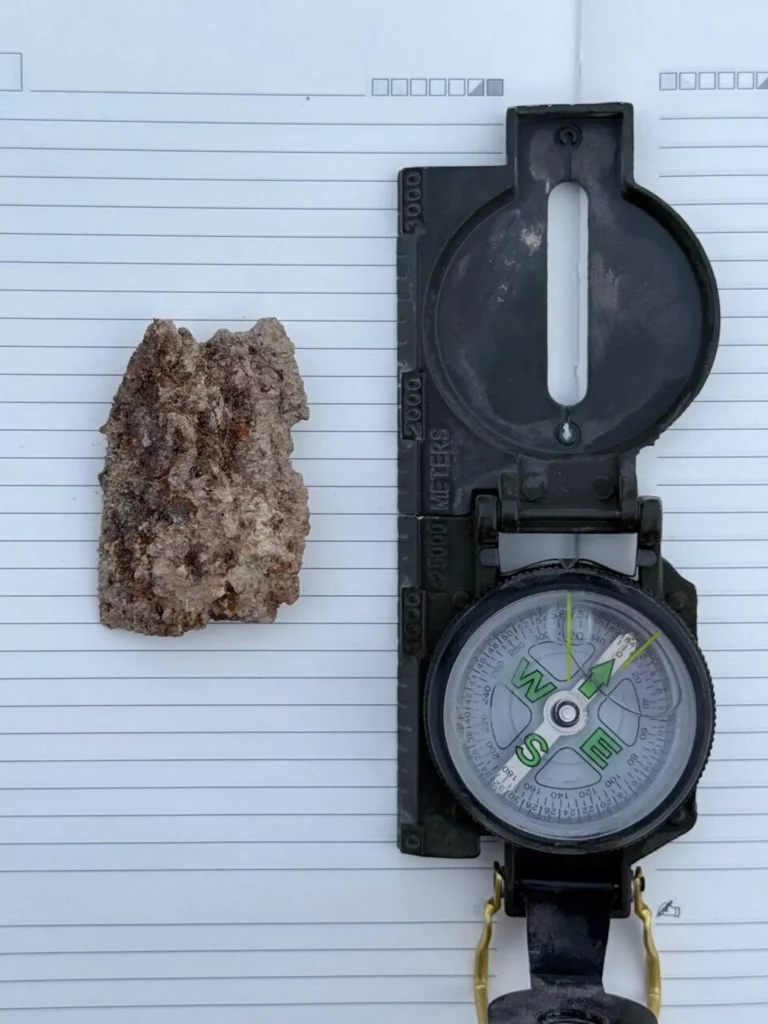
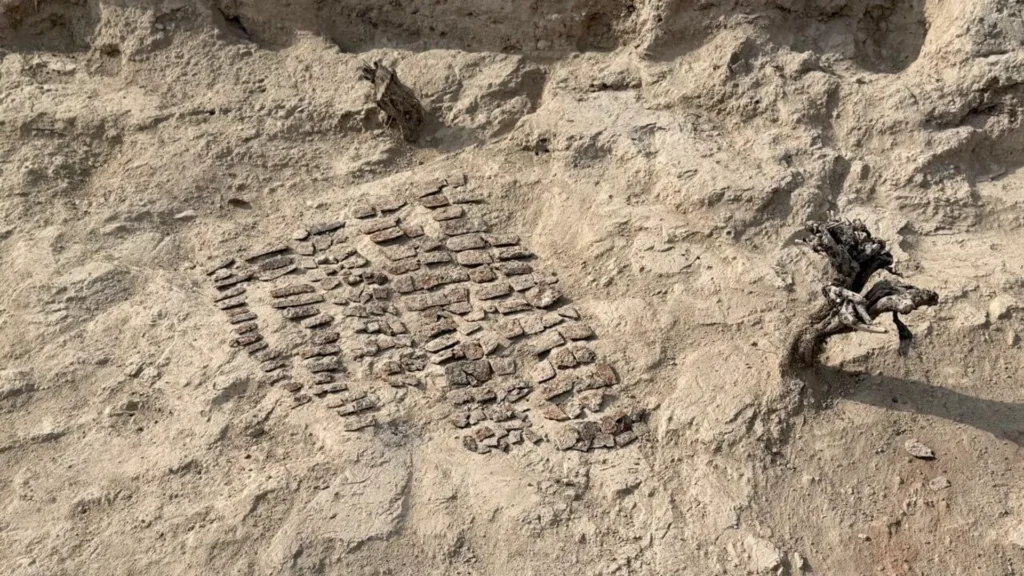
During recent excavations, researchers from the Institute’s Center for Military History and Department of Ancient History uncovered a temple complex built of mudbrick and decorated with carved reliefs. Beneath a memorial arch, they found metal armor fragments—including lamellar plates and riveted fittings—carefully placed within the temple’s lower strata.
Preliminary analysis suggests these objects may have been ritual offerings rather than battlefield debris.
“In antiquity, it was customary to dedicate one’s finest creations to the temple,” the Academy’s statement notes. “The warrior’s armor may have been gifted by an armor-smith as an act of devotion—an expression of gratitude or protection. Such traditions are well documented in ancient Turan, similar to the votive weapons discovered at the temple of Boykend.”
The findings echo discoveries from Boykend and Khorezm, where ceremonial armor and horse gear were similarly deposited in religious structures, suggesting a widespread ritual linking military craftsmanship and sacred patronage.
Traces of Turkic martial culture
Excavations at Kanka since 2021 have also yielded horse equipment, iron spearheads, and decorated saddle fittings, pointing to the enduring role of cavalry in early Turkic military culture. The newly uncovered armor reinforces this image of a society that intertwined martial valor with divine favor.
Researchers emphasize that the temple’s association with warfare offers a rare glimpse into the ideological landscape of the early Turkic world—where rulers were often both kings and high priests, and the boundary between the sacred and the military was blurred.
Dr. Rustam Rakhimov of the Institute of History, who leads the ongoing fieldwork, said in a local interview that the temple findings “reflect a spiritualized perception of warfare,” where arms and armor were seen as vessels of sacred power. “This synthesis of religion and military art is essential to understanding how early Central Asian polities organized themselves,” he added.
Reviving the ancient city as a living museum
The discovery forms part of Uzbekistan’s broader cultural heritage program to reconstruct and protect major archaeological sites across the Tashkent Region. The initiative envisions Kanka as a living archaeological park, combining research, conservation, and public education.
Once fully restored, visitors will be able to walk among the city’s walls and temple remains, following interpretive trails designed to showcase how Kanka evolved from a Hellenistic-era fortress into a medieval stronghold of Turkic identity. The project aligns with Uzbekistan’s strategy to promote its Silk Road heritage and integrate local archaeological achievements into global historical narratives.
From Turan’s heart to global archaeology
The latest findings at Kanka underline the region’s central role in Eurasian history. They illuminate how early Turkic societies blended artistry, warfare, and religion—offering scholars a material connection between mythic texts and lived tradition.
Further laboratory analysis of the metal fragments is underway, including metallurgical composition testing and 3D scanning, to determine production techniques and potential workshop origins. Preliminary observations suggest high-carbon steel alloys, indicating a sophisticated metallurgical tradition far ahead of its time.
For now, the temple and armor of Kanka stand as quiet witnesses to a civilization that once linked the steppes, deserts, and mountains of Central Asia through faith and steel.
Academy of Sciences of the Republic of Uzbekistan
Cover Image Credit: Academy of Sciences of the Republic of Uzbekistan
