
6 November 2025 The Future is the Product of the Past

Ancient Water Pipeline Unearthed on 65-Meter Hill in Tajikistan Reveals Engineering Marvel of the Past

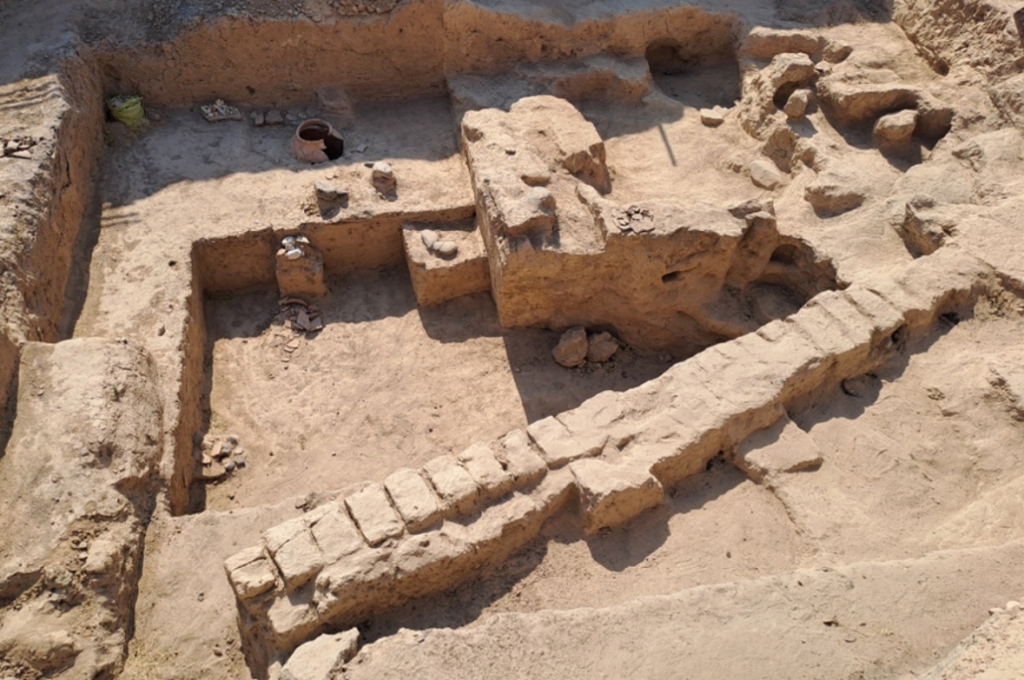
Archaeologists in Tajikistan have made a groundbreaking discovery at the Mugtepa settlement in Istaravshan: an ancient water pipeline system, constructed approximately 1,500 years ago, perched atop a 65-meter hill — roughly the height of a modern twenty-storey building. This remarkable find sheds new light on the engineering capabilities and daily life of Central Asia’s early civilizations.

The Mugtepa site, historically home to fortresses of the rulers of Uratyube, remained largely neglected for nearly three decades. Construction work in 2017–2018 further damaged the cultural layers, leading many experts to believe its secrets had been lost. However, a summer 2025 expedition led by Professor Nabijon Rakhimov of Khujand State University, in collaboration with the Kalai Mug Historical and Cultural Complex, reignited hope. Despite lacking official funding, the team, assisted by students and specialists, meticulously excavated key sections of the aqueduct system.

Between June 18 and July 18, archaeologists studied three segments of the pipeline. Water was drawn from a spring at the base of a nearby hill and transported through ceramic pipes known as kuburs, each approximately 40 cm in length. These pipes were connected using waterproof alabaster mortar and laid in trenches measuring 85 cm wide and 20 cm deep. Small pools, or hauzes, along the route likely served as water collection points. The uniformity of the pipes suggests specialized workshops existed for their production, highlighting the sophisticated infrastructure of the period.

Beyond the pipeline, the excavation revealed artifacts that provide a window into daily life. Soil layers dating from the 5th to 8th centuries yielded pottery, stone grain grinders, and spindle whorls, indicating a thriving agricultural and textile economy. Deeper layers contained objects from earlier eras, including the 1st–3rd centuries CE and the Achaemenid and Hellenistic periods (6th–1st centuries BCE). Notable discoveries included fragments of tall-stemmed goblets, cup-shaped vessels, and red-slip bowls.
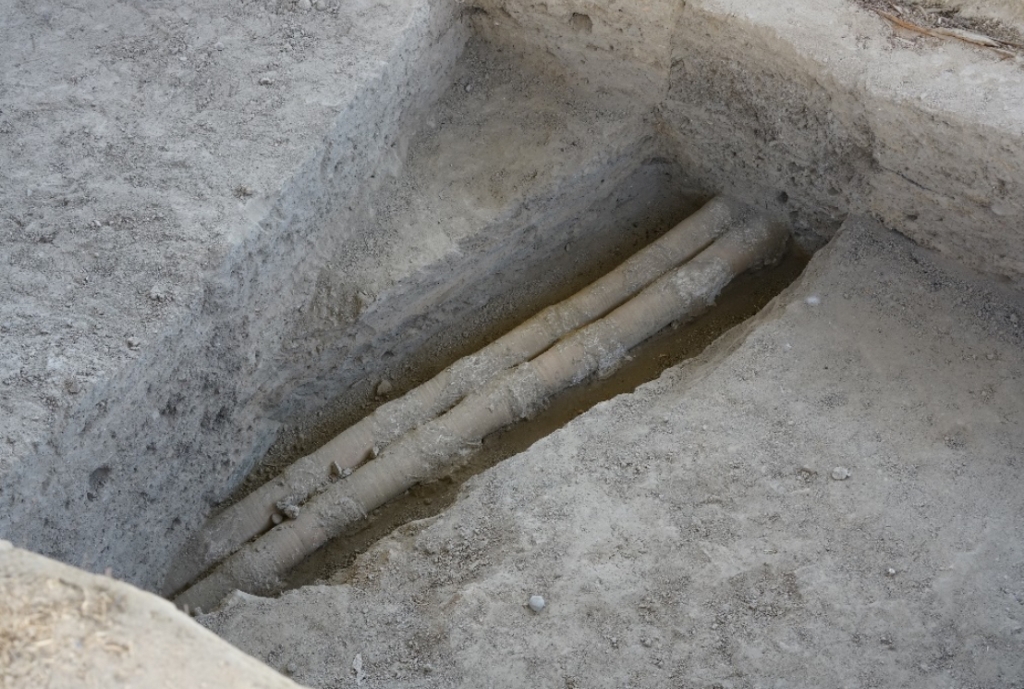

Ceramic kubur (ceramic pipe) of the Mugtepa settlement’s ancient water supply system, used to transport water from a nearby spring over 1,500 years ago. Credit: Nabijon Rakhimov.

“Archaeological monuments are not just stones and shards; they are material evidence of our history,” said Rakhimov. “Without protection and careful treatment, they can disappear. It is our responsibility to preserve them and showcase Tajikistan’s ancient culture on the international stage.”


📣 Our WhatsApp channel is now LIVE! Stay up-to-date with the latest news and updates, just click here to follow us on WhatsApp and never miss a thing!!


This recent discovery is part of a broader trend of significant archaeological breakthroughs in Tajikistan. In 2023, a 7th-century sewer system was unearthed in Istaravshan, revealing the advanced engineering of the time. In May 2025, a Kushan-era clay vessel inscribed in Bactrian was discovered near Sarband, offering rare insights into ancient literacy and social life. Additionally, the Soyi Khavzak site in the Zeravshan Valley has produced artifacts dating back 150,000 years, supporting the theory that the region served as a migration corridor for early humans.

The Mugtepa water pipeline not only demonstrates the ingenuity of ancient engineers but also offers tangible evidence of the social and economic organization of the community it served. The team plans to petition the Agency for the Protection of Monuments under the Government of Tajikistan to secure official support for continued excavations and preservation efforts.

As research continues, the Mugtepa site promises to reveal more about the everyday lives, technologies, and cultures of Central Asia’s past civilizations. This discovery reinforces the importance of archaeological preservation and highlights Tajikistan’s rich historical heritage.

Source: Farah Orifi- Asia Plus

Cover Image Credit: Nabijon Rakhimov

Related Articles

Burial of Ascetic Monk in Chains Reveals Surprising Identity: A Woman in Byzantine Jerusalem

15 February 2025

15 February 2025

A recent archaeological discovery near Jerusalem has challenged long-held beliefs about ascetic practices in the Byzantine era, revealing the remains...

Archaeologists Uncover Oldest Greek Marble Altar in Western Mediterranean at Tartessian Site in Spain

7 July 2025

7 July 2025

The discovery of the Oldest Greek Marble Altar in the Western Mediterranean offers unprecedented insight into Tartessian culture and its...

Turkish researchers use Artificial Intelligence to read cuneatic Hittite tablets

9 January 2023

9 January 2023

Thanks to a project implemented in Türkiye, 1,954 ancient Hittite tablets are being read for the first time using artificial...

Rare African Script Offers Clues to the Evolution of Writing Systems

4 February 2022

4 February 2022

The world’s very first invention of writing took place over 5000 years ago in the Middle East, before it was...

A female executive’s seal from 3000 years ago was discovered in Turkey

29 October 2021

29 October 2021

During the excavations carried out in southeastern Turkey’s Gaziantep’s Karkamış (Carchemish) Ancient City, seals and prints determined to belong to...

2,000 Bronze Statue Fragments Found in Ancient Scrap Yard

20 January 2025

20 January 2025

Archaeologists in Izmir, Turkey have made an extraordinary discovery in the ancient city of Metropolis: Approximately 2,000 bronze statue fragments...

Knife and Lost Armor: First-Ever Verified Artifacts from Emperor Nintoku’s 5th-Century Kofun Tomb Revealed

13 August 2025

13 August 2025

In a discovery that is already rewriting the history of Japan’s ancient Kofun period, researchers have confirmed the existence of...

Votive Altar Dedicated to Basque Deity Larrahe Found in Medieval Well

23 June 2024

23 June 2024

Archaeologists have unearthed a Roman-era votive altar dedicated to the ancient Basque deity Larrahe at the medieval monastery of Doneztebe...

Medieval Islamic glass of Scottish Caerlaverock Castle reveals untold histories

23 October 2022

23 October 2022

Discovered by archaeologists at Caerlaverock Castle, eleven kilometers south of Dumfries on Scotland’s south coast, a trio of Islamic glass...

An 8,500-year-old trepanned skull discovered in Çatalhöyük

23 December 2023

23 December 2023

Traces of trepanation (skull drilling operation) were found on a skull found in the 9,000-year-old Çatalhöyük, near the modern city...

In Bergama, the City of Greek Gods, the People Kept the Cult of Cybele Alive

25 August 2021

25 August 2021

The figurines of Cybele, the goddess of the fertility of Anatolia, and the presence of sanctuaries unearthed in the Ancient...

Stone Age Farmers Settled Near Dortmund Airport 7,000 Years Ago

24 August 2025

24 August 2025

Archaeological discoveries at Dortmund Airport reveal that early Neolithic farmers lived and built houses in the region nearly 7,000 years...

2500-year-old ship graffiti sheds light on the history of Izmir in western Turkey

9 March 2022

9 March 2022

In the Smyrna Agora, which is one of the largest ancient agora in the city center of the world and...

For the first time in Turkish history, a gold belt buckle depicted the face of a Göktürk Khagan found

19 December 2023

19 December 2023

A social complex (Külliye) and new artifacts from the Western Gokturk period were discovered in Kazakhstan. Among these items, a...

Archaeologists may have Found a Viking Age Marketplace in Norway

21 February 2024

21 February 2024

Archaeologists from the University of Stavanger have identified the possible remains of a marketplace from the Viking Age on a...