
18 January 2026 The Future is the Product of the Past

The remains of a very uncommon’ dinosaur species have been discovered in Brazil

Researchers have uncovered the remains of a toothless, two-legged dinosaur species that lived 70 million years ago in Brazil, calling it an “extremely unusual” find.

Theropod, a group whose members were virtually always thought to be carnivores, is the little dinosaur, which reached around 1m long and 80cm tall.

However, the new species, Berthasaura Leopoldinae, has a beak-like mouth with no teeth.

Geovane Alves de Souza, Marina Bento Soares, Luiz Carlos Weinschütz published their findings in the journal Nature, calling the discovery “one of the most complete dinosaurs found from the Cretaceous period in Brazil”.

“That was a real surprise,” the paleontologists who made the find said in a statement released by Brazil’s National Museum.


📣 Our WhatsApp channel is now LIVE! Stay up-to-date with the latest news and updates, just click here to follow us on WhatsApp and never miss a thing!!


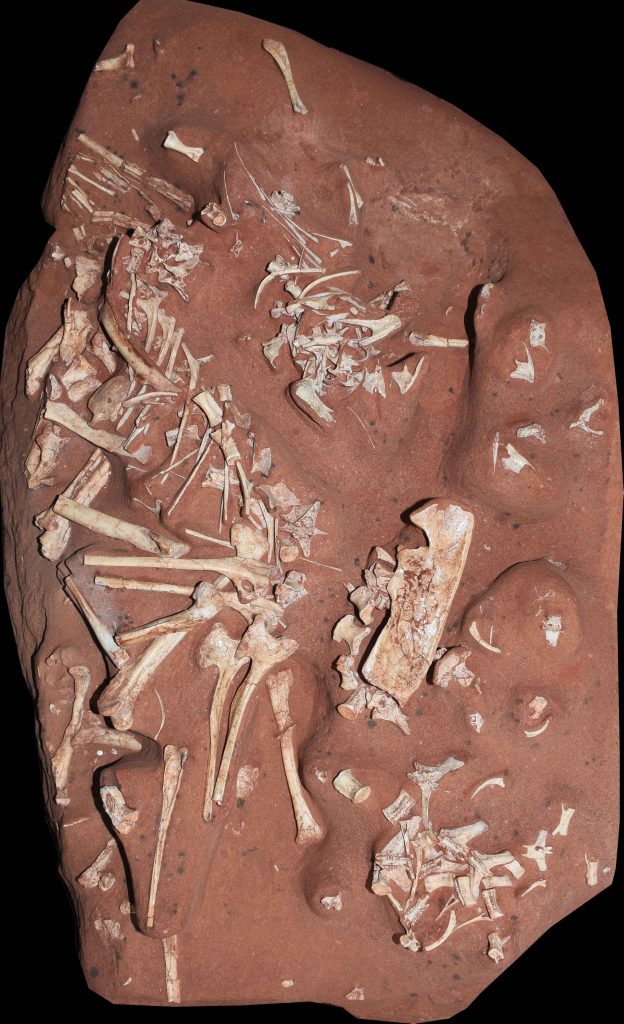
The fossil remains of a new species of dinosaur discovered in Cruzeiro do Oeste, Brazil, are seen in this handout picture released on. (National Musem of Rio de Janeiro)

“The toothless part raises doubts about what kind of diet this animal had,” said researcher Geovane Alves Souza, one of the study’s authors.

“It doesn’t necessarily mean it didn’t eat meat, though. Lots of birds, such as falcons and buzzards, eat meat with beaks. Most likely, it was an omnivore living in an inhospitable environment where it had to eat whatever it could.”

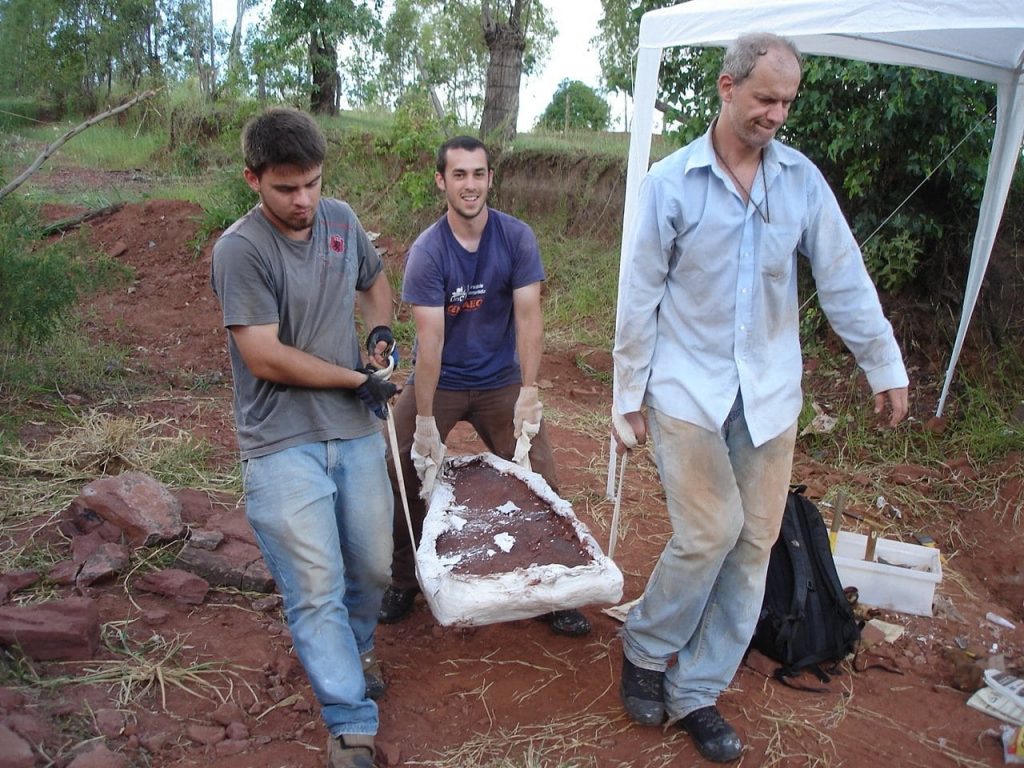
The fossilized skeleton was found along a rural road in the southern state of Parana between 2011 and 2014.

Analysis revealed it was an entirely new species that lived between 70 million and 80 million years ago.

The species was named for Bertha Lutz, a revered Brazilian scientist and feminist who died in 1976, and for Maria Leopoldina, Brazil’s 19th-century empress, who was a patron of the sciences.

Related Articles

Italian Research Team May Have Found Plato’s Burial Site in Athens

23 April 2024

23 April 2024

Graziano Ranocchia, a papyrologist at the University of Pisa, said he found Plato’s exact burial place based on papyri findings...

2,300-Year-Old Gold Ring Reveals Jerusalem’s Hidden Hellenistic Rituals

27 May 2025

27 May 2025

A remarkable gold ring recently uncovered in Jerusalem is offering fresh insight into Hellenistic-era rituals, ancient jewelry traditions, and the...

Researchers explored a rock art site near Idupulapaya in India

1 October 2021

1 October 2021

A rock art site was discovered near Idupulapaya in the Indian state of Andhra Pradesh. Rock paintings from the Megalithic...

Statue of Roman Emperor Hadrianus found in western Turkey

14 September 2021

14 September 2021

Excavations in the ancient city of Alabanda in the western province of Aydin have uncovered pieces of the statue of...

Researchers use AI to read words on ancient Herculaneum scroll burned by Vesuvius

13 October 2023

13 October 2023

Researchers used artificial intelligence to extract the first word from one of the first texts in a charred scroll from...

Friendly Fire: Lost Battlefield from 1758 Found Near Fort Ligonier

16 July 2025

16 July 2025

A foggy evening in November 1758 nearly cost George Washington his life in a friendly fire skirmish between two groups...

2,200-year-old Greek sling bullet may have been used against Jews

9 December 2022

9 December 2022

A 2,200-year-old lead sling bullet was discovered by the Israel Antiquities Authority (IAA) in the central Israeli city of Yavne,...

Evidence of the Birth of Archaic Monotheism in Anatolia found at Oluz Höyük, “Havangah prayer at Oluz Höyük”

27 March 2022

27 March 2022

Oluz Höyük, located 25 kilometres west of Amasya, is an ancient city which has rich findings of religious structuring. During...

Mothers in the prehistoric were far more skilled at parenting their children than we give them credit for

24 November 2021

24 November 2021

The death rate of newborns in ancient cultures is not a reflection of inadequate healthcare, sickness, or other issues, according...

A stone statue (Balbal) with height up to 3 meters found in the Issyk-Kul region of Kyrgyzstan

18 October 2022

18 October 2022

A balbal (stone statue) with a height of up to 3 meters was found during agricultural work in the Ak-Bulun...

Germany: 700-year-old Causeway Found Under Central Berlin Street

19 February 2022

19 February 2022

Archaeologists from the Landesdenkmalamt Berlin (LDA) made a sensational find during their excavation at Molkenmarkt: about 2.50 m below Stralauer...

An inscription with the name of the ancient city was found at the excavation site in Gordion, the capital of the Phrygians

8 August 2022

8 August 2022

An inscription bearing the name of the ancient city was found at the excavation site in Gordion, the capital of...

The 890-million-year-old sponge fossil may be the oldest animal yet discovered

1 August 2021

1 August 2021

890-million-year-old fossil sponges found in the “Little Dal” limestones of northwest Canada may be the oldest animal ever found. According...

Lovingly gazing mosaics restored in Turkey’s Metropolis

16 October 2021

16 October 2021

In the ancient city of Metropolis in the Torbali district of the western Izmir province, mosaics portraying Eros, the Greek...

A 1,100-year-old lead amulet of Bulgarian soldiers sieges Constantinople found

31 March 2023

31 March 2023

A lead plate amulet bearing an inscription in Cyrillic dating from the times of Tsar Simeon the Great was discovered...