18 December 2025 The Future is the Product of the Past

The ancient necropolis area in Turkey’s Antalya becomes a museum

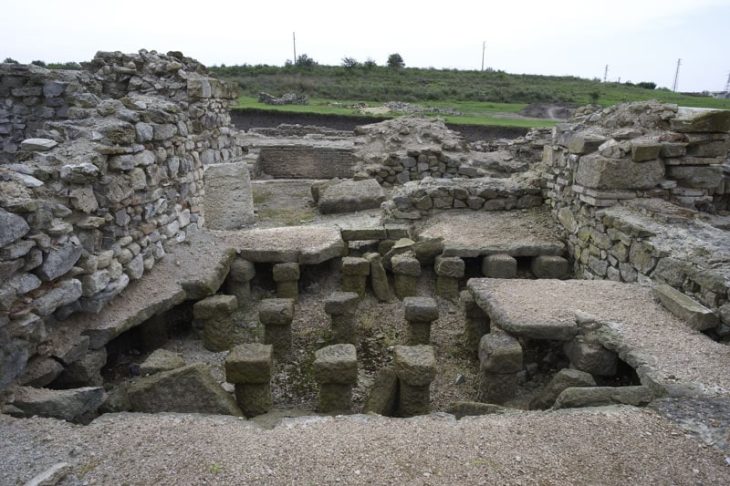
The East Garage Necropolis Area, which was once a public market in the southern province of Antalya and where archaeological excavations started after the discovery of rock tombs, has been opened as a museum.

The necropolis, which dates back to the third century B.C., was discovered by accident in 2008 during construction work on the Antalya Metropolitan Municipality’s Eastern Garage Project.

Then, between 2008 and 2011, under the presidency of the Antalya Museum Directorate, rescue excavations were carried out in the area, unearthing 865 tombs dating from the Hellenistic to the Young Roman periods in the Attaleia Necropolis area.

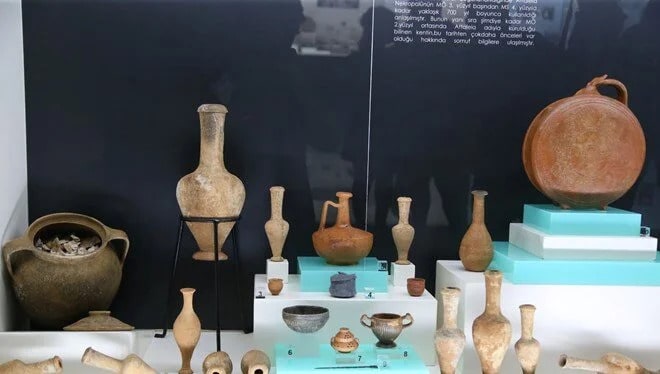
Finds in the tombs revealed that the Attaleia Necropolis was used for 700 years from the beginning of the third century B.C. to the fourth century A.D. The artifacts were put on display in the Antalya Museum.
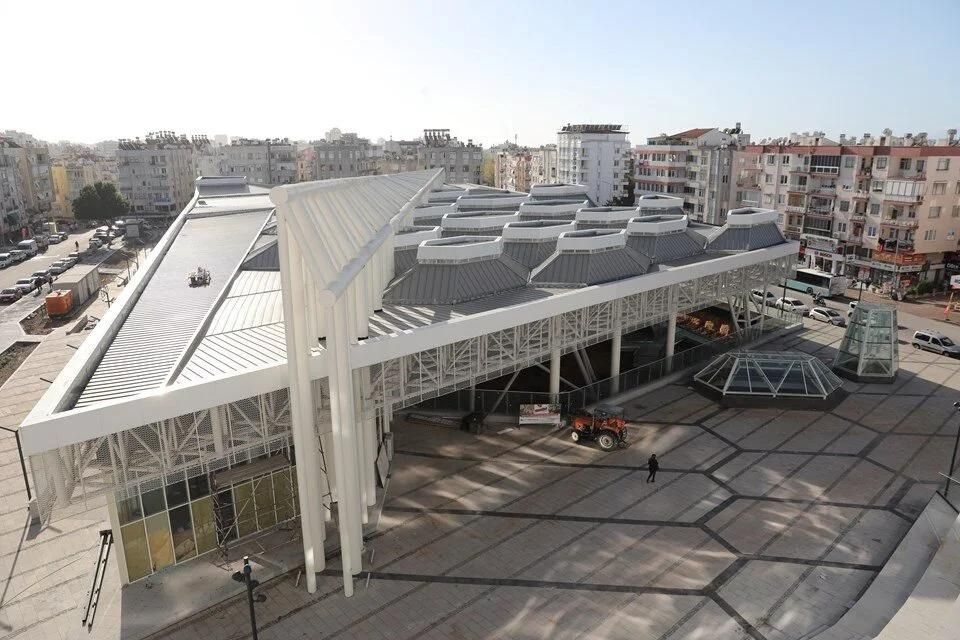
The Necropolis Museum in the East Garage, whose construction was completed by the Antalya Metropolitan Municipality, was transferred to the Antalya Museum at a ceremony held on July 20.


📣 Our WhatsApp channel is now LIVE! Stay up-to-date with the latest news and updates, just click here to follow us on WhatsApp and never miss a thing!!


Gökhan Yazgı, deputy culture and tourism minister, said that the area was known as a public bazaar but had great potential of becoming a cultural route.

Stating that they will ensure that the religious, ethnic, economic and socio-cultural structure of ancient Antalya is introduced in the museum, Mayor Muhittin Böcek said:
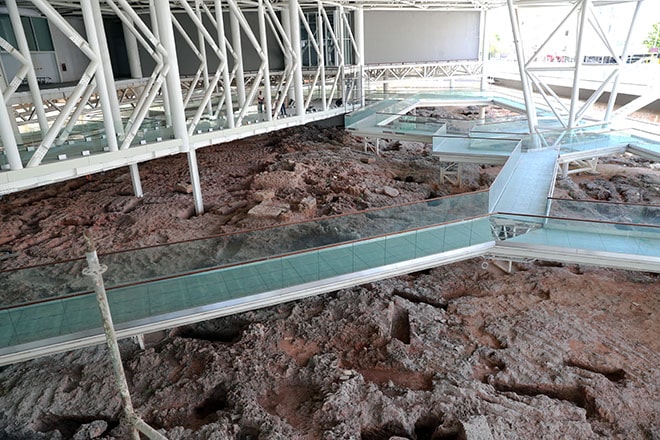
“The architectural project competition was opened in 2005 with the arrangement of the eastern garage and the public market area. Construction of the project started in 2008. Excavations unearthed remains from the ancient eras and rescue works were carried out by the museum directorate until 2010. A total of 865 graves, 1,18 inventory artifacts and nearly 2,000 skeletons have been unearthed in this process.”

“The Necropolis area was registered as a first-degree archaeological site on Feb. 22, 2011. The project was revised and approved by the conservation board on Dec. 17, 2013. On Feb. 20, 2015, the construction of the necropolis was put out to tender and on Jan. 28, 2016, the cultural and trade center was put out to tender. The project, which includes three cultural and trade centers and a business center, was finished on Feb. 15, 2022,” he noted.

Related Articles

The Discovery of a Unique Pre-Viking Helmet Fragment in Lejre, Denmark

23 January 2025

23 January 2025

In Lejre, the northwestern part of the island of Zealand in eastern Denmark, detectorists have uncovered an exceptionally rare fragment...

Europe’s Oldest Megalithic Alignments Dated with Unprecedented Precision

28 June 2025

28 June 2025

New research reveals that the Carnac alignments in Brittany may be Europe’s oldest megalithic monuments, pushing back the timeline of...

Analysis of Ancient Scythian Leather Samples Shows Ancient Scythians Made Leather from Human Skin

20 December 2023

20 December 2023

The ancient Scythians’ history as fearsome warriors dates back more than 2,000 years, and now research from a multi-institutional team...

Archaeologists discovered the first evidence of early administrative management in eastern Iran

21 June 2022

21 June 2022

Iranian archaeologists believe they have discovered the first evidence of early administrative management in an eastern Iranian province, which they...

The Ancient City of Yijin Among the Top 10 Archaeological Discoveries in China

3 February 2021

3 February 2021

Located in Hangzhou’s Lin’an District, Yijin Ancient City among the top 10 archaeological discoveries in China in 2020. Yijin Ancient...

An Elite Nubian Woman’s Burial, Dating Back 4,000 Years, Reveals the Oldest Evidence of Tumpline Use

15 April 2025

15 April 2025

A recent study analyzing 30 ancient skeletons from the Abu Fatima cemetery in Nubia, Sudan, has revealed that women in...

Mothers in the prehistoric were far more skilled at parenting their children than we give them credit for

24 November 2021

24 November 2021

The death rate of newborns in ancient cultures is not a reflection of inadequate healthcare, sickness, or other issues, according...

It may have been designed in Nevali Çori before Göbeklitepe was built

10 October 2021

10 October 2021

Göbeklitepe, Nevali Çori, Karahantepe, and Taştepeler, which will make us rethink what we know about human history, change the information...

13.000 Ostraca Discovered in Upper Egypt

20 December 2021

20 December 2021

The Egyptian Ministry of Antiquities and Tourism announced that a German-Egyptian mission at the Al-Sheikh Hamad archaeological site in Tel...

Winter Solstice Solar Alignment in Kastas Monument: Alexander the Great’s Tribute to Hephaestion

27 May 2025

27 May 2025

A revolutionary study combining archaeology and solar modeling has revealed that the Kastas Monument—the largest funerary structure of ancient Greece—was...

2,000-Year-Old Garlanded Sarcophagus Unearthed in City of Gladiators

2 May 2025

2 May 2025

A remarkably well-preserved, 2,000-year-old sarcophagus adorned with intricate garlands has been discovered during ongoing excavations in the ancient city of...

A woman was buried in a canoe on her way to the ‘destination of souls’ 800 years ago

25 August 2022

25 August 2022

According to new research, Up to 800 years ago, mourners buried a young woman in a ceremonial canoe to represent...

Unique Gold Artefacts of Thracian Horseman Found in Bulgaria

23 August 2024

23 August 2024

The Topolovgrad Municipality posted on its Facebook page on Wednesday that during excavations at the site of a Thracian warrior’s...

Unique Two-Faced Gold Ring Unearthed in Poland

10 February 2024

10 February 2024

A gold ring with an unusual two-faced design, likely to be from the 11th or 12th century, has been discovered...

A bronze tablet from 2000 years ago proves that Greek was spoken in Anatolia and that a multicultural life existed ‘Anisa tablet’

12 April 2024

12 April 2024

The Anisa bronze tablet proves that Greek was used in Anatolia 2000 years ago and that a multicultural life existed....