
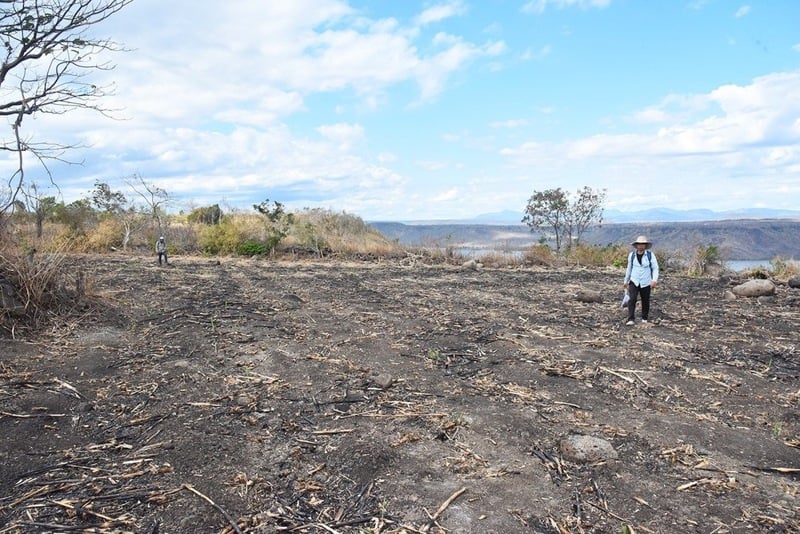
13 January 2026 The Future is the Product of the Past

3,500-Year-Old Opal Workshop and Rare Lithophones Unearthed in Vietnam

Archaeologists in Vietnam’s Gia Lai province have uncovered a remarkable prehistoric site dating back more than 3,500 years. Excavations at Plei Ring, located in H’Bong commune of Chu Se district, revealed not only a vast opal stone workshop but also one of the most intriguing musical discoveries in Southeast Asia: a set of prehistoric lithophones, or stone xylophones.

The findings were announced during a conference on August 15, organized by the Pleiku Museum in collaboration with the Southern Institute of Social Sciences. Leading Vietnamese scholars hailed the site as a key hub in the prehistoric network of tool production and cultural exchange across the Central Highlands.

A 3,500-Year-Old Opal Stone Workshop

Excavations between March and June 2025 showed that Plei Ring was more than just a settlement. According to Dr. Nguyen Quoc Manh, deputy director of the Archaeological Center, the site functioned as a large-scale opal stone workshop around 3,500 to 3,000 years ago. Craftsmen there mastered chipping and carving techniques to produce an array of tools that supplied not only local communities but also neighboring regions.

Evidence of mass production was clear: numerous discarded and broken artifacts were found, suggesting a strict quality control system and an early division of labor. This discovery highlights the sophistication of prehistoric craftsmanship and the gradual development of an agricultural economy that relied heavily on durable stone tools.
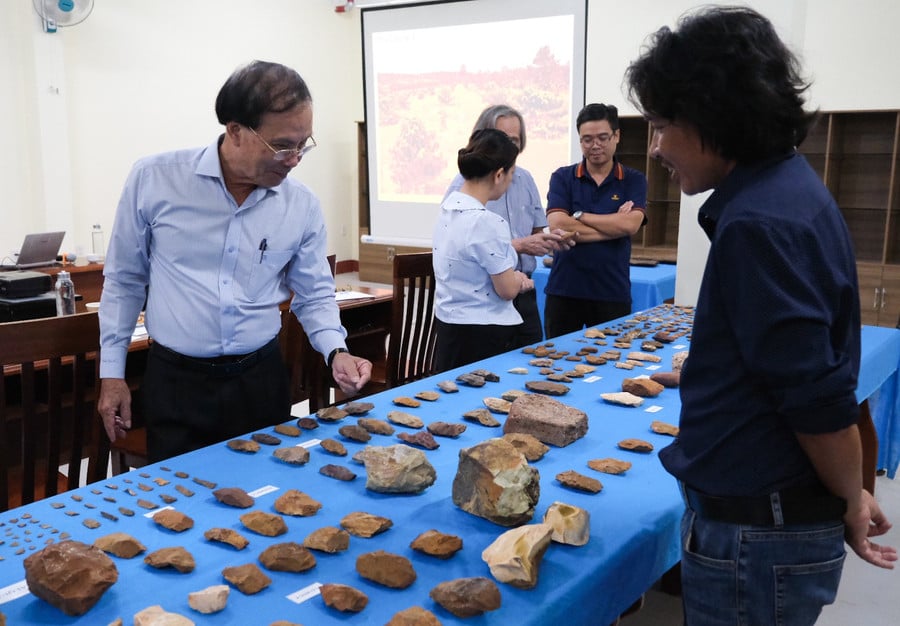
On the sidelines of the conference, scientists discuss the significance of the stone artifacts discovered at the Plei Ring archaeological site. Photo: Hoang Ngoc.

The Discovery of Lithophones

Among the most striking finds at Plei Ring was a set of lithophones, an ancient musical instrument made from carefully carved stone slabs. When struck with wooden mallets, these stones produce resonant tones similar to those of a xylophone. Lithophones are considered one of the oldest known musical instruments in human history, with some examples in Vietnam dating back at least 3,000 years.


📣 Our WhatsApp channel is now LIVE! Stay up-to-date with the latest news and updates, just click here to follow us on WhatsApp and never miss a thing!!


In traditional contexts, lithophones were likely used in ritual ceremonies, communal gatherings, and perhaps even agricultural festivals. Their haunting, bell-like sounds connect present-day listeners with the spiritual and cultural lives of prehistoric communities.

Cultural and Historical Significance

The discovery of lithophones at Plei Ring not only enriches the understanding of prehistoric music but also demonstrates the cultural creativity of early Vietnamese societies. Unlike stone tools designed for survival, lithophones represent a deeper dimension of human expression: the desire to create sound, rhythm, and art.

Archaeologists suggest that lithophones in the Central Highlands may have served both practical and symbolic purposes, reinforcing social cohesion and spiritual beliefs. Their presence within a large workshop site also indicates that music was not an isolated practice but an integrated part of community life.
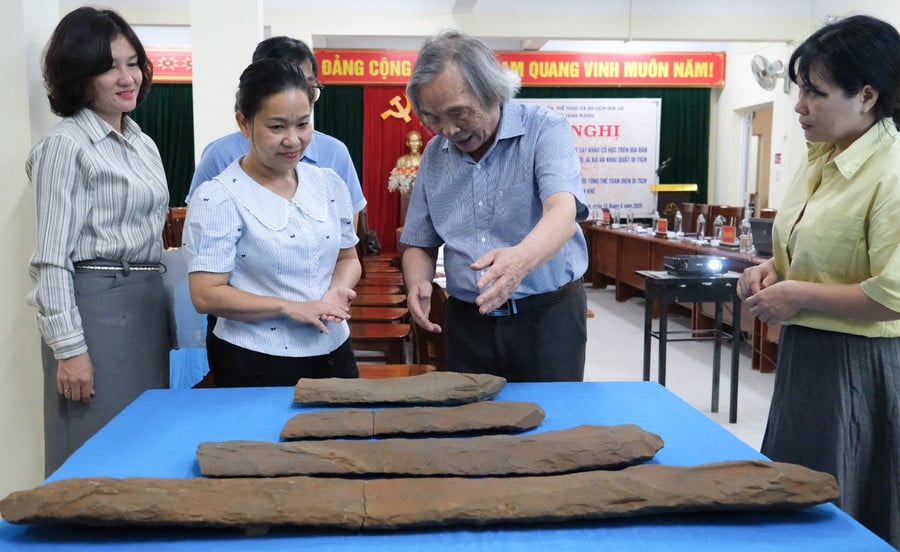
Lithophones discovered at the Plei Ring archaeological site. Photo: Hoang Ngoc.

Toward Heritage Recognition

Experts at the conference emphasized the importance of preserving the Plei Ring relic and incorporating it into broader heritage programs. Discussions also touched on linking the research with other key archaeological sites, such as Roc Tung-Go Da in An Khe, in order to prepare a future UNESCO World Heritage dossier.

With over 52 newly identified relics in Chu Se district alone, the Central Highlands is emerging as one of the most important regions for studying Vietnam’s prehistoric past. The dual discovery of stone tools and lithophones underscores the balance between utility and creativity in ancient societies—an enduring legacy that continues to fascinate researchers and music lovers alike.

A Legacy That Resonates Today

For modern audiences, the lithophone offers more than archaeological curiosity. Contemporary musicians in Vietnam have revived the instrument, adapting it for concerts and cultural showcases. Its deep, resonant tones remind listeners that the roots of music stretch back thousands of years, connecting us with the imaginations of our ancestors.

The findings at Plei Ring reaffirm Vietnam’s role as a cradle of prehistoric innovation, where stone was not only a tool for survival but also a medium for art and sound. As archaeologists continue to uncover the secrets of this site, the 3,500-year-old lithophones of Gia Lai stand as a symbol of both human ingenuity and cultural heritage that still echoes across time.

Cover Image Credit: Plei Ring archaeological site plan. Huynh Ba Tinh

Related Articles

“Last Rhodes shipwreck” of Roman period found in Turkey’s Fethiye

5 March 2022

5 March 2022

Turkish researchers, a Rhodes shipwreck from the third century A.D. was discovered in the depths of the Gulf of Fethiye...

A 2600-year-old Clay Pot was Repurposed As Trash Bin in An Iranian Museum

13 November 2023

13 November 2023

A clay pot dating back to the 2600-year-old Medes period is now serving as a trash bin in a museum...

Bronze Age Treasure Found in Swedish Forests

30 April 2021

30 April 2021

A man who studied the forest to make a map for the orienteering club in western Sweden made an incredible...

The International Congress of Hittitology will be held in Istanbul for the first time in its history

29 December 2021

29 December 2021

The International Congress of Hittitology, which has been held every three years since 1990, was postponed for one year due...

Excavations at Körzüt Castle unearth 2 cuneiform inscriptions and a new Urartian Susi temple

25 October 2023

25 October 2023

During the rescue excavations carried out at the Körzüt Castle in the Muradiye district of Van province in eastern Turkey,...

2,000-Year-Old Unique Composite Fish Scaled Armor Found in Ancient Tomb

20 December 2024

20 December 2024

Chinese researchers have recently found fish-scaled armor in the tomb of Liu He, Marquis of Haihun from the Western Han...

Drone photos reveal Venice of the Fertile Crescent

16 October 2022

16 October 2022

A drone survey of Lagash, a site located between the Tigris and Euphrates rivers, revealed that the 4,900-year-old settlement was...

First Human Figurine of the Mesolithic Era (Circa 9000 Years Old) Discovered in Azerbaijan’s Damjili Cave

19 April 2025

19 April 2025

A groundbreaking discovery has been made in the Damjili Cave in Azerbaijan’s Gazakh district: the first human figurine from the...

Serbian Archaeologists Unearth Roman Triumphal Arch Dedicated to Emperor Caracalla

24 January 2024

24 January 2024

Archaeologists in Serbia have unearthed an ancient Roman triumphal arch dating back to the third century at Viminacium, a Roman...

Sensational find in Ephesus: more than 1,400-year-old district discovered

29 October 2022

29 October 2022

During this year’s excavations at Ephesus in Turkey, archaeologists from the Austrian Academy of Sciences (AW) discovered an incredibly well-preserved...

The oldest evidence of human use of tobacco was discovered in Utah

11 October 2021

11 October 2021

According to recent research, burnt seeds discovered in the Utah desert suggest that humans used tobacco initially and that some...

Divine Punishment or Human Theft? 4,000-Year-Old Relief Missing from Egypt’s ‘Cursed’ Tomb

9 October 2025

9 October 2025

A haunting mystery is unfolding in Egypt’s Saqqara necropolis, where a 4,000-year-old limestone relief has vanished from one of the...

Largest Headhunting Massacre of Women and Children in Neolithic China

12 November 2023

12 November 2023

A new study discovers that ancient headless skeletons discovered in mass graves in China are the remains of victims who...

2000-Year-Old Roman Origins Confirmed for Elche’s Monumental L’Assut de l’Argamassa Dam

17 May 2025

17 May 2025

An archaeological research project has unveiled that the imposing L’Assut de l’Argamassa dam in Elche, Spain, long suspected to be...

Archaeologists in Egypt unearth Roman-era cabin and royal sphinx statue

6 March 2023

6 March 2023

An Egyptian archaeological mission discovered a sphinx statue inside a Roman-era limestone cabin excavated in Egypt’s south. The artifacts were...