
11 November 2025 The Future is the Product of the Past

Millefiori Glass Plateques From the 5th Century AD Discovered in the Ancient Lycian City of Myra

One of the six leading cities of ancient Lycia and the birthplace of Santa Claus (or Sinterklaas in Dutch), the ancient city of Myra and its port, Andriake, yielded very remarkable findings:  millefiori (“A Thousand Flowers”) glass plaques.

The Ancient City of Myra is approximately 1.5 km from the town center of Demre, located on the Kaş-Finike road, in Antalya. Strabon writes that Myra is one of the 6 major cities, each with 3 voting rights in the Lycian League. The city was a rich and crowded metropolis, thanks to its port Andriake, which was an important point on the Mediterranean trade routes, and the fertile lands around it. It was the principal mint of the region and also led a sympolitea formed with Tyberissos and Teimiusa in the Late Hellenistic period. Myra preserved its metropolis status until the Byzantine period.

It was the most important political center of Lycia since the beginning of Christianity. St. Paul visited Myra and Patara in the 1st century BCE during his missionary journey. However, the city owes its real fame to St. Nicholas, who was born in Patara but founded his church in Myra in the 4th century CE to spread Christianity.

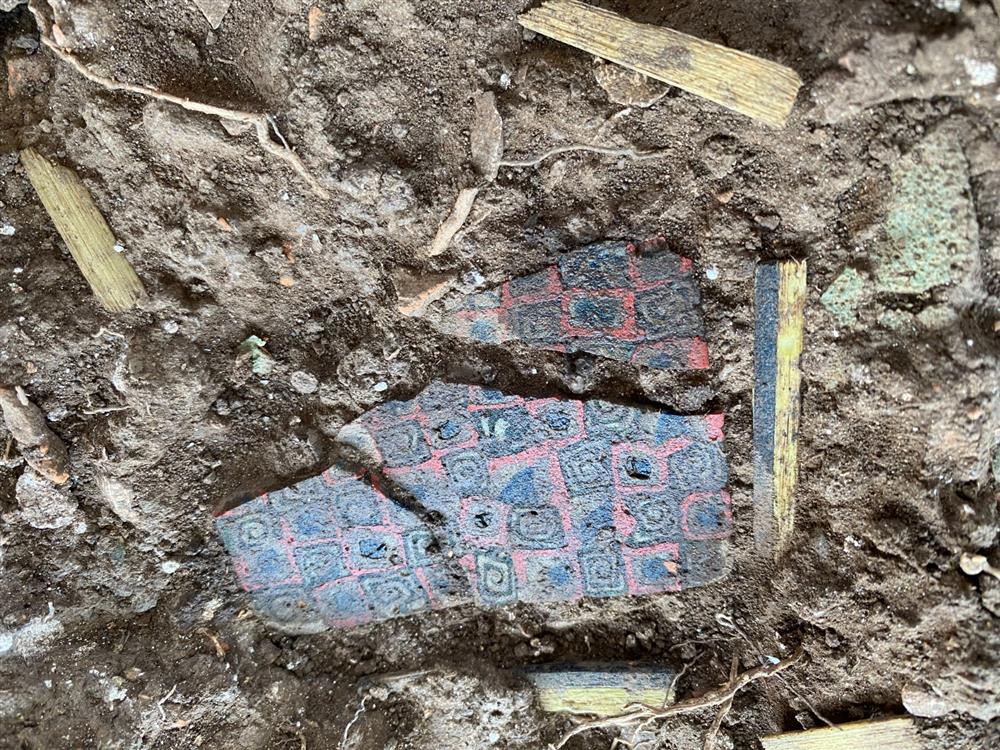
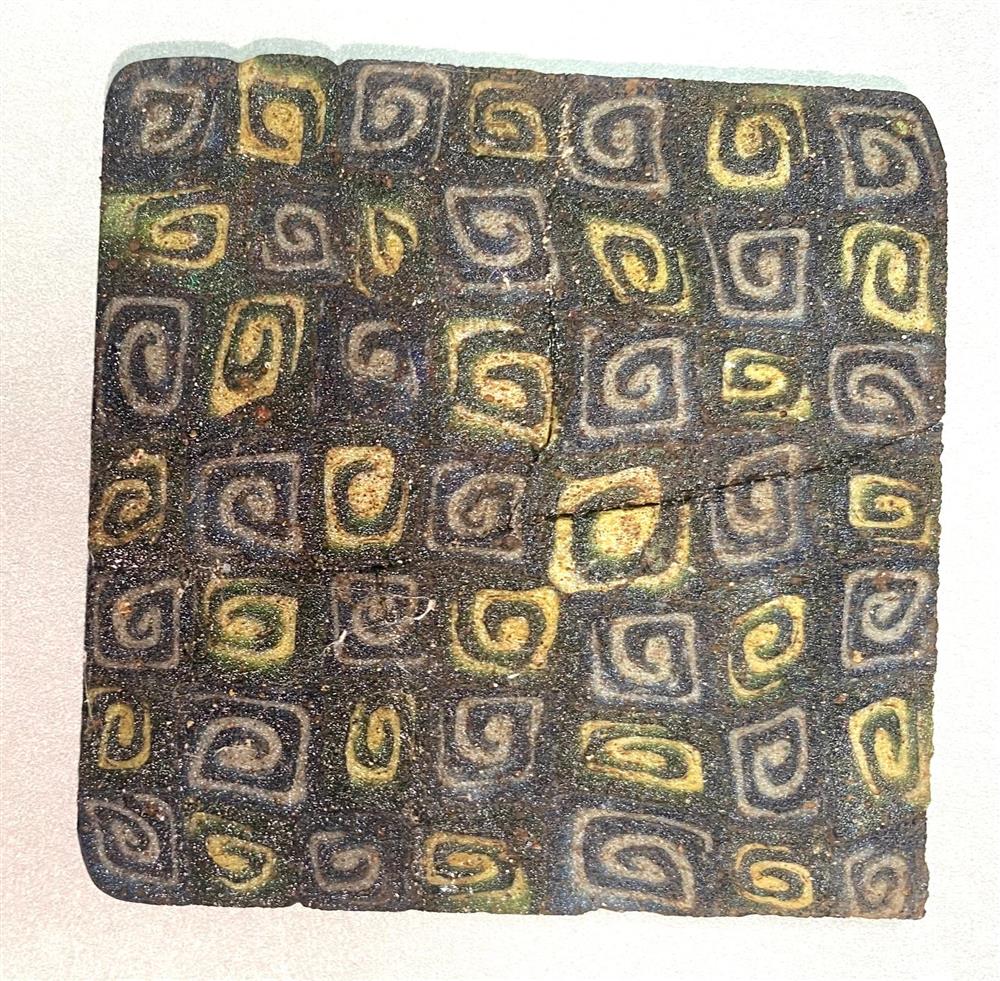
Excavations at Andriake recently uncovered a large number of decorative glass plaques created using the millefiori technique, a complex glassmaking process that involves fusing multiple glass rods of different colors to create intricate patterns that often resemble flowers or geometric shapes.

Considered by experts to be one of the most significant archaeological discoveries of the year in Turkey, millefiori have been found in other parts of the world, but this is the first time they have been found in such abundance and variety in the country.


📣 Our WhatsApp channel is now LIVE! Stay up-to-date with the latest news and updates, just click here to follow us on WhatsApp and never miss a thing!!


Photo: Ministry of Culture and Tourism of the Republic of Türkiye

The discovery was made in the agora area of Andriake, specifically in the customs zone of the port. In the space identified as “Structure 42”, archaeologists found hundreds of pieces of millefiori plaques.

It appears from this discovery that the elite community in Andriake in the fifth century AD possessed highly sophisticated ornamental arts, which were not only visually stunning but also symbolic of authority and rank.

In addition to being ornamental, the millefiori plaques found at Andriake are evidence of the sophistication and luxury of interior design during that era.

In addition to the millefiori glass plaques, other decorative elements were discovered in the same context.  Among the findings are small glass rosettes with square and round forms, along with glass frames that go with the plaques, all of which point to a well-thought-out decorative scheme.
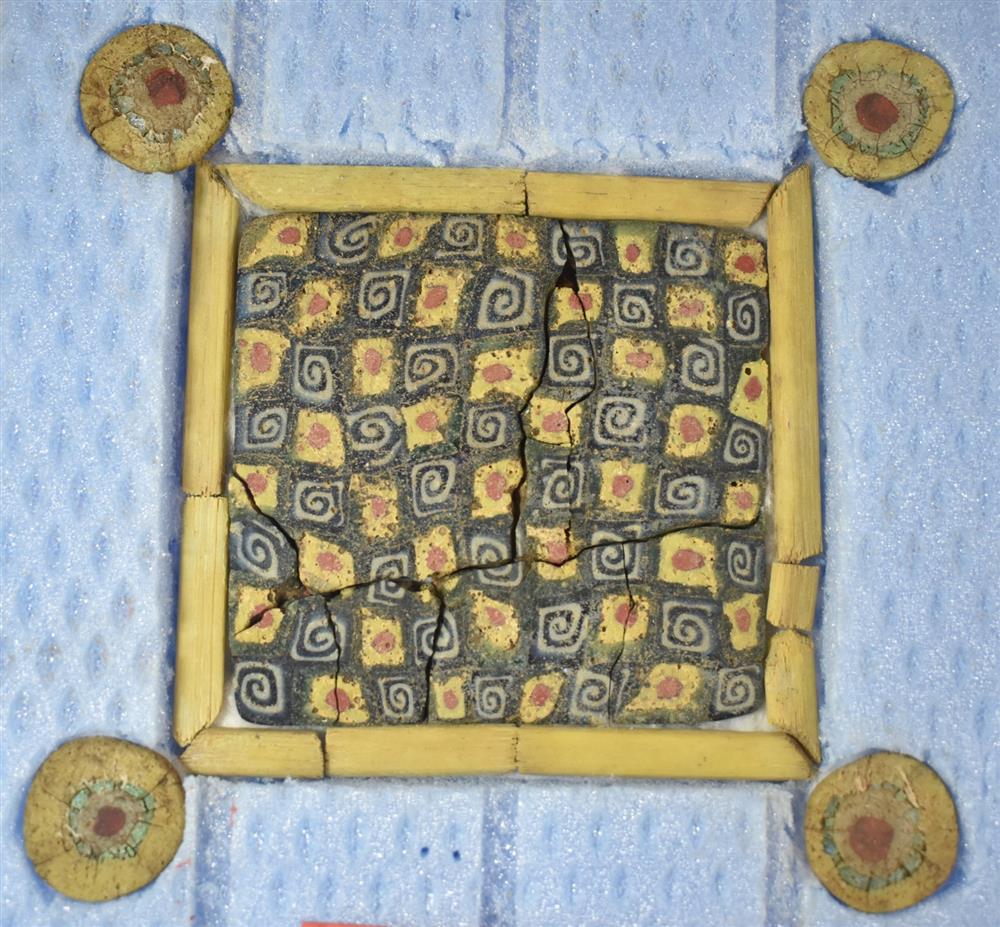
Photo: Ministry of Culture and Tourism of the Republic of Türkiye

The discovery at Andriake, the harbor settlement of the ancient city of Myra, shows the presence of a very special and rich interior decoration at Andriake, with examples of bird figures in inlaid technique among the similarly sized plates that were found to have been used in wall decoration, and figures of saints, birds, and camels in opus sectile technique, which is also a unique discovery for Türkiye.

Located at the junction of the Granarium and Agora in Andriake, at the head corner of western Agora Street, in the most important place of the harbor, the building is thought to be an administrative building with its precious decorations and plan features.

Ministry of Culture and Tourism of the Republic of Türkiye

Cover Image: Ministry of Culture and Tourism of the Republic of Türkiye

Related Articles

Archaeologists Uncover Large Roman-Era Complex Beneath Modern Melun

18 June 2025

18 June 2025

Archaeologists have uncovered significant remnants of the ancient Roman city of Metlosedum, now modern-day Melun, in a recent excavation revealing...

8,000-year-old Female Figurine Discovered in Ulucak Höyük in Western Türkiye

15 August 2024

15 August 2024

One of the most prominent and oldest Neolithic sites found in what is now Turkey has yielded yet another interesting...

City swallowed by sea now center of boat tours

10 September 2023

10 September 2023

The Kekova region, or Sunken City, which has remained under the sea after two major earthquakes in the sixth century...

Neolithic Age Adults and Children Buried Under Family Homes were not Relative

3 May 2021

3 May 2021

An international team of scientists found that Children and adults buried next to each other in one of the oldest...

Riddle of Former Crater Lakes in the Highest Mountains of the Sahara Solved

18 August 2025

18 August 2025

An interdisciplinary research team, led by scientists from the Free University of Berlin and the Max Planck Institute for Meteorology,...

Sicily: Archaeologists make striking discovery in Segesta

8 June 2021

8 June 2021

Archaeological excavations in the Segesta Archaeological Park, investigating a “monumental edifice” near the portico at the end of the old...

In Lviv, Ukraine, a secret room where Jews were hiding in city sewers during the Nazi Holocaust has been unearthed

7 November 2021

7 November 2021

In the western Ukrainian city of Lviv, diggers have uncovered new hiding spots in underground sewers where some Jews managed...

Love and hate in ancient times: Exploring Magical Texts

6 February 2024

6 February 2024

Love and hate are universal emotions that have persisted throughout human history. Ancient civilizations developed their own distinct methods of...

Neanderthals used glue to make stone tools 40,000 years ago, a new study suggests “Earliest evidence of a multi-component adhesive in Europe”

22 February 2024

22 February 2024

More than 40,000 years ago, Neanderthals in what is now France used a multi-component adhesive to make handles for stone...

Archaeologists discover Europe’s longest prehistoric mound in the Czechia

22 June 2024

22 June 2024

Czech archaeologists in the Hradec Králové area in East Bohemia have discovered what is probably the longest prehistoric mound in...

Malaysian rock art found to depict Ruling class and Indigenous tribes conflict

23 August 2023

23 August 2023

Researchers discovered that two anthropomorphic figures of indigenous warriors were created amid geopolitical tensions with the ruling class and other...

The 3200-year-old Mycenaean figure that brought Ephesus together with the Hittite civilization: Found in the excavations of Ayasuluk Tepe

11 June 2022

11 June 2022

A 3,200-year-old Mycenaean figurine that could change the perspective on the history of civilization in Western Anatolia during the Bronze...

Ancient Roman 3rd-century defensive wall found in Germany

24 March 2024

24 March 2024

An exciting archaeological discovery was made during construction work in Aachen’s city center, Germany. At the corner of Pontstrasse and...

3,000-year-old Drill Bit Workshop Unearthed in Vietnam’s

13 May 2021

13 May 2021

According to the provincial museum, an ancient drill bit workshop dating back more than 3,000 years has been discovered at...

Sacred Seduction: Kamasutra Feminism and the Legacy of Ancient Erotic Temples

8 April 2025

8 April 2025

For many, the Kamasutra is merely a name linked to condom brands and erotic chocolates, often dismissed as just a...