4 February 2026 The Future is the Product of the Past

Family Looking for Lost Gold Earring Finds Viking Age Artifacts in Their Garden on the Island Of Jomfruland

A family in Norway was searching for a lost gold earring in their yard on the island of Jomfruland when they discovered treasure much more valuable than the jewelry: Viking-era artifacts dating back more than 1,000 years.

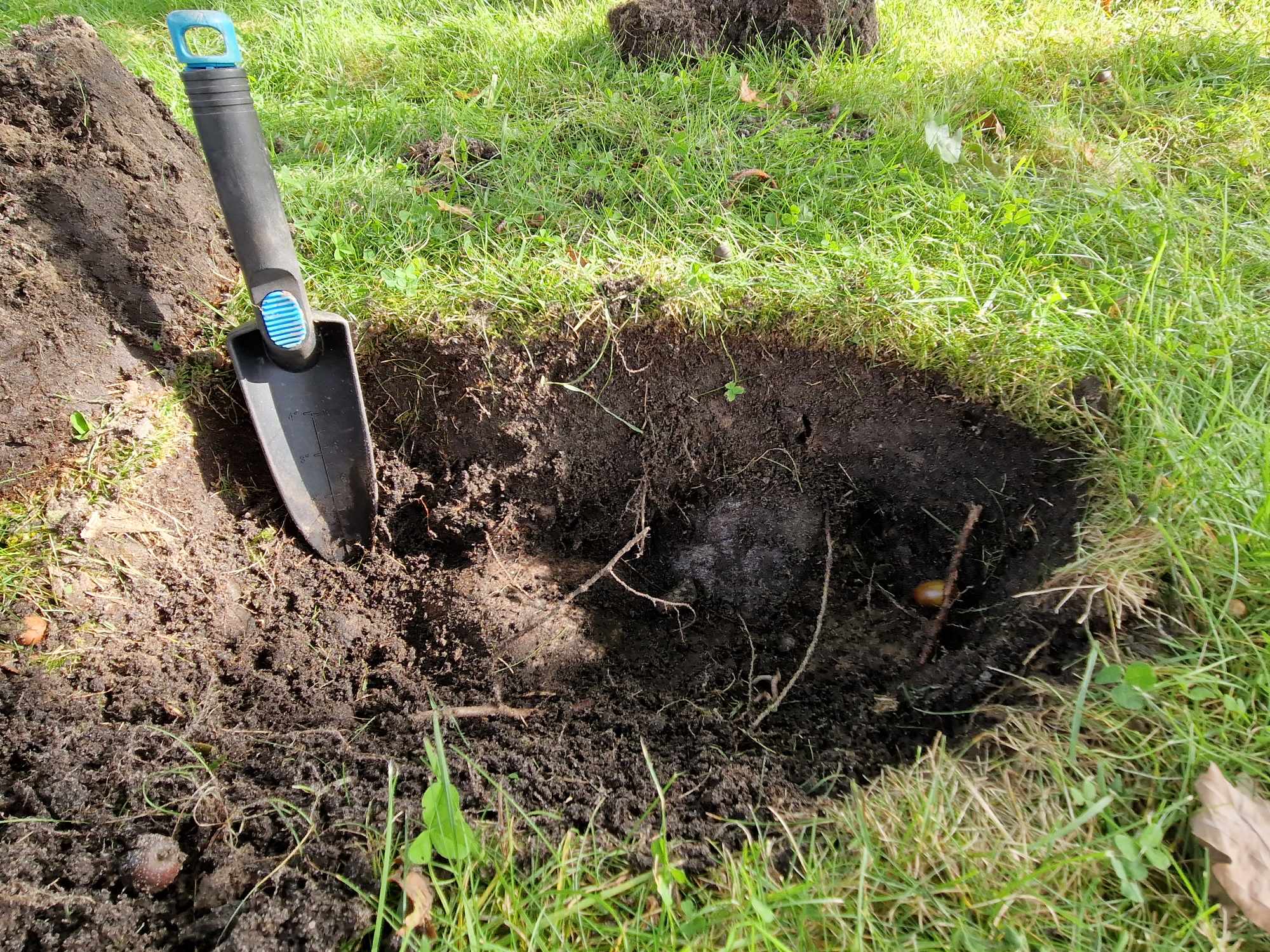
The Aasvik family was searching for the lost jewelry at their home in Jomfruland, but as soon as they turned on the metal detector, they stumbled upon a bowl-shaped buckle and another item that appear to be part of a Viking-era burial, according to a Facebook post this week by the Cultural Heritage of Vestfold and Telemark County Council.

The council said they believe a woman’s grave had been unknowingly preserved under a large tree in the Aasvik family’s garden. The artifacts are thought to date from around 800 AD.

The Aasvik family immediately contacted local authorities to report their find.

Jomfruland is a small island off the south coast of Norway. The find is significant to the history of the region. It was previously assumed people lived on the island in Kragerø during the Viking Age, but scientists have been unable to confirm it until now. This is thought to be the first Viking-era find on the island.


📣 Our WhatsApp channel is now LIVE! Stay up-to-date with the latest news and updates, just click here to follow us on WhatsApp and never miss a thing!!
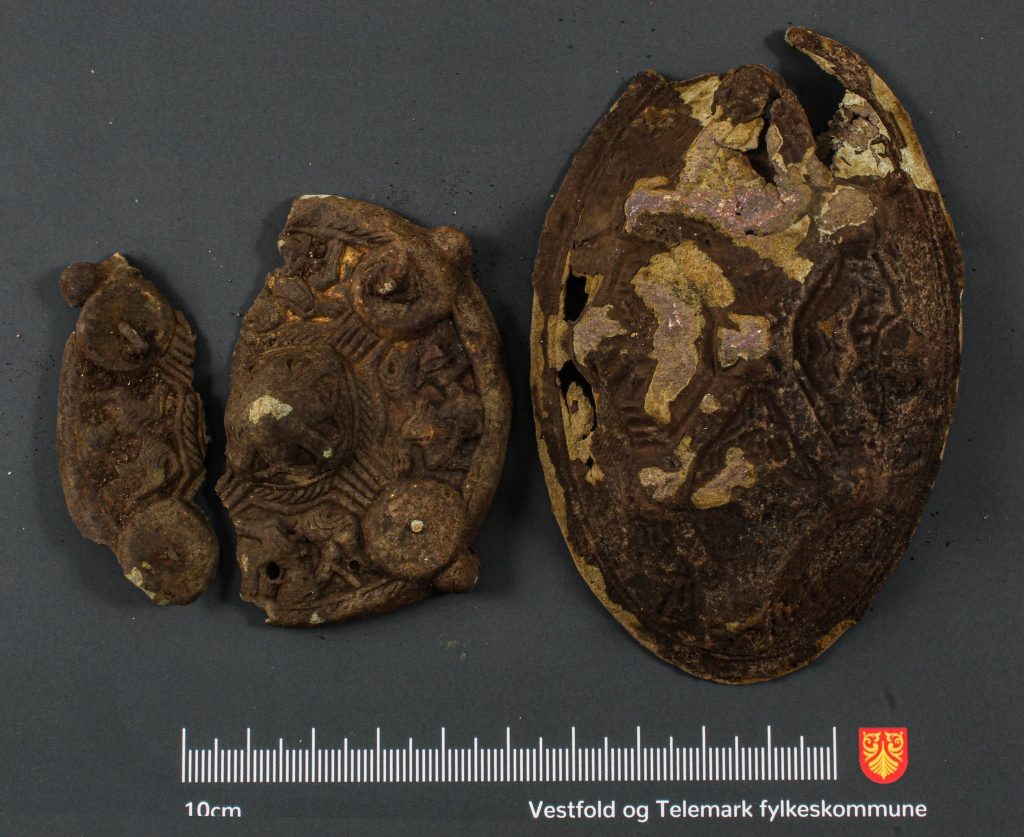


Photo: Cultural Heritage of Vestfold and Telemark County Council.

Archaeologist Vibeke Lia in Vestfold and Telemark County Municipality, who has seen the buckles, says it is an incredible find, and 1,200-year-old artifacts are in good condition.

“As far as I know, it is the first secure find we have from the Viking Age on Jomfruland,” Lia told the NRK Vestfoldogtelemark, adding this is an exciting archaeological find.

Lia believes there may be more objects in the ground at the site but says digging for more is inappropriate.

“If it is a grave, it is protected. We will rather try to find out more in other ways,” she said.

The Aasvik family are not the only people to make a discovery from Viking times in Norway this month. Another treasure was recently found, which archaeologists described as the find of the century.

Amateur archeologist Erlend Bore was using his newly purchased metal detector and dug up nine pendants, three rings, and 10 gold pearls, believed to be from around AD 500.

Cover Photo: Cultural Heritage of Vestfold and Telemark County Council.

Related Articles

Rare waka unearthed from New Zealand River, after being hidden for 153 years

16 June 2023

16 June 2023

A waka -the traditional canoe of the Maori people- believed to be over 150 years old has been salvaged from...

An intact Punic Tomb was Discovered in Malta

29 May 2021

29 May 2021

İntact a tomb dating to the Punic period was found in Tarxien. The Superintendence of Cultural Heritage has announced the...

The 3,000-Year-Old Ancient City is Under Danger

8 February 2021

8 February 2021

For the port planned to be built in Izmir’s Aliağa district, a part of the 3,000-year-old ancient city is in...

Archaeologists Uncover Rare Trojan War-Era Armor from 1200 BCE in Czechia

22 July 2025

22 July 2025

A remarkable archaeological discovery in South Moravia has brought new insights into Bronze Age Europe and its warrior elites. The...

The first Bull Geoglyph discovered in central Asia

29 September 2021

29 September 2021

Archaeologists from the Russian Academy of Sciences’ Institute of History of Material Culture (IIMK RAS) and LLC Krasnoyarsk Geoarchaeology discovered...

Oman discovers fort dating back to the 5th century in North Al Batinah

12 March 2022

12 March 2022

A fort dating back to the 5th century has been discovered at Oman’s Al Fulaij archaeological site in North Al...

‘Mystery and Unfathomable’ King Arthur’s Hall is 4,000 Years Older Than Previously Thought

10 November 2024

10 November 2024

A mysterious monument in Cornwall has been discovered to be 5,000 years old—4,000 years older than previously thought. The rectangular...

Could the Great Pyramid Be Far Older Than We Thought? A New Study Says Yes

28 January 2026

28 January 2026

A newly published preliminary study has reignited one of archaeology’s most enduring controversies: when was the Great Pyramid of Giza...

Europe’s First Toolmakers Were Innovators — Not Imitators, New Study Reveals

17 October 2025

17 October 2025

Europe’s first toolmakers developed their own stone technology 42,000 years ago, according to a new study that challenges the idea...

The mythical hero of Troy and Rome Aeneas’s peerless mosaic discovered in Türkiye

11 May 2023

11 May 2023

A large mosaic depicting the legendary Trojan hero Aeneas, the protagonist of Virgil’s epic poem “The Aeneid” and the ancestor...

Southwest Germany’s Oldest Gold Artifact Found

28 May 2021

28 May 2021

Archaeologists discovered the 3,800-year-old burial of a woman who died when she was around 20 years old in what is...

Scientists have discovered an ancient cemetery of flying reptiles roaming the Atacama desert of Chile 100 million years ago

7 April 2022

7 April 2022

In Chile, an unusual cemetery has been discovered that contains the well-preserved remains of prehistoric flying reptiles that flew over...

Enigmas Roman Dodecahedron Uncovered by Amateur Archaeologists in the UK

24 January 2024

24 January 2024

Amateur archaeologists have unearthed a striking Roman dodecahedron in the serene countryside of Norton Disney, England, a mysterious class of...

“Cardiff’s earliest house” unearthed during an archaeological dig may shed light on the city’s earliest inhabitants

15 July 2022

15 July 2022

Archaeological excavation in a city park in Cardiff, the capital of Wales, has uncovered what is believed to be the...

Analysis of Ancient Scythian Leather Samples Shows Ancient Scythians Made Leather from Human Skin

20 December 2023

20 December 2023

The ancient Scythians’ history as fearsome warriors dates back more than 2,000 years, and now research from a multi-institutional team...