
In the remote wilderness of Egypt’s Sinai Peninsula, a forgotten room revealed one of the most significant biblical manuscript discoveries of the 20th century. Now, thanks to evolutionary biology, scholars are uncovering hidden chapters in the story of the New Testament.
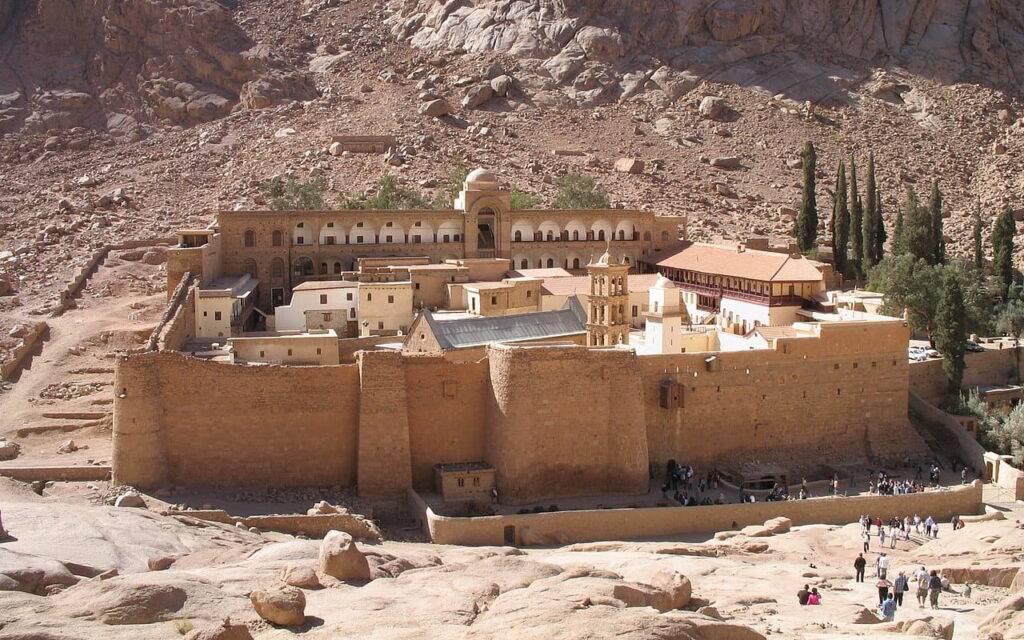
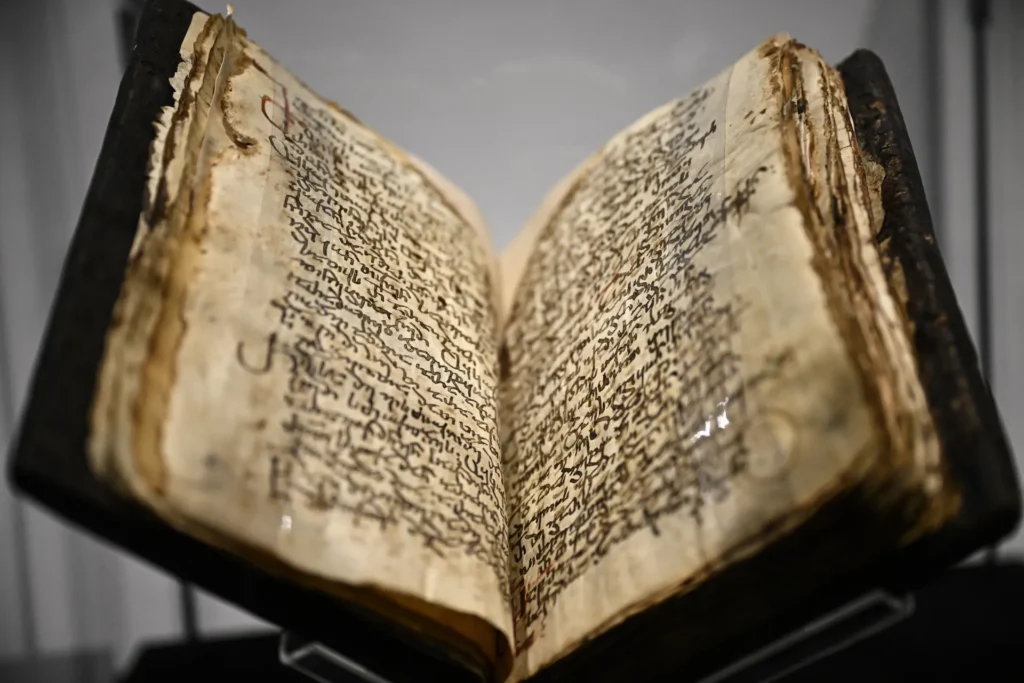
In 1975, inside the ancient walls of St. Catherine’s Monastery—home to the world’s oldest continuously operating library—researchers uncovered a storeroom of long-lost manuscripts in Greek, Syriac, and Arabic. Among them was a remarkable find: an Arabic translation of the Gospels that omitted a key phrase from the very first verse of the Gospel of Mark—”the Son of God.”
At first glance, this might appear to be a minor omission. But this variant is part of a much deeper story—one involving over 500,000 known textual variations across New Testament manuscripts. Now, a surprising scientific ally is helping scholars make sense of it all: phylogenetics, a method originally developed to track the evolution of living organisms.
What Biology Reveals About Biblical Texts
Dr. Robert Turnbull, a researcher at the University of Melbourne and author of Codex Sinaiticus Arabicus and Its Family, is at the forefront of this new interdisciplinary approach. “Just like genes mutate over generations,” Turnbull explains, “manuscripts accumulate changes—some accidental, some deliberate.”
Traditional methods of textual analysis have long relied on reconstructing “stemmas” or manuscript family trees by hand—a laborious process that could take years. But during the COVID-19 pandemic, scholars realized that the same tools used to track the virus’s mutations could be applied to manuscripts. Using phylogenetic analysis, researchers now compare textual variants the way biologists compare DNA sequences, revealing how scribes introduced changes across centuries.
The Arabic Gospels and the Missing “Son of God”
One of the most striking findings comes from the Arabic Gospel discovered in Sinai. In Mark 1:1, where most manuscripts read, “The beginning of the Gospel of Jesus Christ, the Son of God,” this translation omits “the Son of God.”
This reading is not unique. Other ancient sources, including the 5th-century Codex Koridethi, show the same omission. “It doesn’t prove the original text lacked the phrase,” Turnbull notes, “but it highlights early Christian communities where the Christological emphasis was different.”
To place this Arabic manuscript within the wider textual tradition, Turnbull compiled a dataset of its variants and ran it through a supercomputer alongside hundreds of Greek, Latin, and Syriac manuscripts. The result? This Arabic Gospel appears to belong to the Caesarean text-type, a controversial group of manuscripts thought to have circulated in the Near East during the first millennium.
A New Era in Manuscript Studies
The Caesarean text-type has long been debated among scholars, sitting alongside the more widely recognized Alexandrian, Western, and Byzantine text-types. But Turnbull’s analysis provides compelling evidence that this group does indeed form a distinct textual family—and that the Arabic translation from St. Catherine’s Monastery is a critical missing piece.
More broadly, the use of phylogenetics is changing how we study all ancient texts. “These methods go beyond the Bible,” says Turnbull. Researchers are now applying them to medieval literature like Chaucer’s Canterbury Tales and even the manuscripts of Roman historians like Livy.
The key lies in modeling how often different types of changes occur. Minor spelling shifts happen frequently; major changes—like inserting or omitting entire phrases—are rarer. By recognizing this, phylogenetic models can distinguish noise from meaningful transformation.
Every Manuscript Has a Story
What emerges from this approach is more than a digital family tree. It’s a clearer window into how ancient texts evolved—not as static, untouchable artifacts, but as living documents shaped by communities, ideologies, and individual hands.
The Arabic Gospel from Sinai is more than a linguistic curiosity. It’s evidence of how the identity of Jesus was framed differently in different times and places—and how theology, culture, and even geography shaped the way scriptures were copied and understood.
As Turnbull puts it: “The more precisely we can map how texts were copied and changed, the more clearly we can hear the voices of the ancient world.”
Robert Turnbull, Codex Sinaiticus Arabicus and Its Family
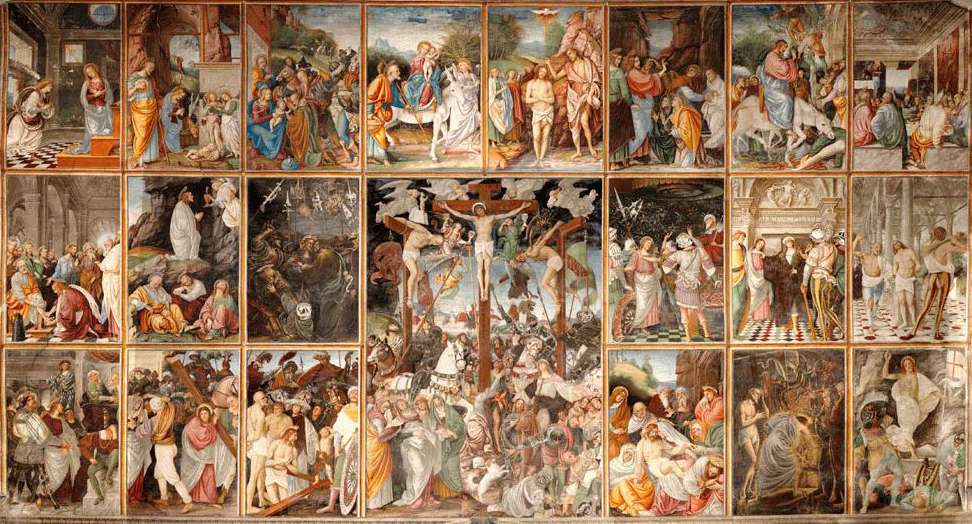
Cover Image Credit: Gaudenzio Ferrari’s Stories of the Life and Passion of Christ, fresco, 1513, Church of Santa Maria delle Grazie, Varallo Sesia, Italy. Depicting the life of Jesus. Public Domain
