
16 January 2026 The Future is the Product of the Past

Ancient Mosaics Unearthed in İznik Hint at Residence of Roman General

A recent archaeological breakthrough in the ancient city of İznik, formerly known as Nicaea, has unveiled richly decorated Roman mosaics and burial plots that may have belonged to a high-ranking Roman general. The discovery is shedding new light on the elite lifestyle and urban development of this strategically vital Anatolian city during the Roman Empire.

The find emerged from ongoing excavations in the Hisardere necropolis, a historically significant burial zone on the outskirts of İznik. Archaeologists from the İznik Museum Directorate revealed three new Roman-era graves and a spectacular mosaic-covered basilica floor, sparking widespread academic interest and international media attention.

A Glimpse into the Roman Elite of Asia Minor

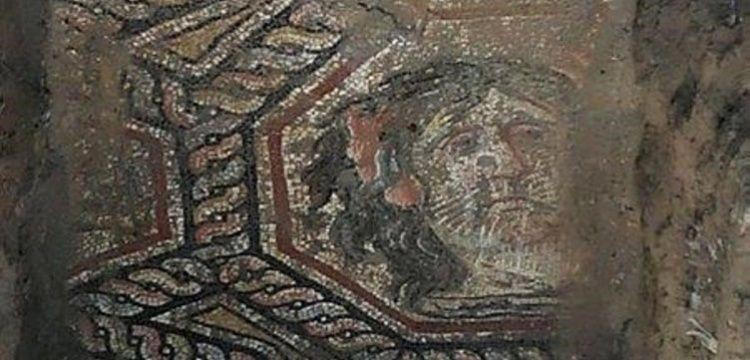
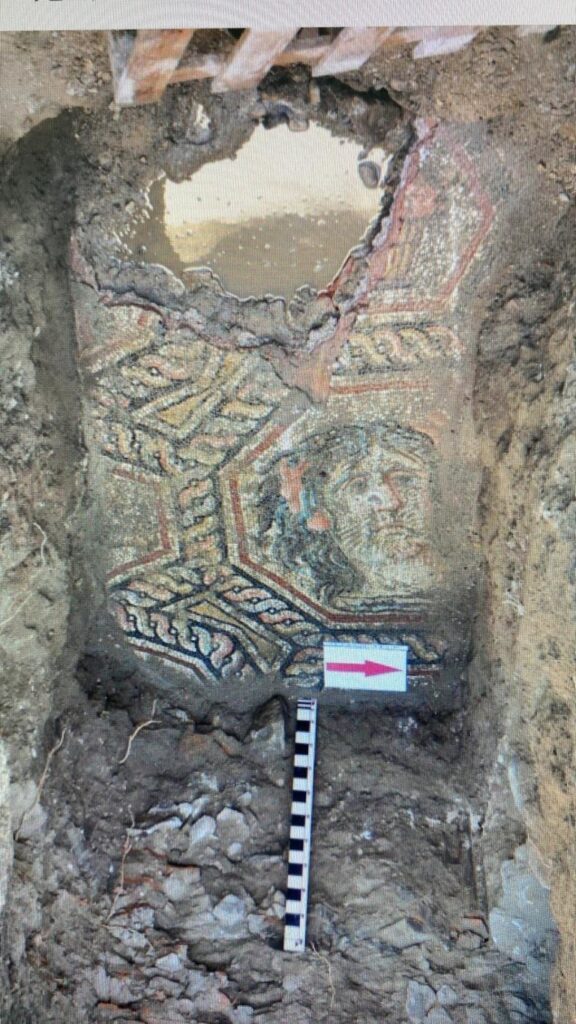
One of the most compelling elements of the find is a mosaic panel believed to have decorated the reception area of a private villa. Its vivid imagery and intricate craftsmanship — including interwoven serpents and human figures — suggest a commission by someone of high social and political standing, possibly a Roman military commander or aristocrat.

“The artistic quality and iconographic content of the mosaics, along with their location near elite tombs, point to a residence connected with the upper echelons of Roman provincial society,” says Dr. Ayşe Güngör, an archaeologist involved in the project.

Serpent motifs, often associated with healing, protection, and military prowess in Roman mythology, further support the theory of a high-status occupant. The discovery offers valuable insights into how Roman elites expressed power and identity through private architecture and decorative arts in the provinces.


📣 Our WhatsApp channel is now LIVE! Stay up-to-date with the latest news and updates, just click here to follow us on WhatsApp and never miss a thing!!


A section of the newly unearthed Roman mosaic floor, believed to belong to the reception area of a high-ranking general’s villa in ancient İznik (Nicaea). Image: IHA

İznik: A Historic Jewel of the Roman and Byzantine World

Founded in the 4th century BCE and rebuilt by Lysimachus, one of Alexander the Great’s successors, Nicaea rose to prominence as a key city in the ancient kingdom of Bithynia before its incorporation into the Roman Empire in 74 BCE. Over the centuries, it became a vibrant political, religious, and cultural hub.

As a major urban center, Nicaea hosted two ecumenical councils — including the First Council of Nicaea in 325 CE, which had a profound impact on the development of early Christianity. The city’s legacy is still visible today in its remarkably well-preserved Roman and Byzantine fortifications, aqueducts, and theater ruins.

The latest excavation reinforces historical narratives describing Nicaea not only as an administrative capital but also as a desirable residence for Rome’s senatorial and military elite. The presence of ornate villas within the necropolis area suggests that high-status individuals were interred close to their estates — a practice not uncommon in Roman Asia Minor.

Rediscovery Sparked by Modern Development

The archaeological site first came to light in 2014 during routine infrastructure work, prompting a series of rescue excavations. However, property ownership disputes and legal expropriation delayed more comprehensive investigations until 2024. Since then, archaeologists have resumed full-scale excavation, leading to the discovery of the villa’s mosaic floors and burial grounds.

Experts from multiple disciplines, including epigraphy, art history, and conservation science, are now working collaboratively to analyze the artifacts. Researchers hope to find inscriptions or household items that could conclusively identify the villa’s original owner and offer a clearer picture of Roman elite life in the Anatolian provinces.
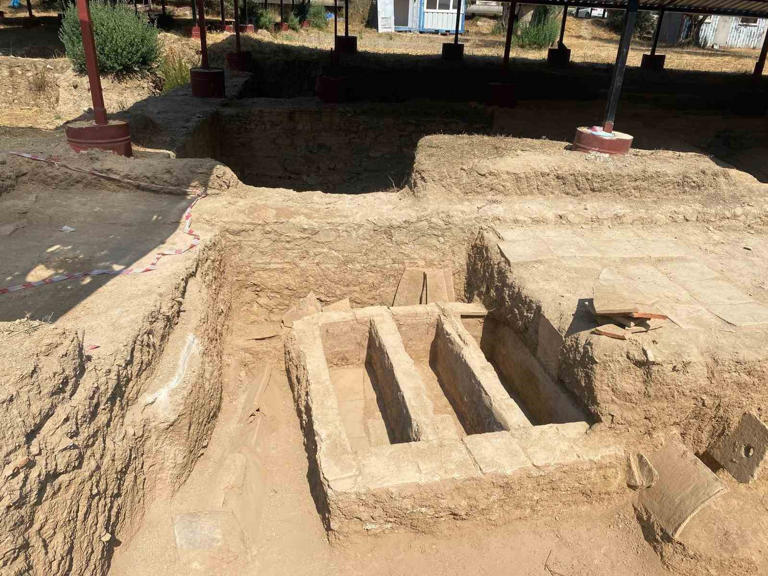
The partially excavated remains of a Roman-era residence, believed to have belonged to a high-ranking general in ancient Nicaea (modern-day İznik). Image Credit: IHA

Preserving İznik’s Ancient Legacy

As preservationists document and stabilize the mosaics, efforts are also underway to enhance public awareness of İznik’s archaeological significance. Officials hope the site will eventually become part of a broader heritage tourism initiative, bringing international visitors closer to the rich history of Nicaea.

“This discovery not only enhances our understanding of Roman residential life but also reaffirms İznik’s place as one of Türkiye’s most important ancient cities,” says Dr. Güngör.

With ongoing excavations and growing academic interest, the story of İznik continues to evolve — layer by layer — offering new glimpses into a world where empires ruled, generals resided, and art spoke volumes about power and prestige.

Cover Image Credit: IHA

Related Articles

Dominican mission discovers 1,305-meter Greco-Roman ancient rock-cut tunnel in Alexandria

4 November 2022

4 November 2022

A Greco-Roman tunnel measuring 1,305 meters in length was discovered beneath Tapuziris Magna, an Ancient Egyptian city, by an Egyptian-Dominican...

A 7,800-Year-Old Massive Stone Wall Discovered Beneath the Sea off the Coast of France

13 December 2025

13 December 2025

Several meters beneath the restless waters off western France, archaeologists have uncovered the remains of a monumental stone construction that...

In the city of Gods and Goddesses Magnesia, Zeus Temple’s entrance gate found

26 September 2021

26 September 2021

During an excavation in the ancient city of Magnesia, located in the Ortaklar district of Germencik in Turkey’s Aegean province...

Iron Age comb found made from human skull in UK

2 March 2023

2 March 2023

Researchers from the London Archaeological Museum (MOLA) determined that an Iron Age comb they found during an archaeological dig that...

2000-year-old glass treasure in Roman shipwreck discovered by an underwater robot in Mediterranean

24 July 2023

24 July 2023

The Italian-French mission recovered a selection of glassware and raw glass blocks from the Roman shipwreck located at a depth...

Roman Hospital Turned Byzantine Church Unearthed at Ancient Kaunos

15 January 2026

15 January 2026

Archaeologists working in southwestern Türkiye have uncovered one of the most compelling examples of architectural continuity in the eastern Mediterranean:...

Ancient Sarmatian Treasures, Including 370 Grams of Gold Bracelet, and Burial Sites Discovered in Kazakhstan’s Atyrau Region

10 February 2025

10 February 2025

During excavations at the Karabau-2 mound in Kazakhstan’s Atyrau region, archaeologists made a remarkable discovery, unearthing nine graves—seven of which...

Ancient Tomb of Korean Hostage Prince Found in China

21 July 2025

21 July 2025

Chinese archaeologists have uncovered the tomb of Kim Young, a hostage prince from the ancient Korean kingdom of Silla, in...

Researchers found evidence of the use of medicinal herbs in the Grotte des Pigeons Cave in Morocco dating back 15,000 years

5 November 2024

5 November 2024

Morocco’s National Institute of Archaeology and Heritage has announced an important discovery that will enhance our understanding of ancient healing...

More than 1,300 prehistoric burial mounds in western Azerbaijan systematically surveyed for the first time

2 January 2025

2 January 2025

Over 1,300 archaeological sites in Azerbaijan were systematically surveyed and documented in two field campaigns in 2021 and 2023 by...

Archaeologists Discover 40,000-Year-Old Evidence of Neanderthal Habitation in Ghamari Cave, Iran

13 March 2025

13 March 2025

Iranian archaeologists have made a groundbreaking discovery in Ghamari Cave (also known as Qamari Cave), located near Khorramabad in Lorestan...

The 2000-year-old origin mystery of the Etruscans solved

25 September 2021

25 September 2021

A genetic analysis of DNA taken from ancient skeletons appears to have answered a conundrum that has captivated researchers for...

The human remains dating back 10,000 years unearthed in Vietnam

15 November 2023

15 November 2023

In Ha Nam Province, northern Vietnam, skeletal remains dating back 10,000 years have been discovered. This is marking the oldest...

19 funerary tombs from Roman times were discovered in Tartus, Syria

27 May 2022

27 May 2022

During search and excavation operations in the archaeological area of Amrit in Tartus, Syria, a joint excavation team from the...

Two new fragments of the Fasti Ostienses, a kind of chronicle engraved on marble slabs, have been found in the Ostia Antica Archaeological Park

19 August 2023

19 August 2023

Two new fragments of the Fasti Ostienses have been discovered in the Ostia Antica Archaeological Park, following investigations carried out...