
10 December 2025 The Future is the Product of the Past

2,050-Year-Old Assembly Building Discovered in Ancient City of Laodicea Marks Architectural First in Anatolia

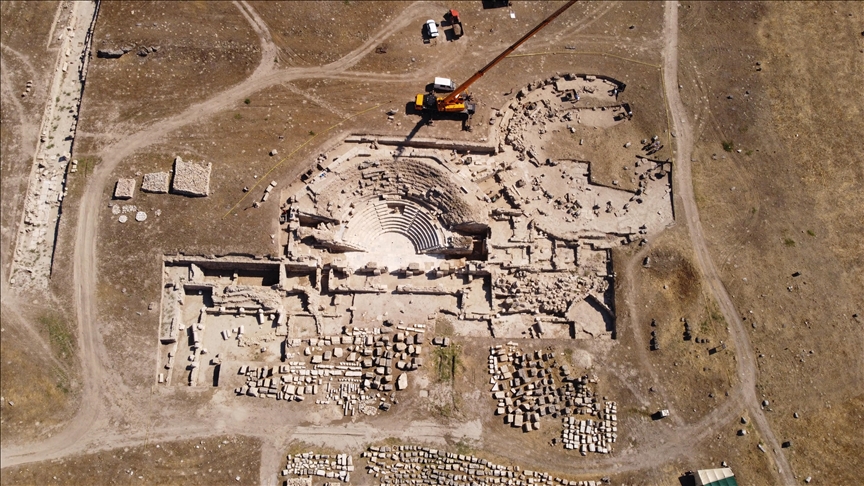
During the 2025 excavation season, archaeologists in the ancient city of Laodicea have unearthed a 2,050-year-old Roman-era assembly building with a never-before-seen architectural design in Anatolia. The structure, which served as the administrative and judicial hub of the city, highlights Laodicea’s critical political role in Roman times.

The find was announced by Professor Celal Şimşek, head of the excavation team, in an interview with Anadolu Agency. Located in the modern-day province of Denizli, Laodicea is listed on UNESCO’s Tentative List of World Heritage Sites and has been under continuous archaeological investigation for over two decades.

A Rare Architectural Marvel

The newly discovered building features pentagonal outer walls and a hexagonal interior plan, a unique architectural style never before encountered in ancient Anatolia. “We are seeing this type of architecture for the first time in the region,” noted Şimşek.

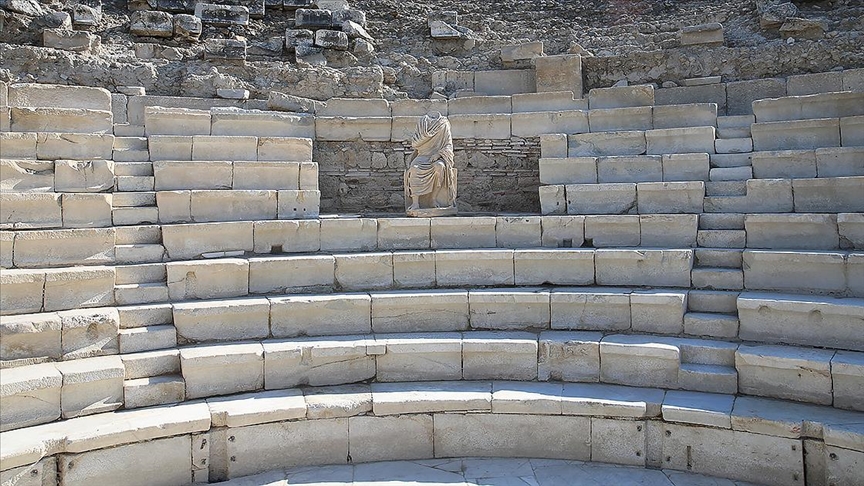
The structure dates back to the late 1st century BC, during the reign of Roman Emperor Augustus, and remained in use until the 7th century AD, when the city was gradually abandoned. Based on the size and design of the seating tiers—17 in total, including 8 lower and 9 upper rows—archaeologists estimate that the building accommodated between 600 and 800 members, including elders, youth, and general citizens.

Inscriptions on the seats revealed the names of assembly leaders and members, offering an exceptional glimpse into the civic structure of ancient Laodicea.


📣 Our WhatsApp channel is now LIVE! Stay up-to-date with the latest news and updates, just click here to follow us on WhatsApp and never miss a thing!!


2,050-Year-Old Assembly Building Discovered in Ancient City of Laodicea Marks Architectural First in Anatolia. Credit: Sebahatdin Zeyrek - AA
2,050-Year-Old Assembly Building Discovered in Ancient City of Laodicea Marks Architectural First in Anatolia. Credit: Sebahatdin Zeyrek – AA

Center of Politics and Justice

According to Şimşek, ancient sources already suggested that Laodicea served as a judicial and administrative center for 7 to 10 surrounding cities during the Roman era. “Laodicea was one of the largest metropolises of Anatolia,” he said. “The existence of such a massive and uniquely designed assembly building confirms its central role in governance and law.”

A seated statue discovered inside the building is believed to represent a high-ranking official or chief judge. Interestingly, the statue’s head—added later and dated to the 5th century AD—indicates that the image of authority was updated over time to reflect changes in leadership. “This shows a continued use and evolution of the legal system over centuries,” Şimşek explained.

Strategic Location and Surrounding Structures

The assembly building is part of a larger civic complex that includes a political agora, archive halls, a grand bath complex, and the largest stadium in Anatolia. These elements paint a picture of a city that was not only wealthy and populous but also played a pivotal role in regional governance.

In particular, the South Bath Complex and the massive stadium next to it emphasize the scale and importance of Laodicea during the Roman Empire.
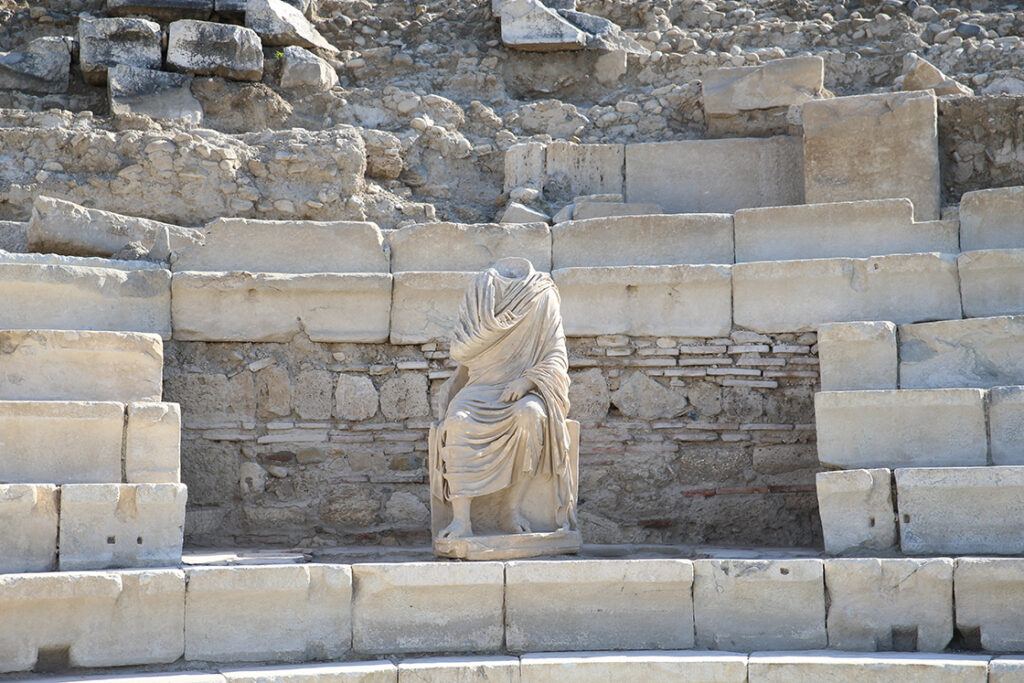
Seated statue believed to represent a chief judge or high-ranking official, discovered within the ancient assembly building of Laodicea. Credit: Sebahatdin Zeyrek - AA
Seated statue believed to represent a chief judge or high-ranking official, discovered within the ancient assembly building of Laodicea. Credit: Sebahatdin Zeyrek – AA

About Laodicea: A City of Continuity and Culture

Founded in the 3rd century BC by Seleucid King Antiochus II, who named it after his wife Laodice, Laodicea became one of the most prominent cities of the Roman province of Phrygia. It reached its peak in the 1st and 2nd centuries AD as a center of commerce, law, and religion.

The city was also home to a significant early Christian community and is one of the Seven Churches of Revelation mentioned in the New Testament.

Past excavations have uncovered remarkable artifacts, including frescoed travertine blocks, a three-meter-tall statue of Emperor Trajan, the Traian Fountain, sculptures of priests and mythological figures, and elaborate mosaics, all testifying to the city’s artistic and political sophistication.
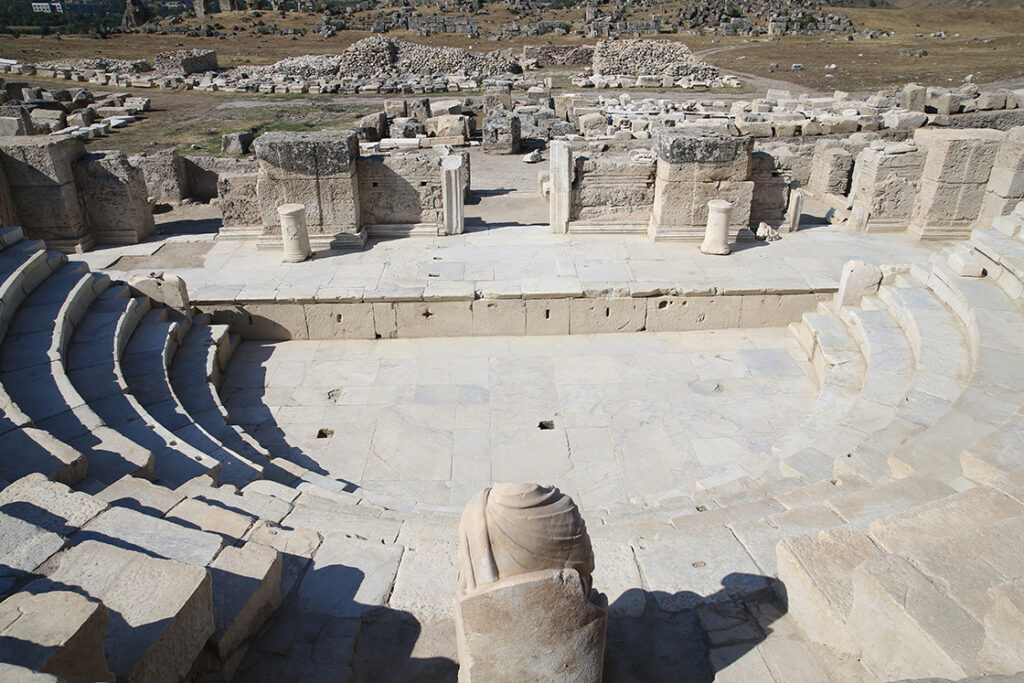

Professor Şimşek states that excavations in the assembly building are nearing completion. Credit: Sebahatdin Zeyrek - AA
Professor Şimşek states that excavations in the assembly building are nearing completion. Credit: Sebahatdin Zeyrek – AA

A Milestone in Archaeology

Professor Şimşek confirmed that the excavation work on the assembly building is nearing completion. “This structure served Laodicea for nearly 750 years without interruption. It’s not just an architectural first—it’s a cultural and historical treasure,” he concluded.

As work continues, the discovery is expected to contribute significantly to Laodicea’s recognition as a full UNESCO World Heritage Site, bolstering both academic interest and tourism in the region.

Cover Image Credit: Sebahatdin Zeyrek – AA

Related Articles

An important Gallo-Roman worship complex was discovered near Rennes, France

13 June 2022

13 June 2022

An essential Gallo-Roman worship complex was unearthed by Inrap  (National Institute for Preventive Archaeological Research) archaeologists at Chapelle-des-Fougeretz (Ille-et-Vilaine), near...

Infinite Embrace: New research sheds light on Bronze Age family relationships that link Britain to Luxembourg

30 January 2024

30 January 2024

A new study of early Bronze Age examples from Luxembourg and Britain, led by researchers from the universities of Mainz...

Ancient Rome’s city borders were discovered in a rare stone

17 July 2021

17 July 2021

Archaeologists unearthed a rare stone outlining ancient Rome’s city borders during excavations for a new sewage system. The stone comes...

The First Dinosaurs Discovered in Japan From the Late Cretaceous Period

30 April 2021

30 April 2021

Yamatosaurus Izanagii, a new genus, and species of hadrosaur or duck-billed dinosaur have been discovered on one of Japan’s southern...

From Destruction to Discovery: Ancient Greek Tombstone Discovered in Libya After Storm ‘Daniel’

2 March 2025

2 March 2025

The Libyan Antiquities Authority has officially confirmed that an ancient artifact uncovered in the torrents caused by Storm “Daniel” in...

Giant Prehistoric Rock Engravings Discovered in South America May Be The World’s Largest

5 June 2024

5 June 2024

Researchers made a groundbreaking discovery of what is thought to be the world’s largest prehistoric rock art. Enormous engraved rock...

Submerged Land Bridge Beneath the Aegean May Have Carried Early Humans From Türkiye to Europe

21 September 2025

21 September 2025

A groundbreaking archaeological study has revealed that early humans may have crossed from modern-day Türkiye into mainland Europe via a...

1,500-year-old secret underground passage uncovered in Istanbul

15 May 2023

15 May 2023

During the ongoing excavations in the ruins of Saint Polyeuktos Church in Istanbul’s Saraçhane neighborhood, which was destroyed during the...

UK’s Oldest Hospice Discovered: Anglo-Saxon Monastery Unearthed in Cookham Reveals Early Medical Care

11 August 2025

11 August 2025

An extraordinary archaeological discovery in Cookham, Berkshire, is rewriting our understanding of healthcare in early medieval England. Unearthed behind the...

Archaeologists Uncover Oldest Greek Marble Altar in Western Mediterranean at Tartessian Site in Spain

7 July 2025

7 July 2025

The discovery of the Oldest Greek Marble Altar in the Western Mediterranean offers unprecedented insight into Tartessian culture and its...

Cuneiform Clues Reveal Körzüt as “The Sacred City of Haldi,” in Urartu Kingdom

6 August 2025

6 August 2025

Excavations in eastern Türkiye uncover a major religious center of the Urartian Kingdom—The Sacred City of Haldi, shedding new light...

Türkiye’s Neolithic Settlement Çayönü Hill Discovered New Tombs from Early Bronze Age

4 September 2023

4 September 2023

Archaeologists have unearthed 5 more tombs dating to the Early Bronze Age during the recent excavations on Çayönü Hill in...

A rare 3,300-year-old wooden yoke found in northern Italy

30 October 2023

30 October 2023

After eight years of complex excavation, recovery, and restoration, a rare 3,300-year-old wooden yoke discovered in a Late Bronze Age...

Mysterious ruins discovered at the bottom of Lake Van, Türkiye’s largest lake

16 August 2023

16 August 2023

At the bottom of Lake Van, Türkiye’s largest salty soda lake with 3,712 square kilometers, divers discovered a cemetery and...

Rare bronze hand discovered in Roman Vindolanda, England

11 July 2023

11 July 2023

One of Europe’s most important Roman archeological sites is the Fort of Vindolanda, one of the earliest Roman garrisons built...