
Archaeologists from MNCR – Muzeul Naţional al Carpaţilor Răsăriteni have announced the discovery of a rare Neolithic clay figurine dating back approximately 7,500 years. The remarkable find was made during preventive archaeological excavations on the outskirts of Sfântu Gheorghe, in central Romania, shedding new light on the spiritual and artistic life of some of Europe’s earliest farming communities.
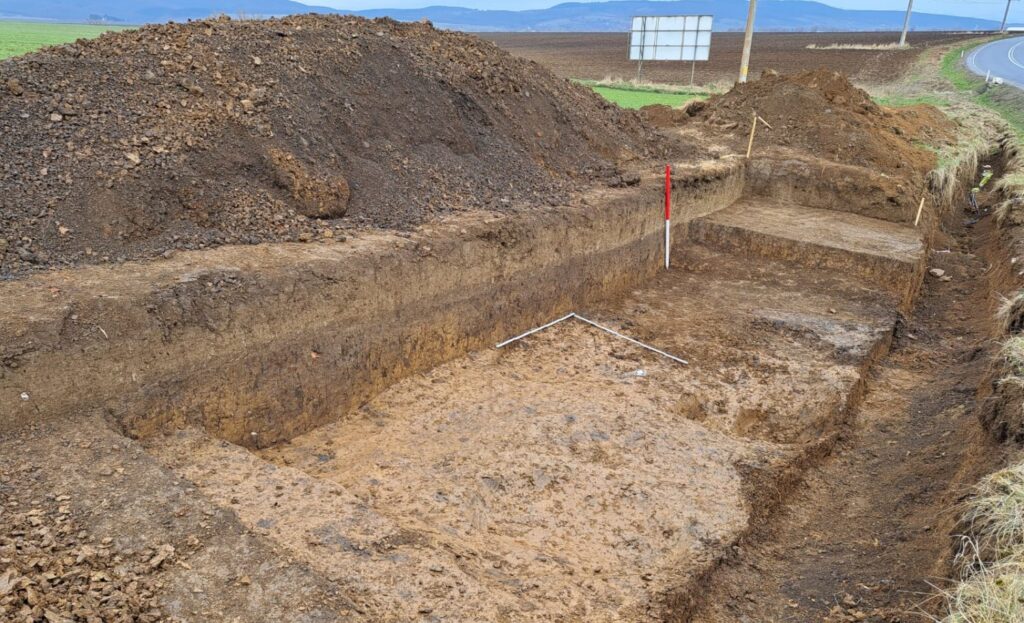
The discovery took place at the archaeological site of Arcuș – Platoul Târgului (Vásártető), where infrastructure works were planned to extend electrical connections for the nearby Sepsi Arena. As part of legally required preventive research, a team of archaeologists conducted systematic excavations before construction began. What initially seemed to be a routine fieldwork day quickly turned into a moment of exceptional significance.
Within the remains of a Neolithic settlement dated between 5800 and 5500 BCE, researchers uncovered traces of ancient dwellings, pottery fragments, burnt clay, and charcoal deposits. Among these domestic remnants, inside a structure more than seven millennia old, archaeologists found a carefully modeled clay figurine representing a female figure with outstretched arms.
The settlement has been attributed to the Starčevo-Criș culture, one of the earliest agricultural cultures in southeastern Europe. Emerging in the early Neolithic period, this culture played a crucial role in the spread of farming practices across the Balkans and into the Carpathian Basin. Communities belonging to this cultural horizon were among the first in the region to establish permanent villages, cultivate crops, and domesticate animals.
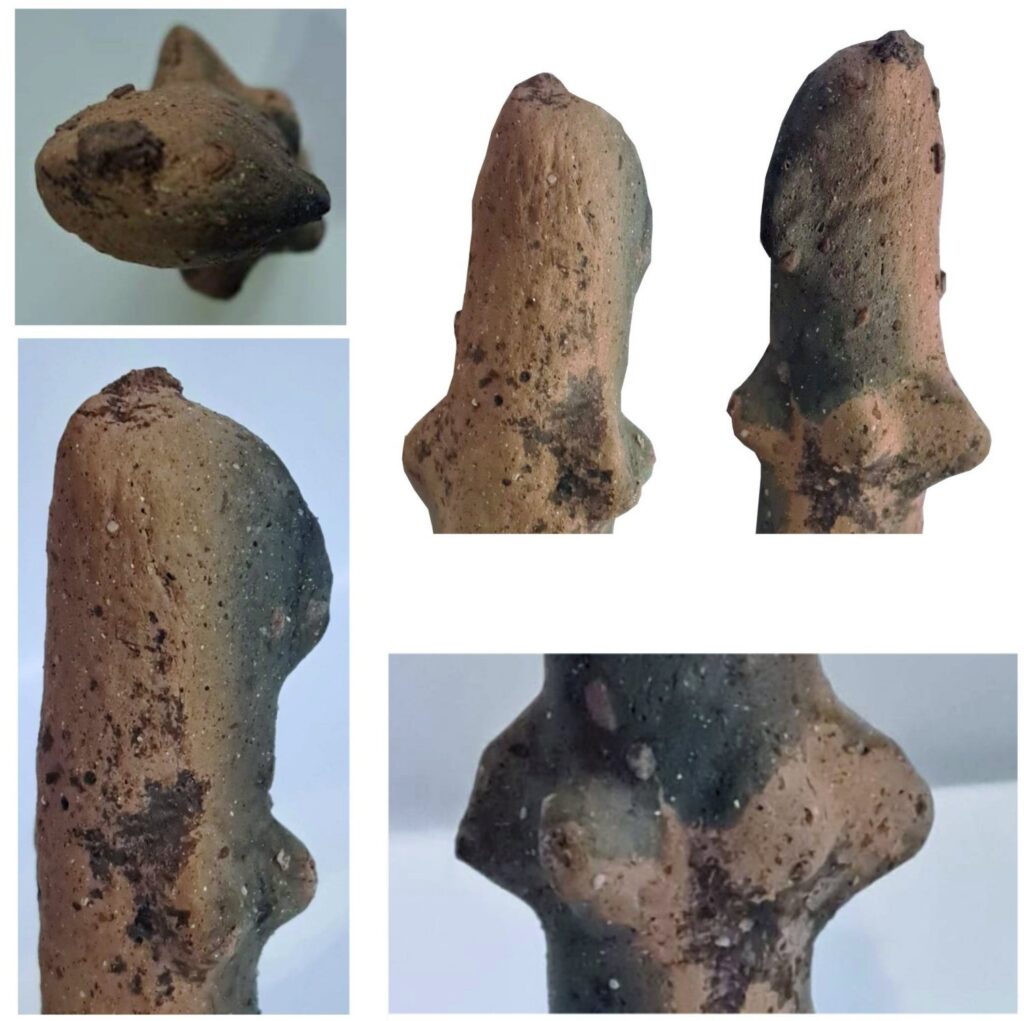
The figurine itself is small—measuring only six centimeters in height—but its significance far exceeds its modest size. It was crafted from clay mixed with chaff and sand, a common tempering technique that improved durability during firing. The object was baked at high temperatures, resulting in a light brick-red color. Dark brown shades visible on the front suggest uneven exposure to heat during the firing process.
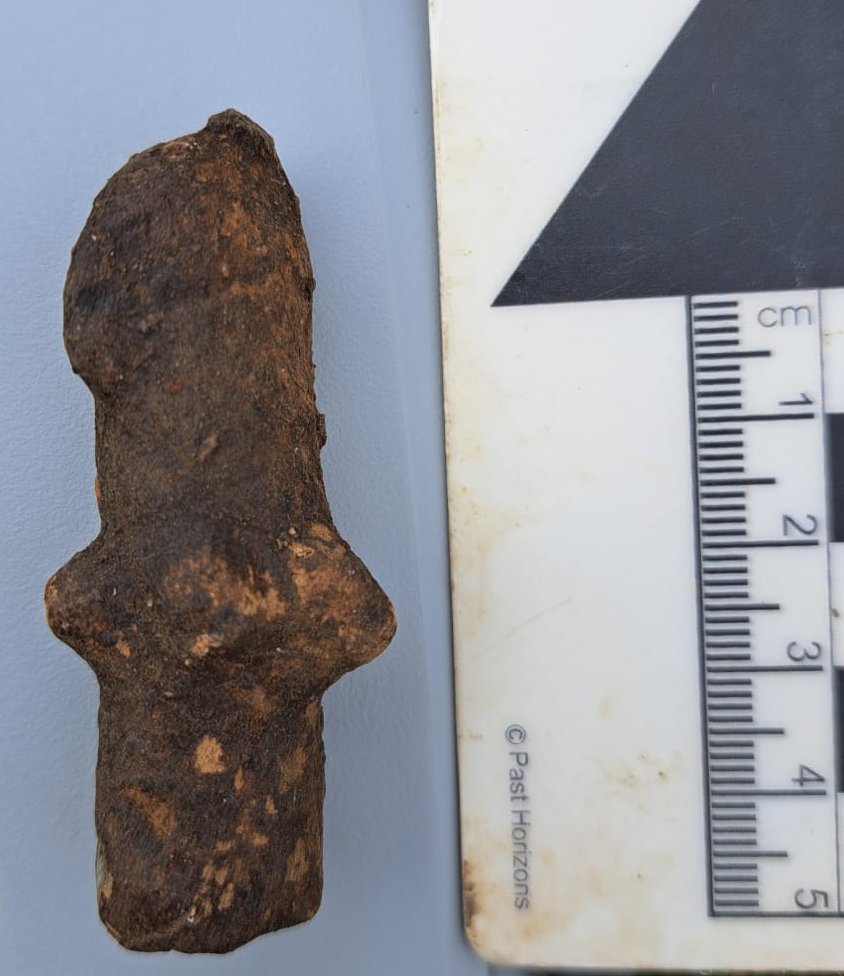
Although the face is not intricately detailed, several key features stand out. The eyes are incised in a distinct “V” shape, while a small oval form marks the nose. Fine engraved lines indicate long hair, likely gathered into a bun. According to specialists, this detail may represent one of the earliest known depictions of a female hairstyle north of the Danube River.
The figure’s arms extend laterally and appear raised, creating a posture widely associated with prayer, invocation, or ritual gesture in Neolithic symbolic art. On the front of the torso, two small protrusions clearly identify the figure as female. Unlike many so-called “Venus” figurines of prehistoric Europe—characterized by exaggerated hips and pronounced fertility attributes—this example presents a slender and simplified silhouette. Its restrained modeling and subtle expressiveness distinguish it from other known figurines of the same era.
Clay figurines are relatively rare within the Starčevo-Criș culture, making this discovery particularly valuable. Most previously documented idols from the period have been found in regions such as Banat or along the Criș River basin. Many of those examples emphasize fertility symbolism through accentuated anatomical features. By contrast, the Arcuș figurine’s understated form suggests either regional stylistic variation or a different symbolic function.
The precise purpose of the figurine remains open to interpretation. Archaeologists propose several possibilities: it may have served as a votive offering, a protective household amulet, or an object used in fertility-related or domestic rituals. The raised-arm posture suggests communication with a higher power or participation in communal ceremonial practices. While definitive conclusions are difficult to establish, the figurine provides rare insight into the symbolic universe of early agrarian societies.
Dr. Dan-Lucian Buzea, archaeologist at MNCR and one of the researchers involved in the excavation, emphasized the emotional resonance of such finds. Objects like this figurine offer a tangible connection to the beliefs and inner lives of people who lived thousands of years ago. Though separated from us by millennia, these early farmers shared a fundamental human impulse: the need to express faith, identity, and hope through symbolic forms.
The excavation project was led by Dr. Dan-Călin Ștefan, with team members Dr. Dan-Lucian Buzea and Dr. Puskás Jozsef. Independent collaborating archaeologists included Dr. Nicoleta Paula Mazăre, Dr. Florentina Mărcuți, and Dr. Marius Mihai Ciută. Their interdisciplinary cooperation ensured meticulous documentation and preservation of the site before construction activities could proceed.
Beyond its archaeological importance, the figurine stands as a cultural bridge across time. It reflects a transformative period in human history when communities shifted from mobile hunter-gatherer lifestyles to settled agricultural living. This transition not only reshaped economies and social structures but also fostered new forms of artistic and spiritual expression.
More than 7,500 years after it was shaped by human hands, the small clay figure from Arcuș now enters the modern world as a silent messenger from the Neolithic past. Through its raised arms and carefully incised features, it continues to evoke questions about belief, ritual, and the enduring human search for meaning—reminding us that even the smallest artifacts can carry the deepest stories.
MNCR – Muzeul Naţional al Carpaţilor Răsăriteni
Cover Image Credit: MNCR – Muzeul Naţional al Carpaţilor Răsăriteni via Facebook
