
16 January 2026 The Future is the Product of the Past

Europe’s Oldest Boomerang: A 40,000-Year-Old Mammoth Ivory Artifact Discovered in Poland

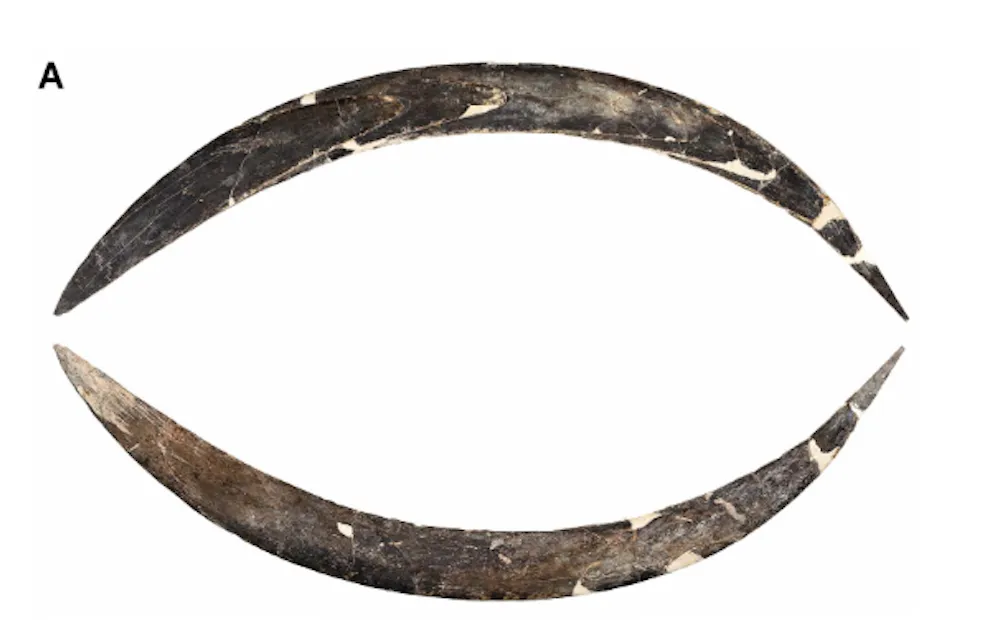
An international team of scientists has uncovered the oldest known boomerang in Europe, a 72-centimeter tool meticulously carved from mammoth ivory, found in Obłazowa Cave in southern Poland. Radiocarbon dating places this artifact between 42,290 and 39,280 years ago, making it one of the earliest examples of Upper Paleolithic technology and early Homo sapiens hunting tools.

Unlike traditional wooden boomerangs, this exceptional prehistoric hunting weapon was designed as a non-returning boomerang, optimized for precision throws rather than aerodynamic returns. Its large size and curvature demonstrate advanced craftsmanship skills during the Late Pleistocene, reflecting the technical ingenuity of early modern humans in Central Europe.

Wear pattern analysis indicates that the boomerang was frequently used by a right-handed individual, providing valuable insights into the daily life and tool use of Paleolithic humans. The boomerang was found alongside a human phalanx identified as Homo sapiens through genetic and morphological analysis, as well as decorative artifacts like shell pendants and bone beads, suggesting possible symbolic or ritual significance.

Due to contamination during restoration, direct radiocarbon dating of the boomerang was not possible. Instead, scientists used Bayesian modeling on associated animal bones and human remains from the same stratigraphic layer to date the artifact precisely. This approach places the boomerang firmly within the Upper Paleolithic period, between 42,290 and 39,280 calibrated years BP.
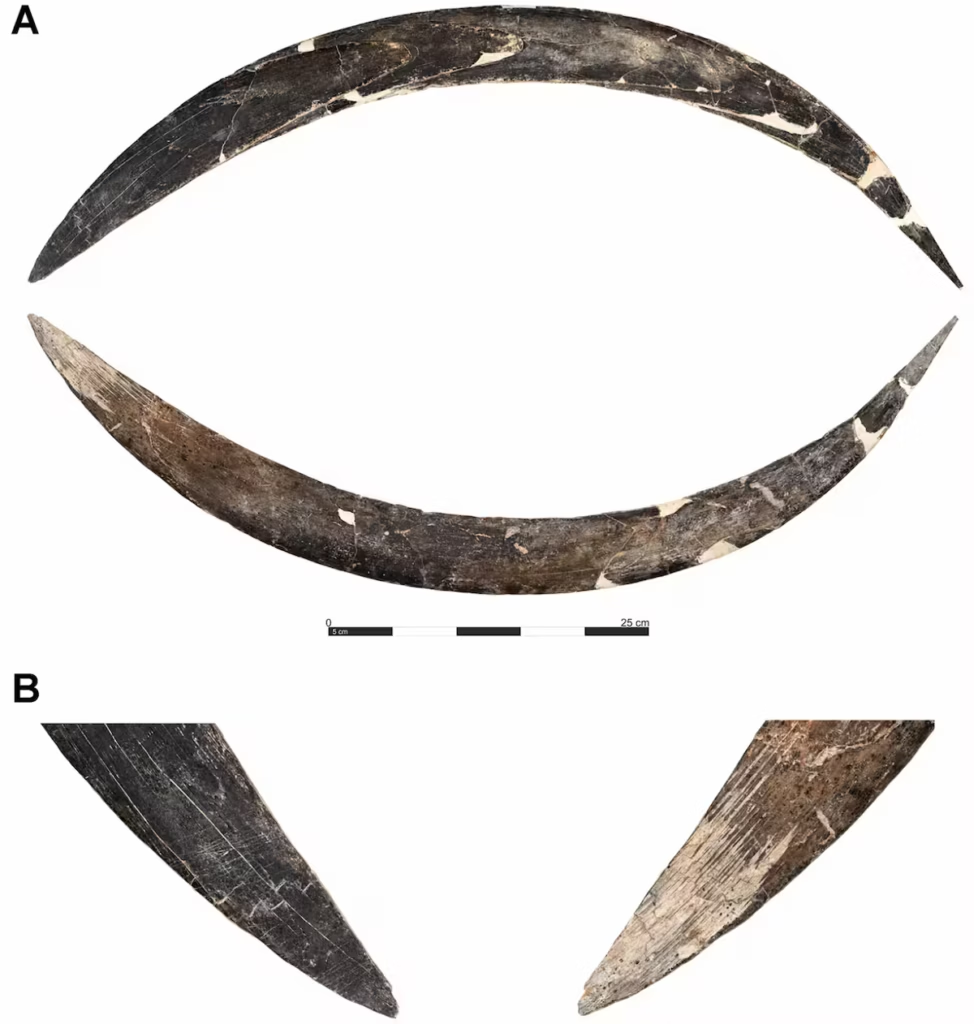
Details of the boomerang. Credit: Talamo et al., 2025, PLOS One

This discovery challenges the long-held belief that boomerangs and similar throwing tools were unique to Aboriginal Australians or later cultures in Egypt. Instead, it reveals that early Homo sapiens in Europe independently developed complex hunting technologies and symbolic behavior much earlier than previously thought. Isotope analyses of animal remains found at Obłazowa Cave indicate a varied diet, including reindeer, horses, and musk oxen, reflecting adaptive strategies in cold-steppe environments.


📣 Our WhatsApp channel is now LIVE! Stay up-to-date with the latest news and updates, just click here to follow us on WhatsApp and never miss a thing!!


The mammoth ivory boomerang from Obłazowa Cave significantly reshapes our understanding of prehistoric innovation, demonstrating that early modern humans possessed advanced technological skills and cultural complexity in Europe around 40,000 years ago. This artifact offers a rare glimpse into the cognitive and adaptive abilities of our ancestors during a pivotal era of human evolution.

Furthermore, this find adds valuable evidence to the ongoing discussion about the interaction and coexistence between Homo sapiens and Neanderthals in Europe. The presence of advanced tools alongside human remains suggests that modern humans brought technological advantages that may have contributed to the eventual replacement of Neanderthals. This insight shifts the timeline for modern human migration and technological development in Central Europe during the Upper Paleolithic.

Additionally, the deliberate selection of mammoth ivory and the transportation of this heavy material over long distances highlight strategic planning and resource investment by early humans. The absence of carving debris in the cave indicates that the boomerang was likely crafted elsewhere and brought to Obłazowa Cave, emphasizing its cultural and possibly symbolic importance beyond mere hunting utility.
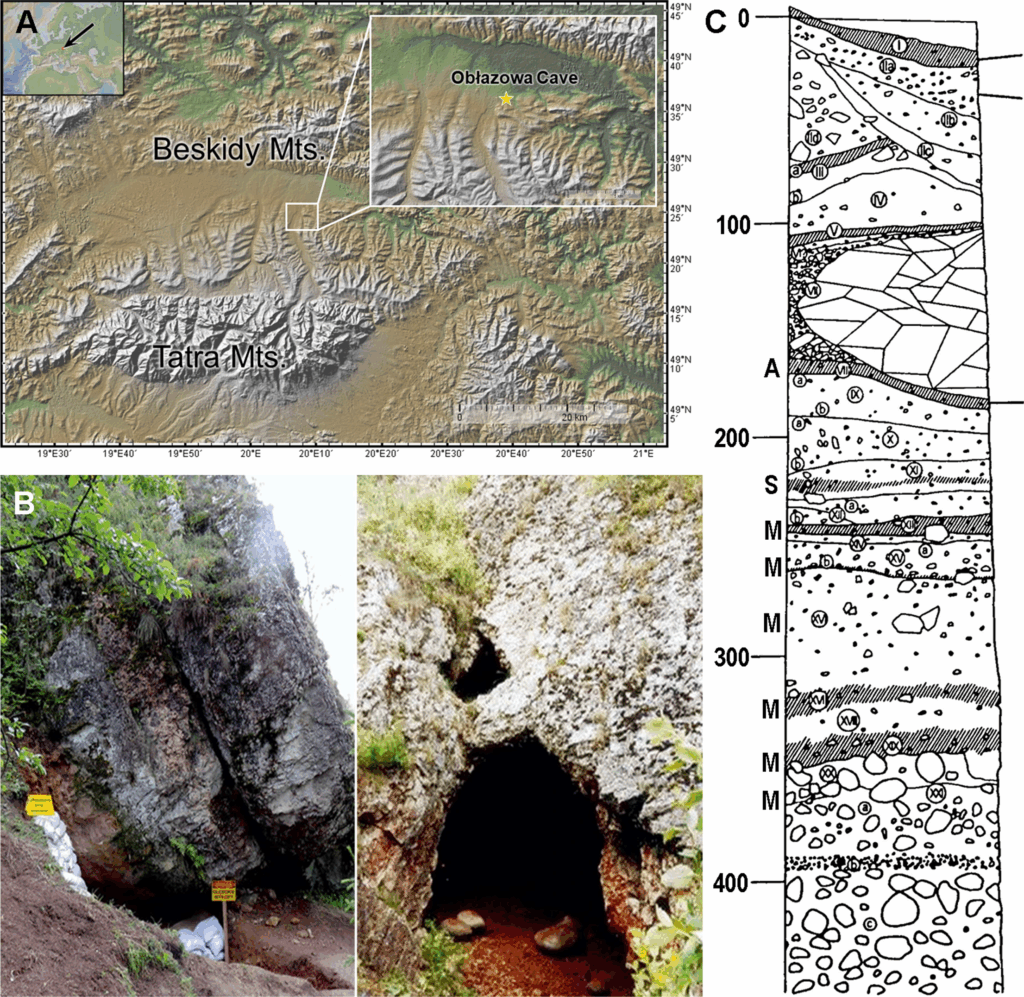
A. Geographical location of Obłazowa Cave in the Podhale basin, western Carpathians (base map from GeoMappApp: www.geomapapp.org); B. View of the western entrance and main entrance of Obłazowa Cave (photos by PV-N and AN); C. Sedimentary section of Obłazowa Cave and distribution of the archaeological horizons, A – Aurignacian, S – Szeletian, M – Mousterian (stratigraphic section redrawn by PV-N). Credit: Talamo et al., 2025, PLOS One

The discovery of this ancient boomerang underscores the sophistication of Upper Paleolithic hunting tools and supports the idea that early modern humans in Europe developed symbolic expression and technological innovation independently of other regions such as Australia or Egypt. It also illustrates their adaptability to harsh climates and diverse ecosystems, enhancing our understanding of human resilience during the Late Pleistocene.

Talamo S, Casaccia N, Richards MP, Wacker L, Tassoni L, Nadachowski A, et al. (2025) Boomerang and bones: Refining the chronology of the Early Upper Paleolithic at Obłazowa Cave, Poland. PLoS One. doi.org/10.1371/journal.pone.0324911

Cover Image Credit: The oldest boomerang in the world. Credit: Archaeological Museum in Kraków

Related Articles

The 3400-year-old city belonging to a mysterious Kingdom emerged from the Tigris river

30 May 2022

30 May 2022

Archaeologists from Germany and Kurdistan have discovered a 3,400-year-old Mittani Empire-era city on the Tigris River. The ruins emerged on...

Remains of ‘female vampire’ found with sickle across her neck and a padlocked toe in Poland

2 September 2022

2 September 2022

A skeleton of what archaeologists believe may have been a 17th-century female vampire has been discovered near Bydgoszcz in Poland....

The Jinn of Girnavaz Mound

6 February 2021

6 February 2021

Girnavaz mound is in the north of Nusaybin district of Mardin province and Nusaybin 4 km is away. It is...

Bosnia and Herzegovina Unearths Europe’s Largest Hoard of 2,000-Year-Old Bipyramidal Ingots from the Sava River

7 August 2025

7 August 2025

Previously recognized for its exhibitions on medieval manuscripts and regional folklore, the Franciscan Monastery Museum “Vrata Bosne” in Tolisa is...

The earliest manuscript of Gospel about Jesus’s childhood discovered in Germany

14 June 2024

14 June 2024

A newly deciphered manuscript dating back 1,600 years has been determined to be the oldest record of Jesus Christ’s childhood,...

A Dice Game board from 5th century BC found in western Turkey’s Daskyleion

6 September 2023

6 September 2023

Archaeologists found a terracotta dice game tabla dating back to the fifth century B.C. during the excavations of the ancient...

The historic Egyptian Palace is being demolished, it may hold a surprise underneath

27 August 2021

27 August 2021

The cause for the evacuation and demolition of the ancient Tawfiq Pasha Andraos Palace, located in the precincts of the...

7,000 years ago the earliest evidence for the cultivation of a fruit tree came from the Jordan valley

17 June 2022

17 June 2022

Tel Aviv University and Jerusalem’s Hebrew University researchers have unraveled the earliest evidence for the domestication of a fruit tree....

A Rock-Cut Temple and Inscriptions from the Neolithic period discovered in Saudi Arabia

6 August 2022

6 August 2022

In a project led by the Saudi Heritage Commission, a multinational team of archaeologists has discovered an 8,000-year-old archaeological site...

Ancient stone grenades discovered at Badaling Great Wall in Beijing

16 October 2023

16 October 2023

Chinese archaeologists have unearthed 59 ancient stone grenades from the ruins of a building in the western section of the...

The Iremir Mound illuminates the pre-Urartian period in East Van

27 July 2021

27 July 2021

Archaeological findings unearthed in the excavations carried out at the İremir Mound in the Gürpınar district of Van, in eastern...

Hidden Archaeological Treasures from Cologne Cathedral

25 January 2024

25 January 2024

An area of around 4,000 square meters (43,055 square feet) is being discovered beneath the Cologne Cathedral, the largest Gothic...

Czech scientists make “Celtic beer” using analysis of pollen from burial site

22 September 2023

22 September 2023

Czech scientists, together with a small experimental brewer, have recreated the country’s first ‘Celtic Beer’ using laboratory analysis of pollen...

Archaeologists Uncovered a Terracotta Commander and Warriors at the Mausoleum of China’s First Emperor

12 January 2025

12 January 2025

Archaeologists have unearthed a rare 2,000-year-old statue depicting a high-ranking military commander at the famous Terracotta Army site in China:...

After 85 years of adventure, Globetrotting Mycenaean gold ring returns home

3 June 2022

3 June 2022

The 3,000-year-old gold Mycenaean ring, stolen from the Rhodes Archaeological Museum during World War II and later bought by a...