
18 January 2026 The Future is the Product of the Past

La Tène-Era Woman’s Grave Filled with Opulent Bronze Jewelry Unearthed in the Czech Republic

Rescue excavations along the planned D7 highway, between the towns of Knovíz and Slaný, approximately 40 kilometers northwest of Prague, have revealed a wealth of historical treasures spanning several millennia. Archaeologists from the Archaeological Centre Olomouc uncovered a total of 467 objects, ranging from Neolithic settlements to early modern artifacts, reflecting the rich and diverse history of the region. Among these discoveries, the grave of a young woman from the early Iron Age has captured particular attention.

The excavation, conducted along a 6.5-kilometer section of the future highway, identified 15 burial sites, with settlements spanning from the Neolithic period to modern times. “This area offers an extraordinary glimpse into thousands of years of human occupation,” says Michaela Bartoš Dvořáková, an archaeologist at the Archaeological Centre Olomouc.

A Woman of the La Tène Era

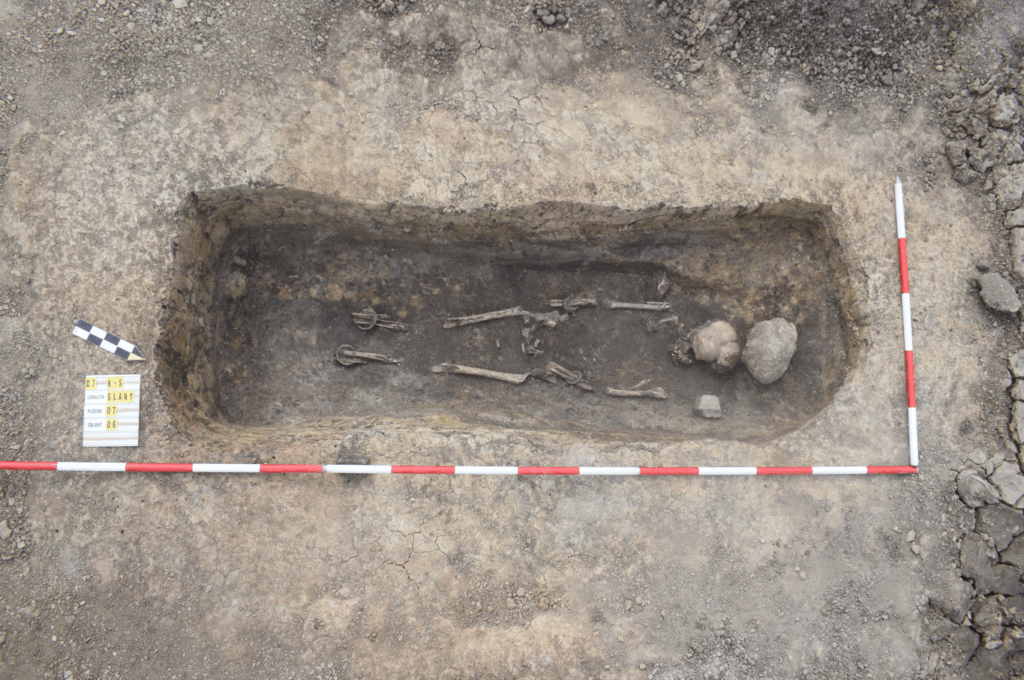
In the vicinity of Slaný, archaeologists uncovered the grave of a woman estimated to be between 20 and 30 years old. She was buried with an impressive collection of bronze jewelry, including a pair of arm and ankle bracelets with seal-like ends, two bronze rings, and a Duchcov-type brooch with a free foot. Each item exhibits unique decorative features, suggesting a highly individualized burial. Based on these artifacts, the grave is preliminarily dated to the mid-4th century BCE, during the La Tène period, a time associated with early Celtic culture in Central Europe.

Specialized analyses are currently underway to shed more light on the life of this woman. Markéta Zahnašová, the archaeologist responsible for the finds, explains, “Using stable strontium isotope analysis, we hope to determine whether she was born locally in the Slaný region or came from elsewhere. Comparing her DNA with other contemporary remains in the area may also reveal familial links and social connections.”
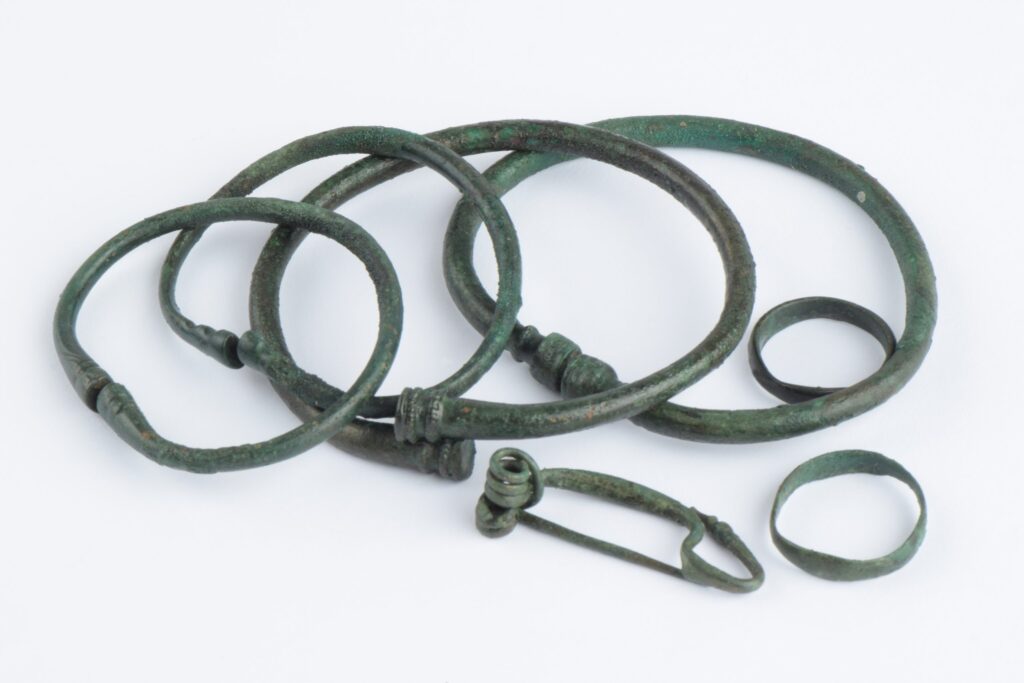
Set of bronze jewelry from the La Tène period. Credit: Andrea Šindlerová, Archaeological Centre Olomouc

Evidence of Health Challenges

Skeletal analysis indicates that the woman may have suffered from metabolic disorders, with signs of physiological stress and iron deficiency. These findings provide a poignant glimpse into the health conditions faced by Iron Age populations, offering researchers a rare opportunity to study ancient disease patterns and their social implications.


📣 Our WhatsApp channel is now LIVE! Stay up-to-date with the latest news and updates, just click here to follow us on WhatsApp and never miss a thing!!


Complementary Discoveries

Alongside the woman’s grave, archaeologists also uncovered several other intriguing burials. Five graves were attributed to the Corded Ware culture, including two children’s graves containing objects such as a perforated deer tooth amulet and miniature axes, suggesting ritualistic or symbolic burial practices. In one child’s grave, aged three to four years, experts found a tiny axe crafted from a broken larger tool, highlighting the importance of miniature objects in ceremonial contexts.

A notable artifact from the nearby village of Kvíc was a thorn-studded ceramic vessel from the Late Bronze Age. Chemical analysis revealed traces of fat and wax, prompting hypotheses that it may have been used for fermenting food or performing other specialized functions.
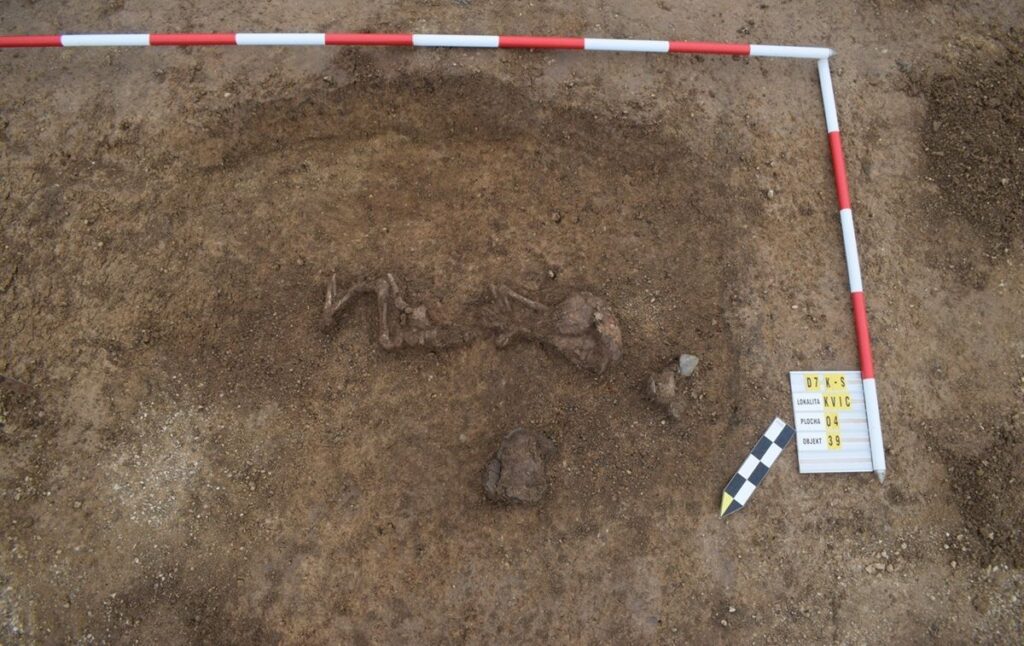
Corded Ware child’s grave with miniature axe. Credit:  Archaeological Centre Olomouc
Corded Ware child’s grave with miniature axe. Credit: Archaeological Centre Olomouc

Broader Context of the Excavation

The excavation also produced early La Tène artifacts, including a bronze belt buckle featuring a snake motif, as well as decorated ceramics from pit-houses. Early medieval settlement and burial activities were also documented, such as ceramic vessels with wave patterns and poorly preserved graves lined with stones.

The ongoing documentation, conservation, and laboratory analyses aim to determine the age, function, and cultural significance of all recovered objects. This meticulous work, involving anthropological, traceological, and phosphatic studies, promises to deepen our understanding of the region’s complex historical tapestry.
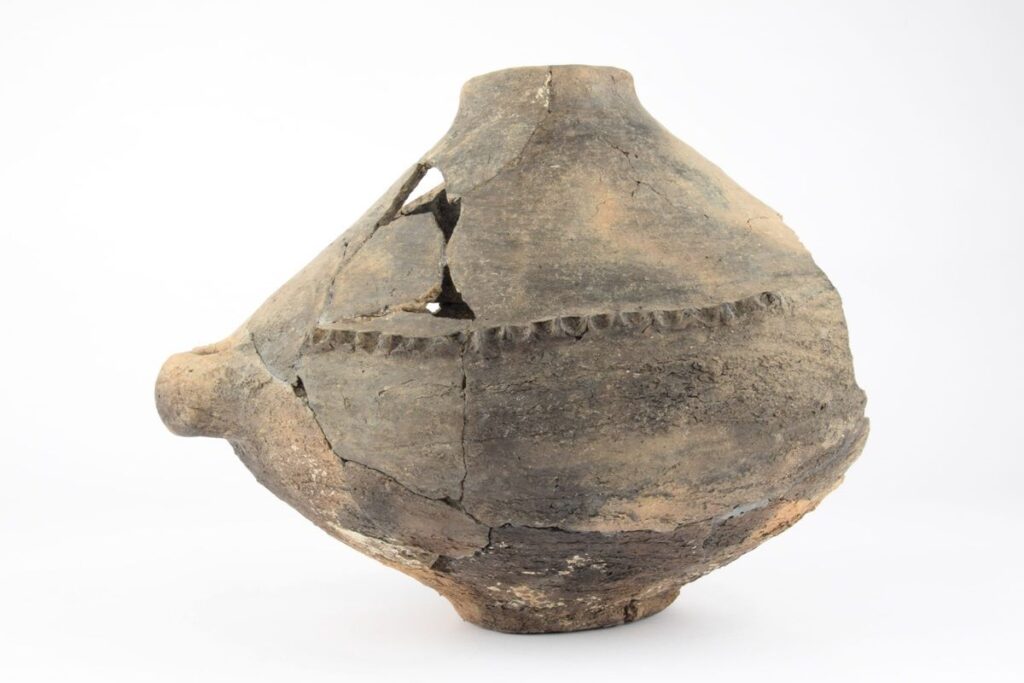
Ceramic vessel from the Late Bronze Age. Credit: Andrea Šindlerová, Archaeological Centre Olomouc

Conclusion

The discovery of the young woman’s grave offers a remarkable window into the life and death of individuals in early Iron Age Central Europe. Her richly adorned burial underscores both personal identity and cultural practices of the La Tène period, while ongoing scientific investigations may reveal her origins, health, and familial connections. As archaeologists continue their work along the future D7 route, each artifact, from miniature axes to thorned vessels, contributes to a broader narrative of human activity in the Czech lands spanning thousands of years.

Archaeological Centre Olomouc

Cover Image Credit: Grave of a woman with bronze jewelry from the La Tène period. Archaeological Centre Olomouc

Related Articles

Truncated conical tombs 3,000 years old found in the Chapultepec Forest

26 November 2023

26 November 2023

Archaeologists from the National Institute of Anthropology and History (INAH) unearthed 10 truncated conical tombs, approximately 3,000 years old, at...

Scientists reveal new discovery inside the Pyramid of Khufu

20 March 2023

20 March 2023

An Egyptian pyramid for 4,500 years is still spilling secrets. After a years-long project using modern technology to reveal the...

Lovingly gazing mosaics restored in Turkey’s Metropolis

16 October 2021

16 October 2021

In the ancient city of Metropolis in the Torbali district of the western Izmir province, mosaics portraying Eros, the Greek...

18,000 years ago, late Pleistocene humans may have hatched and raised the “World’s Most Dangerous Bird.”

2 October 2021

2 October 2021

Researchers say the eggshell is an understudied archaeological material that has the potential to clarify past interactions between humans and...

Unique Heart-Shaped Jesuit Ring from 1700s at Fort St Joseph, Michigan

18 September 2022

18 September 2022

An archeology student from the Fort St. Joseph Archeology project at Western Michigan University has uncovered a unique heart-shaped Jesuit...

Norwegian Boy in Search of Granddad’s Wedding Ring Finds 1500-year-old Roman Jewellery

11 August 2021

11 August 2021

Sander Magnus Vang (12) needed to find his grandfather’s lost wedding ring. Instead, he found a 1500-year-old ring. The golden...

Polish Archaeologists uncover a ancient residence and mysterious mask in Libya’s ancient city Ptolemais

15 January 2025

15 January 2025

In Libya’s ancient city of Ptolemais on the Mediterranean coast, Polish archaeologists have uncovered a dwelling equipped with an advanced...

Viking Dentistry Was Surprisingly Advanced And Not Unlike Today’s Treatments

15 December 2023

15 December 2023

Viking Age teeth at Varnhem indicate surprisingly advanced dentistry, according to the results of a study conducted at the University...

Rare Bronze Age Metalworking Hoard Discovered in Wiltshire, Including an Anvil

20 February 2025

20 February 2025

A remarkable discovery has been made in Urchfont, a village located in Wiltshire, England, where a Bronze Age hoard of...

A first in 35 years! Child grave with bracelets and gifts found in ancient city of Kelenderis

25 June 2022

25 June 2022

During this year’s excavations in the ancient city of Kelenderis, founded on the Mediterranean coast in the southern province of...

Sicily: Archaeologists make striking discovery in Segesta

8 June 2021

8 June 2021

Archaeological excavations in the Segesta Archaeological Park, investigating a “monumental edifice” near the portico at the end of the old...

Ancient tomb discovered under parking lot greenery in Japan

16 September 2023

16 September 2023

Shrubbery intended to illuminate a corner of a nondescript parking lot in Japan’s Nara prefecture turned out to be hiding...

A 2600-year-old Clay Pot was Repurposed As Trash Bin in An Iranian Museum

13 November 2023

13 November 2023

A clay pot dating back to the 2600-year-old Medes period is now serving as a trash bin in a museum...

AI Uncovers Lost Babylonian Hymn After 3,000 Years — A Glorious Ode to the Ancient City

3 July 2025

3 July 2025

Archaeologists and AI experts uncover a 3,000-year-old hymn praising Babylon‘s grandeur, revealing rare insights into ancient urban society, education, and...

6,000 Years of Human History Unearthed in Brittany: From Stone Age Villages to Roman Farms

25 October 2025

25 October 2025

A large-scale archaeological excavation in the heart of Brittany has unveiled more than six thousand years of continuous human occupation,...