
12 November 2025 The Future is the Product of the Past

Spectacular Marble Portrait and Untouched Grave Found at Bulgaria’s Heraclea Sintica

Ongoing rescue excavations at the ancient Roman site of Heraclea Sintica in southwestern Bulgaria continue to deliver extraordinary finds, with recent discoveries spanning from the 2nd century BC to the 2nd century AD.

Archaeologists working along the route of a future Bulgaria–Greece gas pipeline have uncovered a finely carved marble face, a terracotta figurine of the Celtic goddess Epona, and an untouched grave containing seven well-preserved clay vessels. These discoveries come from the Western Necropolis of Heraclea Sintica, near the village of Rupite, where rescue excavations have intensified in recent months due to planned infrastructure development.

A Marble Portrait From Antiquity

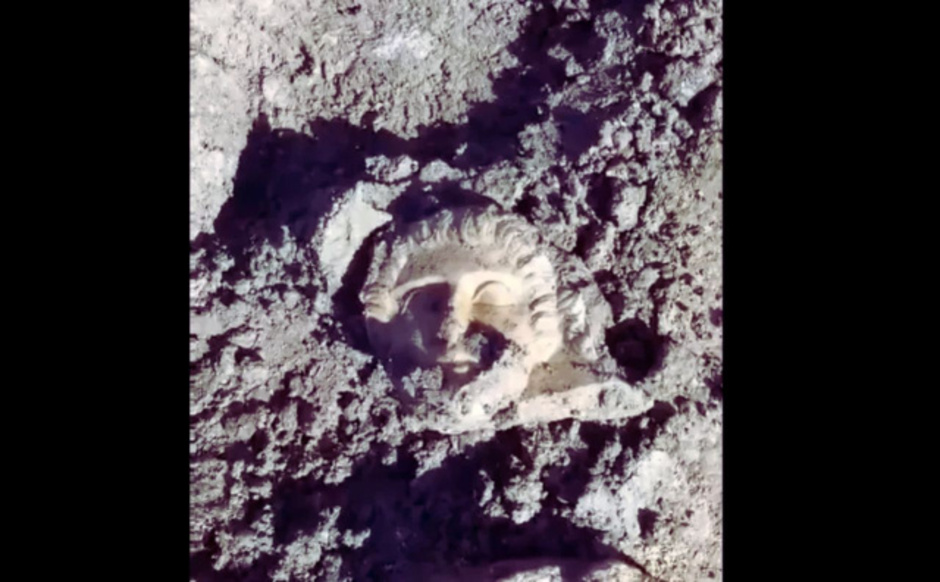
In one of the most recent findings, a sculpted marble face was unearthed within a looted tomb. According to Prof. Dr. Lyudmil Vagalinski, director of the excavation team and representative of NAIM-BAS (National Archaeological Institute with Museum at the Bulgarian Academy of Sciences), the artifact likely formed part of a funerary relief depicting the deceased. It is believed to date back to the 1st or 2nd century AD, providing an exquisite example of Roman-period artistry.

The tomb lies nearly four meters below the modern surface, indicating the depth of the necropolis and its long-standing use. With archaeologists expecting further finds, the site continues to be a treasure trove for classical archaeology.

An Untouched Hellenistic Grave

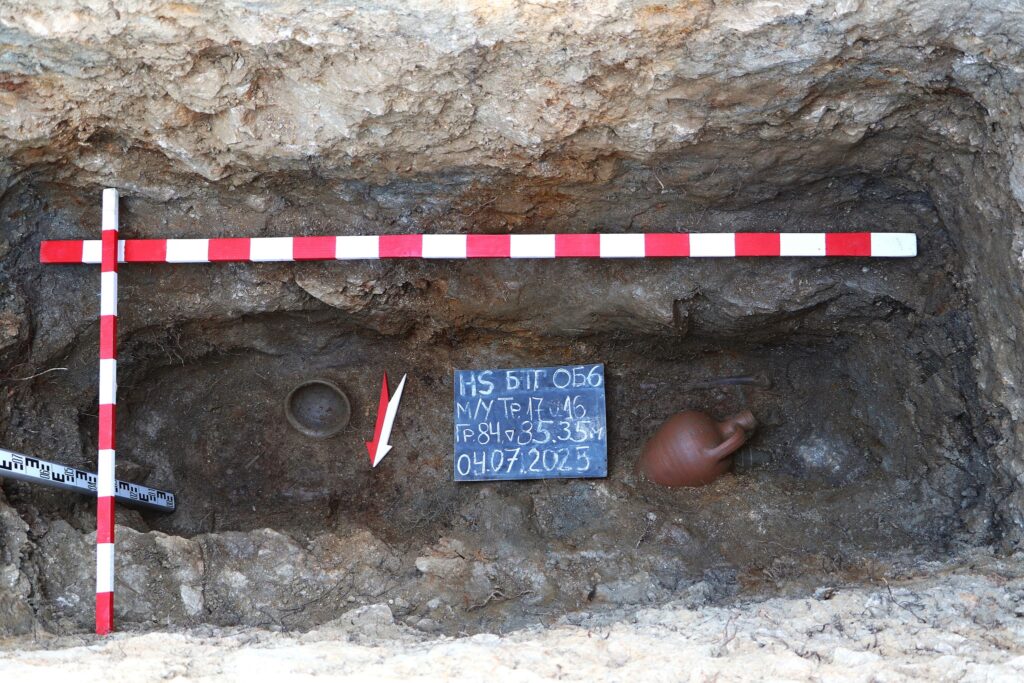
Equally significant is the discovery from May 2025: an untouched grave carved into the rock, which yielded five bowls, a jug, and a clay lamp, all dating from the 2nd to 1st century BC. The exceptional preservation of these vessels offers invaluable insights into ancient burial rituals practiced before Roman dominance.


📣 Our WhatsApp channel is now LIVE! Stay up-to-date with the latest news and updates, just click here to follow us on WhatsApp and never miss a thing!!


Prof. Vagalinski emphasized the importance of the grave in understanding local funerary customs, describing it as a window into a rarely observed Hellenistic ritual tradition.

Goddess Figurines, Jewelry, and a Double Burial

Between these two headline discoveries, the necropolis has also revealed a terracotta figure of Celtic goddess Epona, a clay toy, gold jewelry, and a richly adorned double burial of a man and a woman. These finds, dating across several centuries, indicate a prolonged and culturally layered use of the burial ground.
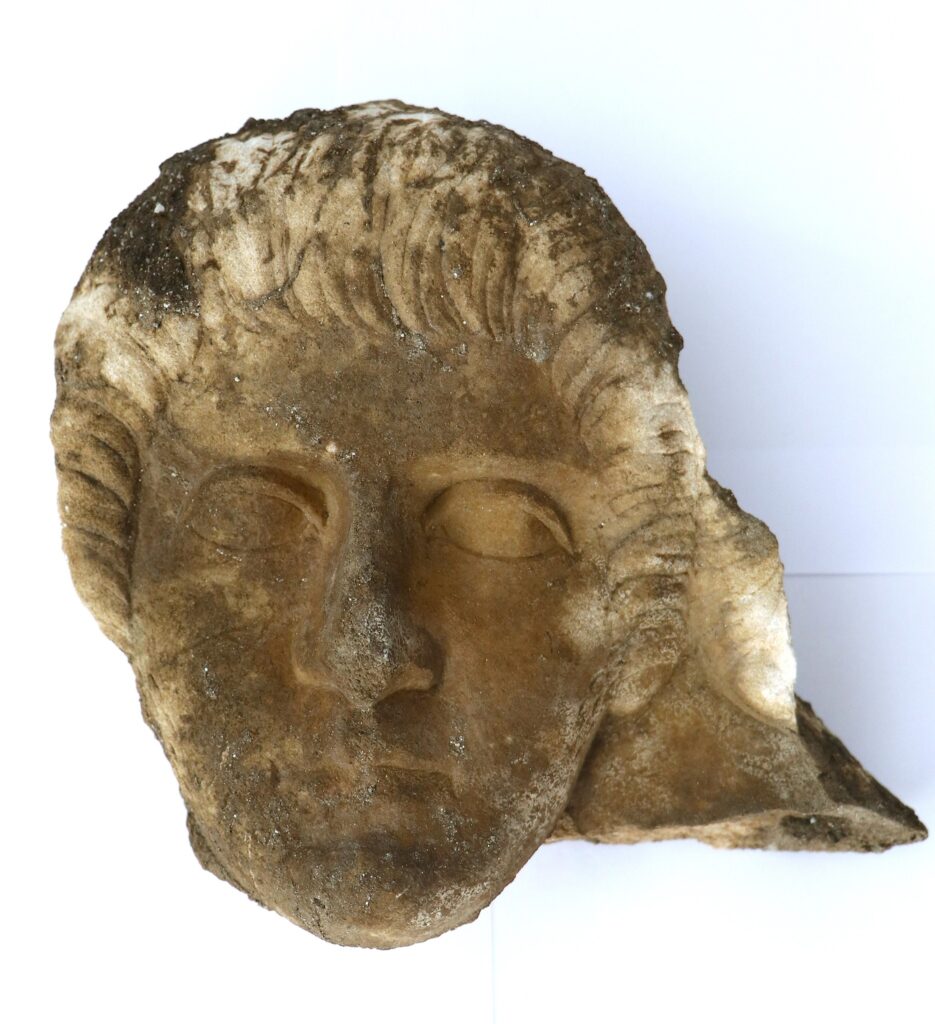
Finely carved marble face of a woman, recently unearthed in the Western Necropolis of Heraclea Sintica. Credit: Archaeologia Bulgarica

About Heraclea Sintica

Heraclea Sintica was a prominent Roman and earlier Hellenistic city located near modern-day Petrich, in southwestern Bulgaria, close to the Greek border. It was founded in the 4th century BC, likely by Philip II of Macedon or Alexander the Great, and flourished during Roman rule as a regional administrative center.

The city’s strategic location in the Struma River valley made it a key point of trade and cultural exchange between the Balkans and the Mediterranean. Today, Heraclea Sintica is one of Bulgaria’s most active archaeological sites, drawing international interest for its well-preserved structures, inscriptions, and artifacts.

Why These Discoveries Matter

The finds at Heraclea Sintica not only expand our understanding of funerary practices across different historical eras but also illustrate the rich cultural interplay of Thracian, Hellenistic, Celtic, and Roman influences in the region.
The finds at Heraclea Sintica illustrate the rich cultural interplay of Thracian, Hellenistic, Celtic, and Roman influences in the region. Credit: Archaeologia Bulgarica

From the personal artistry of a marble funerary relief to ritualistic grave goods untouched for over two millennia, each discovery provides another piece in the puzzle of this once-thriving ancient city.

As excavations continue, archaeologists and history enthusiasts alike are urged to follow updates from the site, where history is quite literally being unearthed, layer by layer.

 Archaeologia Bulgarica

Cover Image Credit:  Archaeologia Bulgarica

Related Articles

‘Exceptional’ Viking Age silver treasure found in Norway

27 October 2022

27 October 2022

A treasure trove of silver fragments from the Viking Age has been discovered in Stjørdal, near Trondheim in central Norway....

3,000-Year-Old Lost Anatolian language ‘Kalašma’ deciphered

5 July 2024

5 July 2024

In 2023 excavation site at the foot of Ambarlikaya in Boğazköy-Hattusha in Turkey, a cuneiform tablet with a previously unknown...

Rare Five Bronze Age Axes found in the Forests of Poland

5 December 2023

5 December 2023

Archaeologists in Poland have discovered five Bronze Age axes in Starogard Forest District, located in Kociewie. A metal detectorist named...

Rare ivory plaques from First Temple Period were discovered in Jerusalem

8 September 2022

8 September 2022

An extraordinary find was made in Jerusalem: an assemblage of ivory plaques from the First Temple period, one of only...

INAH archaeologists discovered a nose ornament made of human bone in Mexico

31 August 2023

31 August 2023

Archaeologists from the National Institute of Anthropology and History (INAH) have discovered a nose ornament made of human bone in...

A new study attributes Japanese, Korean and Turkish languages all to a common ancestor in northeastern China

11 November 2021

11 November 2021

According to a new study, modern languages ranging from Japanese and Korean to Turkish and Mongolian may have had a...

Surprisingly High-Altitude Silk Road Cities Discovered in Uzbek Mountains

25 October 2024

25 October 2024

Archaeologists have discovered two lost medieval cities in the eastern mountains of Uzbekistan that were important hubs on the ancient...

A unique golden sun bowl was discovered during an archaeological survey in Ebreichsdorf, Austria

3 October 2021

3 October 2021

A golden sun bowl and several hundred bronze objects were discovered during archaeological excavations in a prehistoric settlement in today’s...

A Trove of ‘Exceptional’ stunningly preserved bronze statues found at an Ancient Thermal Spa in Tuscany, Italy

10 November 2022

10 November 2022

A group of Italian archaeologists made the discovery of 24 well-preserved bronze statues from an ancient thermal spring in Tuscany....

Archaeologists Unearth Rare Artifacts from the First Turkic Khaganate in the Altai Mountains

15 September 2025

15 September 2025

Archaeologists from Altai State University and their international colleagues have made a groundbreaking discovery in Russia’s Altai Republic, unearthing artifacts...

For the first time in Turkish history, a gold belt buckle depicted the face of a Göktürk Khagan found

19 December 2023

19 December 2023

A social complex (Külliye) and new artifacts from the Western Gokturk period were discovered in Kazakhstan. Among these items, a...

Largest Anglo-Saxon cemetery discovered in Britain illuminates ‘Dark Ages’

16 June 2022

16 June 2022

Archaeologists working on HS2 (the purpose-built high-speed railway line) have discovered a rich Anglo-Saxon cemetery in Wendover, Buckinghamshire, where almost...

Ancient Funerary Stones Looted from Yemen Will Be Exhibited at the Victoria & Albert Museum

14 September 2023

14 September 2023

The Victoria & Albert Museum (V&A) has signed a historic agreement with the Yemeni government to temporarily keep and display...

A stone statue (Balbal) with height up to 3 meters found in the Issyk-Kul region of Kyrgyzstan

18 October 2022

18 October 2022

A balbal (stone statue) with a height of up to 3 meters was found during agricultural work in the Ak-Bulun...

Archaeologists in northern Spanish have discovered what they believe to be the oldest Basque language text

15 November 2022

15 November 2022

Archaeologists have discovered what they believe to be the oldest Basque language text, on  Irulegi archaeological site, near the Aranguren...